

Some writers followed the "proletarian literary movement" and engaged in political activities, while the majority wrote propaganda. Some wrote works that glorified Japan's "mission," with little artistic value.
Literature during the Meiji period
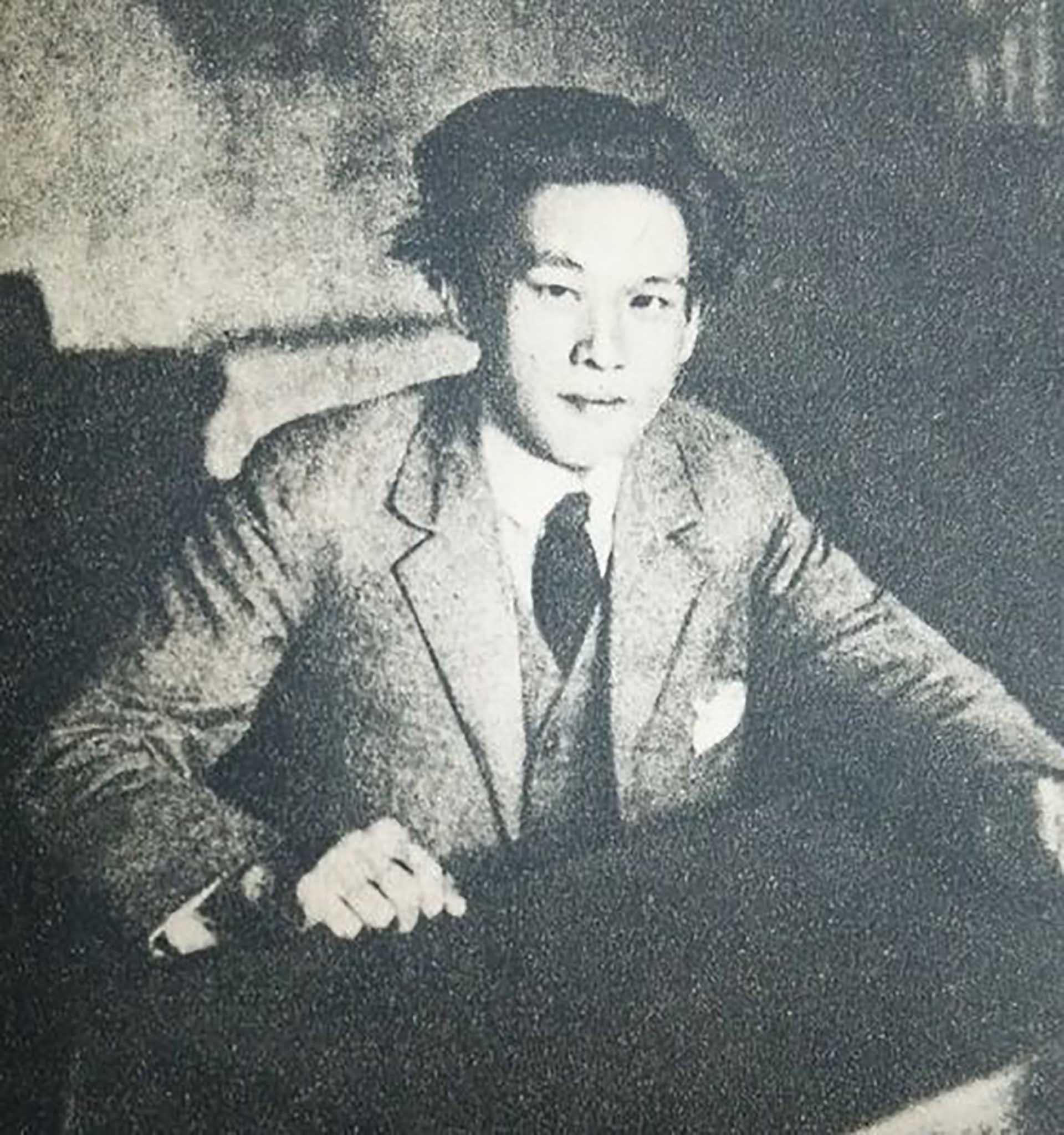 |
| Writer Yokomitsu Riichi. |
Yokomitsu Riichi (1898-1947) was a modernist, experimental writer with a "new sensibility" tendency, opposing the "proletarian school" and vulgar realism.
He was a master of psychological fiction; he wrote novels, short stories, and plays, beginning his career with symbolic fiction. He was a leading figure in the "New Sensationalist" movement, captivated by the imagery and visual effects of French Symbolist and Surrealist poetry.
In the mid-1920s, his style became more aligned with realism; in his novel Shanghai (1928-1931), he wrote about the May 30th Movement of 1925 that led to the Chinese Revolution (1925-1927).
His major works include: City (Machi, 1916), Sun (Nichirin, 1923), The Fly (Hae, 1923), Spring Comes on a Horse-Drawn Carriage (Haru wa basha ni notte, 1926), a lyrical and sensitive story about facing his wife's terminal illness; Machines (Kikai, 1930), showing his growing obsession with the idea of a mechanical principle governing human behavior; Time (Jikan, 1931).
Always interested in writing theory, he presented his ideas in *Discussion on the Theory of Authenticity* (Junsui shōsetsu ron, 1935), in which he emphasized the importance of the artistic yet popular novel, which became a major sensation in literary circles.
He spent six months in Europe, starting in 1936, and based on this experience abroad, he wrote his unfinished masterpiece, * The Traveling Melancholy* (Ryoshu, 1937-1946). In the 1930s, he was influenced by Marcel Proust (France) and James Joyce (Ireland).
Kawabata Yasunari (1899-1972) wrote novels, short stories, and poetry. He was awarded the Nobel Prize in Literature in 1968 and committed suicide at the age of 73. He studied literature in Japan and England and was passionate about classical poetry and literature. Unlike most writers of his time, his aesthetic views stemmed from old traditions. He described himself as a "melancholy traveler wandering the world ."
He passionately defended the emotional stirrings of life against materialism. His works primarily express inner feelings; his attitude is detached from life, somewhat conservative.
The Tale of the Dancer of Yzu (Izu no Odoriko, 1926) depicts the unfulfilled love between a student and a traveling opera singer. It is a prime example of Impressionism, expressed through poetic language. Snow Country (Yukiguni, 1935-1937, completed in 1947) celebrates the beauty of snow, the seasons, women, and the traditions of the icy northern regions of Japan; it became a classic and a masterpiece by Kawabata, placing him among Japan's leading writers.
During World War II, he lived in isolation. After peace was restored , he achieved success with *Thousand Cranes* (Senbadzuru, 1949-1952), a tragic love story set against the backdrop of a tea ceremony; *The Ancient Capital* (Koto, 1962), *The Sound of the Mountain* (Yama no Oto, 1954), * The Sleeping Beauty* (Nemureru bijo, 1961), and *Beauty and Sadness* (Utsukushisa to Kanashimi to, 1965) – his last novel being a passionate tale with a tragic ending. Kawabata himself considered his best work to be *The Master of Go* (Meijin, 1951), a short story that contrasted sharply with his other works.
The story recounts (with some fictional elements) a 1938 Go game, which he reported for the Mainichi newspaper. It was the last game of the renowned Go player Shūsai, who lost to a younger challenger and died a year later. Although the story seems superficial, merely recounting a struggle reaching its climax, some readers interpret it as an allegory for Japan's defeat in World War II, while others see it as a struggle between tradition and modernity.
Some writers following the "proletarian literary movement" were politically active, while the majority wrote propaganda. Some wrote works that glorified Japan's "mission," with little artistic value. Typical proletarian writers include:
Tokunaga Sunao (1899-1958) , the first writer of Japan's "proletarian literature" movement in the 1920s, depicted the hopelessly prolonged strike of Tokyo workers in his work * The Sunless Neighborhood* (Taiyō no nai Machi, 1928).
Following Japan's defeat in 1945, he and several other writers founded the New Japanese Literary World (Shin Nihon Bungakkai) as successors to the pre-war socialist literary groups.
Yoshiki Hayama (1894-1945) is best known for his proletarian novel *The People Living on the Sea* (Umi ni Ikuru Hitobito, 1926), which depicts the horrific working conditions on a cargo ship; and *Prostitutes* (Imbaifu, 1925, short story), an early example of proletarian literature in Japan. Towards the end of his life, he lived in the mountain construction sites of Manchukuo.
Kobayashi Takiji (1903-1933) came from a poor peasant family, worked as an employee, and illegally joined the Communist Party. He wrote many short and novellas, expressing the feelings and thoughts of the proletariat, highlighting the struggles of the Japanese people against feudal forces, landlords, and even capitalism and militarism.
His most famous work is * The Crab-Crawling Boat* (Kanikōsen, 1929), which depicts the harsh lives of crab fishermen and sailors; they revolt against the brutal captain but fail. Kobayashi was captured at the age of 30 and tortured to death.
The repression of proletarian writers broke out very early. Some were imprisoned, some were forced to change their writing style, and some stopped writing altogether.
Source




![Strolling through the American Cultural Garden [Part 19]](https://vphoto.vietnam.vn/thumb/402x226/vietnam/resource/IMAGE/2025/1/19/282450858d7345568984c556f7bb952d)
![Strolling through the American Cultural Garden [Part 17]](https://vphoto.vietnam.vn/thumb/402x226/vietnam/resource/IMAGE/2025/1/20/d66f4bb035b24a638d3710594d9d915f)
![Strolling through the American Cultural Garden [Part 16]](https://vphoto.vietnam.vn/thumb/402x226/vietnam/resource/IMAGE/2025/1/18/0bbabac486274f6e9259fb2359a3f846)









































































Comment (0)