

While the Netherlands is expected to add certain ASML equipment to its export ban list, the US is reportedly planning to impose restrictions on specific factories in Beijing.
Since last October, the US has imposed export restrictions on chip manufacturing tools from companies such as Lam Research and Applied Materials to China, citing national security concerns, and has launched a campaign to encourage other key players in the global semiconductor supply chain to do the same.
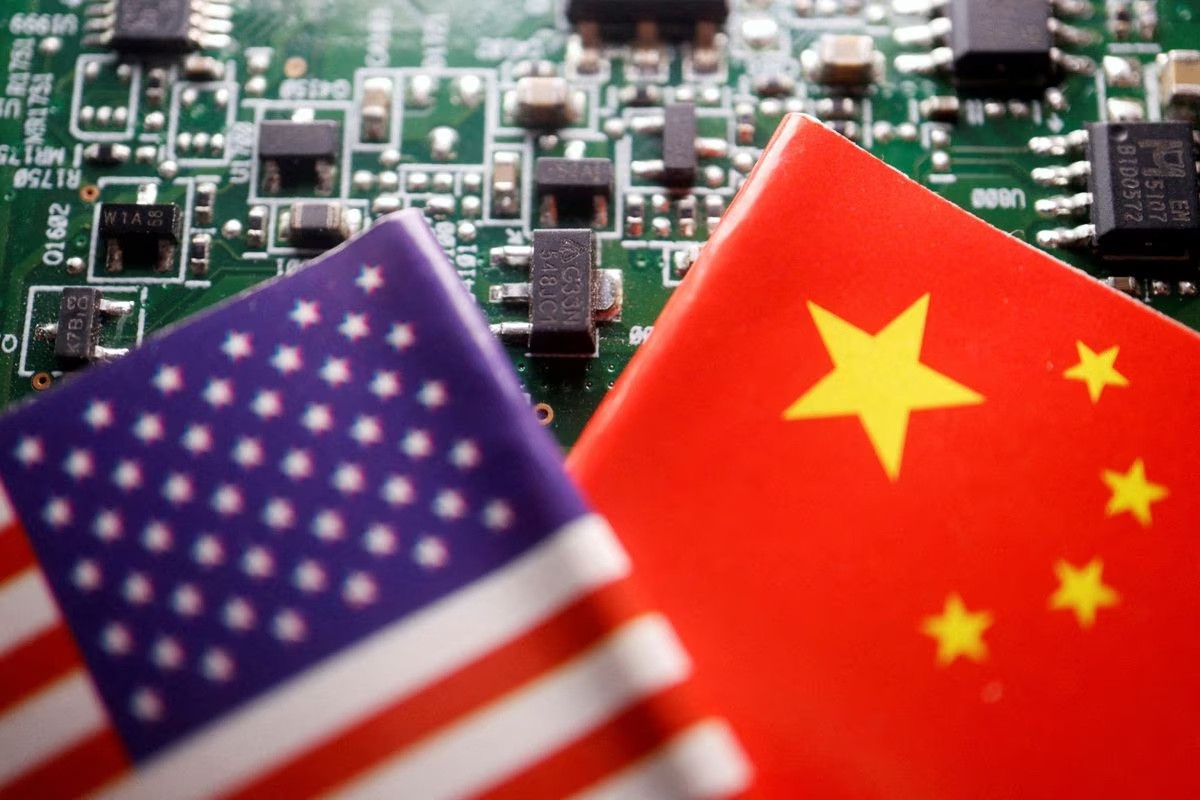
Japan, home to chip manufacturers Nikon Corp and Tokyo Electron Ltd, has also passed rules restricting the export of 23 types of semiconductor manufacturing equipment, effective July 23.
The Dutch government is expected to announce new export controls on June 30th for deep ultraviolet (DUV) printers – ASML's second-best line of equipment, behind ultra-extreme ultraviolet (EUV) lithography machines, which are already on the export ban list.
ASML stated in March that it anticipated government regulation could include the TWINSCAN NXT:2000i product line and more complex models.
However, older DUV models, such as the TWINSCAN NXT:1980Di, could also be banned from export to around six Chinese manufacturing facilities. Reuters sources said the new regulations allow Washington to categorize specific semiconductor factories as subject to “sanctions,” and impose export restrictions even on equipment with low U.S. content.
According to the plan, the new Dutch regulations will not take effect immediately, but will be implemented from September (two months after the announcement).
Meanwhile, the US could announce new restrictions in late July by requiring export licenses for equipment to certain semiconductor facilities in mainland China, including a plant belonging to SMIC – China's largest chip company.
Besides ASML, the world's leading chip manufacturing plant, several other companies will also be affected by the new Dutch rule, such as ASM International (atomic layer deposition system).
(According to Reuters)
Source

![[Photo] Closing Ceremony of the 10th Session of the 15th National Assembly](/_next/image?url=https%3A%2F%2Fvphoto.vietnam.vn%2Fthumb%2F1200x675%2Fvietnam%2Fresource%2FIMAGE%2F2025%2F12%2F11%2F1765448959967_image-1437-jpg.webp&w=3840&q=75)


![[Photo] Prime Minister Pham Minh Chinh holds a phone call with the CEO of Russia's Rosatom Corporation.](/_next/image?url=https%3A%2F%2Fvphoto.vietnam.vn%2Fthumb%2F1200x675%2Fvietnam%2Fresource%2FIMAGE%2F2025%2F12%2F11%2F1765464552365_dsc-5295-jpg.webp&w=3840&q=75)







































![[OFFICIAL] MISA GROUP ANNOUNCES ITS PIONEERING BRAND POSITIONING IN BUILDING AGENTIC AI FOR BUSINESSES, HOUSEHOLDS, AND THE GOVERNMENT](https://vphoto.vietnam.vn/thumb/402x226/vietnam/resource/IMAGE/2025/12/11/1765444754256_agentic-ai_postfb-scaled.png)























![[Photo gallery] Long Thanh Airport 'lights up' ready to welcome its first flight](https://vphoto.vietnam.vn/thumb/402x226/vietnam/resource/IMAGE/2025/12/11/1765467251707_bia_20251211222704.jpeg)













Comment (0)