

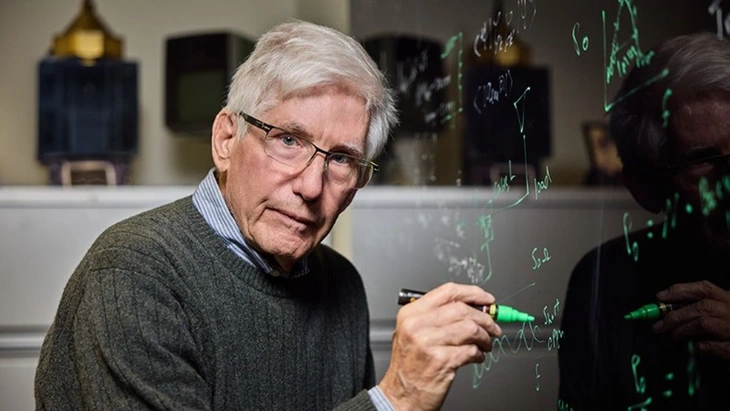
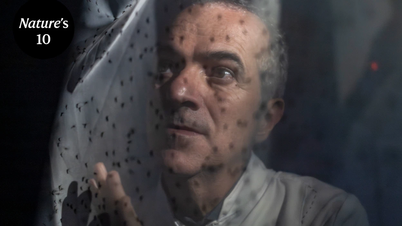
Physicist Tony Tyson, working at the University of California, Davis (USA) - Photo: NATURE
From the dark depths of the ocean to the farthest reaches of space, the year 2025 marks a series of momentous advances in global science .
This year's list "celebrates the spirit of exploring new frontiers, promising medical breakthroughs, efforts to protect scientific integrity and decisions that save lives," said Brendan Maher, features editor at Nature .
Space and deep sea exploration: expanding the frontiers of knowledge
One of the most impressive milestones of 2025 is the $810 million telescope project at the Vera Rubin Observatory (Chile). This project promises to change the way astronomers observe the universe, providing the most detailed images ever of distant galaxies.
Behind this achievement is physicist Tony Tyson , working at the University of California, Davis (USA), who spent over 30 years pursuing the idea of building a giant digital camera system for the observatory. Tyson shared that the project was "high-risk but worthwhile," as it opened up unprecedented observational opportunities.
In the opposite direction, geologist Mengran Du (Do Mong Nhien), working at the Chinese Academy of Sciences, and his colleagues made a dive to a depth of 9,000 meters using a manned submersible.
They captured the first images of an entirely new ecosystem, where bizarre-looking organisms appeared that science had never described before. This discovery not only expanded our understanding of life at the bottom of the sea but also contributed to shedding light on the evolutionary history of ocean ecosystems.
Biomedical breakthroughs: from immune mechanisms to rare disease treatment
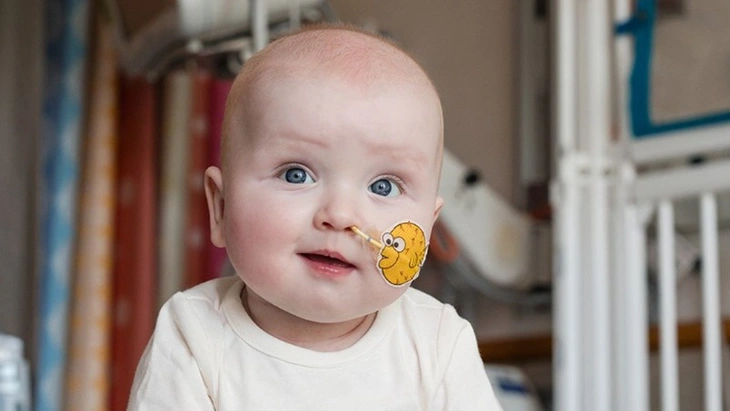
Baby KJ Muldoon, a 1-year-old patient from the suburbs of Philadelphia (USA) - Photo: NATURE
At the microscopic level, Yifat Merbl , a systems biologist at the Weizmann Institute of Science (Israel), has discovered a new function of proteasomes (the cell's protein recycling centers).
She found that proteasomes can produce antimicrobial peptides under certain conditions, opening up entirely new insights into the immune system and potentially paving the way for future infection control strategies.
In the field of clinical medicine, 2025 marks two major achievements in the treatment of rare diseases.
Sarah Tabrizi , a neuroscientist at University College London (UK), was honored when she and her research team developed a therapy to help slow the progression of Huntington's disease, a deadly genetic disease for which scientists have been searching for a cure for decades.
The second achievement is the case of KJ Muldoon , a 1-year-old patient from the Philadelphia suburbs. He is the first person to receive a completely personalized CRISPR gene-editing treatment.
The therapy targets an extremely rare disorder that prevents Muldoon’s body from processing protein. After treatment, his condition improved dramatically. His smile has become a symbol of hope for precision medicine.
Technology and scientific integrity: a tumultuous year
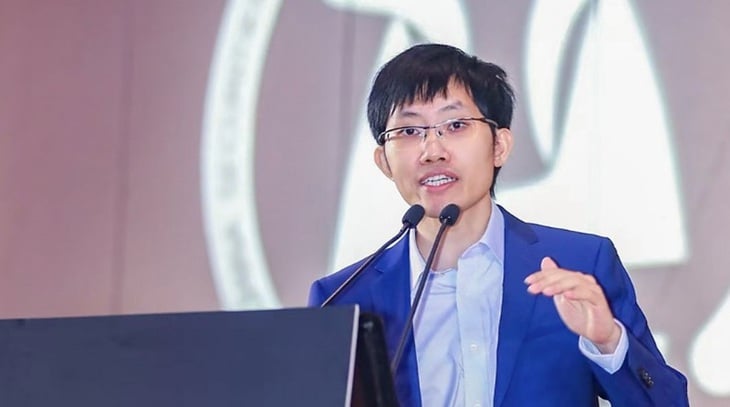
Mr. Liang Wenfeng (Luong Van Phong), Chinese businessman - Photo: NATURE
Not only is 2025 a year of discovery, it is also a year of radical change.
Chinese entrepreneur Liang Wenfeng shook the tech world when he unveiled DeepSeek, a large language model that rivals the best models currently available but is built at a much lower cost.
Importantly, DeepSeek is released as an “open weight,” allowing researchers to download and develop it for free.
In India, data scientist Achal Agrawal has spent the past year investigating research integrity violations. His findings have helped the Indian government overhaul its university ranking policy to prioritize scientific ethics.
Public health: responding to epidemics and protecting science
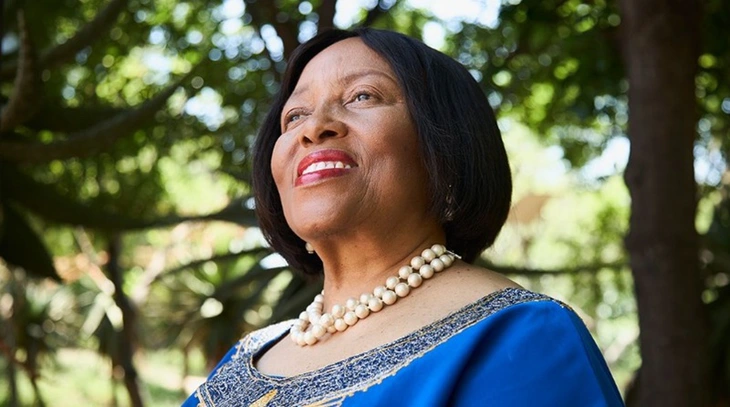
Ms. Precious Matsoso, public health official in South Africa - Photo: NATURE
In an effort to combat infectious diseases, Brazilian agricultural researcher Luciano Moreir has opened the first factory to breed mosquitoes infected with Wolbachia bacteria. Millions of these mosquitoes are being released into the environment to slow the spread of dengue fever.
Meanwhile, Ms. Precious Matsoso , a public health official in South Africa, played a key role in negotiating the world's first treaty on pandemic preparedness after years of negotiations.
Finally, the list honors Susan Monarez , a microbiologist and immunologist in the United States. Ms. Monarez was once appointed head of the Centers for Disease Control and Prevention (CDC).
She has been praised for her steadfast refusal to fire scientists at the CDC and for pushing vaccine policies that lack scientific basis.
5 faces to look forward to in 2026
According to Vietnam News Agency , in addition to the Top 10, Nature also announced 5 faces expected to make breakthroughs in 2026, including:
Mr. Reid Wiseman (NASA) - commander of the Artemis II mission led the historic flight to bring humans around the Moon.
Dr. Georgina Long (University of Sydney) - a pioneering oncologist who brought a new immunotherapy for brain tumors into clinical trials.
Mr. Amadou Sall (Institut Pasteur Dakar) - operator of the MADIBA complex in Senegal to help Africa become self-sufficient in producing measles and Ebola vaccines.
Ms. Alice Xiang (Sony AI) - an expert demonstrating the feasibility of training AI based on ethical data and minimizing bias.
Ms. Colette Delawalla (Stand Up for Science) - an activist trying to protect American science from political pressure ahead of the 2026 midterm elections.
ANH THU
Source: https://tuoitre.vn/nature-cong-bo-top-10-guong-mat-khoa-hoc-noi-bat-nam-2025-20251210092707952.htm


![[Photo] Explore the US Navy's USS Robert Smalls warship](/_next/image?url=https%3A%2F%2Fvphoto.vietnam.vn%2Fthumb%2F1200x675%2Fvietnam%2Fresource%2FIMAGE%2F2025%2F12%2F10%2F1765341533272_11212121-8303-jpg.webp&w=3840&q=75)

![[Photo] The captivating scenery of the fragrant maple forest in Quang Tri](/_next/image?url=https%3A%2F%2Fvphoto.vietnam.vn%2Fthumb%2F1200x675%2Fvietnam%2Fresource%2FIMAGE%2F2025%2F12%2F10%2F1765353233198_lan09046-jpg.webp&w=3840&q=75)





















![[Video] The craft of making Dong Ho folk paintings has been inscribed by UNESCO on the List of Crafts in Need of Urgent Safeguarding.](https://vphoto.vietnam.vn/thumb/402x226/vietnam/resource/IMAGE/2025/12/10/1765350246533_tranh-dong-ho-734-jpg.webp)






















































Comment (0)