

Every morning upon waking up, Kingsley Ho Chun-ngai (21 years old) performs a massage of acupressure points between his eyebrows and behind his ears to reduce swelling, promote blood circulation, relax muscles, relieve stress, and aid recovery. Meanwhile, Angel Li Sun-yi (22 years old) uses acupuncture to manage stomach pain, menstrual cramps, and even anxiety.
"I can use acupuncture because it's very quick and convenient. Stimulating one acupuncture point can affect the entire body," Li said.
Both Ho and Li are currently students in the Traditional Chinese Medicine program at the Chinese University of Hong Kong (CUHK), a long-established field of study that is attracting considerable public attention.
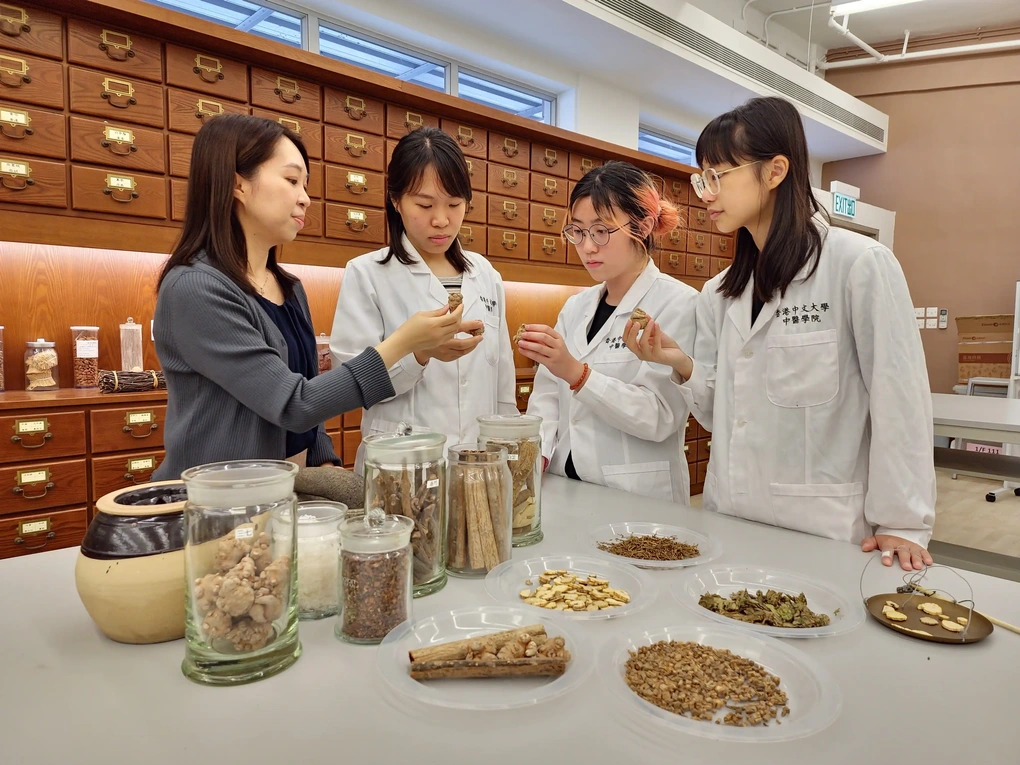
Dr. Sarah Chan Sze-nga (left) assists traditional medicine students at the Chinese University of Hong Kong in identifying medicinal herbs (Photo: Young Post Club).
Traditional Chinese Medicine (TCM) has a history of approximately 2,000 years, based on methods such as acupuncture, massage, and herbal medicine to treat illnesses by balancing the body's energy (qi).
According to Dr. Sarah Chan Sze-nga, Director of the Bachelor of Traditional Chinese Medicine program at the Chinese University of Hong Kong (CUHK), interest in TCM in Hong Kong (China) has been increasing significantly recently.
In 2014, CUHK's Traditional Medicine program attracted approximately 1,600 applications. This number dropped below 1,200 between 2019 and 2021, but rebounded in 2024, reaching a 10-year high of 1,637 applicants.
Besides CUHK, which boasts one of the city's oldest traditional medicine schools, Baptist University and the University of Hong Kong also offer this field of study.
Dr. Chan said that the growing interest stems in part from the government 's promotional policies. In 2024, Hong Kong will host its first Traditional Chinese Medicine Festival. The Hong Kong (China) government has also established the Traditional Chinese Medicine Development Committee, tasked with developing a strategy to promote the industry over the next two years.
Ms. Chan also believes that the Covid-19 pandemic was a significant factor driving the development of this industry. During the pandemic, health became a top priority, causing even those who had never been exposed to traditional medicine to seek out practitioners.
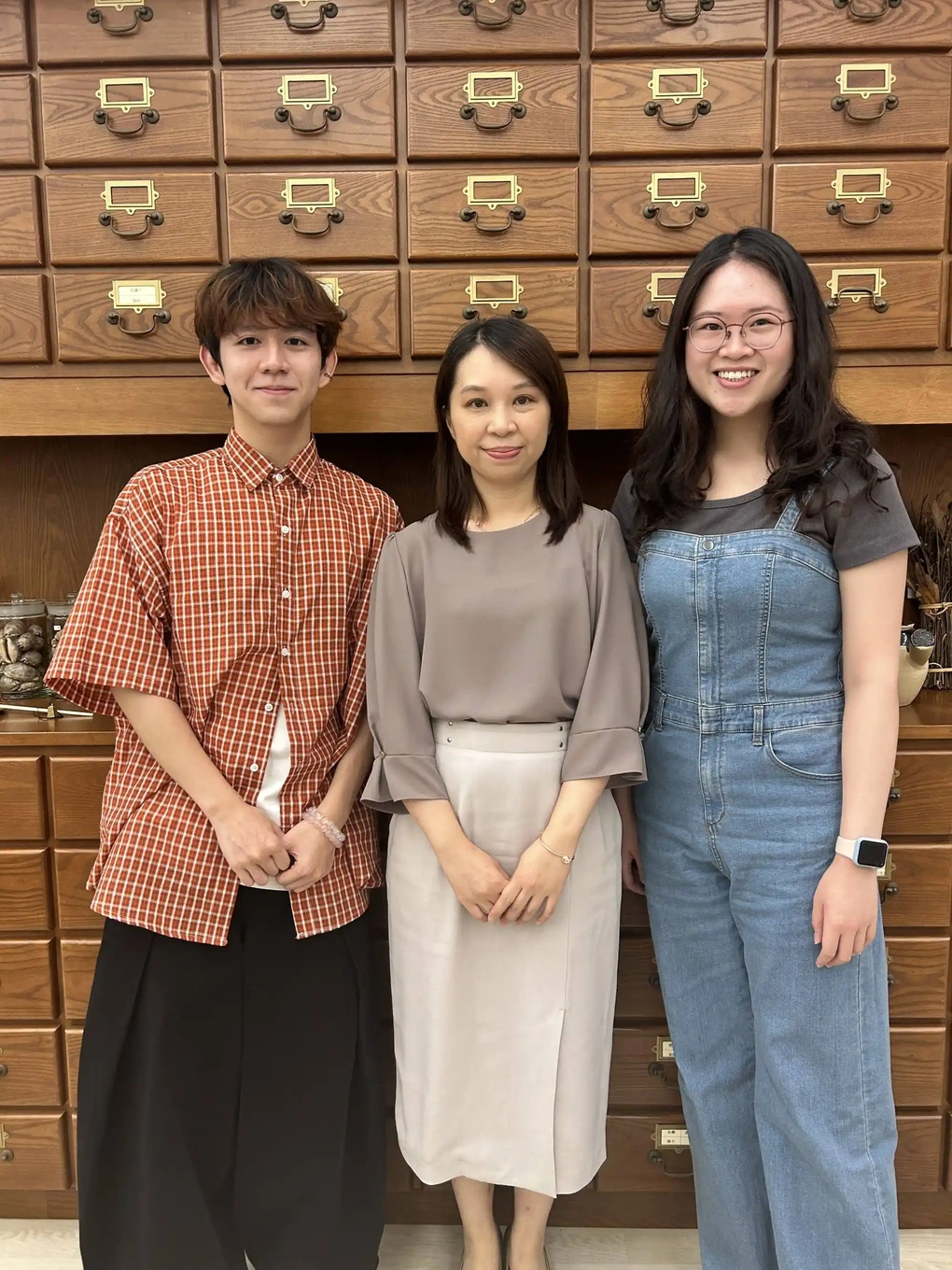
Student Kingsley Ho Chun-ngai (left), Dr. Sarah Chan Sze-nga (center), and student Angel Li Sun-yi (right) (Photo: Kathryn Giordano).
Over the years, traditional medicine training programs in Hong Kong (China) have continuously adapted to the times, aiming to equip students with the ability to work alongside Western medicine.
According to Li, many traditional methods are easy to apply in daily life to maintain health, and he suggested students try things like drinking tea, listening to music, or doing slow exercises.
Source: https://dantri.com.vn/giao-duc/nganh-y-hoc-co-truyen-thu-hut-sinh-vien-20250910115449300.htm































































Comment (0)