

(CLO) Nguyet Vien Temple is a unique historical, cultural, and architectural relic of the ancient village of Nguyet Vien, now located in Hoang Quang commune, Thanh Hoa city. With over 400 years of history, Nguyet Vien Temple has been a place of worship for the village's tutelary deity – Princess Mai Hoa – along with 18 village scholars who passed the imperial examinations.
The ancient temple, over 400 years old, boasts unique architecture.
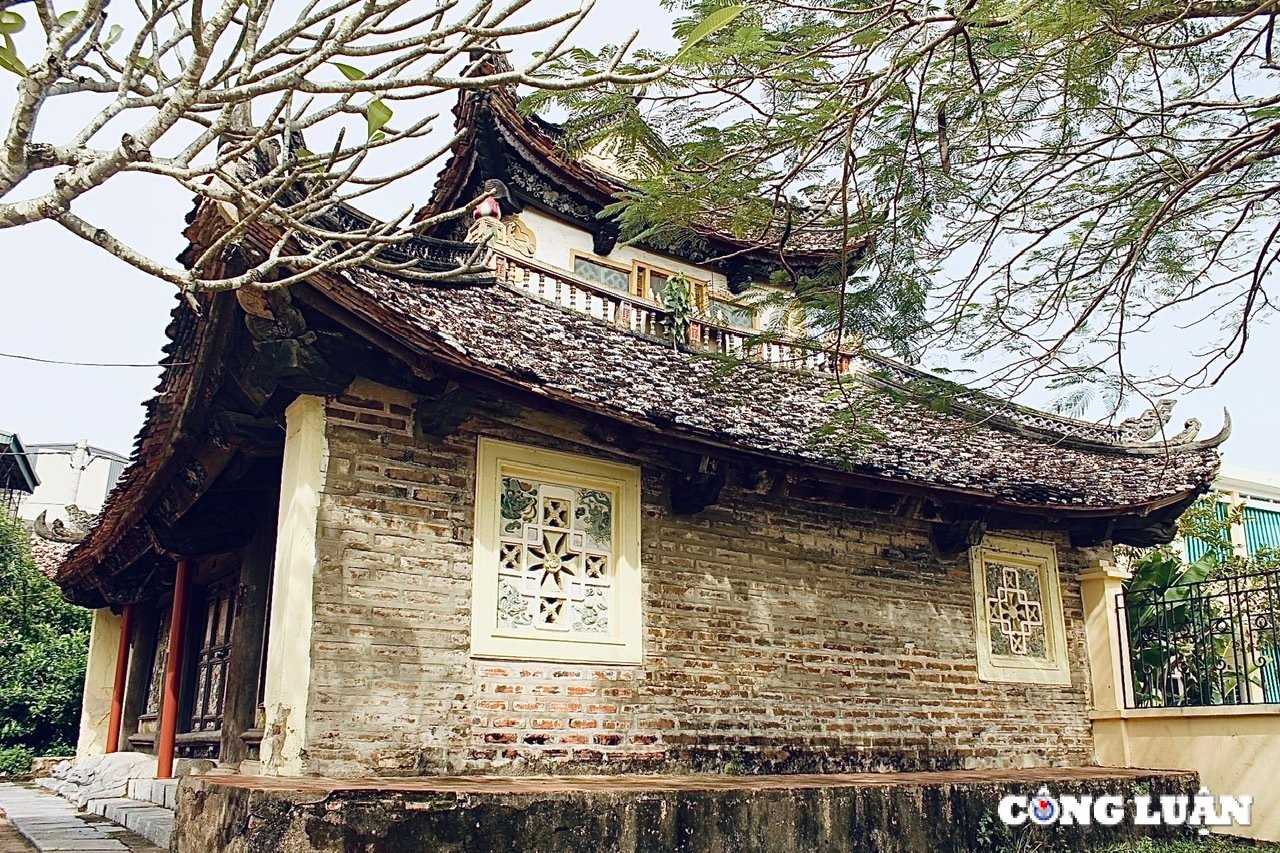
The Nguyet Vien shrine was built in 1593. Based on the inscription on the main beam inside the monument, the Nguyet Vien shrine was initially built at the end of the 16th century, in the year Quy Ty, during the Quang Hung era of King Le The Tong (1593), was renovated in the year Dinh Hoi during the Minh Menh era (1827), and further repaired in the year Binh Than during the Thanh Thai era (1896).
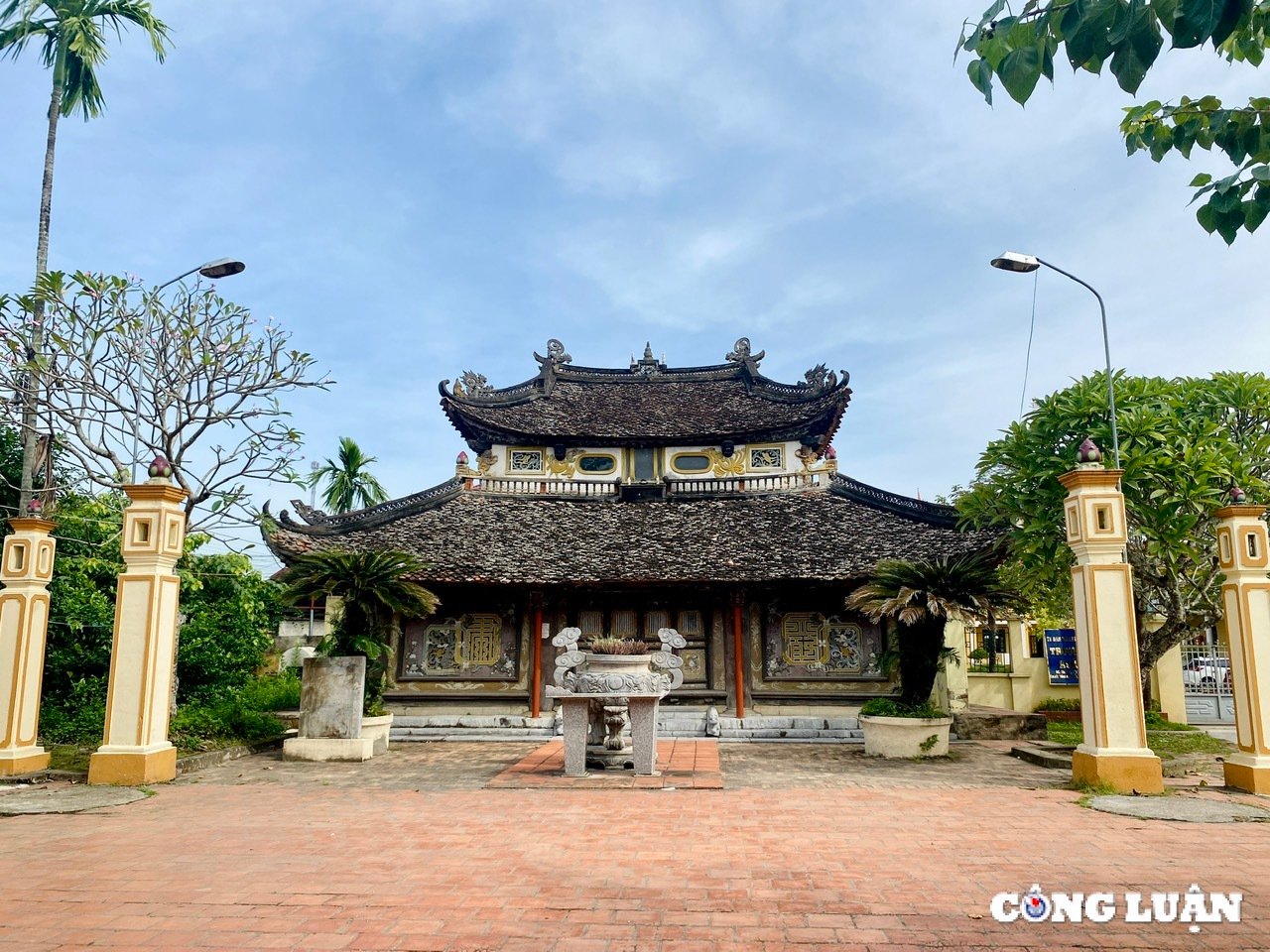
Nguyet Vien Temple is a unique historical, cultural, and architectural monument in the ancient village of Nguyet Vien, now located in Hoang Quang commune, Thanh Hoa city.
Previously, the shrine was located within the large grounds of the village, right next to the temple and the nine-bay communal house, along with a well, a stone bridge, and many ancient trees that remained lush and green all year round, creating a spacious and airy landscape.
Over time, structures such as temples, communal houses, ancient wells, ancient stone bridges, and old trees were all dismantled, leaving only this shrine. To this day, this structure stands on a rather modest area of only about 2,500 square meters.
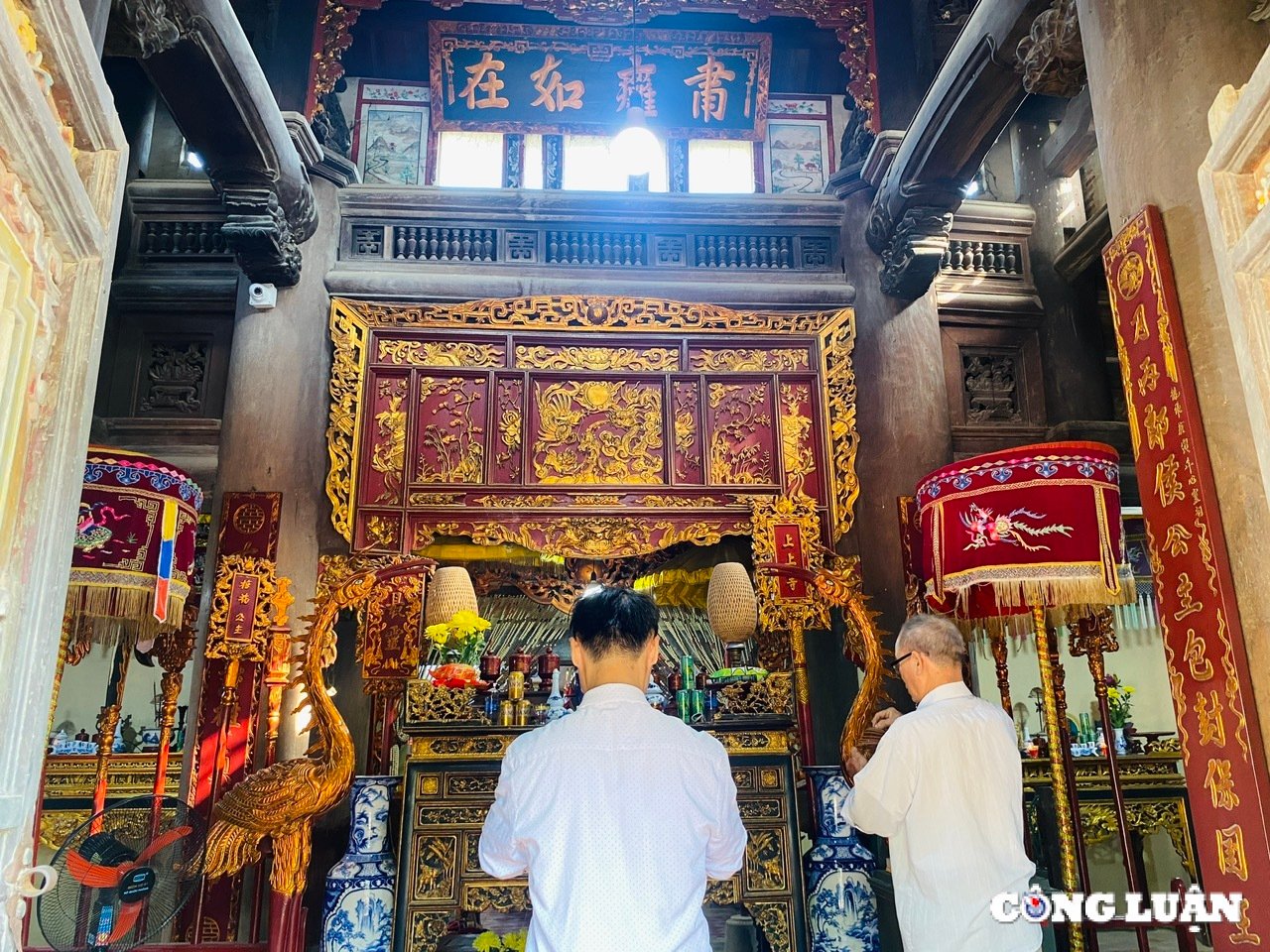
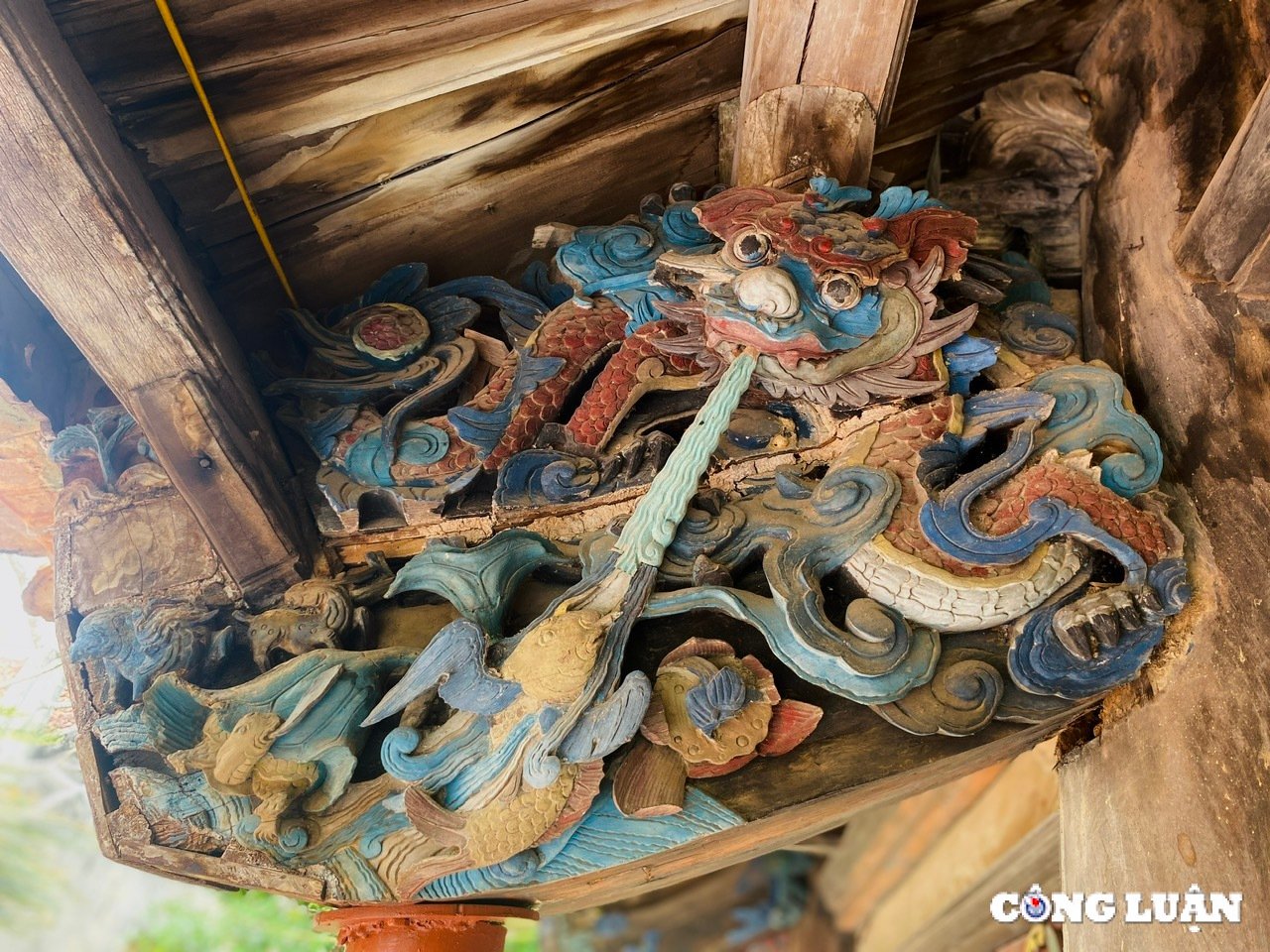
At the ends of the crossbeams, purlins, and brackets, dragon and phoenix heads are carved. These figures also appear in the voids of the house structure, in various styles, adding vibrancy and high aesthetic value to the entire building.
However, a structure built over four centuries ago possesses many ancient architectural features with exquisite carvings. Large, heavy wooden columns stand upright on massive stone slabs. These columns are intricately carved, primarily with motifs of dragons, phoenixes, and unicorns – reflecting reverence for these sacred creatures in folk beliefs.
In front of the steps leading into the temple are a pair of stone crocodiles carved in a lunging posture, their heads slightly raised, bulging eyes, slender noses, wide mouths, and mouths holding precious pearls.
In addition, the decorative patterns are very diverse, such as lotus petals, willow branches, flower buds, etc., covering the entire structure, creating a magnificent beauty for this ancient temple.
According to Mr. Cao Xuan Mac, head of the relic management board, "The Nguyet Vien shrine was built in 1953. After several renovations, the shrine has basically retained its original architectural features from the past."
This is a place of worship dedicated to the female tutelary deity and the renowned scholars of Thanh Hoa province.
Unlike many other historical sites, the deity worshipped at Nguyet Vien shrine is a female village tutelary deity – with an inscription clearly stating "Chuong Vi Duc Bao Trung Hung Thuong Dang Than". Although there are no documents clearly identifying the tutelary deity of Nguyet Vien village, local folk legends and people today believe that the tutelary deity of Nguyet Vien village is Princess Mai Hoa – the daughter of the king.
Out of admiration for the great learning and talent of Mr. Nghè Đờn (from Hoằng Thịnh commune, Hoằng Hóa district today), when he resigned from his official position and returned to his hometown, she secretly followed him. However, she got lost along the way and could not find Mr. Nghè Đờn's hometown. Deeply disappointed and disheartened, she threw herself into the Mã River to commit suicide. Her body drifted to Nguyệt Viên village and was buried at Cồn Trạch by the ancestor of the Nguyễn family in Nguyệt Viên village.
Later, the village elders dreamt that a young woman appeared and said she would repay them and bless the villagers, helping them to progress in their studies and prosper in their businesses. From then on, the people of Nguyet Vien village have taken the 10th day of the 2nd lunar month each year - the day of her burial - as their memorial day and revered her as the village's guardian deity.
Furthermore, the site still contains a stele listing the names of the Doctors of Philosophy from Nguyet Vien village who passed the imperial examinations during the feudal era. It begins with Doctor Nguyen Trat (during the reign of King Le Than Tong) and the last person from the village, and indeed the last in the entire country, to pass the doctoral examination during the feudal era was Mr. Le Viet Tao, who passed the Ky Mui 1919 examination.
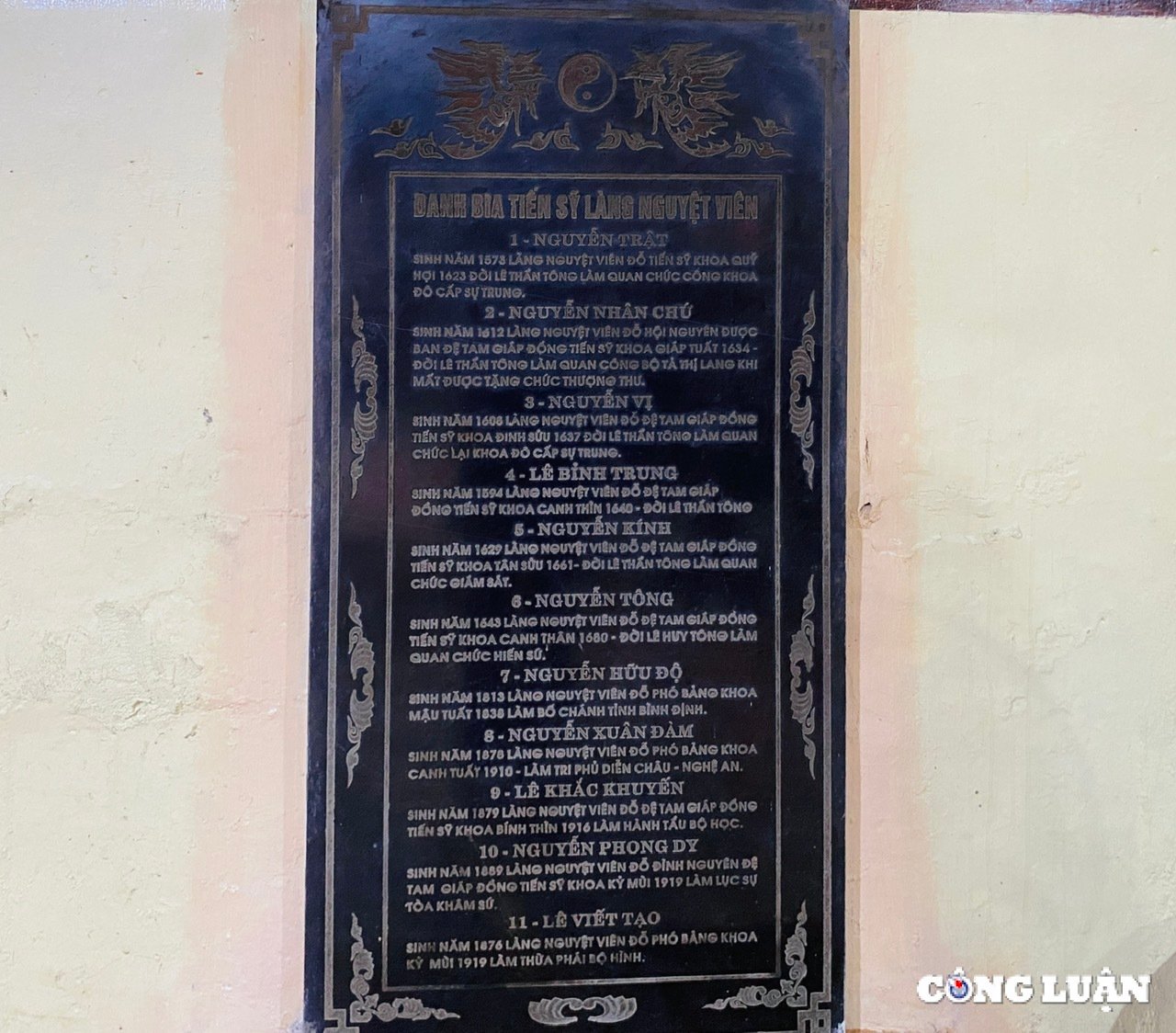
Within the historical site, there is still a stele recording the names of the Doctors of Philosophy from Nguyet Vien village who passed the examinations during the feudal era. It begins with Doctor Nguyen Trat (during the reign of King Le Than Tong) and the last person from the village, and indeed the last in the entire country, to pass the doctoral examination during the feudal era was Mr. Le Viet Tao, who passed the Ky Mui examination in 1919.
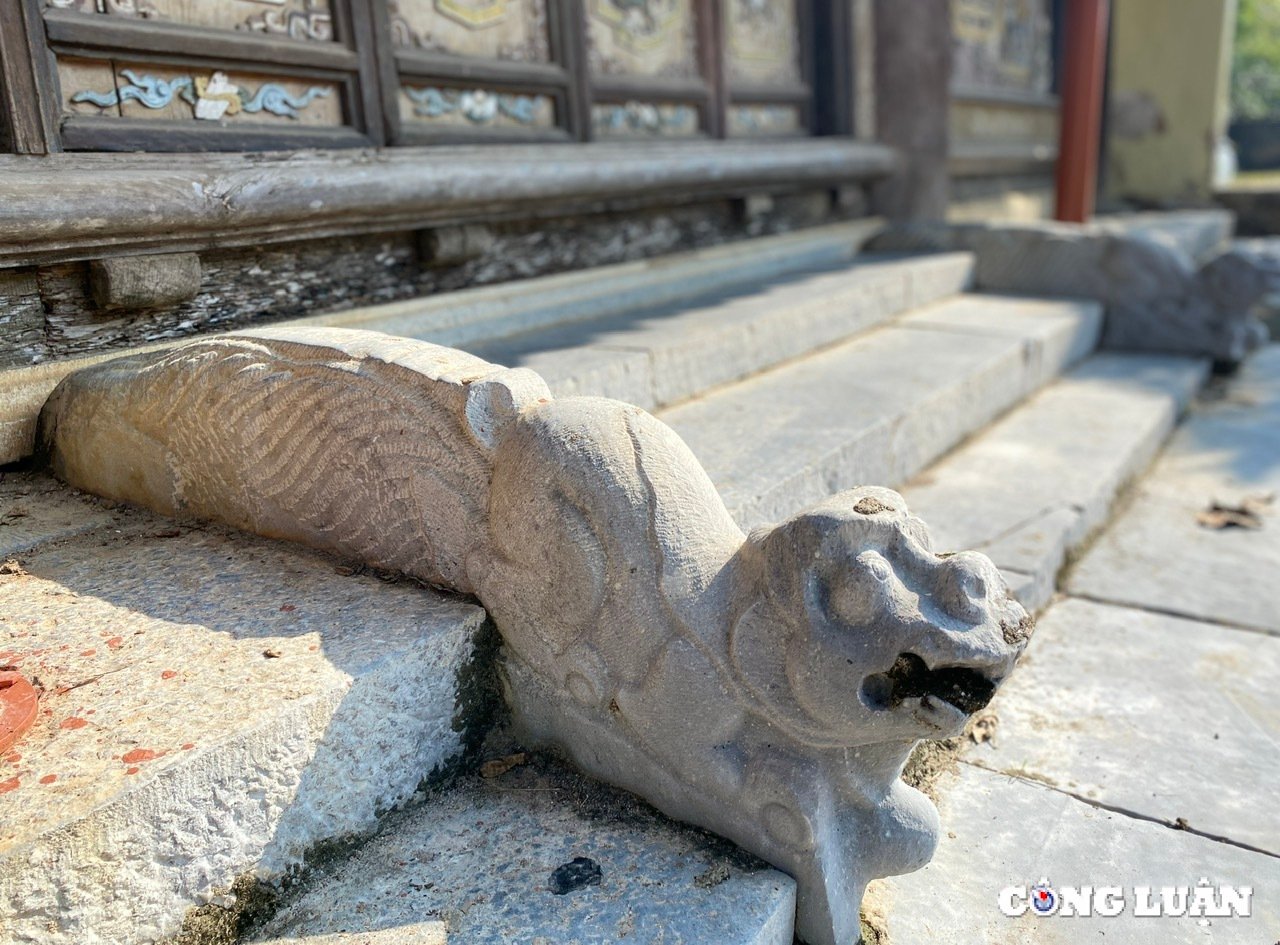
In front of the steps leading into the temple are a pair of stone crocodiles carved in a lunging posture, their heads slightly raised, bulging eyes, slender noses, wide mouths, and mouths holding precious pearls.
Although not very large, Nguyet Vien Temple is a valuable structure in terms of both historical and cultural significance, as well as architectural art. The temple is a place of worship for saints and virtuous individuals who contributed to the founding of the land and helped the people preserve, protect, and build the national territory.
According to Ms. Nguyen Thi Hien: “I grew up in Nguyet Vien village, and from childhood to adulthood, I witnessed countless village festivals and processions. This is a sacred shrine, and on holidays or the 1st and 15th of each month, people from the village and commune come to the shrine to offer incense, pay respects, and pray for peace and good fortune.”
Phu Thang - Le Thao
Source: https://www.congluan.vn/nghe-co-nguyet-vien--di-tich-hon-400-nam-ben-bo-song-ma-post319855.html






































































Comment (0)