

Transform the spirit of the resolution into consistent action throughout the system.
Through studying Resolution No. 71-NQ/TW on breakthroughs in education and training development (Resolution 71), Professor Dr. Nguyen Quy Thanh – Rector of the University of Education (Vietnam National University, Hanoi) – analyzed that, since the 2018 Higher Education Law, the university council has been identified as the highest authority, expected to bring about modern governance and reduce the concentration of power in the hands of the rector.
However, this mechanism is not yet compatible with the leadership structure in public schools. There are situations where the Party Committee issues a directive to do something, but the school board votes against it.
The consequence is a prolonged decision-making cycle: the school administration – the Party Committee – the school council – and then back to the school administration. A single decision can take several months to process. This not only causes delays in operations but also "undermines the leadership role of the Party, especially in public schools."
According to Professor Nguyen Quy Thanh, the solution proposed in this Resolution is not a return to the old model, but an upgrade: the Party Secretary also serves as the Rector with clearly defined powers, some functions previously belonging to the school council are transferred to the Party Committee, transforming the leadership role from "general policy" to close supervision of each decision: "This time, the functions of the Party Committee will be updated, providing more specific and in-depth guidance."
He argued that changes in governance structure are only the first step; for smooth operation, a compatible legal framework is needed: "The three laws – the Education Law, the Higher Education Law, and the Vocational Education Law – will all need to be adjusted."
Regulations regarding school boards, the role of the Party Committee, the autonomy mechanism, and budget allocation must be clearly updated so that the resolution can be implemented synchronously. This is a necessary step in "legalizing" the resolution, transforming its spirit into consistent action throughout the entire system.
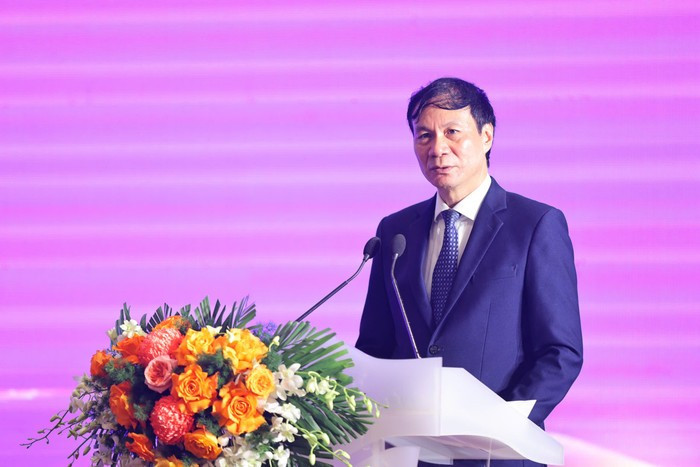
Resolution 71 opens up opportunities to legislate on how budget allocation is done.
Based on that foundation, Professor Nguyen Quy Thanh argued that the issue of autonomy needs further in-depth discussion, because the autonomy mechanism can only operate effectively when the governance framework has been clearly defined.
University autonomy has been a familiar term for a decade, but according to the Rector of the University of Education, the long-held understanding is fundamentally flawed. The essence of autonomy is not about "cutting" the budget, but about changing the way funding is allocated. Instead of annual budget estimates, the State should provide a stable financial package for 3-5 years. Within that framework, universities should be able to independently decide how to spend on personnel, investment, and academic activities, provided there is a transparent accountability mechanism.
This approach from the previous period transformed autonomy into "self-reliance," leading to a phased budget cut – a 10% reduction each year, until a complete cut by 2026. This pushed universities into a spiral of increasing tuition fees and opening more high-quality programs to balance revenue and expenditure: The trend of rapidly and sharply increasing tuition fees is inevitable. But it is very detrimental to education. It creates inequality, places a heavy burden on parents, and many families struggle to afford a university education for their children.
Moreover, the "ordering" mechanism for training – which was expected to be a solution – also faces many obstacles. Professor Thanh cited the example of Government Decree No. 116/2020/ND-CP "Regulations on policies to support tuition fees and living expenses for teacher training students," noting that many provinces and cities did not sign the order because they feared liability risks when the "product" only appeared after four years.
The consequence is low training targets, localized teacher shortages, and high entrance exam scores for teacher training programs. "It takes four years to produce graduates, and no one dares to sign a multi-billion dollar contract when they have to wait four years for acceptance."
According to Professor Thanh, Resolution 71 opens up opportunities to legalize the method of budget allocation, transforming autonomy into "guaranteed autonomy." The State will still invest, but through a standardized, transparent ordering mechanism, reducing risks for localities. Schools will have the right to make their own decisions within the allocated budget, while encouraging diversification of revenue sources (international cooperation, research, services) instead of absolute dependence on tuition fees. Tuition fees will be adjusted gradually, avoiding "price shocks" and limiting inequality.
"Without stable funding, schools will be forced to cut back on tuition fees – the inevitable consequence being tuition fee increases. There's no other way," Professor Thanh emphasized, adding that there would be two positive impacts: halting tuition fee increases, reducing social pressure, and ensuring equal educational opportunities; while also helping schools stabilize their development strategies and focus on improving quality instead of chasing enrollment numbers to generate more revenue.
Financial issues are the "lifeblood" that determines the health of the entire system. Professor Thanh pointed out a worrying reality: the state budget for higher education is currently only about 10,000 billion VND, a sharp decrease compared to the 17-18 trillion VND of previous years, while the number of students has reached nearly 2 million. Therefore, the average investment per student is only 13-14 million VND/year, a figure already lower than most countries in the region.
Resolution 71 clearly states that budget cuts should not continue but must be increased. More importantly, the resolution introduces a new point that Professor Thanh considers a "step forward in thinking": the establishment of a national scholarship fund. This fund will consolidate all scholarship and student support resources into an independent, transparent mechanism, completely separate from tuition fees.
"Scholarships must have a separate fund, completely separate from tuition fees. Children pay tuition to study, not to have it used to provide scholarships for others" - this would put an end to the long-standing situation where schools are forced to allocate 8% of tuition fees from the majority to a small number of scholarship recipients – a shortcoming that Professor Nguyen Quy Thanh has repeatedly pointed out.
Professor Nguyen Quy Thanh emphasized the need to restructure the university system: merging smaller institutions and reducing overlaps to concentrate resources. However, he also warned against mechanically "reducing staff" in education: the team of PhDs and associate professors are valuable assets acquired through years of training, and cutting them would immediately lead to a decline in quality.
Source: https://giaoducthoidai.vn/nghi-quyet-71-quy-dinh-ro-hon-ve-hoi-dong-truong-va-tu-chu-dai-hoc-post747963.html





















































































Comment (0)