

When I retired, the change in my living environment disrupted my daily routine, including eating, sleeping, and work schedules. In just the first three months, I lost 2kg, and my family, especially my wife, were worried. They told me I needed to see a doctor, saying that at only 60, I looked like an 80-year-old.
Despite my family's daily care and attention, including providing nutritious food and rest according to my preferences, and even three packets of traditional Chinese medicine per month, my condition didn't improve. So I went to the provincial hospital for a check-up. The doctor said I had no significant illness and that with rest, a balanced diet, and careful attention to what foods to eat and what not to eat, I would return to normal. However, I had to remember to exercise regularly, avoid lying down too much, and not dwell on the past.
I listened to the doctor's advice and followed it. It was a bit difficult at first, but I got used to it. Six months later, my health improved and returned to normal; I even regained my weight from when I first retired. I felt reassured, realizing that consistent daily exercise and activities are essential for success, combining practical activities with reading books and articles on senior health care.
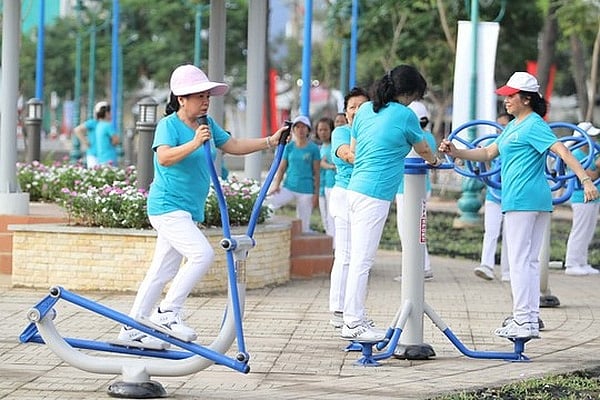 |
I've come to understand that in real life, to have good health and a long life, there are three key factors: Firstly, a balanced lifestyle and diet are essential. As the old saying goes, "illness enters through the mouth," meaning that if you eat and drink indiscriminately without restraint, you're more likely to get sick. Secondly, regular exercise is necessary to improve blood circulation, with light, manageable work and daily physical activity, combining physical and mental training. Thirdly, elderly people should also take supplements to aid digestion and have regular check-ups so that any illnesses can be detected and treated early.
Based on these experiences, I created a daily and hourly schedule for taking care of my health. I wake up at 5 am in the summer and 6 am in the winter, do some exercises in bed, massage my body – first, rub my hands together and gently massage from my head down to my neck, then massage my eyes and nose. I massage my abdomen in a clockwise circular motion 50 times and then counterclockwise. I lie on my back and kick my legs up towards the sky 100 times, then bend my knees and pull them towards my stomach with my hands before slowly sitting up. I get out of bed and stand, waving my arms about 500 times for 10 to 12 minutes, following the "Dharma Muscle and Tendon Strengthening Exercise" method. After that, I go for a walk of about 3-4 km, return home, take a hot shower in the winter, a cool shower in the summer, do my personal hygiene, and then have breakfast.
I eat five meals a day: a hearty breakfast, a moderate lunch, and a light dinner, with a little fruit or a glass of milk in between. From 8 to 10 a.m., I socialize with friends, receive guests, or go to the garden to water the vegetables or prune the plants, doing light chores like sweeping the house, taking care of the chickens and pet birds. In the afternoon, I spend two hours reading newspapers and books. I always have two issues of the newspaper daily: the Elderly Magazine and the Phu Tho Newspaper. I read the news sections, the "From the Eyes of the Elderly" section, and articles on remedies. If I find any interesting articles, I share them with my colleagues during our tea break the next morning.
In addition, I also spend time thinking and writing articles for newspapers, science and lifestyle publications, and stories about good people in local newspapers, which have been published. This motivates me to be even more enthusiastic and passionate about reading and writing, and it's also a way to exercise my mind, preventing my brain from becoming sluggish, leading to forgetfulness and confusion in old age. After dinner, I sit and watch TV, never missing the 7 PM news broadcasts. I watch until the end of the VTV1 series, brushing my teeth and going to bed at 9:30 PM. I never go to bed too early or stay up past 10 PM so that I wake up on time in the morning. I only rest for 1 to 1:30 PM, and in the afternoons, around 3 PM, I play a few games of table tennis before riding my mountain bike along the paved roads of the village fields for about 8-10 km.
My schedule is like this: a 24-hour cycle, repeating the same pattern the next day. I've been doing this for over two decades now, and I feel healthy, my mind is at ease, and my spirit is alert and clear. Many elderly people ask me what my secret is to maintaining such good health, and I've shared it with many, who have also achieved positive results.
I believe that to implement these measures for good health, one must first have determination, perseverance, and persistence; a lack of effort will not yield results.
People say that if you have health, you have everything; without health, you have nothing. Health is more precious than gold. Our ancestors said, "A person's health is worth a thousand gold coins," meaning that with good health, one can create gold, while without health, even sitting on a golden platter, one cannot find happiness. Although I am old, I am still implementing these measures to maintain my health, eat well, sleep soundly, and have gained weight, keeping it between 55kg and 61kg. I have decided that health is paramount in life, first for myself and for the happiness of my family and grandchildren.
Source: https://ngaymoionline.com.vn/nguoi-cao-tuoi-phai-biet-cham-care-suc-khoe-cho-minh-57644.html











![[Photo] Prime Minister Pham Minh Chinh holds a phone call with the CEO of Russia's Rosatom Corporation.](/_next/image?url=https%3A%2F%2Fvphoto.vietnam.vn%2Fthumb%2F1200x675%2Fvietnam%2Fresource%2FIMAGE%2F2025%2F12%2F11%2F1765464552365_dsc-5295-jpg.webp&w=3840&q=75)










































Comment (0)