

Exports are at risk of being impacted by the trade war and the US administration's tariff policies, according to Deputy Minister of Planning and Investment Tran Quoc Phuong.
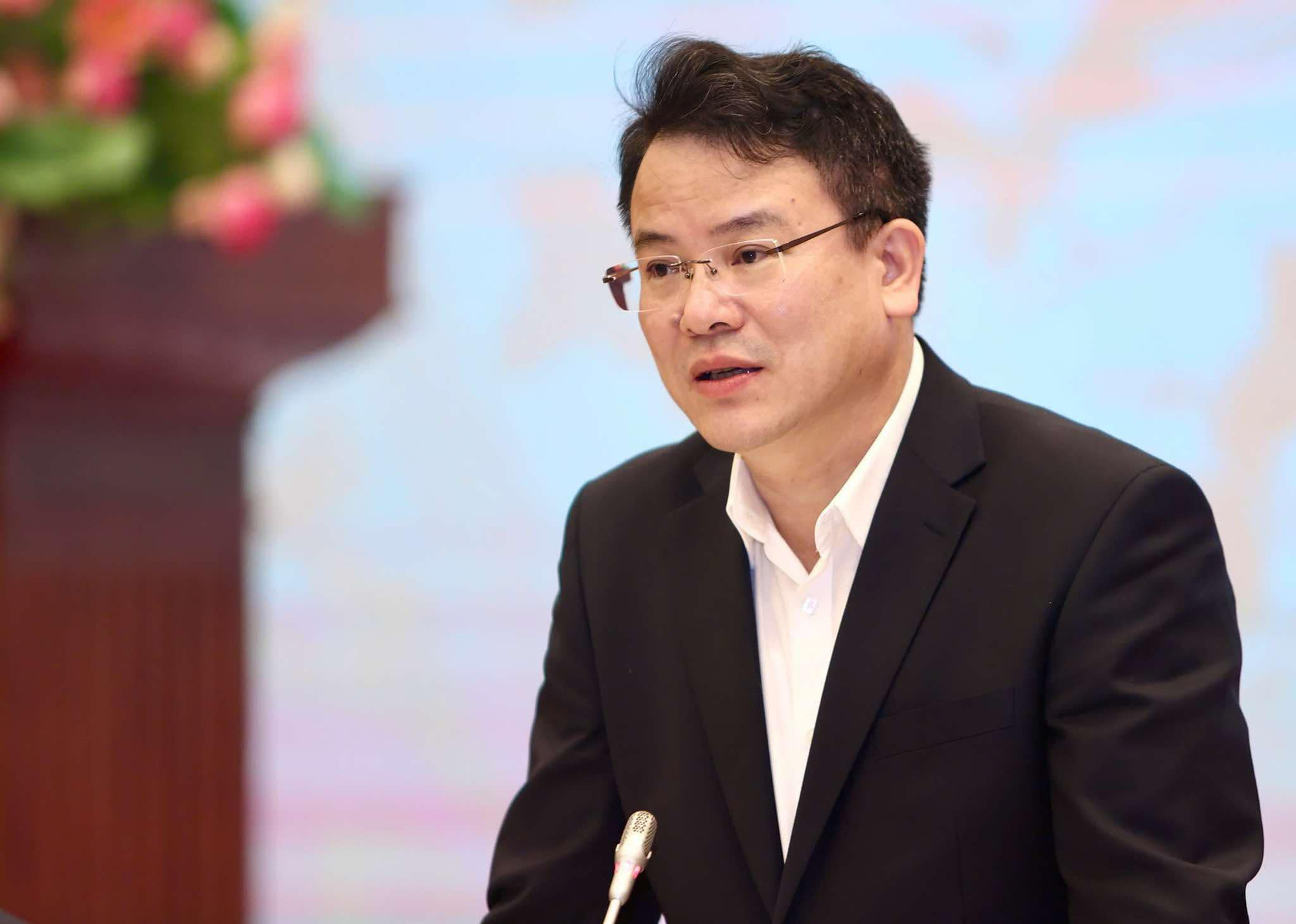
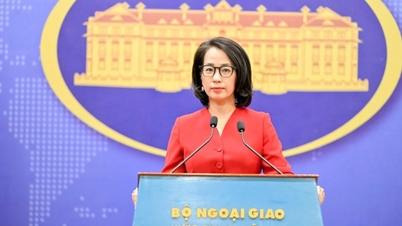
Deputy Minister of Planning and Investment Tran Quoc Phuong answers questions at the press conference - Photo: NGUYEN KHANH
At the regular government press conference on the afternoon of February 5th, Deputy Minister of Planning and Investment Tran Quoc Phuong provided the above information.
Answering the question about breakthrough solutions to achieve the 8% growth target for 2025, laying the groundwork for double-digit growth.
Proactive solutions to promote growth.
Mr. Phuong acknowledged that this is a challenging and arduous task, consistent with the future goals and stages of striving to become a high-income country by 2045.
Regarding specific and comprehensive solutions, Mr. Phuong stated that the focus will be on improving institutions and laws. This is an urgent need to remove institutional bottlenecks in investment, thereby unlocking stagnant resources.
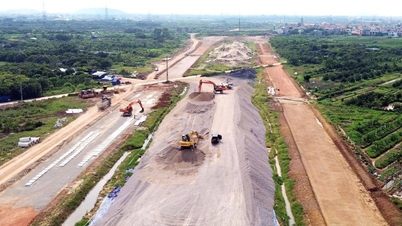
On the demand side, investment will be increased, and recurrent expenditures will be reduced to allocate capital for public investment, especially for some important projects that need to be implemented soon, such as the standard gauge railway projects from Lao Cai to Hanoi to Hai Phong; and from Hanoi to Lang Son to Mong Cai…
Going forward, state-owned enterprises will also be restructured, creating space for development, attracting investment with leading enterprises, and fostering a ripple effect.
Simultaneously, it is necessary to promote private investment and attract foreign investment by removing institutional and legal obstacles, creating a more attractive investment environment, and implementing a green channel policy to attract high-tech projects in technology parks.
Attracting domestic private enterprise investment is based on improving the investment and business environment, increasing and establishing new businesses, removing obstacles and opening up the real estate market, corporate bond market, and stock market…
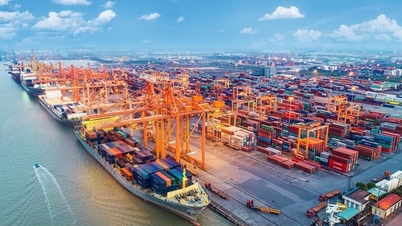
Specifically regarding exports in 2025, Mr. Phuong believes that there may be relatively significant challenges related to protectionist policies and tariff policies of the United States.
Along with that are the potential risks to the global trade market from trade retaliations by various countries. Therefore, it is necessary to analyze and understand the situation thoroughly in order to respond to a trade war.
Accordingly, the Prime Minister directed the effective utilization of signed FTAs, the exploration of new markets such as the Middle East, Africa, and Latin America, and the establishment of connections to ensure both input and output...
This is linked to boosting consumption and the purchasing power of the domestic market, as total retail sales and consumer service revenue in the country increased sharply by 9.5% in January. Therefore, we need to capitalize on this in the coming month to contribute to growth.
On the supply side, the impetus for production and business needs to be boosted more strongly, especially in the manufacturing and processing industries, and tourism should be attracted. New growth drivers should be promoted, leveraging Vietnam's strong position on the global technology map, particularly in the field of AI.
Boost growth, lower interest rates.
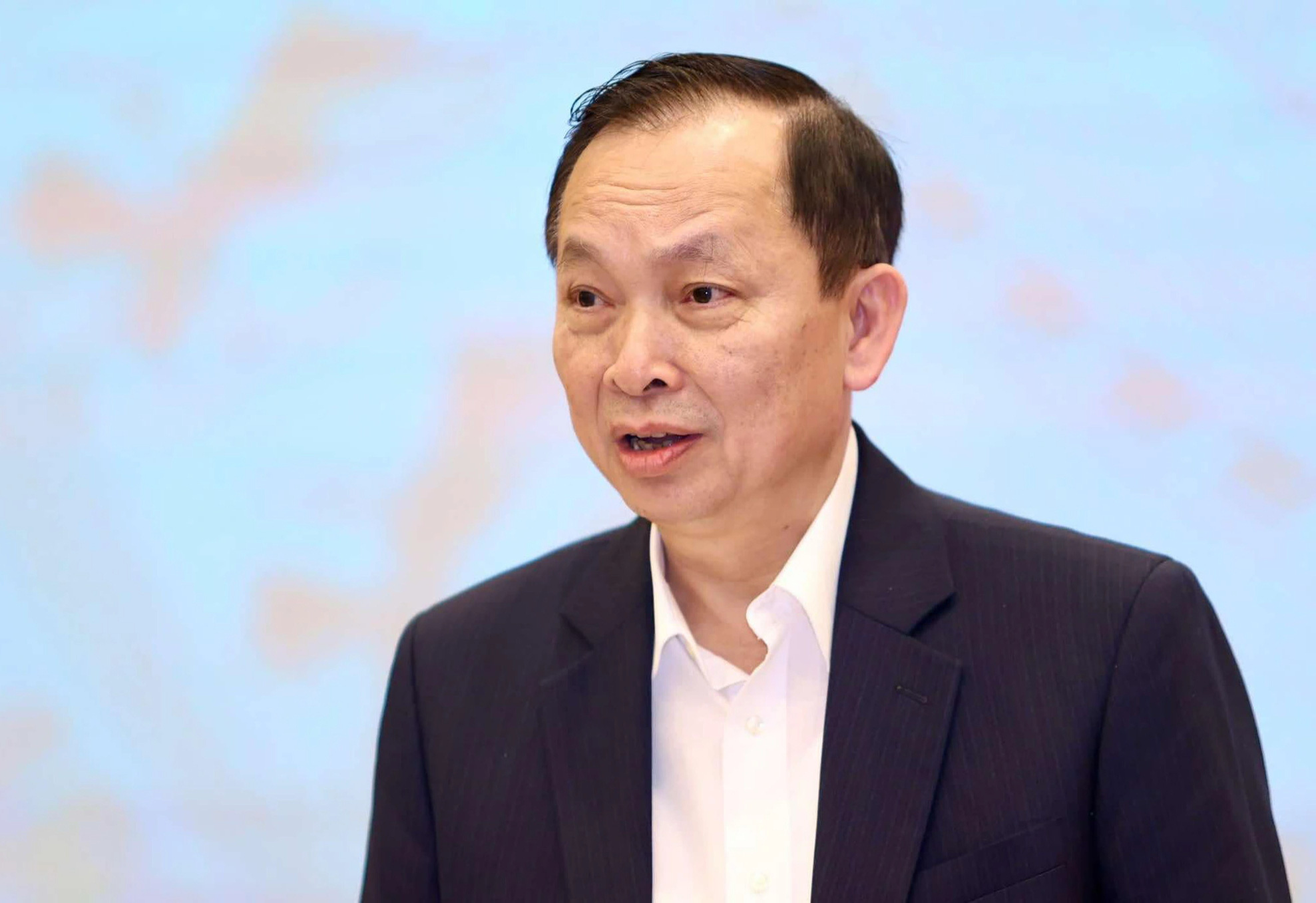
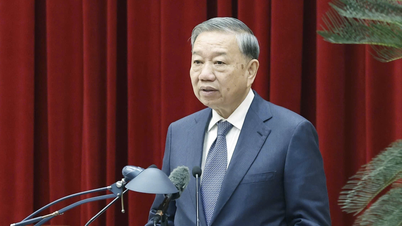
Deputy Governor of the State Bank of Vietnam, Dao Minh Tu, answers questions at a press conference - Photo: NGUYEN KHANH
Regarding promoting credit growth, Mr. Dao Minh Tu, Deputy Governor of the State Bank of Vietnam, said that growth requires investment. An 8% growth rate is positive, but it requires concerted and decisive efforts and solutions.
To achieve an 8% growth rate, credit must double. That is, two percent increase in credit corresponds to one percent increase in GDP, requiring investment and efficient use of social resources. With an 8% growth rate, the actual growth would need to be 16%, or even 18-20%.
"This year, how can we ensure sufficient capital for the economy, for both medium and long-term investments, when the stock market, bond market, and real estate market haven't really recovered? Therefore, providing capital is a heavy responsibility," Mr. Tú said.
To achieve the above objectives, the State Bank of Vietnam will manage the economy to ensure macroeconomic stability, control inflation, and implement flexible policies in conjunction with other policies.
This involves ensuring liquidity for the economy and commercial banks, injecting idle capital into the economy, and implementing a reasonable interest rate policy. When investment capital is needed, tools for capital supply and refinancing will be used. Interest rates will be managed to remain stable, consistent with the general interest rate of the economy and other macroeconomic requirements, with a gradual reduction in interest rates.
The credit limit is set at 16%, but it can be higher if inflation is controlled and growth targets are achieved. Therefore, the State Bank of Vietnam will empower commercial banks to proactively raise their credit limits and maintain overall credit control.
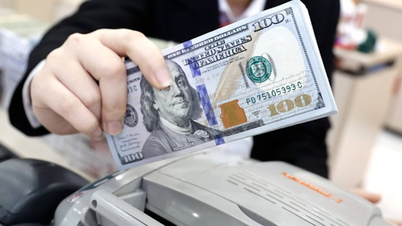
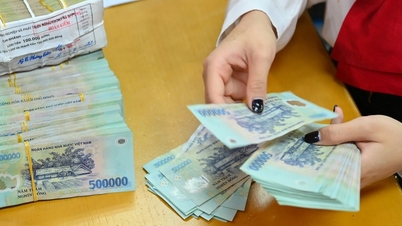
Regarding exchange rates, foreign currency will remain stable, with interventions when necessary to ensure reasonable rates and prevent hoarding or speculative behavior. Policies will be implemented to effectively deliver preferential credit packages in the near future…
Source: https://tuoitre.vn/nguy-co-chien-tranh-thuong-mai-tac-dong-xuat-khau-ra-sao-20250205174332961.htm

![[Photo] Prime Minister Pham Minh Chinh holds a phone call with the CEO of Russia's Rosatom Corporation.](/_next/image?url=https%3A%2F%2Fvphoto.vietnam.vn%2Fthumb%2F1200x675%2Fvietnam%2Fresource%2FIMAGE%2F2025%2F12%2F11%2F1765464552365_dsc-5295-jpg.webp&w=3840&q=75)

![[Photo] Closing Ceremony of the 10th Session of the 15th National Assembly](/_next/image?url=https%3A%2F%2Fvphoto.vietnam.vn%2Fthumb%2F1200x675%2Fvietnam%2Fresource%2FIMAGE%2F2025%2F12%2F11%2F1765448959967_image-1437-jpg.webp&w=3840&q=75)






































![[OFFICIAL] MISA GROUP ANNOUNCES ITS PIONEERING BRAND POSITIONING IN BUILDING AGENTIC AI FOR BUSINESSES, HOUSEHOLDS, AND THE GOVERNMENT](https://vphoto.vietnam.vn/thumb/402x226/vietnam/resource/IMAGE/2025/12/11/1765444754256_agentic-ai_postfb-scaled.png)









































Comment (0)