

Children are prone to recurrent middle ear infections due to parental mistakes in caregiving, such as improper nasal irrigation or using medication without proper prescription.
According to Dr. Pham Duc Tuan, Department of Pediatrics, Tam Anh General Hospital, Hanoi , middle ear infections are common in young children because the Eustachian tube (a small tube running from the back of the throat to the middle ear) is short and horizontal. Pathogens enter the middle ear from the nasopharynx, causing infection.
Recurrent otitis media is defined as three or more episodes within 6 months or four or more episodes within 12 months. This condition occurs in the early years of life in about 20-30% of children due to a variety of causes.
Incorrect breastfeeding technique
A common mistake that makes children prone to recurrent middle ear infections is incorrect bottle-feeding. Children often hold the bottle while lying down on a bed or sofa, causing the milk to flow back up towards the nose and ears during swallowing. If bottle-feeding, parents should hold the child at an angle. For breastfed babies, mothers should hold their child instead of feeding them while lying down.
Exposure to cigarette smoke
When children inhale cigarette and pipe smoke, it can increase the risk of recurrent middle ear infections. Parents should limit their children's passive exposure to it.
Dr. Duc Tuan explained that cigarette smoke damages the epithelium, releases proteases, inhibits antiproteases, and reduces the antibacterial activity of macrophages and neutrophils. This reduces mucosal activity and disrupts the eustanchian tube in the middle ear. Children living in smoky environments are also more susceptible to tonsillitis, allergies, sinusitis, and lung infections.
Not washing hands frequently
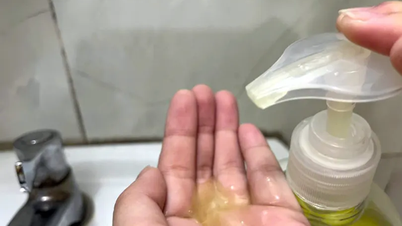
Parents and children should wash their hands with soap and water for 20 seconds, following the recommended steps. This is one way to help prevent the spread of cold-causing germs and reduce the risk of recurrent middle ear infections.

Children who don't wash their hands properly have an increased risk of recurrent middle ear infections. (Image: Freepik)
Cold or viral infection
According to Dr. Tuan, children's immune systems are still developing, making them susceptible to infections. Children who frequently catch colds and get viral infections causing rhinitis and pharyngitis are more likely to develop middle ear infections. Parents should ensure their children receive all necessary vaccinations to reduce the risk of illness and complications.
Exposure to the source of infection
Children who experience recurrent middle ear infections often contract them at school. To reduce this risk, parents should instruct their children to wash their hands after using the toilet, before and after meals, and to wear masks when in crowded areas.
Using medication without a prescription.
A common mistake that leads to middle ear infections in children is parents using old prescriptions or obtaining prescriptions from other children who have had similar symptoms. Giving children antibiotics repeatedly without a doctor's prescription can lead to antibiotic resistance, making treatment difficult and affecting the gut.
Improper nasal irrigation
The habit of rinsing a child's nose when they have a cold or rhinitis can strip the nose of its natural protective layer of mucus. Some nasal sprays contain corticosteroids, which can cause atrophy of the nasal and pharyngeal mucosa. Many parents have their children lie on their backs while rinsing, causing the ears to be lower than the nose and throat, making it easier for water to enter and bacteria to attack the ears. Parents should choose nasal rinses and use appropriate positions as directed by a doctor.
If a child experiences recurrent middle ear infections, more than three times in six months or four times in a year, parents should consult a doctor for a treatment plan to avoid affecting their child's health.
Emerald
| Readers can post questions about children's illnesses here for doctors to answer. |
Source link


















































































































Comment (0)