

In reality, as the poverty line is raised, sustainable poverty reduction is not just a matter of numbers, but requires practical solutions, long-term monitoring, and solutions tailored to the specific circumstances of each household.
A fragile escape from poverty
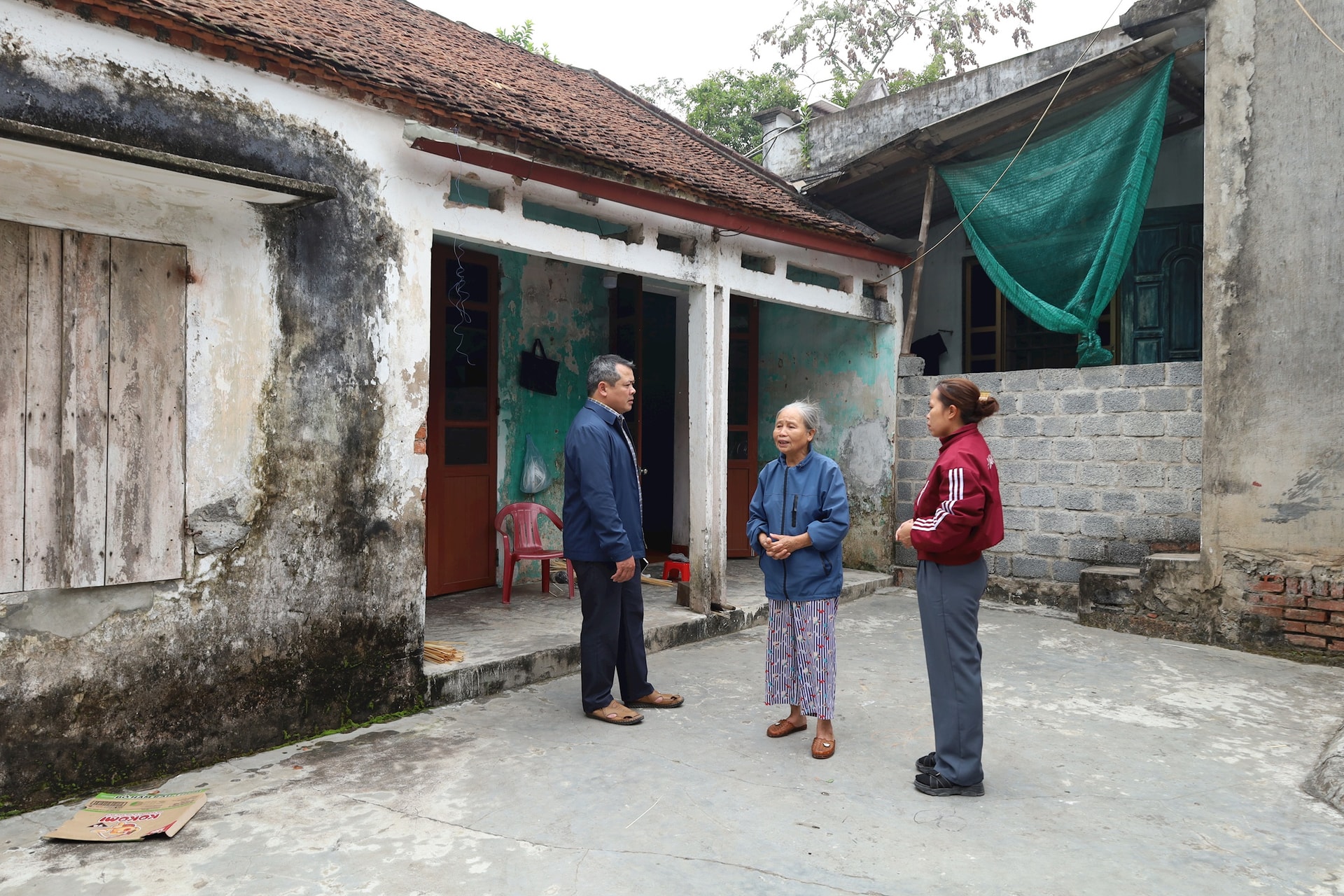
The small house of Mrs. Cao Thi Mung in Ha Duc village (Hoa Phu commune) has become quiet and deserted since her husband's recent death. Built in 1959, the house is now severely dilapidated, with a crooked roof, numerous leaks, peeling walls, and a floor lower than the road level, causing water to flood in during heavy rains. She says that on some rainy nights, she can see light filtering through the roof, "like seeing stars in the sky."
At over seventy years old, Mrs. Mung is no longer able to work. She currently lives with her youngest son, but his family is also in very difficult circumstances. Their income mainly depends on agriculture and freelance work, which is unstable and seasonal. Even more worrying, her youngest son's children are ill and require long-term treatment, making the cost of medicine and care a constant burden. The whole family struggles to make ends meet each day, with no savings to consider renovating or rebuilding their house.
When asked about her wishes by commune and village officials, Mrs. Mung simply said, "If the government can provide support, that would be appreciated; if not, I wouldn't dare ask for more." Her greatest wish was to have a safer house so she could live peacefully in her old age, especially during the rainy and stormy season. According to local officials, this is a truly difficult case, even though she is no longer on the list of impoverished households according to current standards.
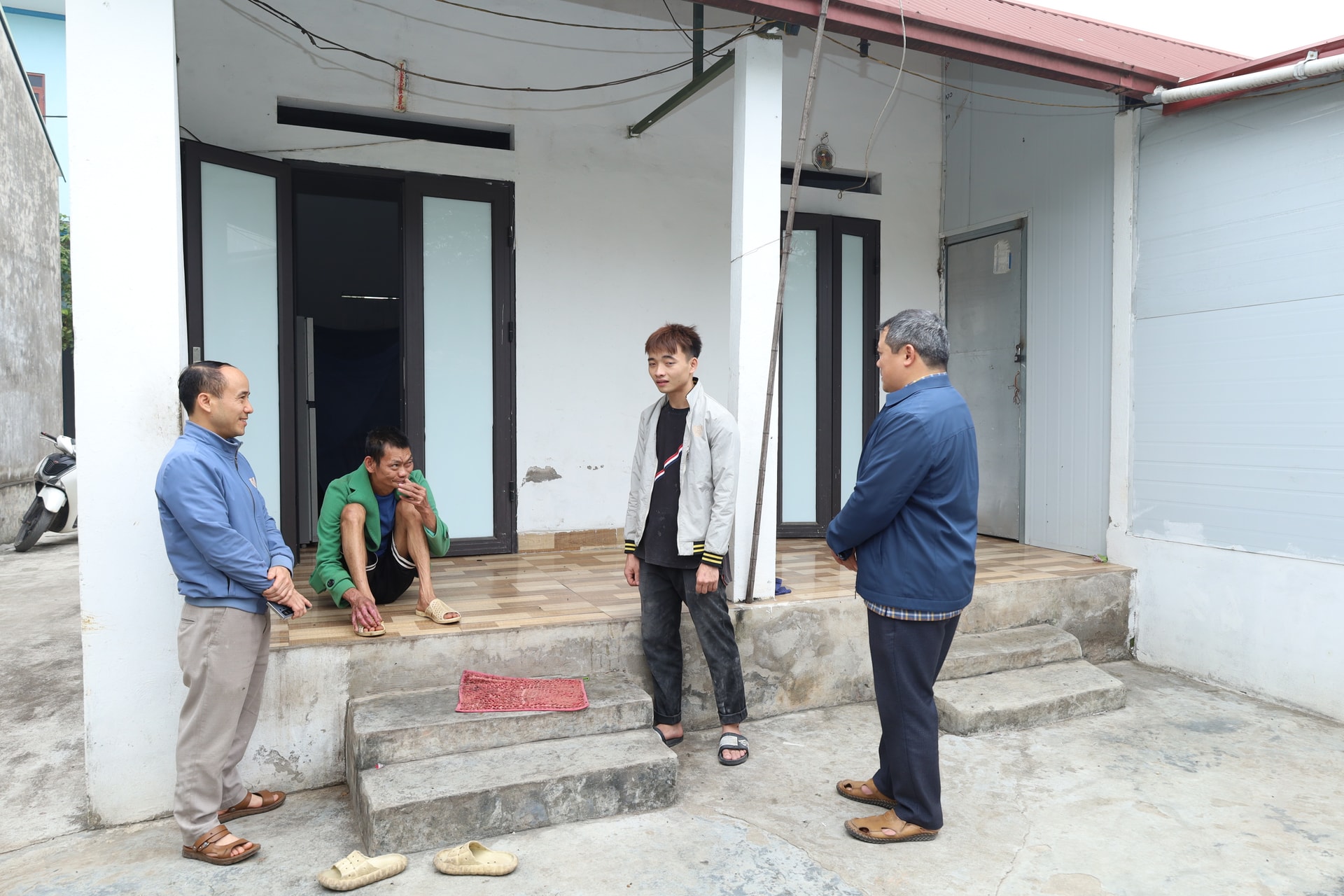
Leaving Mrs. Mung's house, the delegation continued its visit to the family of Mr. Nguyen Van Tuoi – a case assessed by village officials as "particularly difficult." Both Mr. and Mrs. Tuoi are ill and unable to work. The family's livelihood currently depends on the income of their two older children, who work as factory workers in local businesses. Their wages are low, while they have to cover living expenses, medication for their parents, and their younger siblings' education.
Mr. Tươi's family has a youngest daughter who is attending high school, nearly 10km from their home. However, the family has no means of transportation. Besides an old bicycle, they own no other means of getting to school. Therefore, the youngest daughter's commute to school depends on being dropped off or she has to manage on her own under very difficult circumstances.
During a meeting with commune officials, Mr. Tươi's son expressed his wish for the government to consider providing him with a motorbike. With this vehicle, he could earn extra income by working as a motorbike taxi driver, and also use it to transport his youngest sister to her distant school and for the whole family's transportation, especially when his parents are ill and need to go to the hospital. According to the village leader, this is a typical case of a near-poor household that is very susceptible to falling back into poverty. Even though they have officially escaped poverty, if the two older children lose their jobs or the family incurs additional medical expenses, their lives could immediately fall into a deadlock.
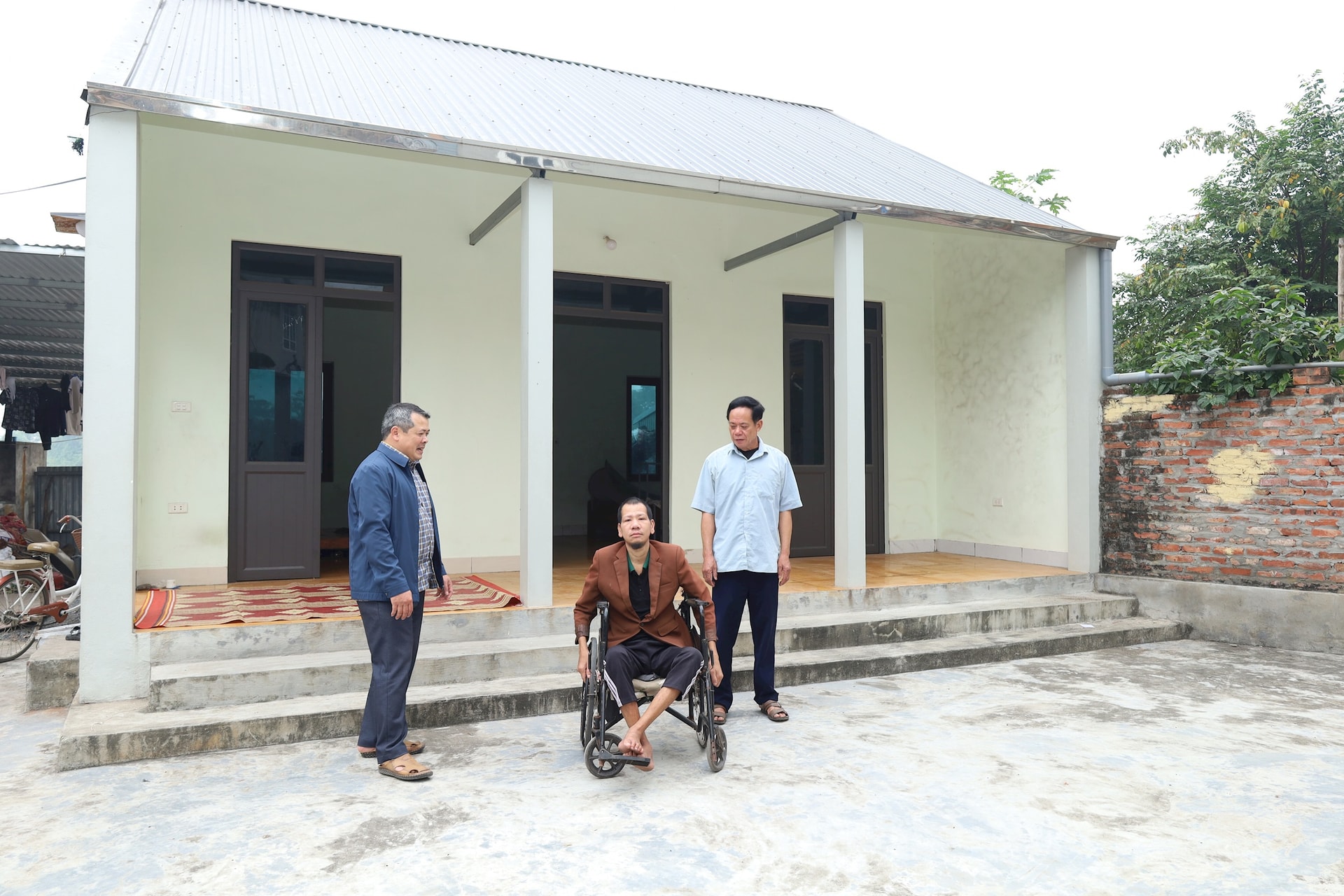
The third case noted by the working group was the family of Mr. Do Huu Tien. Mr. Tien suffers from a joint disease, rendering both his feet immobile and unable to walk or work for many years. Previously, he worked as a freelance laborer, but since falling ill, he has been completely confined to his home. The family has two young children, one of whom is still in school, and all living expenses depend on his elderly parents and a meager social welfare allowance.
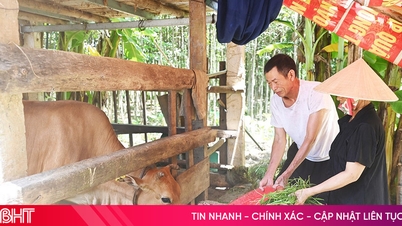
When asked about their needs, Mr. Tien's family did not request cash assistance but rather hoped for suitable livelihood support, specifically a cow for breeding. According to village officials, with the right support, the family could utilize their family's labor to care for the cow, gradually improving their income and reducing their dependence on subsidies.
The three specific cases above show that the current picture of poverty reduction in Hoa Phu is no longer about "whether or not there are poor households," but rather about how to prevent newly escaped-from-poverty households and near-poor households from falling back into poverty. These households share common characteristics: unstable income, the burden of illness, many dependents, and a lack of basic necessities such as safe housing, transportation, and stable livelihoods. Therefore, the line between escaping poverty and falling back into poverty remains very thin.
A practical solution
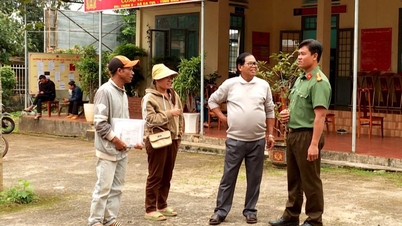
Sharing her concerns about current poverty reduction efforts, the Chairwoman of the Vietnam Fatherland Front Committee of Hoa Phu commune, Nguyen Thi Nga, stated that the biggest challenge for the locality no longer lies in identifying poor households according to the standard, but rather in ensuring that near-poor households, newly escaped-from-poverty households, and those with particularly difficult circumstances are not overlooked in the monitoring and support process.
"There are families who, on paper, have escaped poverty, but in reality, their lives remain very precarious. If we don't closely monitor their circumstances, even a small setback related to health, employment, or a natural disaster could cause them to fall back into poverty," Ms. Nga said.
According to a review by Hoa Phu commune, there are currently no households classified as poor according to the poverty line, but there are still 124 near-poor households and many cases with particularly difficult circumstances. A large proportion of these require support in housing and livelihoods. Regarding housing specifically, the commune has identified 24 households in need of assistance, many of which have severely dilapidated houses that do not ensure safe living conditions, especially during the rainy season. However, due to legal land ownership issues or not meeting the required criteria, not all cases can receive support simultaneously.
Based on the resources allocated by the city, in 2025, Hoa Phu commune plans to support the construction of "Great Solidarity" houses for 6 eligible households, with each household receiving 50 million VND from the city's funds. For the remaining cases, the locality will continue to mobilize resources from the "For the Poor" Fund and other social sources to gradually improve housing conditions for disadvantaged households.
"The commune's approach is not to spread resources too thinly, but to prioritize truly urgent cases, while continuing to monitor the situation to provide further support when resources become available," said Ms. Nguyen Thi Nga.
Along with housing, livelihood support has been identified as a crucial solution to help near-poor households gradually become self-sufficient. Through a field review, Hoa Phu commune selected 12 cases to implement economic development support, including 6 households receiving breeding cows and 6 households receiving motorbikes as means of livelihood. The support is implemented based on the actual needs of each family, allowing residents to proactively choose suitable livestock and equipment, with complete documentation and follow-up after support to ensure long-term effectiveness and avoid superficial assistance.
According to Ms. To Thi Nhan, Secretary of the Party Committee and Chairwoman of the People's Council of Hoa Phu commune, sustainable poverty reduction in the current period cannot rely solely on subsidies, but must be linked to creating livelihoods and conditions for people to earn their own living. As the poverty line is raised, eliminating poor households according to the standard is only the initial result. More importantly, it is crucial to help near-poor households become self-sufficient and avoid falling behind in the overall development of the locality.
Ms. To Thi Nhan stated that the commune's Party Committee has unanimously agreed not to chase targets and not let achievements overshadow the real difficulties faced by the people. The focus in the coming period will remain on the 124 near-poor households and those who have escaped poverty but whose lives are still unstable. For households with the ability to work, the commune will focus on supporting vocational training, job placement, and facilitating access to preferential loans and production equipment. For households with no or very limited ability to work due to old age, illness, or disability, the locality will prioritize ensuring social security, safe housing, and minimum living conditions, minimizing the risk of falling back into poverty.
One of the key areas that Hoa Phu commune particularly focuses on is post-support monitoring. Support doesn't stop at giving money or resources; it must continue to involve accompanying and understanding emerging difficulties in order to make timely adjustments. "If we don't follow up to the end, it's easy for people to remain in difficulty but no longer be eligible for support. Therefore, villages and organizations must consider long-term support for near-poor households as a regular task," emphasized Ms. To Thi Nhan.
The experience of Hoa Phu shows that when there are no longer any households classified as poor according to the standard, the poverty reduction challenge has entered a new phase, requiring more flexible, substantive, and sustainable approaches. Sustainable poverty reduction is not just a matter of resources, but requires the synchronized involvement of the entire political system, with a spirit of being close to the people, understanding their needs, and providing appropriate support to each individual's circumstances. This is precisely the direction that Hoa Phu is persistently pursuing in the coming time.
Source: https://hanoimoi.vn/giam-ngheo-ben-vung-o-xa-hoa-phu-sat-tung-hoan-canh-726777.html











































































Comment (0)