

Professor Mary-Claire King - the discoverer of the BRCA1 gene that completely changed the way humanity understands breast and ovarian cancer - returned to Vietnam in a special moment: She was named the winner of the VinFuture 2025 Special Prize for female scientists .
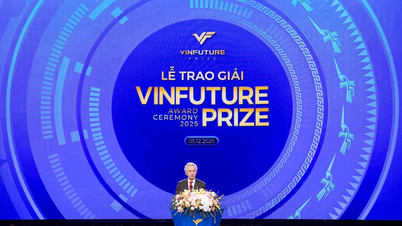
In an interview with the press after the VinFuture 2025 award ceremony, Professor King shared about his 50-year journey pursuing the BRCA project, his cautious stance towards the wave of AI applications in medicine, his deep memories with Vietnam and his commitment to continue supporting research.

Professor Mary-Claire King receives the award from the Chairperson of the Award Committee.
- Congratulations to the winner of the VinFuture 2025 Special Prize for female scientists. Why did the professor choose two research directions on breast cancer and ovarian cancer?
There are two reasons why I pursue this research. The first reason is because breast and ovarian cancer are of great importance to women all over the world , including my relatives, friends, and sisters in my family.
Second, since ancient Greece, we have had researchers who have recorded cases of families where over many generations many women have had breast cancer, but cannot explain why.
In my hypothesis and opinion, I also wonder if it is due to their exposure to exogenous factors in the environment, lifestyle, that influence the high rate of breast cancer for that family, compared to other healthy sisters in the same family?
I found that explanation unreasonable, because in these families, the rate of women with breast cancer is unusually high. So I hypothesized that if it was not due to environmental factors, it could only be due to genetic factors. So I thought that if all other options were not possible, let's try genetic factors. So all my research for the last 50 years has been about that topic.
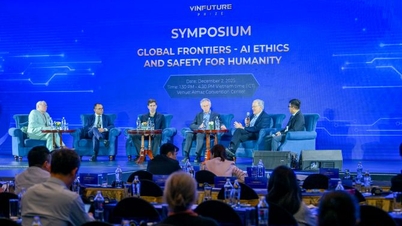
- We all know that AI is being used a lot in research and testing activities nowadays. For example, AstraZeneca said they were able to shorten the research time from two years to just two weeks thanks to AI. So, do you use AI in your research?
I can talk about AI in my field - genetics, focusing on identifying key genes and mutations related to cancer, pediatric diseases, pregnancy problems, and mental health. Of course, I have tried AI. However, at the moment, in my experience, AI is not yet reliable enough to be used in clinical practice.
I know this because I often test cases that I have studied for years, performed experiments on, published, and that the scientific community has agreed on. But when I feed those cases into AI, the system makes both types of mistakes: Affirming a gene or mutation causes a disease when it doesn’t, or denying a link when experimental evidence has shown it does.
Therefore, within my area of expertise, AI is not yet ready for application in diagnosis or clinical practice.
However, my sharing is not meant to be general. Some fields have used AI very successfully. My colleague, Professor David Baker, who just received the Nobel Prize for protein design, has applied AI extremely effectively, but that is still in a research environment, not yet in clinical application.
Let me emphasize one more point. In genetics, we can see two very different applications of AI. AI for research is very promising - I think the potential is huge and really exciting. But AI for clinical use, as I have shared my experience, is not yet ready.
- As an expert who has spent more than half a century researching breast cancer and ovarian cancer, what advice do you have for women today, first of all, to limit the risk of contracting these two diseases?
For modern women, we are all at risk for breast and ovarian cancer. Breast and ovarian cancer can develop for many different reasons, and in the group of women I directly studied, it was women with mutations in the BRCA1 and BRCA2 genes, as well as their sister genes.
For women who are young, healthy, and have not developed any cancer, but have a sister, mother, or grandmother in the family who has had breast or ovarian cancer, I recommend genetic testing to see if there is a mutation in the BRCA1, BRCA2, or other sister genes.
In fact, genetic testing and genetic analysis are very popular in the world, performed with high accuracy and quality. In Vietnam, this genetic analysis and testing are also performed with very good quality. Therefore, I also recommend that we should go for genetic screening.

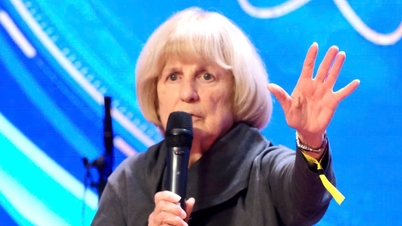
Professor Mary-Claire King.
- At the VinFuture Awards ceremony, you shared your surprise that you never thought you would witness this moment 50 years ago? When you were young, you supported anti-war protests in Vietnam in the 1970s. Was that the beginning of your love for Vietnam and what has made you come to Vietnam many times in the past?
I also think that, deep down, I am impressed by the resilience of the Vietnamese people. And that is probably why I love Vietnam so much and return to it many times.
53 years ago, I led a protest against the American war in Vietnam. 52 years ago, I also led a protest against that war. 51 years ago, I was still protesting. And, 50 years ago, you won… I never thought a day like today would come… I am so happy. Really happy. It is a great honor for me to be here.
Vietnam is an extraordinary country. You have so much to be proud of. Thank you for inviting me here!
As for research, it’s hard to pinpoint exactly why people choose a particular project. For me, it’s a combination of how important it is to work with the pediatricians at the National Children’s Hospital, and knowing that, together with Dr. Kathleen, we can achieve success.
- Could you please share your memories of your time in Vietnam, especially while working and supporting Vietnamese patients?
I have been in Vietnam since 2017. I went to the National Children's Hospital to work with the medical staff there to study some cases, including seriously ill and disabled children. We tried to work together to understand the children's illnesses and find the cause to treat them.
I noticed that your country's doctors and nurses are very attentive to finding out all the information about the child's condition, and studying the medical records very carefully. We not only get the child's information but also together find out about the pathology of similar cases posted online to find a match.
We updated every piece of information and produced a multi-page case description. We took this information back to our country, and brought the parents’ DNA samples back to the United States for testing.
This time, our process was the same, but the DNA testing was done in Hanoi. Vietnam has gone through a period of great suffering through generations, so the life and lives of children are very precious. Every year, we study several cases like this. Even patients we have studied for many years are still being studied by us.
- Your research is creating breakthroughs in cancer screening and early detection. How will you support Vietnam after receiving the award?
Of course I will support you. I went to Hanoi Medical University, participated in a workshop to share with students the research results of my lab and many other labs that I collaborate with. We discussed and found out whether Vietnamese researchers had published research articles related to cancer and suggested new directions for research on breast and ovarian cancer.
We have agreed to do some screening of women and diagnose them for these two cancers. At the same time, we will do genetic testing to see if there are any gene mutations. Our colleagues in Vietnam will provide information and we will continue to study this issue when we return home.
Vietnam has good capacity in performing gene sequencing procedures, has good clinical skills, but what is important for research is how to interpret genomic data to see if the results are true for the majority of people around the world.
Nowadays, the amount of information and data is increasing rapidly, so it takes a lot of work from many scientists to interpret the information to see that it is the right data for the majority of cases. You have good clinical skills but also need to interpret the data.
Source: https://vtcnews.vn/nha-khoa-hoc-nu-vinfuture-2025-ai-chua-du-do-tin-cay-de-dung-trong-lam-sang-ar991810.html

![[Photo] Prime Minister Pham Minh Chinh holds a phone call with the CEO of Russia's Rosatom Corporation.](/_next/image?url=https%3A%2F%2Fvphoto.vietnam.vn%2Fthumb%2F1200x675%2Fvietnam%2Fresource%2FIMAGE%2F2025%2F12%2F11%2F1765464552365_dsc-5295-jpg.webp&w=3840&q=75)

![[Photo] Closing Ceremony of the 10th Session of the 15th National Assembly](/_next/image?url=https%3A%2F%2Fvphoto.vietnam.vn%2Fthumb%2F1200x675%2Fvietnam%2Fresource%2FIMAGE%2F2025%2F12%2F11%2F1765448959967_image-1437-jpg.webp&w=3840&q=75)












































![[OFFICIAL] MISA GROUP ANNOUNCES ITS PIONEERING BRAND POSITIONING IN BUILDING AGENTIC AI FOR BUSINESSES, HOUSEHOLDS, AND THE GOVERNMENT](https://vphoto.vietnam.vn/thumb/402x226/vietnam/resource/IMAGE/2025/12/11/1765444754256_agentic-ai_postfb-scaled.png)












































Comment (0)