

On the evening of December 5 in Hanoi , VinFuture Foundation officially announced the winners of the VinFuture Prize 2025.
The four outstanding scientific and technological works honored consistently affirm this year's theme of "Rising together - Prospering together", demonstrating the role of cross-border scientific cooperation to jointly solve global challenges in health , environment and livelihood for humanity.
The VinFuture Prize 2025 attracted 1,705 nominations from scientists , research organizations and technology businesses worldwide - nearly three times more than the first season, focusing on the theme of cross-border scientific cooperation to protect public health, develop new-generation smart materials, respond to climate change, promote clean energy solutions, as well as ensure global food security.
The VinFuture 2025 Main Prize worth 3 million USD was awarded to Dr. Douglas R. Lowy, Dr. John T. Schiller, Dr. Aimée R. Kreimer and Professor Maura L. Gillison (USA) for their discovery and development of HPV vaccines to prevent tumors caused by human papillomavirus (HPV).
The groundbreaking research on the human papillomavirus capsid protein by Dr. Lowy and Dr. Schiller has led to the development of highly effective HPV vaccines, preventing millions of cases of cervical cancer, particularly in developing countries.
Subsequently, Dr. Kreimer's single-dose vaccination regimen, recommended by the World Health Organization (WHO), significantly expanded vaccine access to the population.
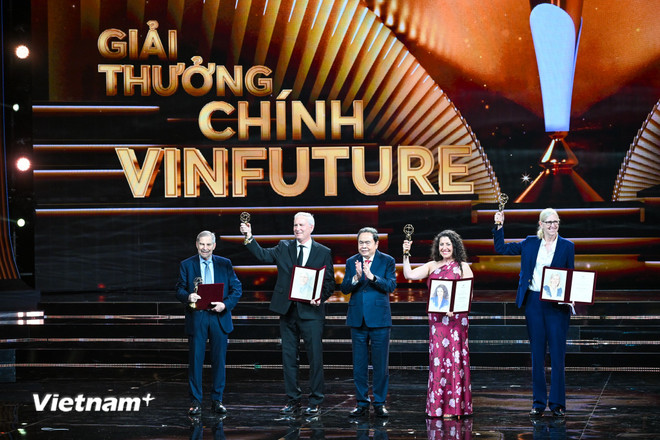
In parallel, studies in Professor Gillison and Dr. Kreimer’s epidemiological laboratory have also identified a link between HPV and head and neck cancer, a significant cancer threat that can be reduced by HPV vaccination. Their work has saved, and will continue to save, millions of lives for decades to come.
In addition to the Main Prize, VinFuture 2025 also awards 3 Special Prizes, each worth 500,000 USD, to Scientists researching new fields, Female Scientists and Scientists from developing countries.
The VinFuture 2025 Special Prize for Scientists from Developing Countries honored Professor María Esperanza Martínez-Romero (Mexico) for her advances in microbial ecology and symbiotic nitrogen fixation in tropical ecosystems.
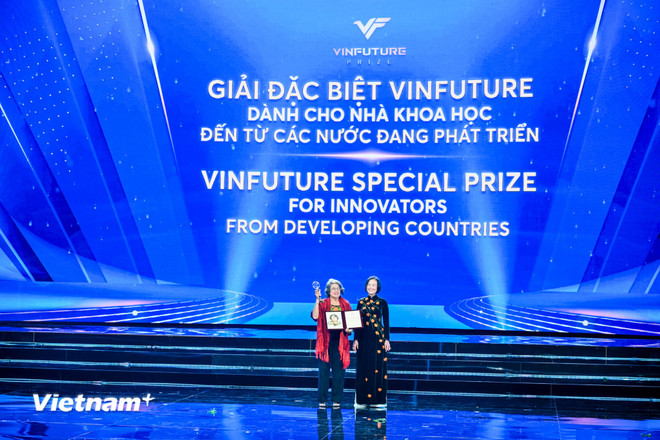
Professor Martínez-Romero discovered and described many new Rhizobium species, contributing to the expansion of understanding of microbial classification and plant-microbe interactions in agriculture, opening up new research directions on plant-bacteria symbiosis, with far-reaching impacts on sustainable agriculture in the context of limited resources.
The VinFuture 2025 Special Prize for Female Scientists was awarded to Professor Mary-Claire King (USA) for her discovery of the BRCA1 gene associated with the risk of breast and ovarian cancer, laying the foundation for genetic testing, screening programs and personalized treatment.
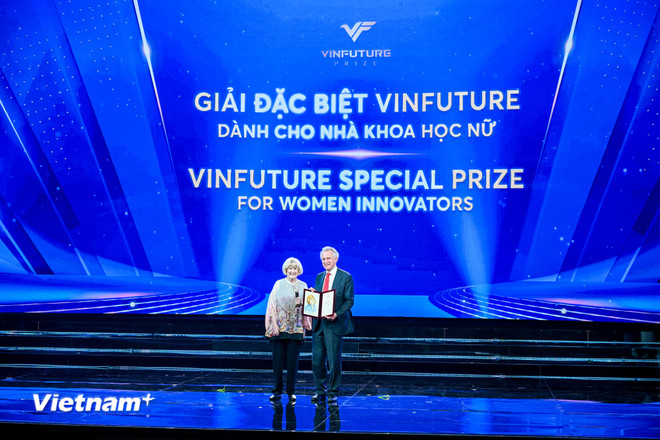
The identification of the BRCA1 gene on chromosome 17q21 in 1990 - before the human genome was decoded - was considered a historic milestone, confirming the genetic nature of cancer risk and changing prevention and treatment approaches worldwide.
The VinFuture 2025 Special Prize for Scientists researching new fields honored five scientists: Professor Venkatesan Sundaresan (USA), Professor Raphaël Mercier (Germany), Dr. Emmanuel Guiderdoni (France), Dr. Imtiyaz Khanday (USA) and Dr. Delphine Mieulet (France) for their innovations in developing hybrid crops capable of self-propagating.
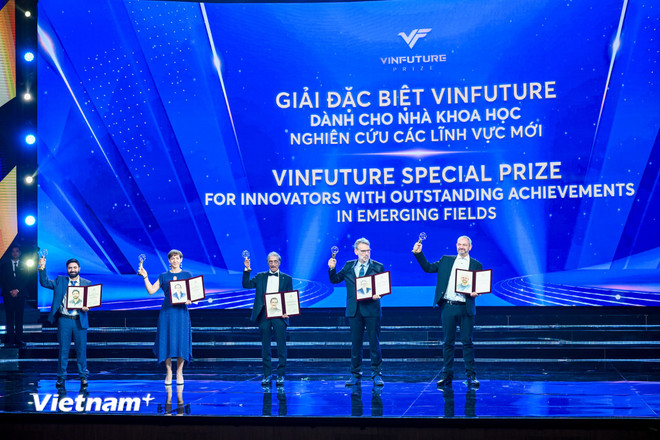
Hybrid plants have superior yields to their parent plants, but producing hybrid seeds for rice – the staple food of more than half the world's population – is complex and expensive, making it out of reach for most farmers.
The team has created rice seeds with superior traits identical to the parent plant through self-pollination, based on new insights into developmental biology and genetics, helping to improve yields, reduce seed costs and promote sustainable food security.
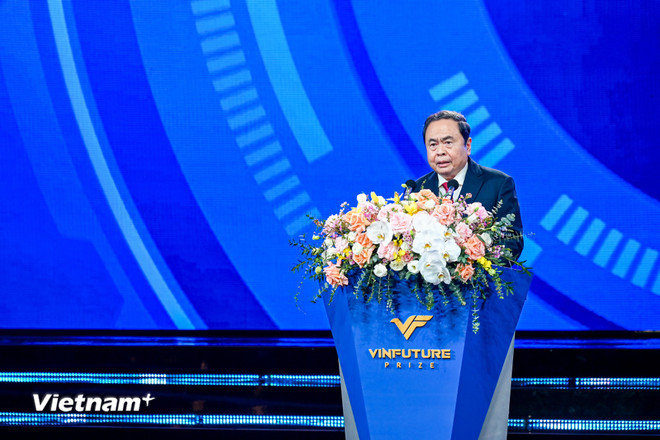
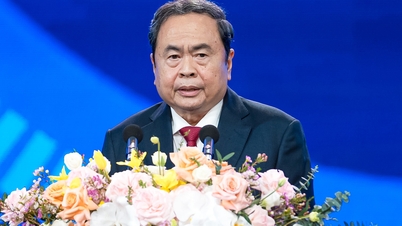
Speaking at the event, National Assembly Chairman Tran Thanh Man said: "Looking back at the past 5 years, we can affirm that this award not only honors outstanding scientific works but also creates valuable dialogues and forums between scientists, businesses and policymakers; from there, new ideas, new approaches, new cooperation models are opened and widely spread. After 5 seasons, there have been more than 6,000 nominations sent from nearly 110 countries and territories on all 5 continents. 48 outstanding scientists have been honored, who are leading trends in the most important scientific fields such as: artificial intelligence, clean energy, biotechnology, new materials, precision medicine, food security."
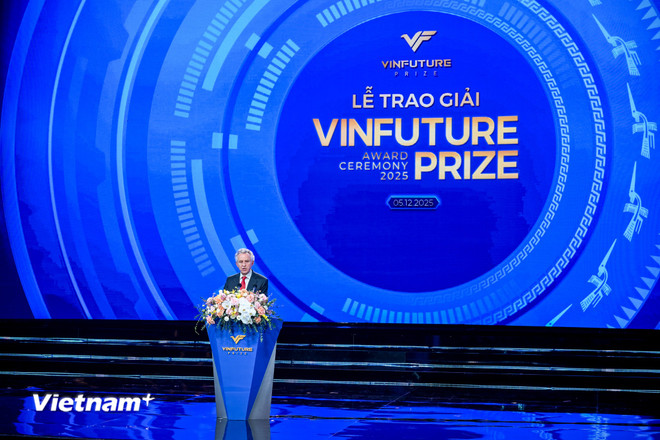
Commenting on the works honored this year, Professor Richard Friend, Chairman of the VinFuture Prize Council, said: “The 2025 VinFuture Prize Laureates have created groundbreaking scientific advances that have brought practical benefits to human health and global food security. From vaccines and understanding genetic diseases to plant breeding methods and farming processes that ensure optimal growth, these achievements demonstrate the power of science when guided by compassion and the spirit of cross-border cooperation. When knowledge serves humanity, it not only expands our understanding of the world, but also contributes to protecting and nurturing life.”
After 5 consecutive successful seasons, the VinFuture Prize has become one of the world's most prestigious science and technology awards, with 6,132 nominations from nearly 110 countries and territories on 5 continents, and honoring 48 outstanding scientists. The honored works - from clean energy, artificial intelligence, biomedical technology to breakthroughs in agriculture - are creating profound changes, contributing to improving the quality of life and shaping the future of humanity./.
Source: https://www.vietnamplus.vn/giai-thuong-chinh-vinfuture-vinh-danh-cac-nha-khoa-hoc-phat-trien-vaccine-hpv-post1081328.vnp



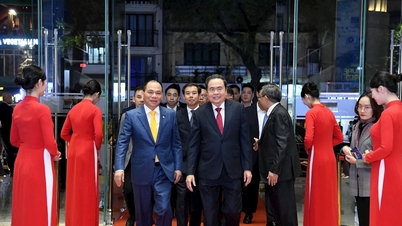
![[Photo] National Assembly Chairman Tran Thanh Man attends the VinFuture 2025 Award Ceremony](/_next/image?url=https%3A%2F%2Fvphoto.vietnam.vn%2Fthumb%2F1200x675%2Fvietnam%2Fresource%2FIMAGE%2F2025%2F12%2F05%2F1764951162416_2628509768338816493-6995-jpg.webp&w=3840&q=75)
![[Photo] 60th Anniversary of the Founding of the Vietnam Association of Photographic Artists](/_next/image?url=https%3A%2F%2Fvphoto.vietnam.vn%2Fthumb%2F1200x675%2Fvietnam%2Fresource%2FIMAGE%2F2025%2F12%2F05%2F1764935864512_a1-bnd-0841-9740-jpg.webp&w=3840&q=75)











































































Comment (0)