

Currently, key transportation projects in the South, especially Ho Chi Minh City, are consuming a huge amount of stone, while the procedures for renewing and granting mining permits are time-consuming. This forces contractors to scramble to buy up the stone, causing prices to continuously increase.
They didn't dare to bid because the price was too high.
Around mid-November, a number of quarries in Binh Duong and Dong Nai provinces announced price adjustments.
Mr. Hoang, a supplier of sand and stone for many transportation projects in Thu Duc City, said: "The price of stone has been continuously increasing throughout the past year. Some suppliers have adjusted prices up four times in a year. Although each price increase is only from 2,000 to 4,000 VND/ton, when converted to cubic meters and multiplied by the total volume, the estimated cost is pushed up by hundreds of millions of VND."
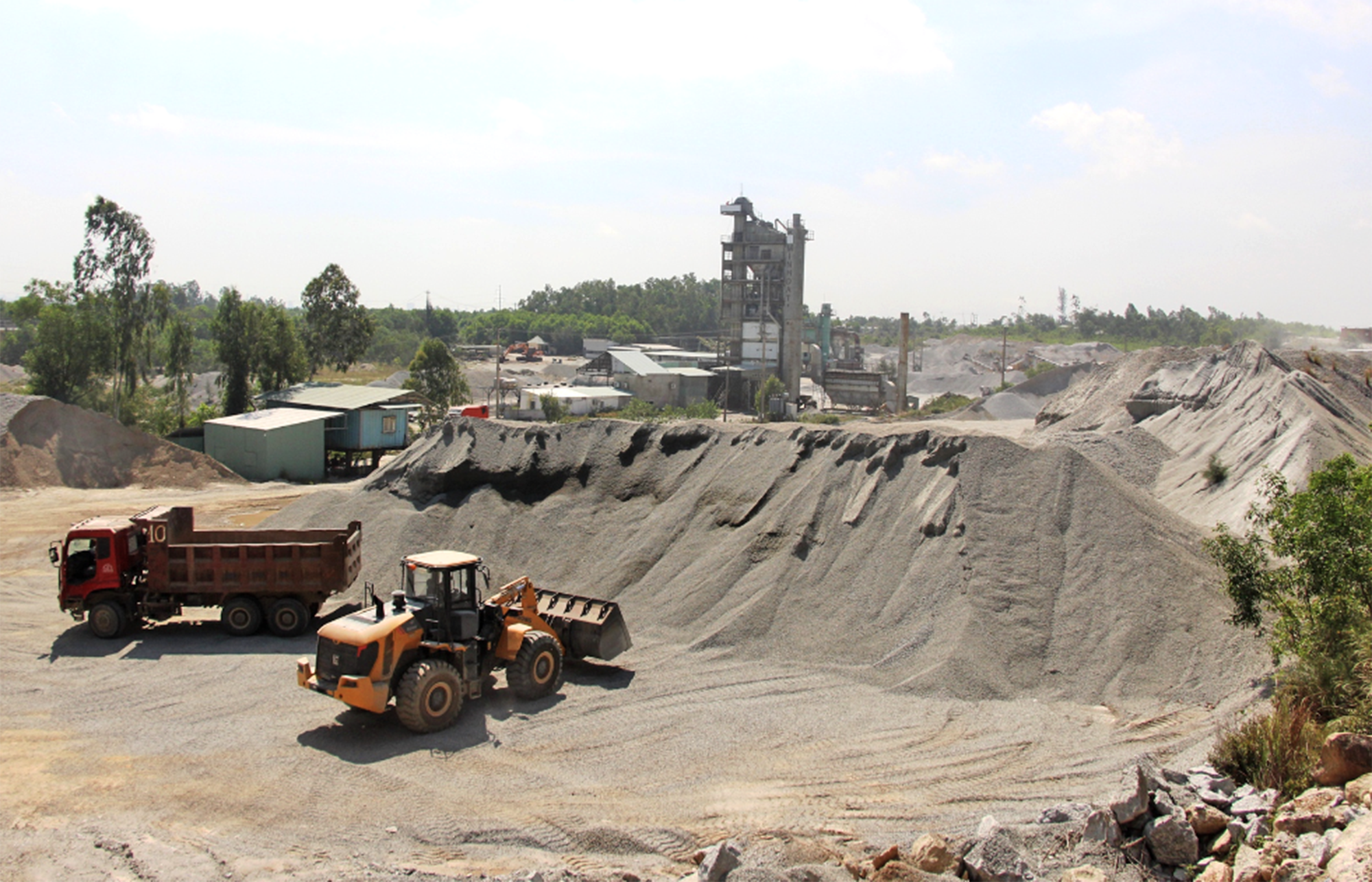
The limited capacity of quarries, coupled with the simultaneous construction of numerous transportation projects, has led to continuously rising stone prices and localized shortages.
According to Mr. Hoang, with a conversion rate of one cubic meter of stone equivalent to 1.6 tons, a price increase of 4,000 VND per ton corresponds to a price increase of 6,400 VND per cubic meter. For every 100,000 cubic meters used, the supplier faces a cost loss of nearly 650 million VND.
A representative of the contractor constructing Ring Road 3 in Thu Duc City further shared that the situation only reflects a part of the situation from the supplier's perspective. From the perspective of the contractor directly involved in the construction, the price of stone is truly putting significant pressure on them.
The above accounting only covers the input cost of stone each time the quarry adjusts its prices upwards, and does not include transportation and storage costs. When factored into the selling price delivered to the construction site, the contractor has to bear an additional cost of over 100,000 VND/m3 of stone due to transportation costs by water and road.
"Just last week, my company decided not to participate in a large-scale tender in Ho Chi Minh City because we determined that we could not offer a bid lower than the bid price set by the client," the representative said.
Many mines report temporary stock shortages.
Along the Dong Nai River near the Thuong Tan quarry area (Bac Tan Uyen district, Binh Duong province), hundreds of large barges are anchored, waiting to load goods for delivery to Ho Chi Minh City and the Mekong Delta provinces.
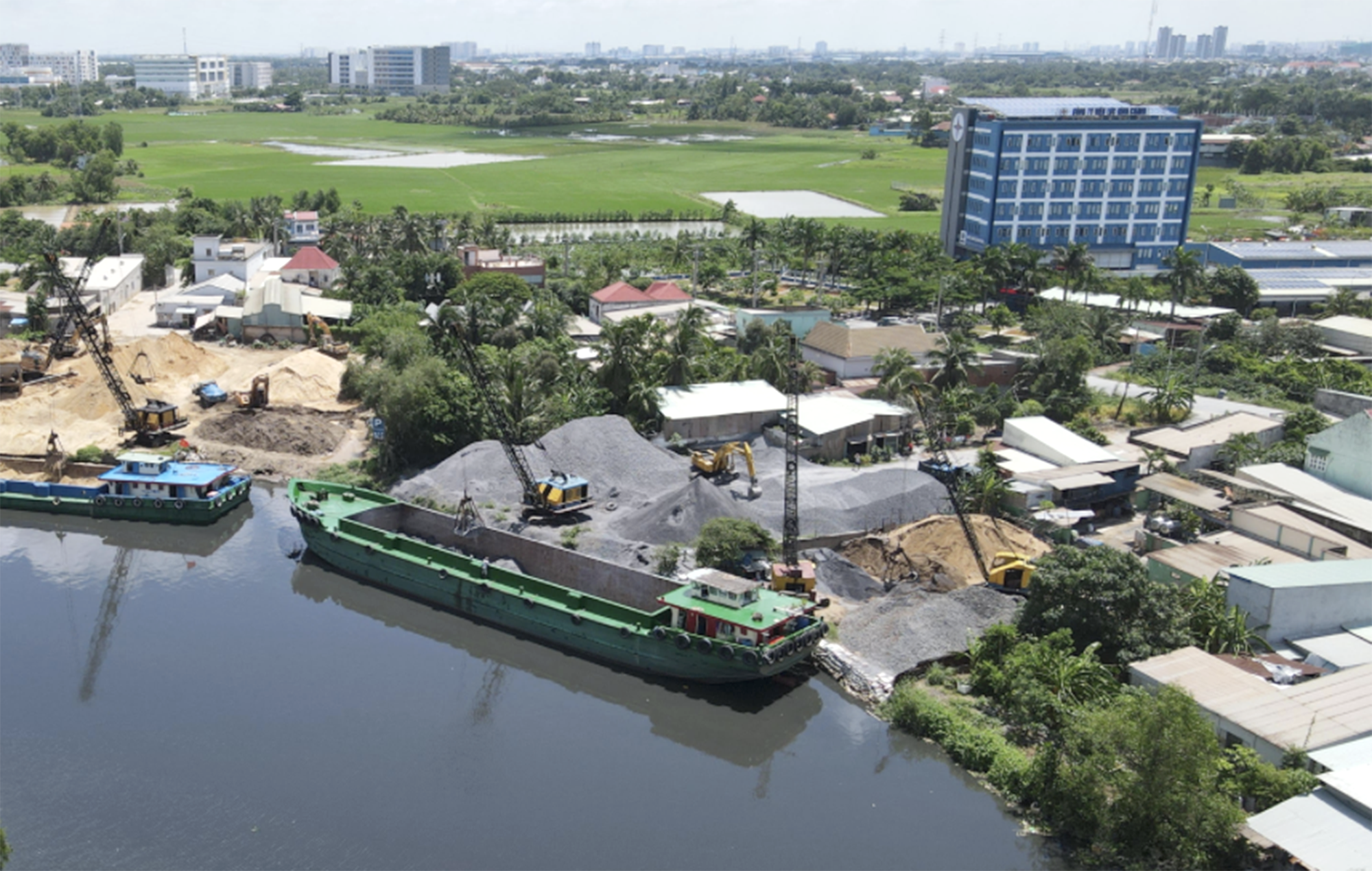
The contractor must purchase and collect stones from construction material docks along the river.
Mr. De (52 years old), a barge captain who regularly travels the Thuong Tan - Long An route, said that the number of barges arriving here has increased sharply since around the middle of this year, so the waiting time for loading and unloading is very long, sometimes even causing traffic jams along the river.
"Because of the long docking times, shipping costs have recently increased from 40,000 VND/m3 to 50,000 VND/m3 depending on the route. There's a lot of demand, but there's a shortage of goods, so people have to wait a long time. Some barges have to stay until the next day to receive their cargo," Mr. De said.
Explaining the situation of continuously rising prices and scarcity of construction stone, Mr. Nguyen Linh, Deputy Director of the Investment and Construction Project Management Board of Dong Nai province, said that key transportation projects are consuming a very large amount of stone, creating daily pressure.
Meanwhile, the procedures for renewing and granting mining licenses are complex, requiring up to a year for mine investors to complete and submit them to the competent authorities for approval.
For example, the Ho Chi Minh City Ring Road 3 project requires approximately 5,200,000 m3 of cement, the Bien Hoa - Vung Tau expressway requires nearly 1,500,000 m3, and Long Thanh airport is expected to use 2,000,000 m3.
In Ho Chi Minh City, the demand for crushed stone also outweighs the demand of the general market. Therefore, the supply of each type of stone is almost entirely prioritized for the transportation market, due to the specific characteristics of the period.
"The 1 x 1 size aggregate used in ready-mix concrete for civil construction has been in short supply for the past month. Mines in Binh Duong and Dong Nai have reported temporary shortages because existing customers have already placed orders for the entire volume according to the mining capacity," said Mr. N, director of a ready-mix concrete business.
Improve supply soon.
According to a survey of the construction stone materials market by Funan Securities, the total output of the top 5 companies investing in and exploiting stone quarries in Binh Duong and Dong Nai provinces is currently hundreds of millions of cubic meters, but they only extract about 16,000,000 cubic meters per year.
On the other hand, annual production is allocated to the entire Southeast and Southwest regions, so capacity is only at a sufficient level, and shortages of supply are inevitable at times.
According to a representative from the Department of Natural Resources and Environment of Dong Nai province, the province has planned over 1,300 hectares of land for mineral exploitation located in Vinh Cuu district, Bien Hoa city, Xuan Loc district, Thong Nhat district, and scattered in some other localities.
This resource advantage helps the province generate additional revenue for its budget and create jobs for thousands of local workers. Most importantly, it ensures a supply of construction materials for provinces and cities in the South.
To ensure sufficient stone supply and prevent price fluctuations, Dong Nai province has planned the exploitation of 40 mines with a total area of over 1,400 hectares to serve civil construction and key projects from now until 2030, with a vision to 2050.
Representatives from the Department of Natural Resources and Environment of Binh Duong province stated that they are urgently completing the legal documents for the auction of four stone quarries in Phu Giao and Bac Tan Uyen districts. Once the auction procedures are completed, these quarries will supply 3,000,000 cubic meters of stone to the market annually.
Combined with the capacity of existing mines, the addition of new mines will essentially meet the demand for construction stone in the southern region.
Speaking about the fundamental approach to proactively securing stone material sources, a representative of a major transportation contractor in Ho Chi Minh City shared that relying on suppliers carries considerable risks.
When the market fluctuates, price increases or shortages directly impact the progress of the projects that the contractor is involved in.
This expert suggested that companies involved in transport infrastructure construction should consider investing in the direct exploitation of stone quarries.
Source: https://www.baogiaothong.vn/nha-thau-dau-dau-vi-da-khan-hiem-gia-tang-phi-ma-19224112521052581.htm
































































































Comment (0)