

Dr. Julie Scott, a hematologist in the US, says that caffeine reaches its peak in the blood after about an hour of entering the body. The effects of caffeine usually last from 4 to 6 hours before gradually diminishing.
Completely eliminating caffeine takes longer because the body breaks it down in stages through the liver.

Caffeine reaches its peak level in the blood about 1 hour after consumption.
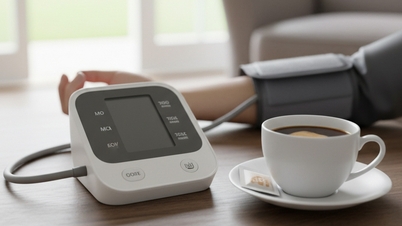
Photo: AI
Depending on their metabolism rate, some people feel the effects of caffeine for a longer period, possibly up to 12 hours.
This explains the difficulty sleeping after consuming caffeinated drinks in the afternoon, according to the health website Verywell Health .
Factors affecting the caffeine breakdown process
The liver is responsible for processing and eliminating caffeine from the body. The breakdown time varies from person to person. The half-life (the time it takes for the body to eliminate 50% of caffeine) of caffeine ranges from 2 to 12 hours depending on individual physiology.
Genetic factors strongly influence the rate at which caffeine is metabolized. Some individuals possess genetic makeup that allows for rapid breakdown, while others do not. Children and older adults generally process caffeine more slowly than adults.
In addition, liver damage can prolong the process of breaking down caffeine. Pregnant women, especially in the later stages of pregnancy, often take longer to eliminate caffeine from their bodies.
Signs that caffeine is losing its effect.
As caffeine levels decrease, the body may experience fatigue, headaches, difficulty concentrating, and irritability. This is a normal reaction as the body begins to return to a state of balance.
People who consume caffeine daily may experience symptoms if they suddenly stop using it. These symptoms include headaches, fatigue, low mood, and difficulty concentrating. Symptoms usually begin 12 to 24 hours after the last use and last for several days.
The effects of caffeine on bodily functions.
Caffeine directly affects the central nervous system. Signal transmission between the brain and body accelerates, making users feel alert, focused, and energized.
The long-term effects of caffeine include difficulty falling asleep, restless sleep, or waking up in the middle of the night. Some people experience anxiety or restlessness when consuming large amounts.
Caffeine also increases heart rate and has diuretic properties, leading to a greater need to urinate. This frequent urination continues until the caffeine wears off.
Experts suggest that consuming around 400 mg of caffeine per day is appropriate for healthy adults. This is a common amount to maintain alertness without causing overstimulation.
Source: https://thanhnien.vn/caffeine-ton-tai-trong-co-the-bao-lau-bac-si-giai-dap-185251211093053481.htm


































































































Comment (0)