

According to the Resolution, the National Assembly agreed to add a case where the State can reclaim land for national defense and security purposes to build drug rehabilitation facilities managed by the people's armed forces.
At the same time, three cases are added where the State can reclaim land for socio-economic development in the national and public interest:
Implement projects in free trade zones, projects in international financial centers.
In cases where land is used for a project through an agreement on land use rights that has expired, but the agreement covers more than 75% of the land area and more than 75% of the land users, the Provincial People's Council shall consider and approve the revocation of the remaining land area to allocate or lease the land to the investor.
Creating land funds to pay for projects under Build-Transfer (BT) contracts, and to lease land for continued production and business activities in cases where organizations are using land that the State is reclaiming.
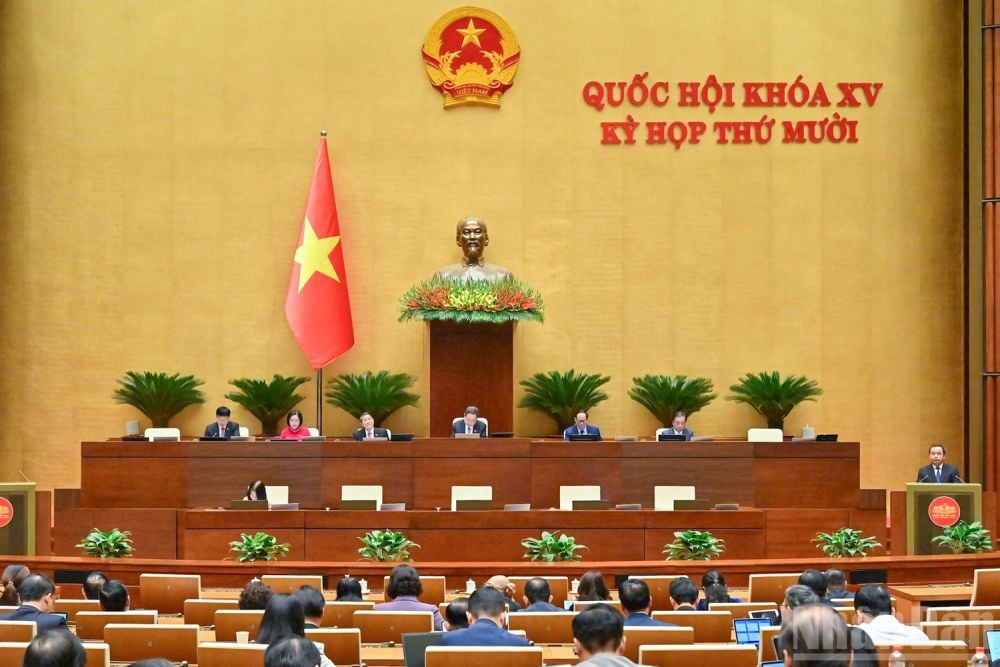
According to the National Assembly Resolution, the conditions for land acquisition for national defense, security, and socio-economic development in the national and public interest require the completion of the approval of compensation, support, and resettlement plans, and the arrangement of resettlement in accordance with the Land Law, except for the following cases:
Land acquisition in cases where the compensation, support, and resettlement plan, which does not include resettlement arrangements, has been publicly posted but not yet approved for nationally important projects, urgent public investment projects as stipulated by the law on public investment, and for other projects if more than 75% of land users agree to land acquisition before the compensation, support, and resettlement plan is approved;
Land acquisition before completion of resettlement arrangements applies to urgent public investment projects as stipulated by the law on public investment, projects implementing on-site resettlement, and projects where resettlement arrangements are along the main construction route;
The government is tasked with specifying the details of land acquisition before approving compensation, support, and resettlement plans, and with land acquisition before completing resettlement arrangements.
The National Assembly assigns the provincial People's Committees the authority to regulate the arrangement of temporary housing, the duration and cost of temporary housing in cases where land is reclaimed before resettlement arrangements are completed.
The competent authority or person shall decide on land acquisition according to the progress of the investment project or according to the progress of compensation, support, and resettlement.
Notably, the land price used for calculating land compensation and land use fees in resettlement areas "is calculated according to the land prices in the land price table and the land price adjustment coefficient stipulated in this Resolution".
In cases where compensation is provided in the form of on-site residential land and the land price at the compensated location is not included in the land price list, the competent authority shall base its decision on the land price in the land price list for a similar location to determine the land price for calculating land use fees at the resettlement site in the compensation, support, and resettlement plan.
The People's Committee at the commune level is responsible for reporting to the People's Committee at the provincial level to submit to the Provincial People's Council for inclusion in the land price list at the nearest meeting.
The National Assembly stipulates that before issuing a decision to revoke land, the competent authority must send a notice of land revocation to the landowner, the owner of assets attached to the land, and any related rights and obligations (if any) at least 60 days in advance for agricultural land and 120 days in advance for non-agricultural land.
Regarding land price adjustment coefficients, the Resolution clearly states that the Provincial People's Committee shall decide to issue land price adjustment coefficients applicable from January 1st of each year; if necessary, the Provincial People's Committee shall decide to amend or supplement the land price adjustment coefficients within the year or for each area or location for application.
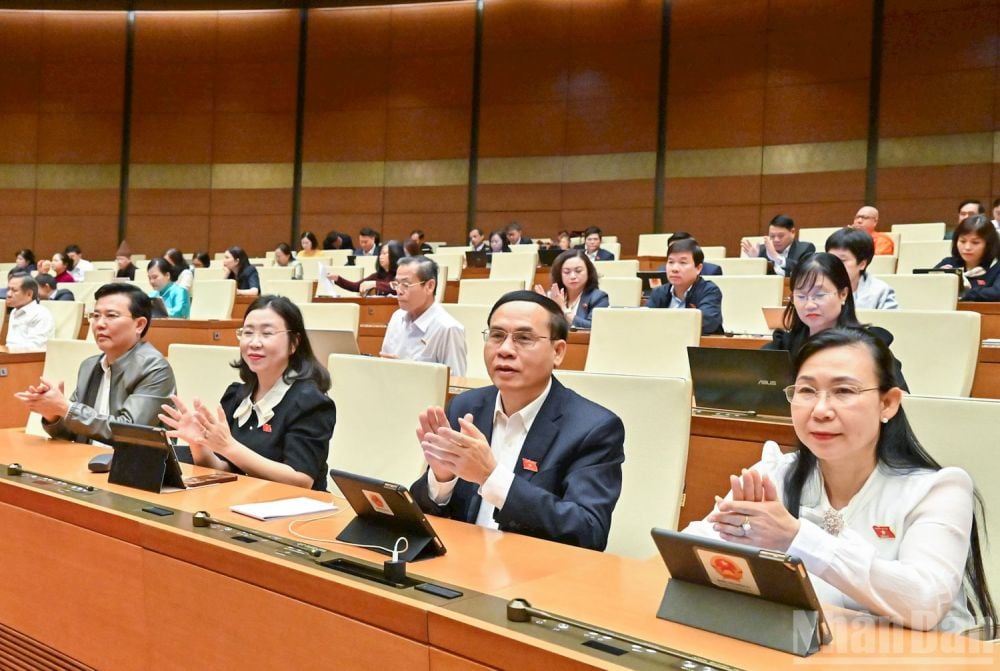
Regarding land price tables, in cases of land allocation or land lease for land reclamation investment projects or investment projects with land reclamation components, and in cases where the land price table cannot be applied, the specific land price shall be determined according to the provisions of the Land Law. The Provincial People's Council shall decide on the land price table, announce and apply it from January 1, 2026, and amend or supplement the land price table as necessary.
Regarding exemptions and reductions of land use fees and land rent, the Resolution clearly states: In cases where land use fees or land rent are exempted, there is no need to determine land prices, calculate fees, or apply for exemption (except in cases where the exemption is for a specified period). In cases where annual land rent is reduced according to government regulations, there is no need to apply for a reduction.
When changing the land use purpose, people must pay land use fees and land rent in a lump sum for the remaining period, calculated based on the difference between the land type before and after the change.
For garden land, pond land, or agricultural land within the same plot as residential land as defined when land use rights are recognized, if the land use purpose is changed to residential land, the land use fee is calculated as follows: 30% of the difference between the land use fee calculated according to the residential land price and the land use fee calculated according to the agricultural land price at the time of the decision allowing the change of land use purpose for the area of land converted within the local residential land allocation limit; 50% of the difference for the portion exceeding the limit, but not exceeding one time the local residential land allocation limit; 100% of the difference for the portion exceeding the above limits. This fee is calculated only once for each household or individual on each plot of land.
The resolution also adds regulations on the issuance of land use certificates, land parcel splitting and consolidation, and land data management. Cases involving the transfer of mineral exploitation rights or conversion of business types that already have legal land documents will require registration of changes. Registration of mortgages on land use rights and assets attached to the land only needs to be updated in the database, not re-confirmed on the land use certificate.
Households and individuals who have been using land stably and have been granted temporary land use right certificates issued from October 15, 1993 onwards will be granted land use right certificates and ownership certificates for assets attached to the land in accordance with Clause 3, Article 137 of the Land Law.
When subdividing or merging land parcels, the land parcel must have access to a public road or be permitted to pass through by adjacent landowners to connect to a public road. If a landowner voluntarily allocates a portion of their land for an access road, they are not required to change the land use purpose of that portion.
According to nhandan.vn
Source: https://baodongthap.vn/nhieu-thay-doi-quan-trong-trong-chinh-sach-dat-dai-tu-1-1-2026-a233965.html

![[Photo] Prime Minister Pham Minh Chinh holds a phone call with the CEO of Russia's Rosatom Corporation.](/_next/image?url=https%3A%2F%2Fvphoto.vietnam.vn%2Fthumb%2F1200x675%2Fvietnam%2Fresource%2FIMAGE%2F2025%2F12%2F11%2F1765464552365_dsc-5295-jpg.webp&w=3840&q=75)


![[Photo] Closing Ceremony of the 10th Session of the 15th National Assembly](/_next/image?url=https%3A%2F%2Fvphoto.vietnam.vn%2Fthumb%2F1200x675%2Fvietnam%2Fresource%2FIMAGE%2F2025%2F12%2F11%2F1765448959967_image-1437-jpg.webp&w=3840&q=75)











![[Infographic] Many activities at the 96th anniversary commemoration of the death of Deputy Scholar Nguyen Sinh Sac](https://vphoto.vietnam.vn/thumb/402x226/vietnam/resource/IMAGE/2025/12/11/1765441454787_infographic-nhieu-hoat-dong-tai-le-gio-lan-thu-96-cua-cu-pho-bang-nguyen-sinh-sac20251211010322.webp)






















![[OFFICIAL] MISA GROUP ANNOUNCES ITS PIONEERING BRAND POSITIONING IN BUILDING AGENTIC AI FOR BUSINESSES, HOUSEHOLDS, AND THE GOVERNMENT](https://vphoto.vietnam.vn/thumb/402x226/vietnam/resource/IMAGE/2025/12/11/1765444754256_agentic-ai_postfb-scaled.png)







































Comment (0)