

(NLĐO) - The Tam Tinh Doi archaeological site was discovered and excavations began nearly 100 years ago, but it still continues to baffle archaeologists.
On February 2nd, many Chinese citizens can begin visiting a highly anticipated exhibition on Huangqin Island (Zhuhai City, Guangdong Province), featuring a range of astonishing artifacts from the ancient Shu Kingdom. The majority of these come from Sanxingdui.
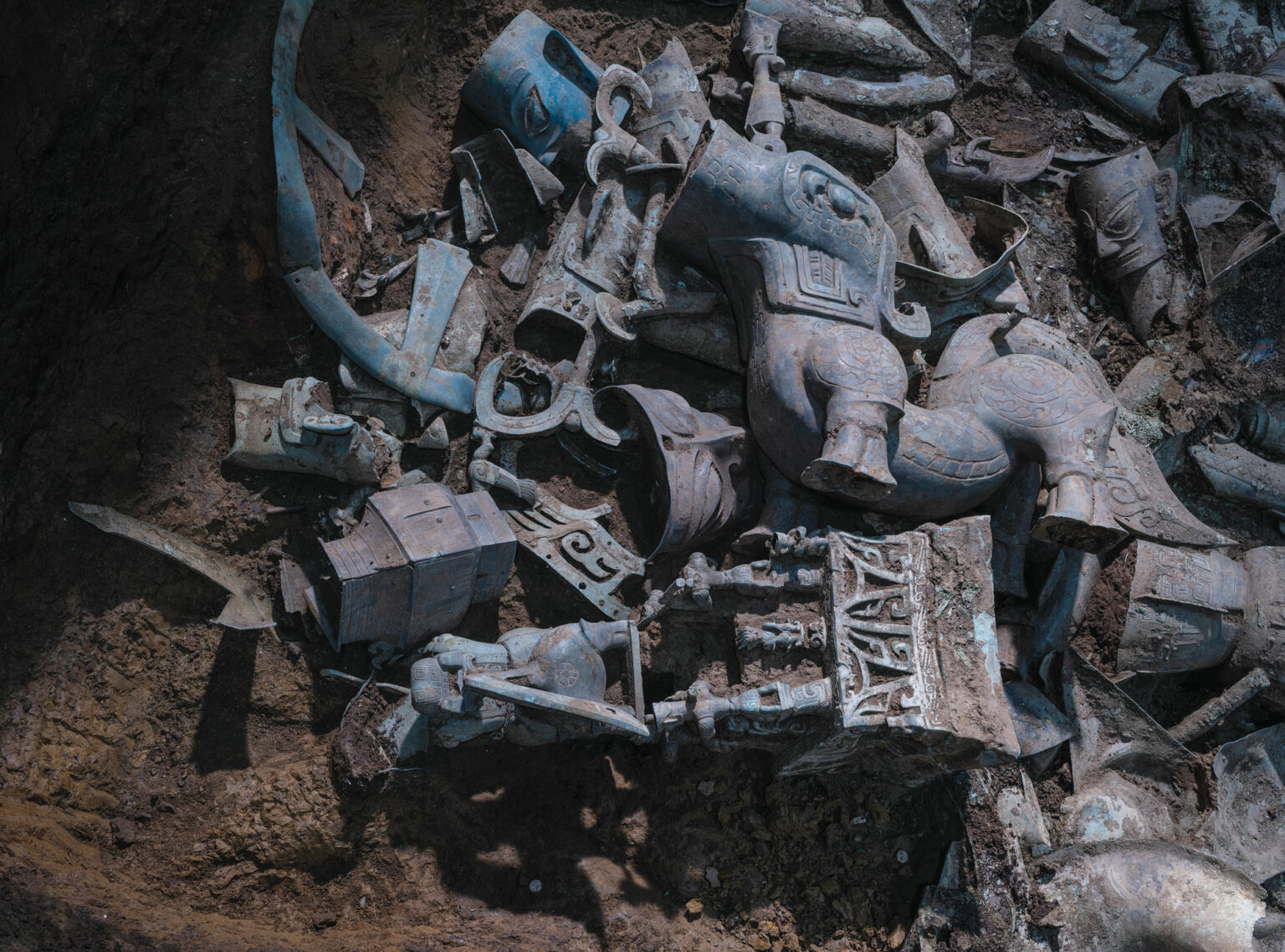
Exquisite bronze artifacts found in one of the excavation pits at Sanxingdui - Photo: SICHUAN PROVINCIAL INSTITUTE OF CULTURAL HERITAGE AND ARCHAEOLOGY
Sanxingdui is one of China's archaeological wonders, where the kings of Shu built a magnificent capital city that lasted for centuries.
Since the discovery of this ancient city site in the 1980s, Chinese archaeologists have stumbled into a world of treasure, and decades of excavation have yet to uncover it all.
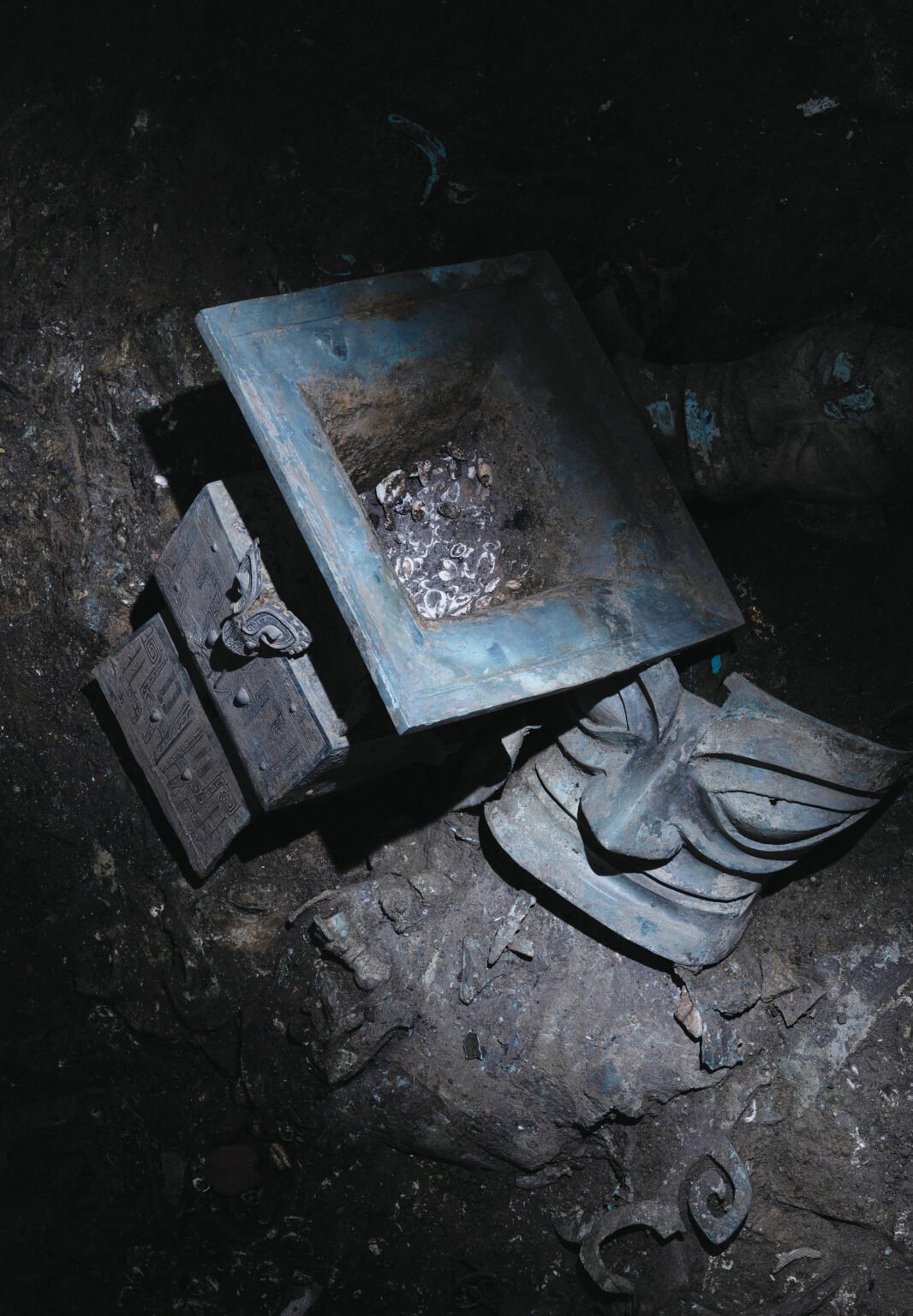

A series of unique artifacts were unearthed at Sanxingdui - Photo: SICHUAN PROVINCIAL INSTITUTE OF CULTURAL HERITAGE AND ARCHAEOLOGY
According to Archaeology Magazine, the legend of the ancient capital of Shu was realized in 1927 when a man and his son dug a ditch at a site with three mounds near the Yazi River in central Sichuan, 40 km northeast of present-day Chengdu.
They discovered that the mounds, known locally as Tam Tinh Doi, concealed hundreds of jade artifacts, including ceremonial tablets and scepters.
Professional excavations that followed for the first time revealed the surrounding walls of this ancient city, as well as some evidence that led them to begin believing that this was indeed the legendary capital of the Shu Kingdom.
In the 1980s, workers from a nearby brick factory stumbled upon more jade artifacts, and excavations were reopened, leading to the discovery of two large rectangular pits containing nearly 1,000 artifacts.
They were bronze statues, ceramic vases, numerous gold and jade artifacts, ivory and seashells, seemingly deliberately burned, smashed, and buried in the ground.
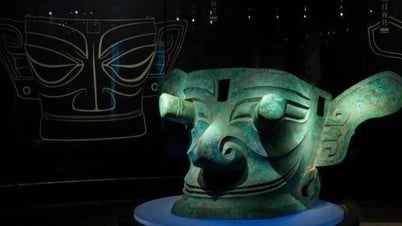
Among the artifacts is a bronze mask with large ears, a mysterious smile, and bulging eyes reminiscent of one of the legendary kings of the Shu dynasty.
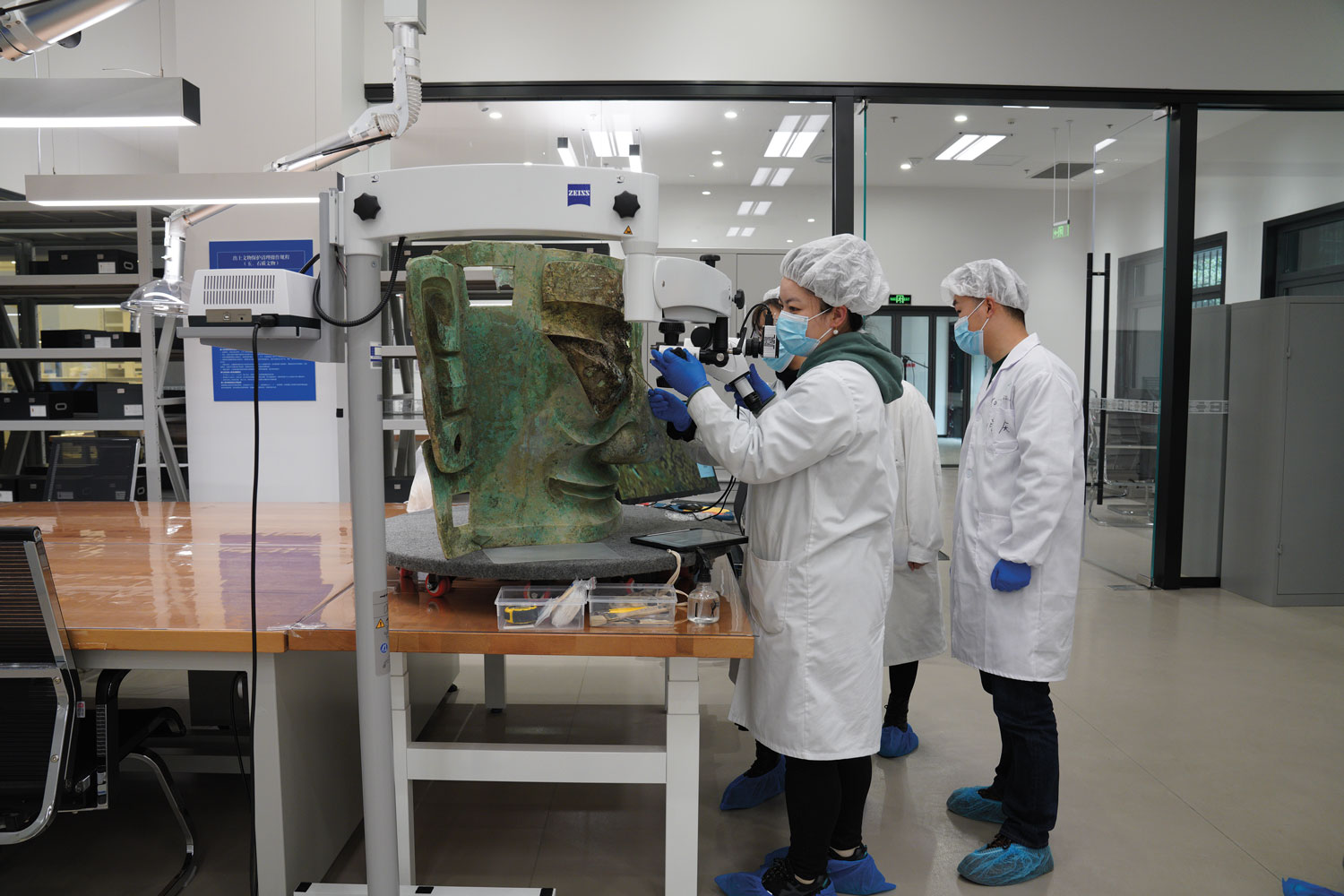
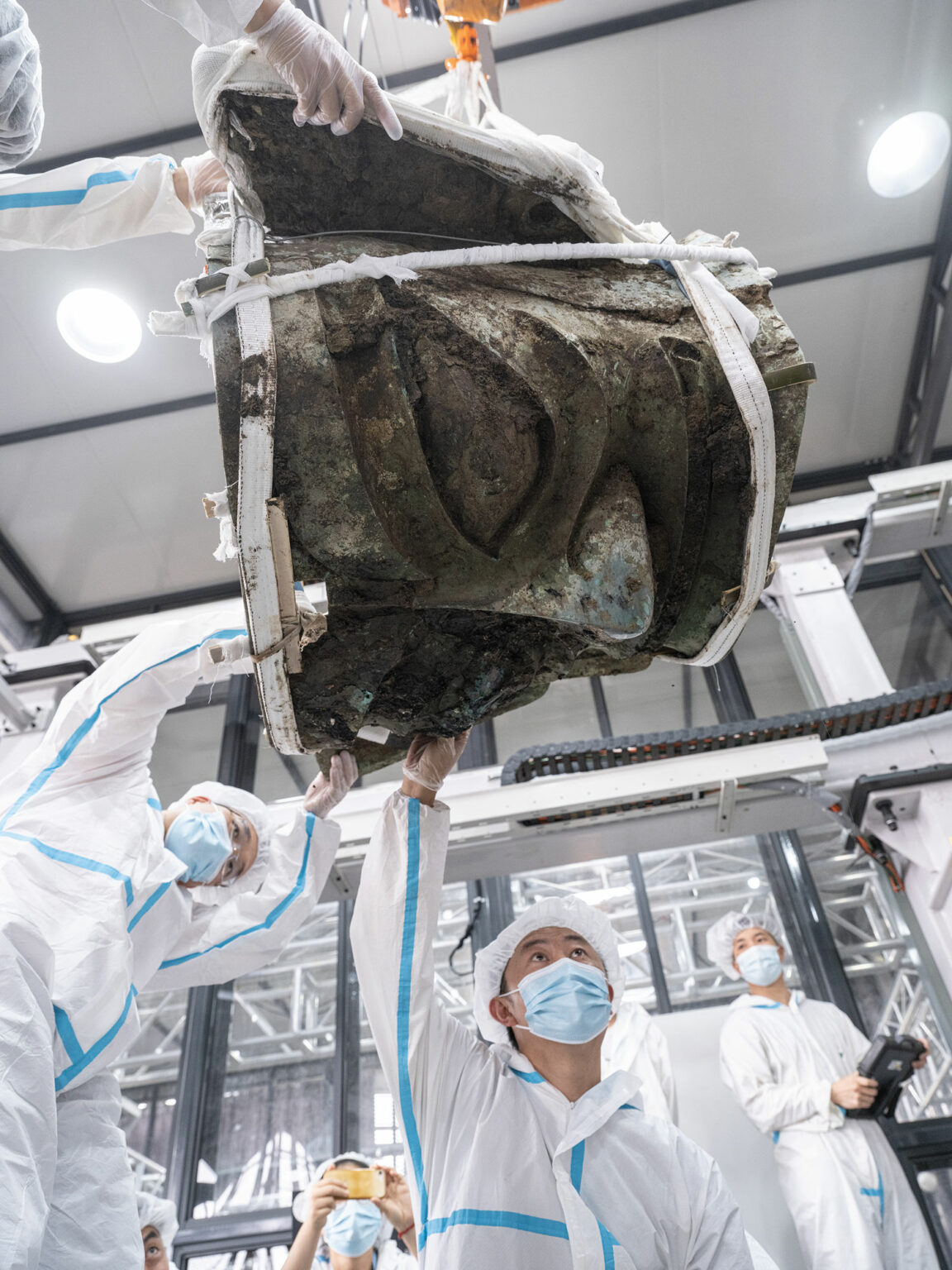
A giant bronze mask, believed to be a symbol of a Shu Kingdom king, is being studied in a laboratory - Photo: SICHUAN PROVINCE INSTITUTE OF CULTURAL HERITAGE AND ARCHAEOLOGY
In 2019, archaeologists noticed another depression in the ground next to Pit 2. They dug around the depression and the rim of a bronze wine vessel appeared.
As they continued digging deeper, another pit filled with bronze, ivory, and jade artifacts that closely resembled those in Pit 2 was discovered. Eventually, six new pits similar to Pits 1 and 2 were uncovered.
Over the next two years, archaeologist Yu Lei from the Sichuan Provincial Institute of Cultural Relics and Archaeology and his colleagues unearthed more than 17,000 artifacts from the new pits, of which about 4,800 were almost completely intact.
Like previous discoveries, these objects reflect the unique vision of artisans from ancient Sanxingdui.
"We joked among ourselves that if we hadn't unearthed these things ourselves, we would never have believed they were real," said archaeologist Xiaoge He from Peking University.
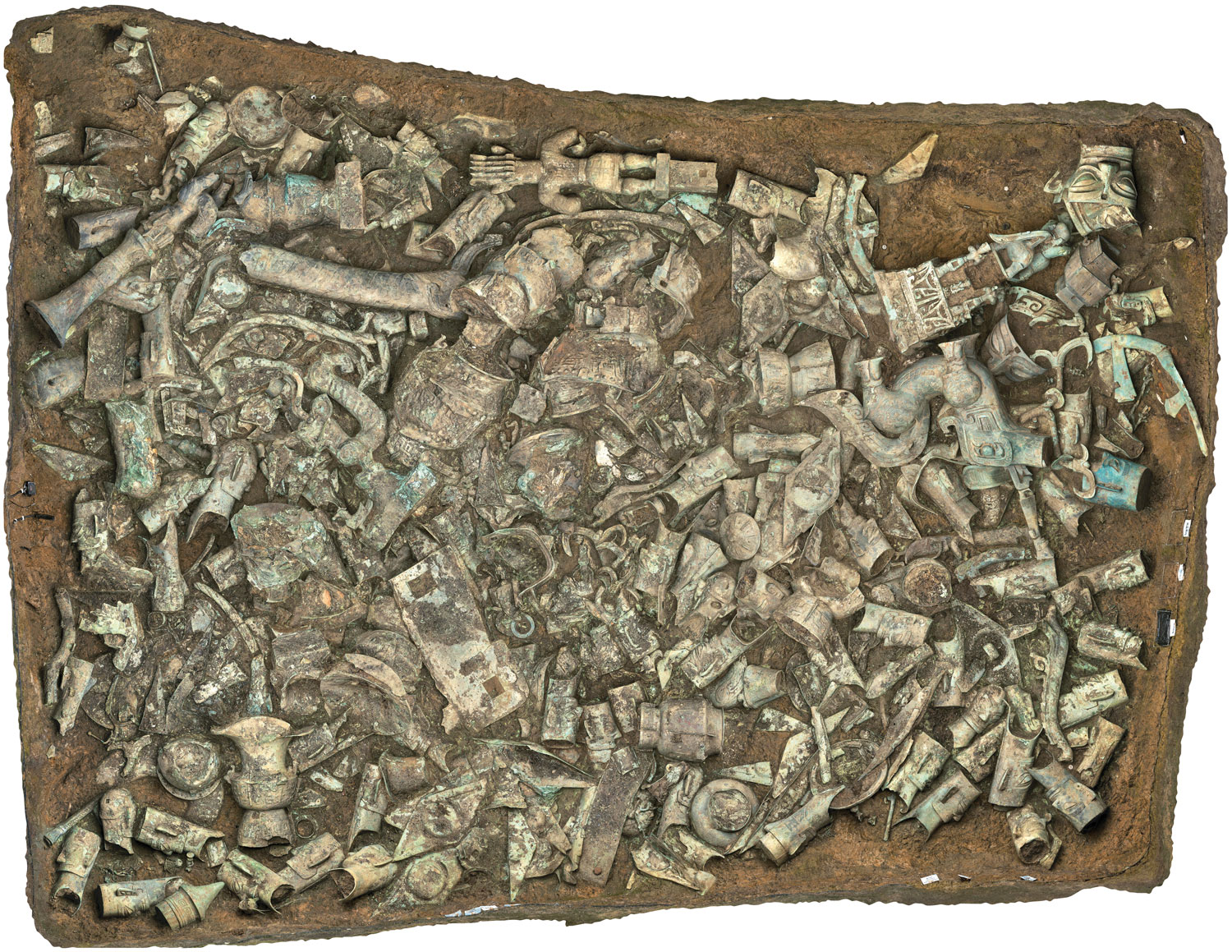
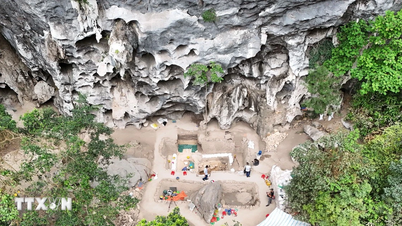
An aerial view of Pit 8 in the Tam Tinh Doi archaeological site.
A key discovery made by the team was that many artifacts broken off from different pits could be reassembled to form a complete object. Thanks to this, some artifacts were perfectly recreated through elaborate assembly steps.
The top priority for researchers now is to understand the significance of these artifacts and why they were buried.
Over 100 life-sized bronze heads, depicted with bulging eyes and mischievous smiles, may have played a particularly important role.
They all contain details that help fit into larger objects, which, according to Jay Xu, director of the Asian Art Museum in San Francisco, depict members of the ruling class in Sanxingdui.
They consist of two distinct groups: one group always wears their hair in a bun secured with a hairpin, while the other group—comprising three-quarters of the figurines—has long braided or plaited hair that hangs down their backs.
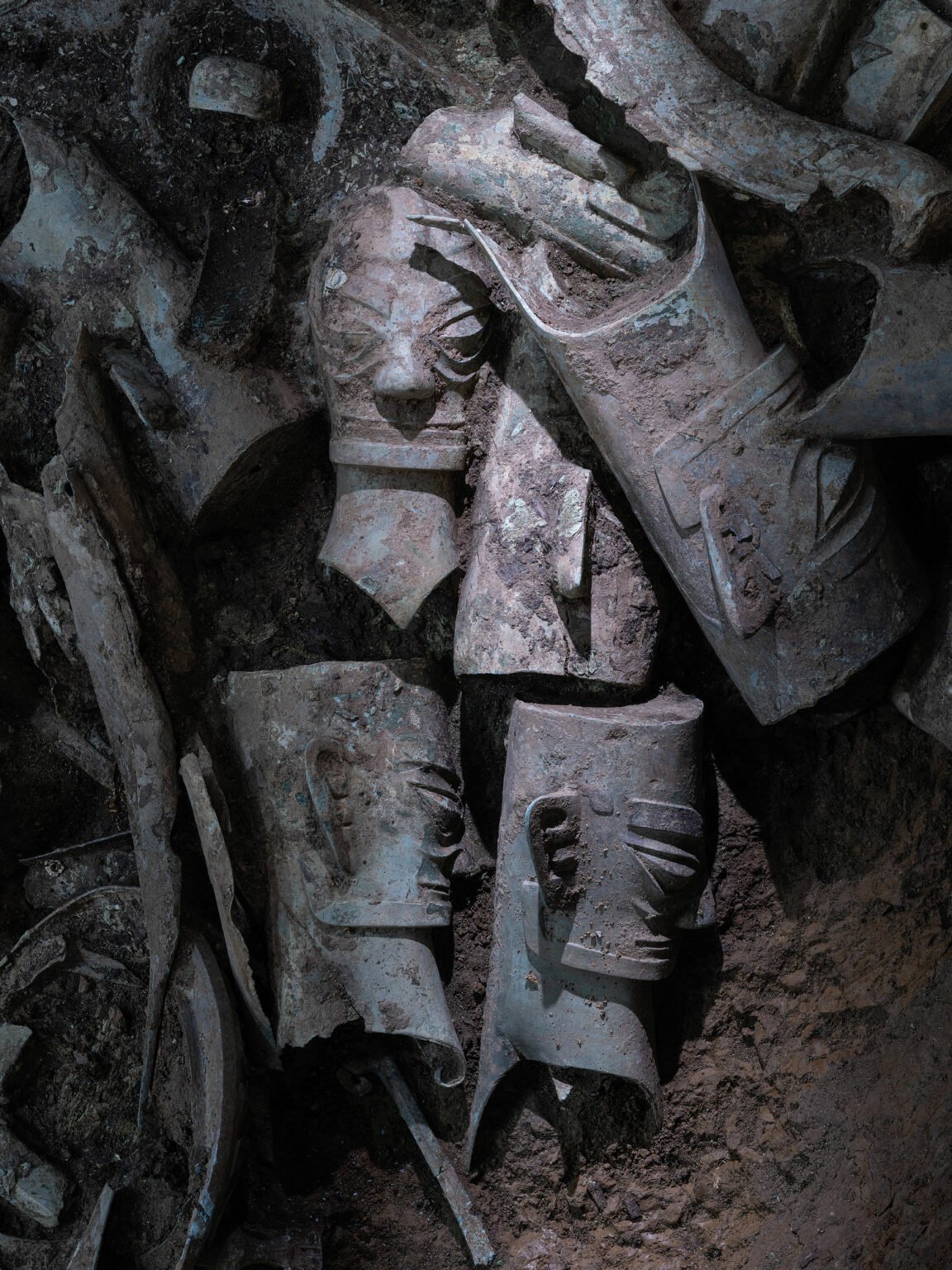
Bronze heads - Photo: SICHUAN PROVINCIAL INSTITUTE OF CULTURAL HERITAGE AND ARCHAEOLOGY
These two groups may have jointly ruled Sanxingdui for much of the city's history, and their rivalry led to major conflicts towards the end of Sanxingdui's history.
After the conflict, the once glorious Sanxingdui was reduced to ruins, and the victorious group decided to relocate the capital. The new capital is believed to be another famous site called Jinsha, also in Sichuan.
Shu Kingdom, or Ancient Shu, was an ancient state located in what is now Sichuan Province, China, with its historical center in the Chengdu Plain.
The Shu Kingdom may have had a history spanning up to 5000 years, flourishing until it was defeated by the Qin dynasty in 316 BC.
Source: https://nld.com.vn/tam-tinh-doi-nhung-phat-hien-choang-vang-tu-kinh-do-co-thuc-196250129093535458.htm
![[Image] Close-up of the newly discovered "sacred road" at My Son Sanctuary](/_next/image?url=https%3A%2F%2Fvphoto.vietnam.vn%2Fthumb%2F1200x675%2Fvietnam%2Fresource%2FIMAGE%2F2025%2F12%2F13%2F1765587881240_ndo_br_ms5-jpg.webp&w=3840&q=75)




































































Comment (0)