

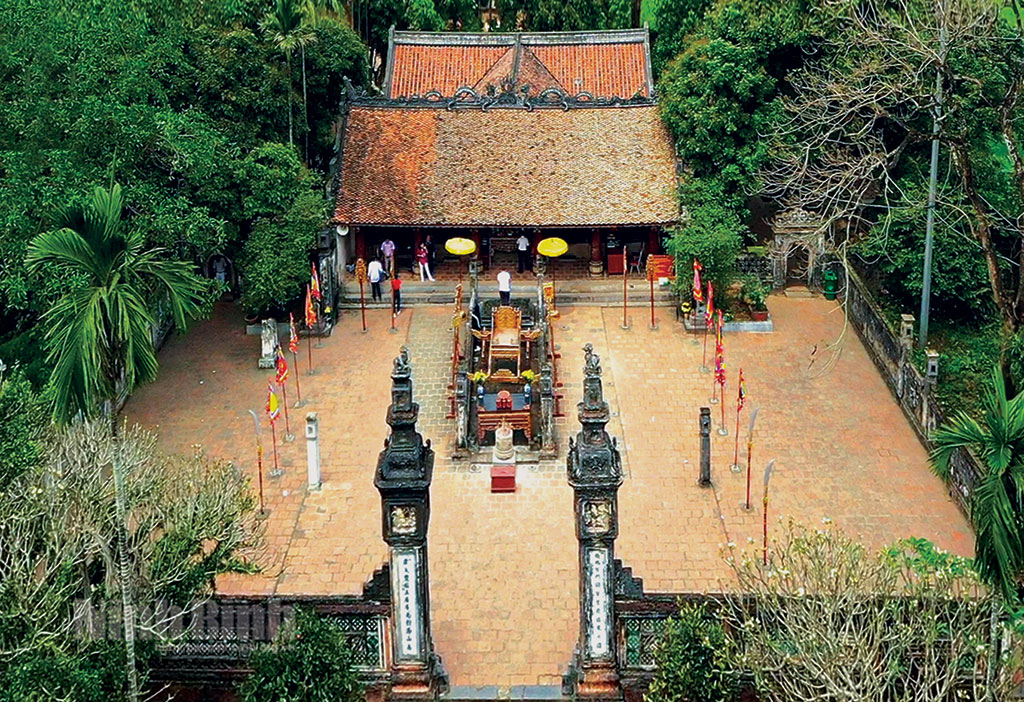
Hoa Lu Ancient Capital National Special Monument - a place that preserves many valuable cultural and historical values.
Hoa Lu, the ancient capital, held a strategic location and was closely linked to the formation, existence, and development of the first centralized feudal state in Vietnam. For 42 years (968-1010), Hoa Lu marked significant turning points in the nation's history, ushering in a period of independence and laying the foundation for national reconstruction and reunification. In 1010, King Ly Thai To moved the capital to Thang Long, ushering in a new era, the era of Dai Viet civilization. Hoa Lu no longer boasts gilded palaces or ornate towers, but it has left behind an invaluable cultural heritage. In 2014, the Hoa Lu ancient capital, located within the core area of the Trang An Scenic Landscape Complex, was recognized by UNESCO as a World Cultural and Natural Heritage site.
Mr. Giang Bach Dang, Director of the Hoa Lu Ancient Capital Historical and Cultural Relic Conservation Center, said: The Center is currently preserving and storing approximately 1,000 artifacts, including 5 valuable national treasures. Over the years, the conservation and promotion of the relics' value has always been a priority for all levels of government, relevant agencies, and the Center, aiming to preserve and disseminate the unique values of the locality, contributing to the socio -economic development of the province, creating momentum for the development of the tourism industry, bringing economic benefits, and contributing to promoting the image of Vietnam and its people. The Center strictly adheres to the Heritage Law in managing and protecting the relics, ensuring their originality. In particular, national treasures such as the Long Sang and Phu Viet are well-preserved, maintaining their aesthetic appeal, surrounded by protective fences, and equipped with a security camera system.
However, the protection and promotion of the Hoa Lu Ancient Capital relic site is currently facing many difficulties. To ensure a harmonious balance between sustainable development and heritage preservation, and tourism development within the heritage area, while also aligning with the General Plan, Heritage Management Plan, and socio-economic development plan of the province, it is crucial to address the challenges. Currently, there are still public roads running through the Hoa Lu Ancient Capital relic site, affecting security, public order, environmental sanitation, the natural landscape, tourist activities, and hindering relic management. To ensure the solemnity and dignity of the relic site, it is necessary to expedite the construction of public roads outside the relic site, while the current roads running through the site should be exclusively for tourist use.
Furthermore, archaeological excavations have received attention and investment in recent years. However, many mysteries remain beneath the ground, especially recent excavations which have shown that the distribution area of relics in the central region of the capital is actually three times larger than the current protected area of the Hoa Lu Ancient Capital Relic Site. Therefore, in order to strongly research, preserve, and promote the values of the relics of the Dinh-Early Le dynasties, further excavations of larger area and scale are needed.
In particular, the current impact of urbanization, with people building houses and transportation infrastructure, may cause damage and burial of historical relics. The research results will provide us with a basis for taking the next steps, such as preserving the excavated sites in situ, creating an archaeological park for research and tourism. At the same time, we must protect the original state of the area from the northern part of the Hoa Lu Ancient Capital historical and cultural relic site (Ngòi Chẹm area) to the Nội Trong field area, including: relocating households currently living in this area, prohibiting construction of houses, tombs, and the digging of ponds, etc., in accordance with the detailed plan for the preservation, restoration, and promotion of the value of the Hoa Lu Ancient Capital special protection zone approved by the Provincial People's Committee.
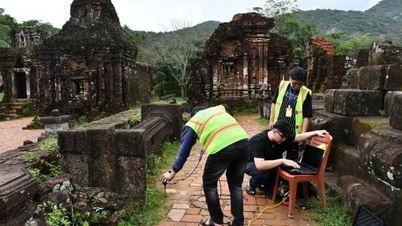
According to Mr. Nguyen Duc Long, Chairman of the Provincial Cultural Heritage Association, in the current period, digital transformation and increased application of science and technology in the protection and promotion of the heritage of Hoa Lu Ancient Capital are extremely necessary. This is the bridge that brings relics and heritage closer to the community, contributing positively to the process of protecting and promoting the value of relics, turning heritage into tourism products, and developing socio-economic development. Drawing on experiences from several provinces and cities in Vietnam and internationally, Mr. Long proposed several solutions for preserving and promoting the value of heritage in a modern context, such as applying module software for managing relics; applying Lidar and Round Radar technology to determine archaeological excavation locations; applying 3D and Hologram technology to promote, support, and explain relics; and especially increasing the application of QR code technology for automatic explanations at the relic site.
Currently, the team directly responsible for guiding and explaining to visitors at the Hoa Lu Ancient Capital Historical and Cultural Relic Conservation Center consists of about 10 people. Among them, the number of staff with foreign language skills is very limited. The implementation of QR code-based automated explanations will overcome this limitation, providing visitors with a better experience.
Currently, Ninh Binh province is implementing solutions and tasks aimed at building the province into a centrally-governed city with the characteristics of a Millennium Heritage City and a Creative City by 2035; one of the major centers with high brand value in tourism, cultural industry, and heritage economy of the whole country and the region. Preserving and promoting the values of Hoa Lu Ancient Capital will open up spaces and impetus for the province to continue exploiting its heritage more effectively and sustainably.
According to Ninh Binh Newspaper
Source: https://bvhttdl.gov.vn/ninh-binh-bao-ton-di-san-co-do-hoa-lu-trong-dong-chay-hien-dai-20240819103454091.htm


![[Photo] Prime Minister Pham Minh Chinh holds a phone call with the CEO of Russia's Rosatom Corporation.](/_next/image?url=https%3A%2F%2Fvphoto.vietnam.vn%2Fthumb%2F1200x675%2Fvietnam%2Fresource%2FIMAGE%2F2025%2F12%2F11%2F1765464552365_dsc-5295-jpg.webp&w=3840&q=75)
































































Comment (0)