

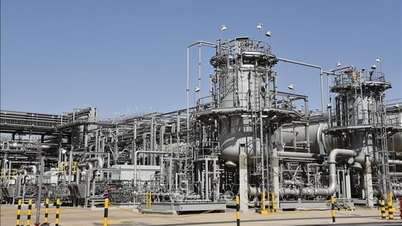
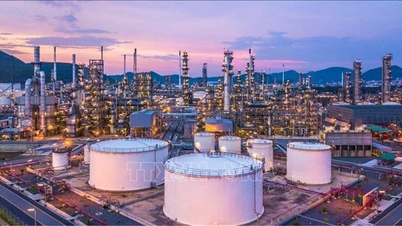
Over the weekend, OPEC+ surprised everyone by announcing it would increase oil production in October by an additional 137,000 barrels per day. This is a rare instance of the oil alliance reversing previous production cuts, which had been in place for years to stabilize the market.

Since April, OPEC+ has gradually reinstated production cuts of 2.5 million barrels per day. With this new decision, the eight-member group will further ease production by 1.65 million barrels per day, more than a year ahead of schedule.
The goal is to regain market share.
Experts believe this move is not just about increasing production, but also a clear message: OPEC+ is willing to accept lower oil prices to protect its market position.
Saudi Arabia, the UAE, and Iraq are the countries most likely to increase production, and the "opening the valve" move is more of a strategic move than a practical measure of volume.
Meanwhile, Russia needs high prices to offset its budget, which is under pressure from sanctions. This divergence of interests is exposing the rifts within OPEC+.
Risk of oversupply and competition with US shale oil.
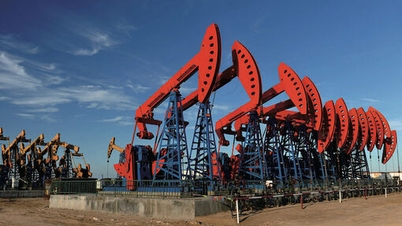
According to Macquarie expert Walt Chancellor, the market could face oversupply in 2026, as the US reached a record production of 13.6 million barrels per day in June. Despite a decrease in the number of drilling rigs, US production remains high and could offset any shortfall if oil prices fall.
He argued that if OPEC+ continues with this strategy, WTI oil prices could fall to $50–55 per barrel, a level low enough to force US shale oil producers to cut production.
Impact on world oil prices
The OPEC+ decision coincided with macroeconomic developments in the US. The weak August jobs report dragged Treasury yields down and led the market to bet that the Fed would cut interest rates three times before the end of the year.
OPEC+ is scheduled to hold its next meeting on October 5th. The alliance has stated that it will be flexible in adjusting its production increases, potentially accelerating, pausing, or reversing them depending on market developments.
Source: https://baonghean.vn/opec-tang-san-luong-dau-tu-thang-10-uu-tien-bao-ve-thi-phan-10306101.html


![[Photo] Closing Ceremony of the 10th Session of the 15th National Assembly](/_next/image?url=https%3A%2F%2Fvphoto.vietnam.vn%2Fthumb%2F1200x675%2Fvietnam%2Fresource%2FIMAGE%2F2025%2F12%2F11%2F1765448959967_image-1437-jpg.webp&w=3840&q=75)









































![[OFFICIAL] MISA GROUP ANNOUNCES ITS PIONEERING BRAND POSITIONING IN BUILDING AGENTIC AI FOR BUSINESSES, HOUSEHOLDS, AND THE GOVERNMENT](https://vphoto.vietnam.vn/thumb/402x226/vietnam/resource/IMAGE/2025/12/11/1765444754256_agentic-ai_postfb-scaled.png)








































Comment (0)