

Kinhtedothi - Agreeing with the amendment of the Law on Government Organization, National Assembly deputies from the Hanoi delegation believe that when decentralizing and delegating power, it must be accompanied by openness, transparency, accountability, and methods of supervision and inspection to prevent abuse of power…
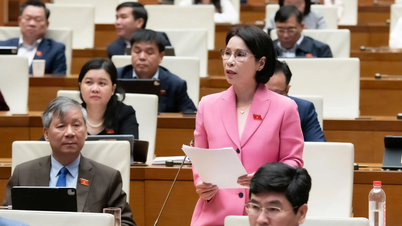
On February 13th, continuing the program of the 9th Extraordinary Session, National Assembly deputies discussed in groups the Draft Law on Government Organization (amended), the Draft Law on Local Government Organization (amended), and the Draft Resolution of the National Assembly stipulating the handling of some issues related to the reorganization of the state apparatus.
Presiding over the group discussion session at the Hanoi City National Assembly Delegation were General Secretary To Lam; Politburo member and Secretary of the Hanoi City Party Committee Bui Thi Minh Hoai - Head of the Hanoi City National Assembly Delegation; Deputy Secretary of the Hanoi City Party Committee and Chairman of the Hanoi City People's Council Nguyen Ngoc Tuan - Deputy Head of the Hanoi City National Assembly Delegation; and Deputy Head of the Hanoi City National Assembly Delegation Pham Thi Thanh Mai.
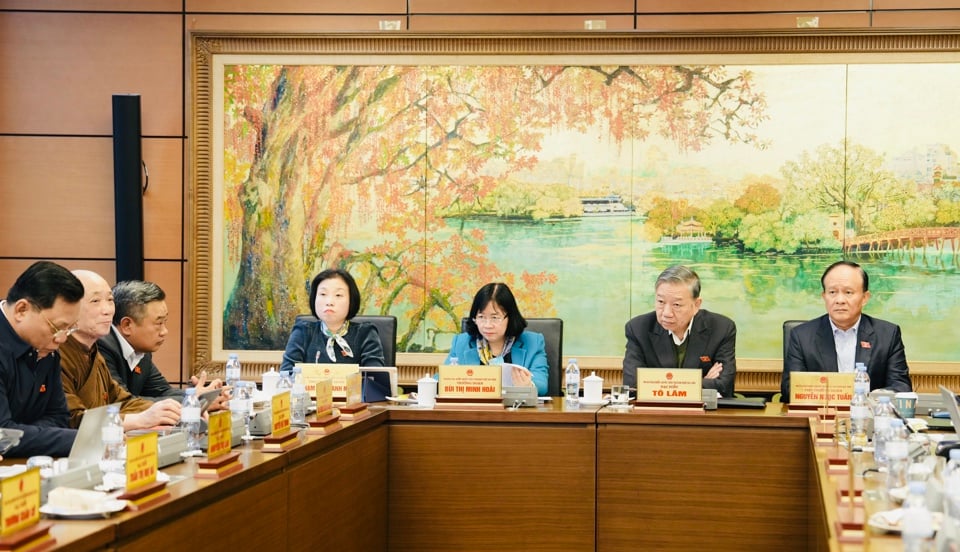
During discussions in Group 1 (Hanoi City National Assembly Delegation), opinions were expressed that the National Assembly's consideration and feedback on laws related to organizational structure are very timely, meeting the demands of the streamlining revolution to enhance effectiveness, efficiency, and productivity. The draft laws closely adhere to the requirements and directions of the Central Committee and the Politburo, clearly demonstrating a mindset of promoting decentralization and delegation of power, fostering development…
Agreeing with the amendment of the Law on Government Organization, National Assembly representative Hoang Van Cuong argued that the current decentralization and delegation of power has many shortcomings due to the mechanism. According to the representative, when decentralization and delegation of tasks occur, power must also be granted. The law should not specify in detail every method, but only stipulate principles and requirements. This means that how to proceed after delegating power to localities should be decided by the localities themselves, not by the Government, which then drafts guiding decrees that localities must follow.
Furthermore, decentralization and delegation of power must be accompanied by openness, transparency, accountability, and methods of supervision and inspection to prevent abuse of power. This will create a mechanism that helps officials and civil servants to be dynamic, creative, and proactive in their thinking and actions.
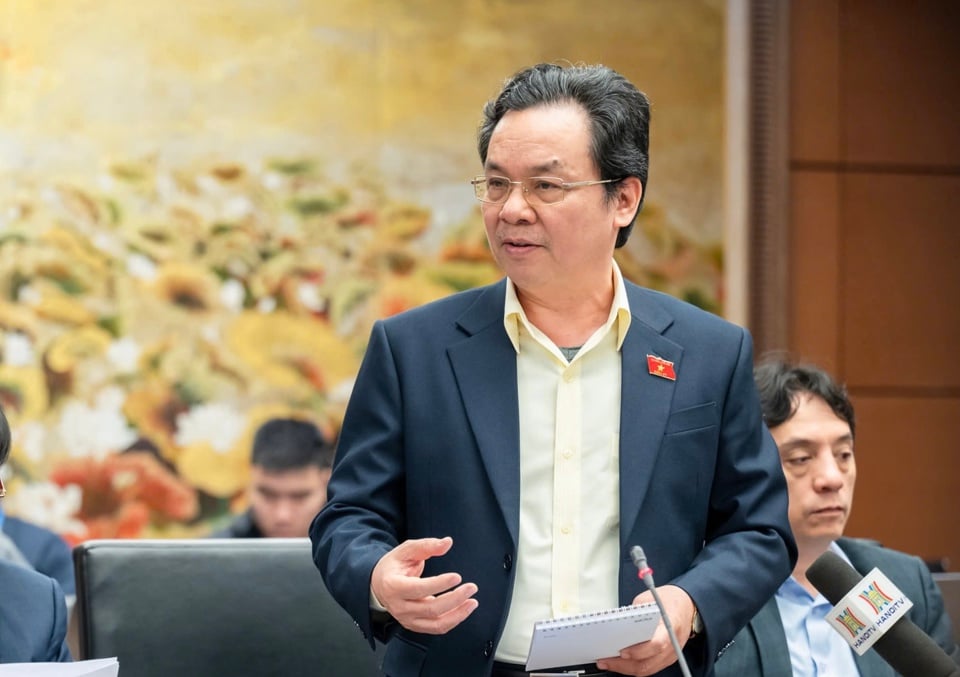
The delegates also emphasized that, in order to create institutional breakthroughs, there are two key issues. Firstly, it is necessary to change the management method, shifting from the current behavior-based management to a results-based management system that measures outputs.
Furthermore, the law stipulates that citizens are allowed to do anything that is not prohibited, while officials and civil servants are allowed to do only what the law permits. This leads to a situation where officials and civil servants are not allowed to act differently, even if the results are good, as long as it violates the law.
Therefore, this regulation needs to be changed. In addition to prohibiting civil servants from doing anything the law forbids, they should also be required to do things that are not yet regulated by law but can solve the problem of output.
"Allowing officials and civil servants to be proactive and creative without violating the law is the only way to create institutional breakthroughs," emphasized delegate Hoang Van Cuong.
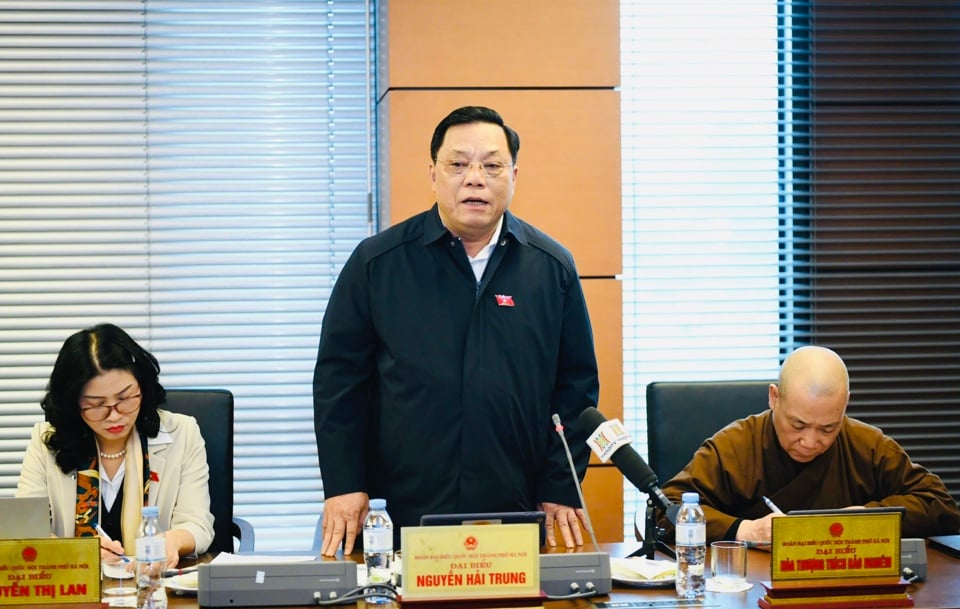
Sharing the same view, National Assembly representative Nguyen Hai Trung argued that decentralization and delegation of power must be linked to openness, transparency, supervision, and control, avoiding abuse of power. Furthermore, specific regulations on the procedures should be avoided; only the viewpoints, objectives, and principles should be stipulated. This is because the implementation method depends on each individual's mindset, especially in a context where we are emphasizing the spirit of daring to think and daring to act.
Some opinions suggest further clarification regarding the mechanisms of decentralization, delegation of power, and authorization, as well as the conditions for exercising power. Specifically, they propose that tasks that can be delegated should be immediately delegated to local authorities, because while decentralization is stipulated in the law, delegation of power is regulated in subordinate legal documents.
National Assembly representative Le Quan proposed expanding the decentralization and delegation mechanism to help remove and reduce administrative procedures. He pointed out that the most common problems arise when localities consult ministries and agencies. Therefore, more decentralization is needed for the Chairmen of the People's Committees of provinces; provincial-level authorities should have more power to delegate authority to departments, agencies, and district-level authorities.
"Besides supplementing regulations on decentralization for heads of subordinate units, it is possible to decentralize to organizations that meet the requirements and delegate authority to individuals who meet the requirements..." - National Assembly representative Le Quan stated his opinion.
Source: https://kinhtedothi.vn/phan-cap-phan-quyen-phai-kiem-tra-giam-sat-de-tranh-lam-quyen.html


















![[Photo] Prime Minister Pham Minh Chinh holds a phone call with the CEO of Russia's Rosatom Corporation.](/_next/image?url=https%3A%2F%2Fvphoto.vietnam.vn%2Fthumb%2F1200x675%2Fvietnam%2Fresource%2FIMAGE%2F2025%2F12%2F11%2F1765464552365_dsc-5295-jpg.webp&w=3840&q=75)

















































Comment (0)