

Quang Ninh province has nearly 423,000 hectares of land planned for forestry, of which more than 370,000 hectares are forested. Mangrove forests serve as a "common home" for various aquatic species to thrive and develop. The terrestrial forests are used for activities such as timber production, conservation and protection, cultivation of medicinal plants under the canopy, and the development of farm and household-based economic models, as well as forest-based tourism. All of these provide livelihoods for the people, allowing them to rely on the forest to prosper, increase their income, and improve their lives.
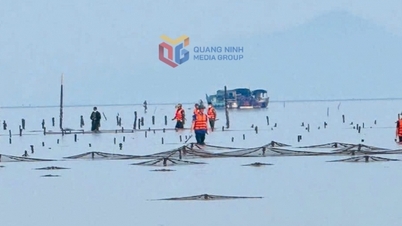
96 hectares of newly planted mangrove forest in Hamlet 1, Hai Tien Commune (Mong Cai City) are part of the project to modernize the forestry sector and enhance coastal resilience, implemented by Quang Ninh province from 2020 to the present. Compared to previous projects, the implementation method has undergone many changes, with local people directly involved in planting, caring for, and protecting the trees instead of entrusting it to intermediary contractors.
Each hectare of mangrove forest in Hai Tien requires an investment of 220-300 million VND from planting to maturity, three times more expensive than planting forests on land. All of this cost is attributed to the local people participating in the reforestation activities. Therefore, from the very beginning of the mangrove reforestation project, the people of Hamlet 1, Hai Tien Commune, have benefited from employment and labor, thereby increasing their income.
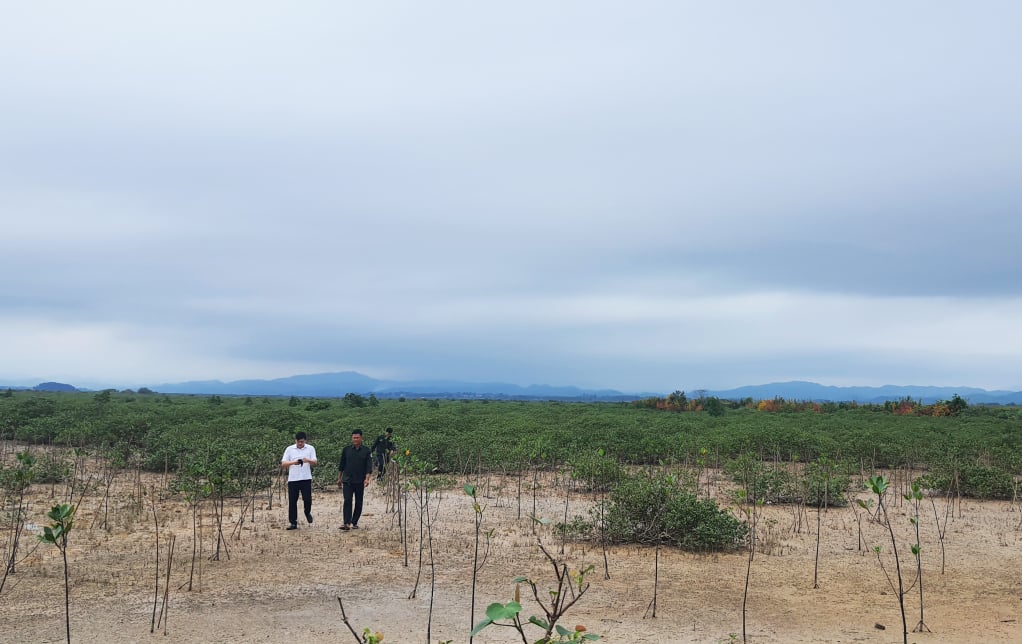
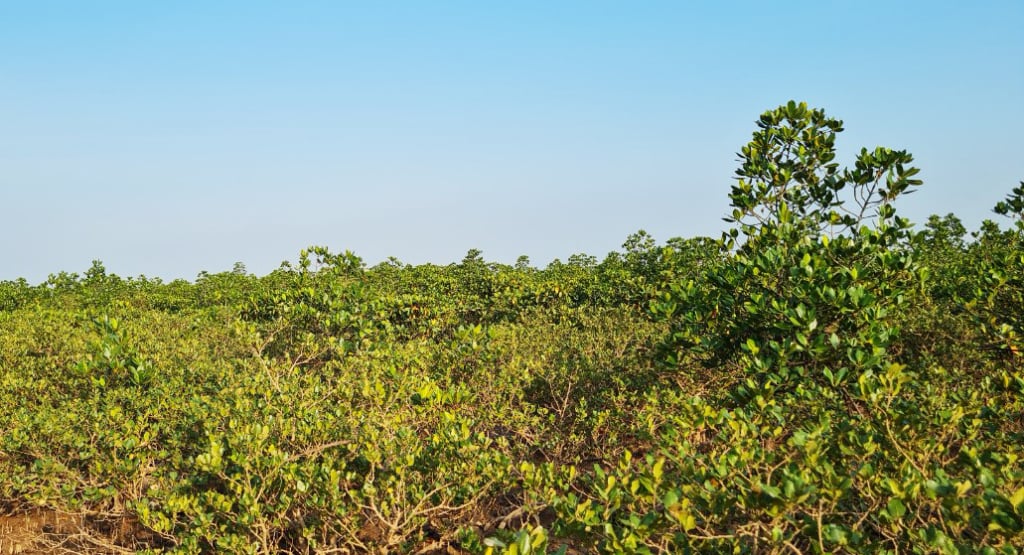
Since 2020, Quang Ninh province has planted 560 hectares of mangrove forests, bringing the total mangrove forest area in the province to over 19,000 hectares, the highest among the northern provinces. These abundant mangrove forests, which serve as a breeding ground for various aquatic species, have enabled local people to increase their income and improve their lives.
In reality, beneath the mangrove forests lie countless valuable natural seafood species such as clams, crabs, shrimp, mussels, sea worms, and earthworms. Among them, clams and sea worms are considered endemic aquatic species of Quang Ninh, thriving in alluvial areas with mangrove forests. In many localities, people can combine the exploitation and cultivation of aquatic products from mangrove forests, with the most effective being extensive shrimp farming and hanging oyster farming. Upcoming ideas and projects focus on developing community tourism linked to mangrove forests.
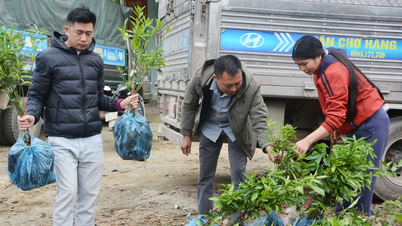
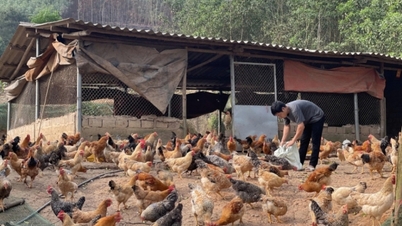
Along with mangrove forests, Quang Ninh also has a large area of terrestrial forests. According to calculations by the Department of Agriculture and Rural Development, forest land and forestry currently provide jobs and income for approximately 60,000 workers.
In Ba Che district, the forestry center of the province, thousands of households annually engage in the harvesting of planted forests for production. The harvested forest area in Ba Che is estimated at nearly 3,000 hectares, with a timber yield of over 154,000 cubic meters, corresponding to a revenue of over 300 billion VND. The economic development of Ba Che's forests reflects the general economic development of other forested localities throughout the province. Statistics show that in 2022, the timber harvested from planted forests in Quang Ninh reached over 839,000 cubic meters, a 19.2% increase compared to the adjusted plan. The production of non-timber forest products, including pine resin (3,300 tons), cinnamon bark (5,600 tons), star anise (925 tons), and Strychnos nux-vomica seeds (600 tons), generated billions of VND in revenue for forest-planting households and forestry enterprises.
The lush green forests of Quang Ninh also serve as a foundation for the development of many economic sectors. Yen Tu National Forest boasts a rich and diverse ecosystem of primary forest flora and fauna. Particularly noteworthy are the giant pine trees and centuries-old yellow apricot trees in Yen Tu, associated with the legend of Emperor Tran Nhan Tong, contributing to Yen Tu's status as a key tourist destination. This means that many households at the foot of the mountain are developing their service industries. They have jobs, income, and improved living standards; many are becoming wealthy thanks to tourism in Yen Tu.
It is evident that forests are creating livelihoods for people, increasing their income and improving their lives. Forests in Quang Ninh are well protected and developed, and are one of the resources that helped Quang Ninh basically eliminate poverty by the end of 2022, achieving the goal of the National Target Program for Sustainable Poverty Reduction giai đoạn 2021-2025 three years ahead of schedule.
Source

![[Image] Close-up of the newly discovered "sacred road" at My Son Sanctuary](/_next/image?url=https%3A%2F%2Fvphoto.vietnam.vn%2Fthumb%2F1200x675%2Fvietnam%2Fresource%2FIMAGE%2F2025%2F12%2F13%2F1765587881240_ndo_br_ms5-jpg.webp&w=3840&q=75)











































































Comment (0)