

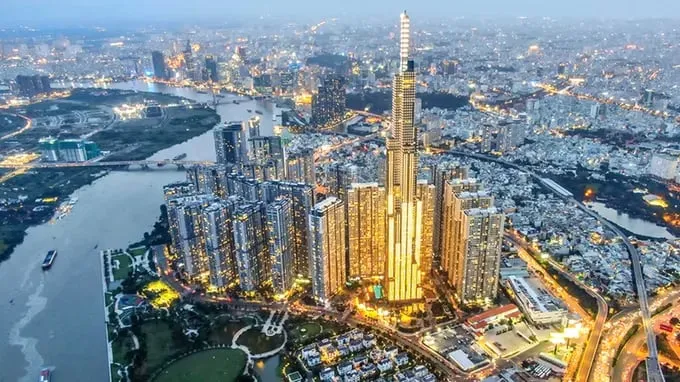
Economically , the goal is to achieve an average GDP growth rate of over 8% per year during the period 2021-2030; and a GDP per capita at current prices of approximately US$8,500 by 2030.
The resolution emphasizes leveraging the advantages of each socio-economic region; focusing on developing two major economic growth areas in the North and South, linked to the two growth poles of Hanoi and Ho Chi Minh City. Key economic corridors such as North-South, Lao Cai - Hanoi - Hai Phong - Quang Ninh, and Moc Bai - Ho Chi Minh City - Bien Hoa - Vung Tau will be invested in comprehensively and modernly, achieving high growth rates and making a significant contribution to the overall development of the country.
Developing Vietnam's education system to reach an advanced level in the region.
Strong development of digital infrastructure and data infrastructure will create a foundation for national digital transformation, the development of a digital government, digital economy, and digital society; the digital economy's share of GDP will reach approximately 30%...
Socially, the goal is to maintain a stable replacement fertility rate (an average of 2.1 children per woman of childbearing age); the population size will reach approximately 105 million people. The Human Development Index (HDI) will reach approximately 0.78. Average life expectancy will reach approximately 75.5 years. The proportion of agricultural labor in the total workforce will decrease to below 20%.
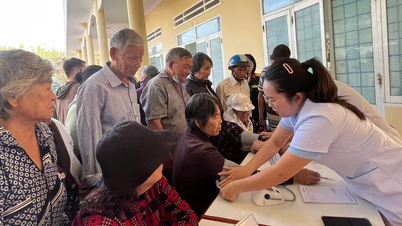
Develop Vietnam's education system to reach an advanced level in the region; ranking among the top 10 countries with the best higher education systems in Asia. Strive for at least 8 higher education institutions to be among the top 200 universities in Asia, and at least 1 higher education institution to be among the top 100 universities in the world in certain fields according to reputable international rankings. Simultaneously, improve the quality of healthcare services to be on par with advanced countries in the region.
The resolution outlines the orientation for socio-economic spatial development, including: socio-economic zoning, development orientation and regional linkages; development of dynamic regions and national growth poles; and development of economic corridors.
Specifically, the development of the northern economic growth region includes Hanoi City and areas connected to the Ring Road 4, Ring Road 5, National Highway 5, National Highway 18, and expressways CT01, CT04, CT05, CT07, CT09 passing through Hai Phong City and the provinces of Bac Ninh, Thai Nguyen, Phu Tho, Ninh Binh, Hung Yen, and Quang Ninh; with Hanoi City as the growth pole.
The goal is to build a leading economic region in the North, prioritizing the development of high-quality human resources, science and technology, innovation, the digital economy, and the digital society.
Ho Chi Minh City is the growth pole of the Southern dynamic region.
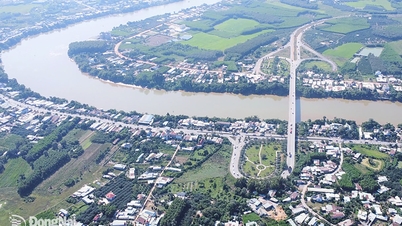
The development of the Southern economic growth zone includes areas along National Highways 22, 13, 1, and 51, the Western North-South Expressway, and Ring Road 4 through Ho Chi Minh City and the provinces of Dong Nai and Tay Ninh; with Ho Chi Minh City as the growth pole. In the period after 2030, research will be conducted to expand the scope of the economic growth zone.
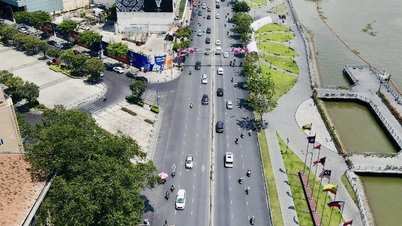
The goal is to build a leading economic and financial region in the South, at the national and Southeast Asian levels, excelling in economics, finance, trade, services, healthcare, education and training, high-quality human resource development, science and technology, innovation, and digital transformation. The focus will be on strongly developing the innovation ecosystem, leading the way in transforming the growth model, and building a digital economy and society. The development of financial services, banking, science, technology, and logistics will be robust. The development of an international financial center in Ho Chi Minh City aims to make it a leading international financial hub, elevating Vietnam's position in the global financial network and driving economic growth...
The formation and development of the Central Vietnam Economic Zone includes the coastal areas of the provinces and centrally-governed cities of Hue, Da Nang, Quang Ngai, and Gia Lai; with Da Nang city as the growth pole.
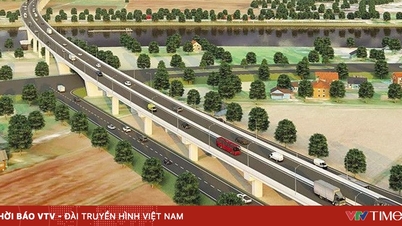
The formation and development of the Mekong Delta economic growth zone includes areas within Can Tho city and the provinces of An Giang, Vinh Long, and Dong Thap, linked to the expressway network (Eastern North-South Expressway section from Can Tho to Vinh Long, An Huu - Cao Lanh Expressway, Western North-South Expressway from Cao Lanh to Rach Soi, Chau Doc - Can Tho - Soc Trang Expressway, Ha Tien - Rach Gia - Bac Lieu Expressway) and the Phu Quoc Special Economic Zone; with Can Tho city as the growth pole. In the period after 2030, research will be conducted to expand the scope of the economic growth zone to include the Tran De seaport.
The resolution also states that the North Central region will be formed as a dynamic economic zone encompassing areas along the Eastern North-South Expressway, National Highway 1, and the coastal road, linked to provincial central cities, coastal tourist cities, and coastal economic zones of the three provinces of Thanh Hoa, Nghe An, and Ha Tinh. The North Central region will become a national center for petrochemicals, metallurgy, mechanical engineering, automotive, and supporting industries; while simultaneously rapidly developing new industries such as electronics, semiconductors, artificial intelligence, digital technology, and high-tech industries.
The resolution also outlines the development orientation of the national urban and rural systems; the orientation for the exploitation and use of airspace; the orientation for the development and spatial distribution of important sectors (industry; services; agriculture, forestry and fisheries); the orientation for the development of national-level social infrastructure; the orientation for the development of national-level technical infrastructure; and the orientation for national land use.
Source: https://www.sggp.org.vn/phat-trien-vung-dong-luc-phia-nam-thanh-trung-tam-kinh-te-tai-chinh-hang-dau-dong-nam-a-post816708.html


![[Photo] Prime Minister Pham Minh Chinh holds a phone call with the CEO of Russia's Rosatom Corporation.](/_next/image?url=https%3A%2F%2Fvphoto.vietnam.vn%2Fthumb%2F1200x675%2Fvietnam%2Fresource%2FIMAGE%2F2025%2F12%2F11%2F1765464552365_dsc-5295-jpg.webp&w=3840&q=75)





























































Comment (0)