

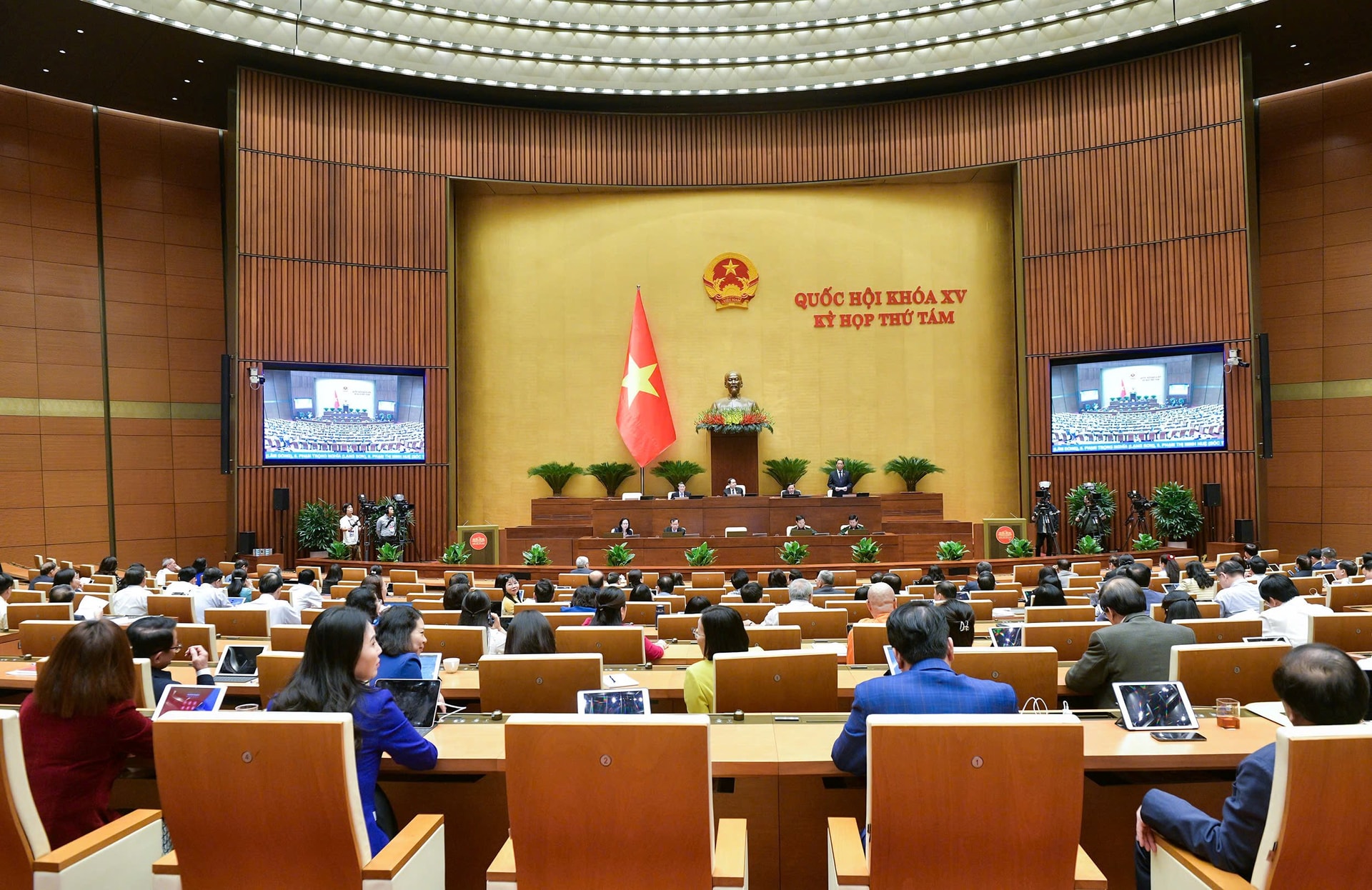
(TN&MT) - Discussing the draft Law amending and supplementing a number of articles of the Law on Officers of the Vietnam People's Army, delegates basically agreed on the necessity of promulgating the Law to fully institutionalize the Party's guidelines and the State's policies on building a strong contingent of officers of the Vietnam People's Army to meet the requirements of the mission. In particular, increasing the age of active service for officers is reasonable and consistent with the nature and tasks of the army, which is a special labor sector.
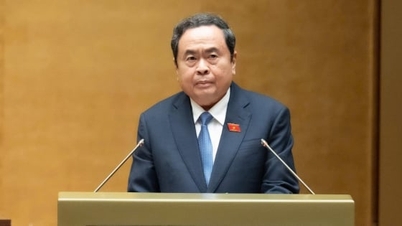
Continuing the agenda of the 8th Session, on the morning of November 5th, under the chairmanship of National Assembly Chairman Tran Thanh Man , the National Assembly held a plenary session in the Assembly Hall to discuss the draft Law amending and supplementing a number of articles of the Law on Officers of the Vietnam People's Army. National Assembly Vice Chairman Tran Quang Phuong presided over the session.
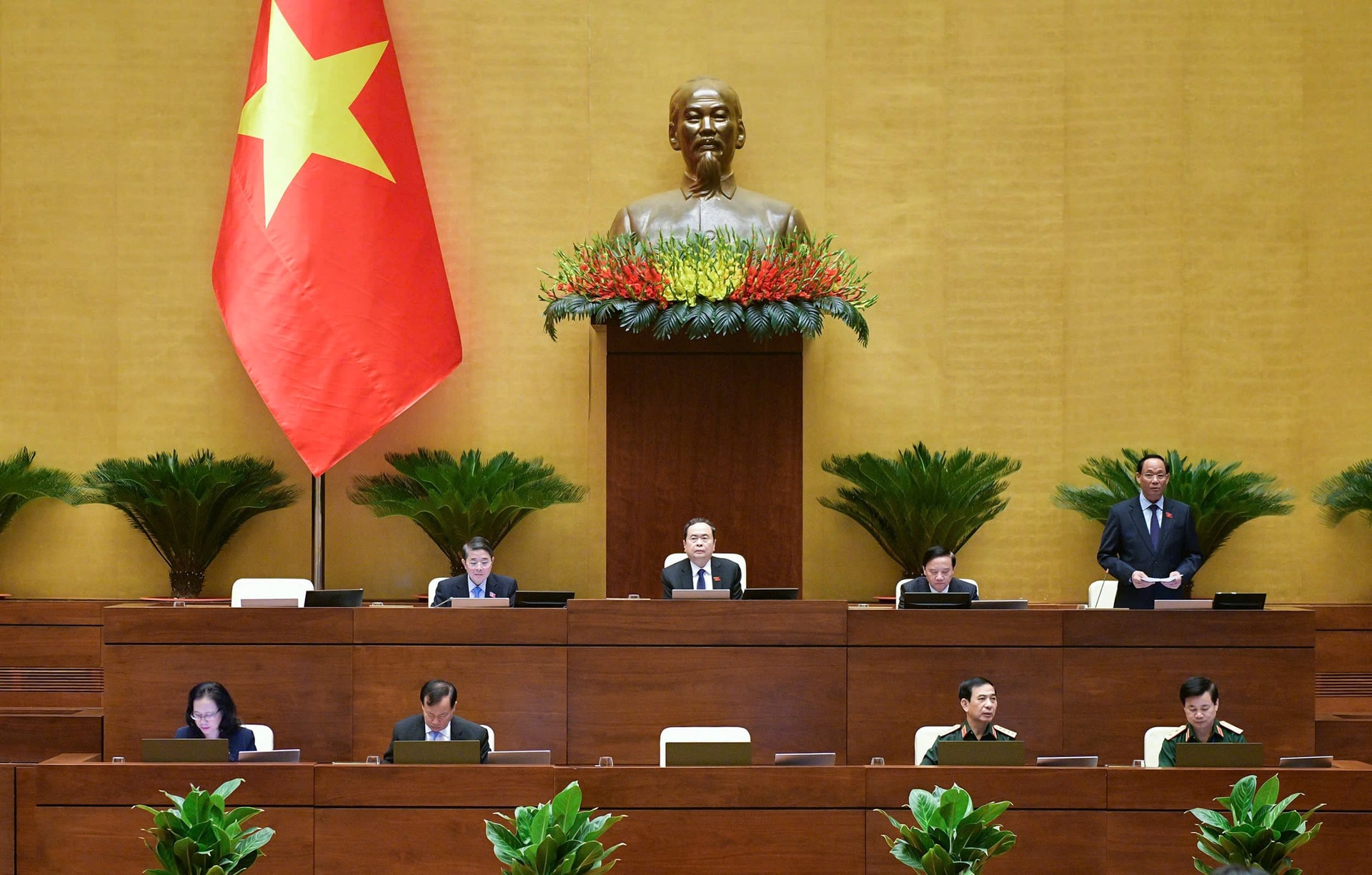
During the plenary session, Delegate Be Minh Duc, from the Cao Bang Provincial Delegation of the National Assembly, affirmed that the enactment of the law aims to fully institutionalize the Party's guidelines and the State's policies on building a strong contingent of officers in the Vietnam People's Army, meeting the requirements of basically building a lean, efficient, and strong Vietnam People's Army by 2025, creating a solid foundation to strive towards building a revolutionary, regular, elite, and modern Vietnam People's Army by 2030. The amendments and additions to some policies in the law also aim to attract and utilize high-quality human resources to serve the Vietnam People's Army.
One of the notable amendments in this draft law is Article 13, which stipulates the age limit for active service of officers. Accordingly, the draft Law amending and supplementing a number of articles of the Law on Officers of the Vietnam People's Army stipulates the maximum age limit for officers serving in the armed forces according to military rank as follows: Lieutenant: 50; Major: 52; Lieutenant Colonel: 54; Colonel: 56; Brigadier General: 58; General: 60.
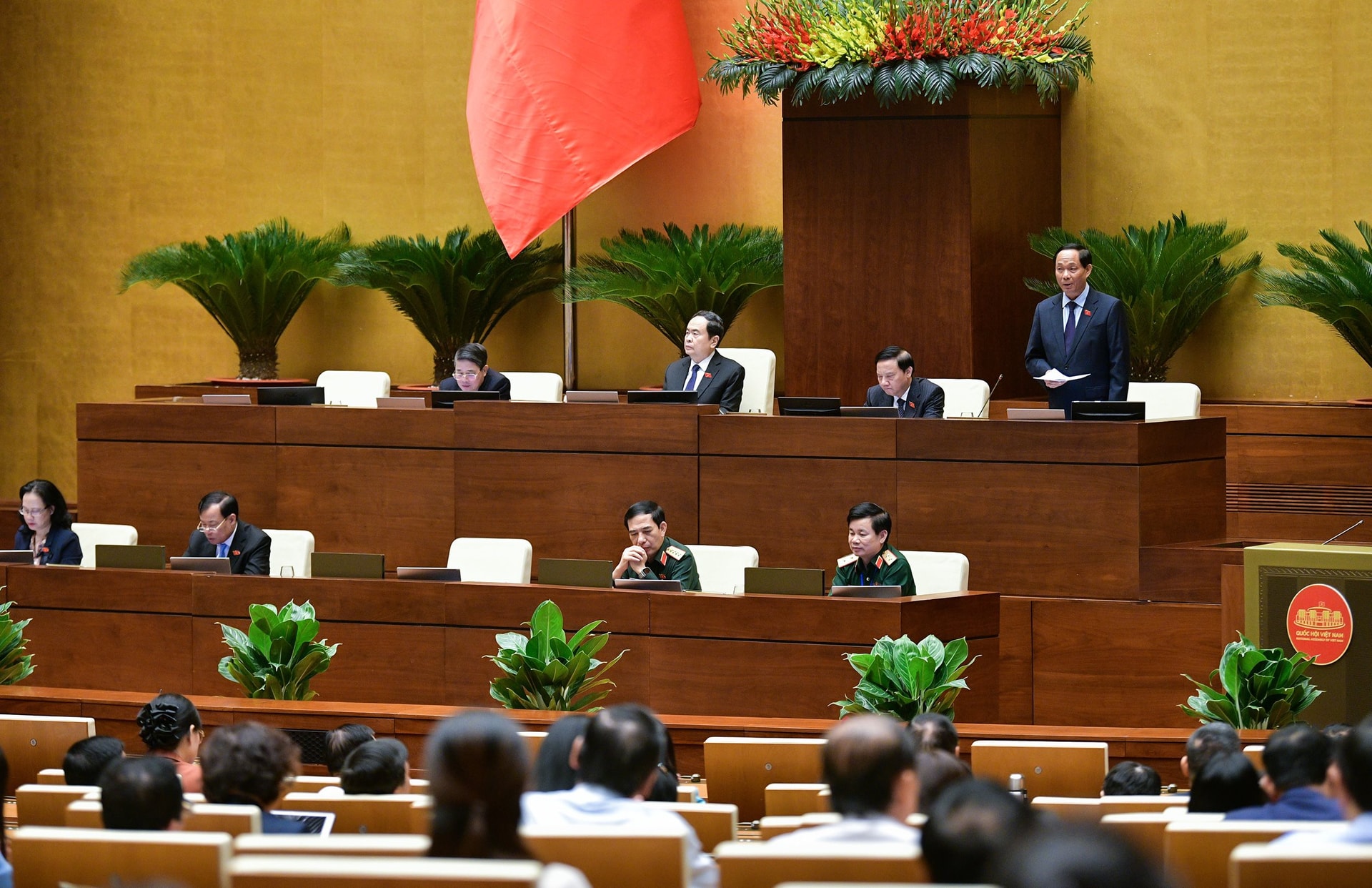
In addition, the draft law also stipulates that, when the Army has a need, officers who meet the political and moral qualities, are highly skilled in their profession, are in good health, and volunteer may have their service age extended by no more than 5 years as stipulated in Clause 1 of this Article; officers who are professors, associate professors, doctors, specialists (level 2), pharmacists (level 2), chief engineers, leading scientists, officers with specialized or advanced training, or in special cases may have their service extended further as prescribed by the Minister of National Defense.
Representative To Van Tam, from the Kon Tum Provincial Delegation to the National Assembly, argued that such an increase is reasonable and appropriate given the nature and tasks of the military, which is a special labor sector, and also aligns with the current state of military development. Currently, according to the Social Insurance Law, officers from Lieutenant Colonel downwards who reach retirement age have not yet contributed to social insurance for 35 years, thus not receiving 75% of their pension.
"Raising the retirement age aims to align with the regulations of the Labor Code and the Social Insurance Law so that officers can receive full benefits upon retirement. Furthermore, raising the retirement age also aims to attract talented individuals to serve in the military. Therefore, I agree with this regulation," Representative To Van Tam emphasized.
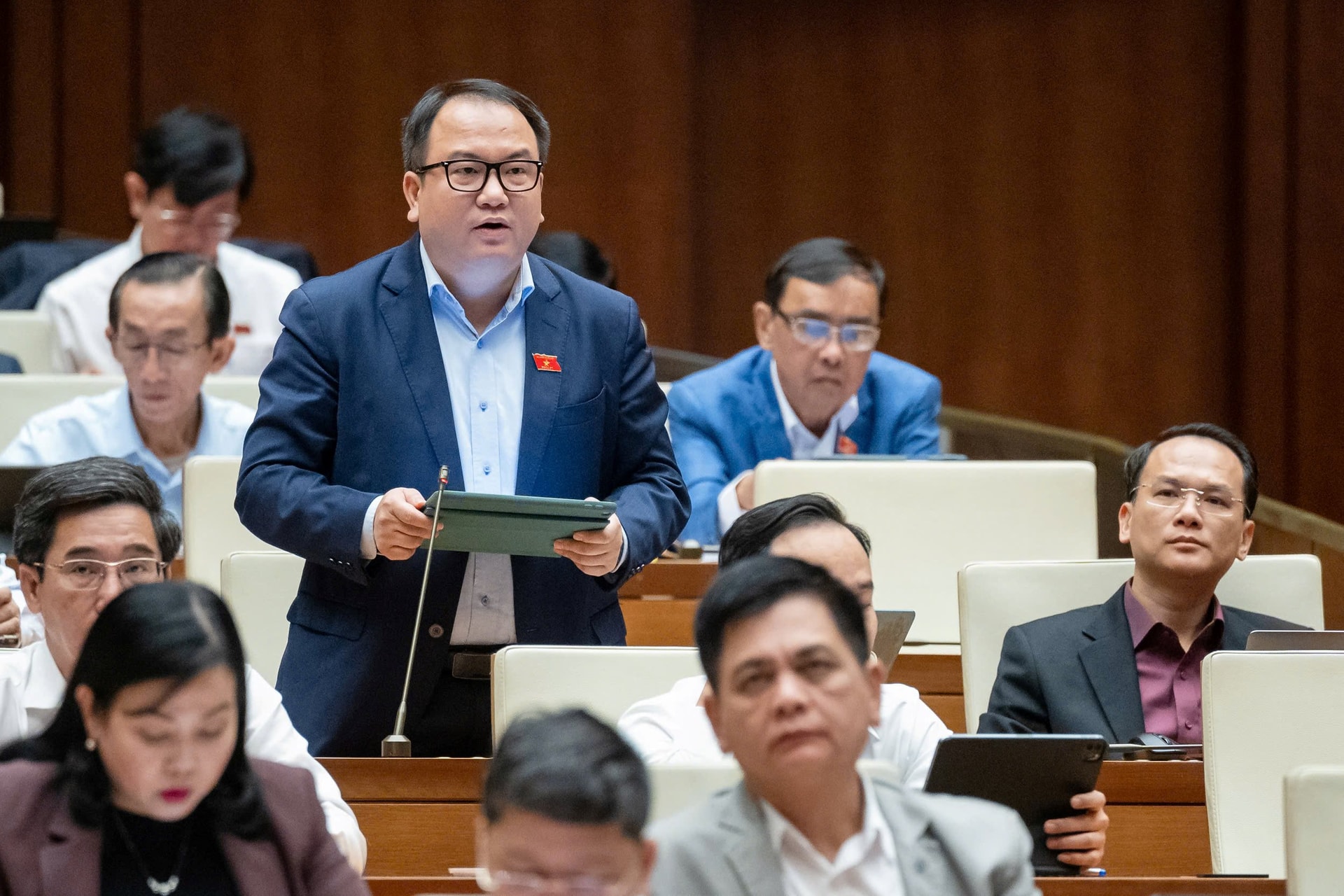
Representative Pham Trong Nghia, from the Lang Son Provincial Delegation of the National Assembly, also argued that increasing the age for officers serving in the armed forces by 1-5 years would increase the time and amount of contributions to the social insurance fund, thereby increasing the accumulation of the social insurance fund and contributing to the implementation of the contribution-benefit principle in long-term social insurance schemes.
Regarding raising the age limit for generals, the draft law currently stipulates a maximum age of 60. Representative Nguyen Dai Thang, from the Hung Yen Provincial National Assembly Delegation, suggested that the drafting agency research and consider adjusting the age limit for active service for army generals to 62 years old to ensure uniformity among the armed forces, to ensure the proper utilization of talent, and to maintain balance between the People's Army and the People's Police. He also noted that the proposed increase in the age limit for active service for police generals to 62 years old for men in 2028 aligns with the current retirement age increase in the Labor Code, ensuring consistency and uniformity within the legal system.
In addition, Representative Nguyen Thi Yen Nhi, from the Ben Tre Provincial National Assembly Delegation, argued that although they are all officers of the Vietnam People's Army, the nature, working environment, work locations, and tasks in mountainous areas, border regions, and islands are more complex, difficult, and dangerous than in other areas. Therefore, she proposed that the drafting committee consider lowering the maximum age for service in mountainous areas, border regions, and islands compared to other areas, in order to ensure that officers have sufficient physical and mental health to perform their assigned duties effectively.
Expressing her agreement with the draft law, Representative Thai Thi An Chung, from the National Assembly delegation of Nghe An province, stated that the Ministry of National Defense had carefully considered the age increase based on various options. The proposed option in the draft law is both consistent with the nature, tasks, and organizational structure of the military, and aligns with practical realities and regulations on labor and social insurance.
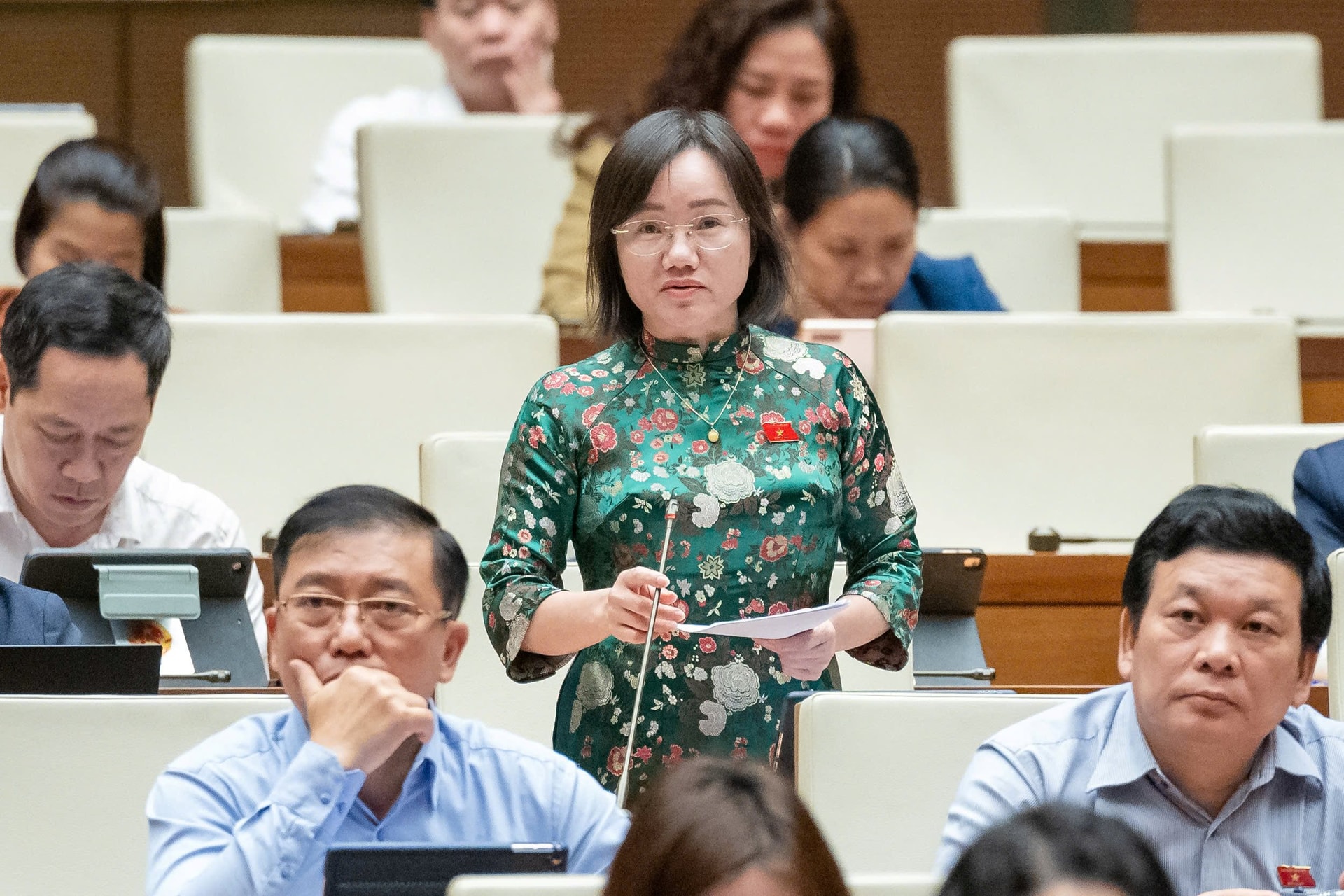
However, the delegate argued that the condition for extending the service age by 5 years, as stipulated in Clause 2, Article 13—that is, when the military needs officers with sufficient political and moral qualities, expertise, and good health—is too general and unclear. "To align with the decentralization policy and practical realities, I propose that the draft law should delegate to the Government or the Minister of National Defense the authority to regulate the extension of the service age for active-duty officers in exceptionally necessary cases," the delegate suggested.
The delegates also agreed that the draft Law amending and supplementing a number of articles of the Law on Officers of the Vietnam People's Army, to be considered, commented on, and passed by the National Assembly at the 8th session using the simplified procedure, is appropriate.
Responding to a delegate's explanation regarding the increase in the age of lieutenants from 46 to 50, General Phan Van Giang, Minister of National Defense, stated that officers typically reach the rank of captain within 10-12 years of graduation. "If officers only reach the rank of captain by the age of 50, their capabilities need to be re-evaluated," General Giang emphasized, adding that the retirement age for captains is not high, almost non-existent. General Giang stressed that military officers must be trained to be able to handle situations effectively and meet increasingly demanding and rapid professional requirements.
Regarding the proposal to increase the retirement age for army generals to 62, General Phan Van Giang shared: Due to the unique characteristics of organizational and command work in the army, we hope the National Assembly will allow us to maintain the retirement age for generals as proposed in the draft, which is 60 years old.
Source: https://baotainguyenmoitruong.vn/tang-tuoi-phuc-vu-tai-ngu-cua-si-quan-phu-hop-voi-tinh-chat-nhiem-vu-cua-quan-doi-382743.html
![[Photo] Closing Ceremony of the 10th Session of the 15th National Assembly](/_next/image?url=https%3A%2F%2Fvphoto.vietnam.vn%2Fthumb%2F1200x675%2Fvietnam%2Fresource%2FIMAGE%2F2025%2F12%2F11%2F1765448959967_image-1437-jpg.webp&w=3840&q=75)




![[Photo] Prime Minister Pham Minh Chinh holds a phone call with the CEO of Russia's Rosatom Corporation.](/_next/image?url=https%3A%2F%2Fvphoto.vietnam.vn%2Fthumb%2F1200x675%2Fvietnam%2Fresource%2FIMAGE%2F2025%2F12%2F11%2F1765464552365_dsc-5295-jpg.webp&w=3840&q=75)

































![[OFFICIAL] MISA GROUP ANNOUNCES ITS PIONEERING BRAND POSITIONING IN BUILDING AGENTIC AI FOR BUSINESSES, HOUSEHOLDS, AND THE GOVERNMENT](https://vphoto.vietnam.vn/thumb/402x226/vietnam/resource/IMAGE/2025/12/11/1765444754256_agentic-ai_postfb-scaled.png)












































Comment (0)