

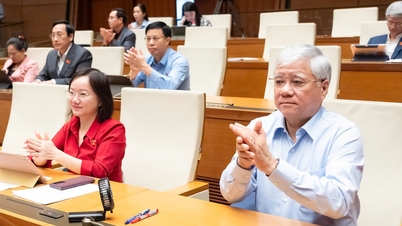
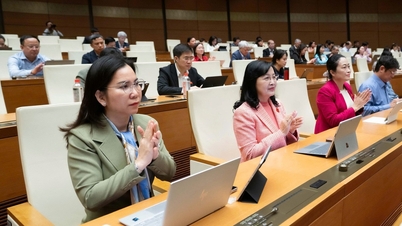
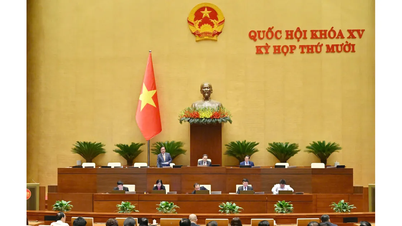
On the morning of December 10, the National Assembly voted to pass the amended Law on Personal Income Tax with 438/443 National Assembly deputies present in favor (92.6% of the total number of National Assembly deputies). The law consists of 4 chapters and 30 articles, effective from July 1, 2026.
The law stipulates that the progressive tax schedule for personal income will be reduced from 7 levels to 5 levels and the gap between levels will be widened. The lowest tax rate is 5% for income up to 10 million VND/month. The highest tax rate is 35% for income over 100 million VND/month, instead of the current 80 million.
Finance Minister Nguyen Van Thang said the new tax schedule will help individuals reduce the amount they have to pay. At the same time, it will also overcome the current situation of skyrocketing tax rates between levels.
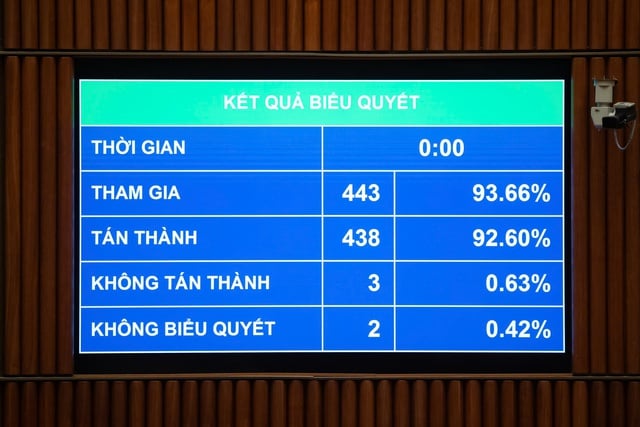
The National Assembly voted to pass the amended Law on Personal Income Tax with 438/443 National Assembly deputies present in favor (92.6% of the total number of National Assembly deputies).
Regarding the highest tax rate of 35% , according to the Government's report, this is the average level compared to other countries in the world . Some countries in the region such as Thailand, Indonesia, and the Philippines are also applying the highest personal income tax rate of 35%, while China is 45%. The Government said that if the 35% rate is adjusted down to 30% as some previous proposals, it will be considered a tax reduction policy for the rich.
Regarding the family deduction level , the National Assembly assigned the Government to adjust the family deduction level based on price and income fluctuations. According to the Resolution of the National Assembly Standing Committee passed on October 17, the deduction level for the taxpayer himself/herself will increase to 15.5 million VND/month (an increase of 4.5 million VND), for dependents to 6.2 million VND (an increase of 2.2 million VND). This level will apply from the 2026 tax period.
With this deduction, an individual taxpayer (without dependents) with an income of 17 million VND/month does not have to pay tax, after deducting insurance and family deductions for themselves. Specifically, an individual with an income of 17 million VND/month, the social insurance contribution is equal to the income. The insurance amount of 10.5% (social insurance 8%, health insurance 1.5% and unemployment 1%) is 1,785 million VND. The total amount of deductions is 17,285 million VND (after adding the personal deduction of 15.5 million), which is greater than the income, so they do not have to pay tax.
In case of having 1 dependent, an individual with an income of 24 million VND per month does not have to pay tax after deducting insurance. Similarly, an individual with an income of 31 million VND per month and 2 dependents does not have to pay tax when applying the progressive tax schedule.
0.1% tax on gold bar transactions
In addition, the National Assembly also "finalized" the content of taxing income from gold bar transfers. The law stipulates a tax of 0.1% on the transfer price of each gold bar transaction. Accordingly, the Government stipulates the taxable gold bar value threshold, the time of application of tax and adjusts the personal income tax rate for gold bar transfers in accordance with the roadmap for gold market management. The Government's assignment of specific regulations on the taxable gold bar value threshold is to exclude cases where individuals buy and sell gold for the purpose of saving and storing (not for business purposes).
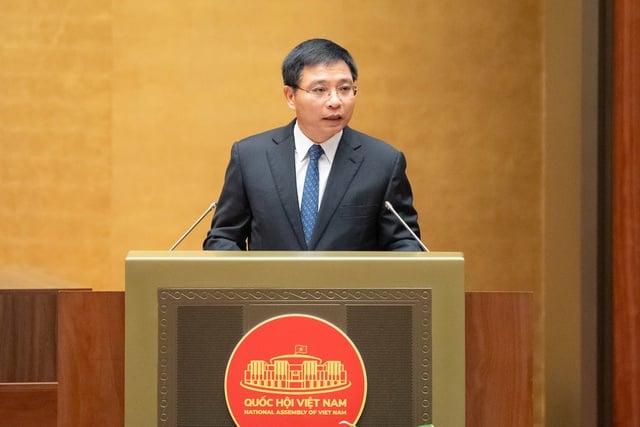
Finance Minister Nguyen Van Thang explained before pressing the button to pass the law.
Clause 1 of Article 7 of the regulations on personal income tax on business income states that "Resident individuals engaged in production and business activities with annual revenue of VND 500 million or less are not required to pay personal income tax."
The Government submitted to the National Assembly Standing Committee an adjustment of the level of revenue not subject to personal income tax to suit the socio-economic situation in each period. This level has increased by 300 million VND compared to the current regulations.
Explaining this content, Finance Minister Nguyen Van Thang said that the Government has added a basis to determine the non-taxable revenue threshold of VND500 million/year, ensuring that this non-taxable threshold is appropriate, does not destroy the livelihoods of small business households and individuals, and ensures livelihood and social security issues.
At the same time, this regulation also ensures fairness in taxation and does not affect or hinder the conversion of eligible household businesses into enterprises.
In particular, these business households and individuals will be able to choose the method of calculating tax based on the rate on revenue or income.
Source: https://phunuvietnam.vn/quoc-hoi-chot-muc-thue-thu-nhap-ca-nhan-cao-nhat-la-35-238251210093900256.htm





























![[Video] The craft of making Dong Ho folk paintings has been inscribed by UNESCO on the List of Crafts in Need of Urgent Safeguarding.](https://vphoto.vietnam.vn/thumb/402x226/vietnam/resource/IMAGE/2025/12/10/1765350246533_tranh-dong-ho-734-jpg.webp)


























































Comment (0)