

The Vietnam Railway Authority has submitted to the Ministry of Transport for consideration and approval the planning for the Lao Cai - Hanoi - Hai Phong - Quang Ninh railway line.
Nearly 450km long, connecting to the Chinese railway network.
According to the planning documents for the Lao Cai - Hanoi - Hai Phong - Quang Ninh railway line, the route passes through 10 provinces/cities: Lao Cai, Yen Bai, Phu Tho, Vinh Phuc, Hanoi, Bac Ninh, Hung Yen, Hai Duong, Hai Phong and Quang Ninh.
The total length of the line is 447.66 km; the starting point is the connection with the Chinese railway in Lao Cai province, and the end point is Cai Lan station in Ha Long city, Quang Ninh province.
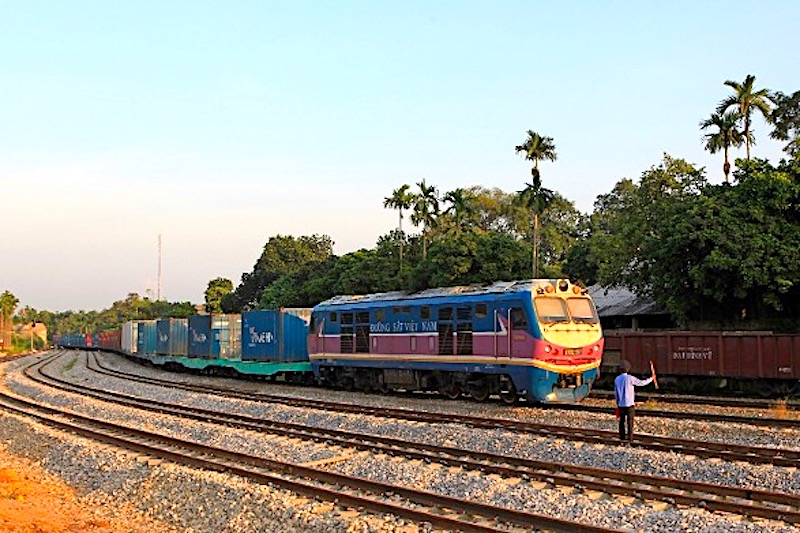
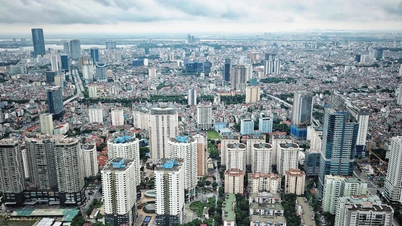
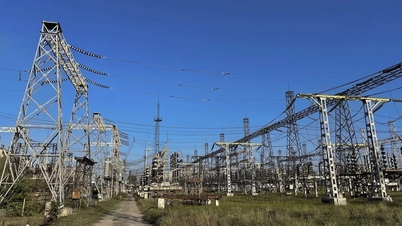
Consultants propose a plan for the Lao Cai - Hanoi - Hai Phong - Quang Ninh railway line, spanning 447.66km and passing through 10 provinces (Image: illustration).
Specifically, the route passes through Lao Cai province for a length of 64.82km; through Yen Bai for 76.95km; through Phu Tho for 60.05km; through Vinh Phuc for 41.75km; through Hanoi City and Bac Ninh province for 40.93km; through Hung Yen for 18.57km; and through Hai Duong for 40.97km.
Specifically, the section passing through Hai Phong City has a length of 81.66km, including: the main route to Lach Huyen port with a length of 46.25km; the branch route to Nam Do Son port with a length of 12.63km; the branch route to Dinh Vu port with a length of 7.88km; and the branch route connecting to Quang Ninh province with a length of 14.9km.
Finally, the section passing through Quang Ninh province has a length of 36.62km, of which: 25.95km is a newly constructed section; and 10.67km is the existing railway line.
The planned line includes 41 stations, comprising mixed-use stations, cargo stations, and technical stations.
Mixed stations include both train depots and intermediate stations. Train depots include: Lao Cai, Yen Thuong, Nam Hai Phong, Ha Long, and Cai Lan. Of these, Lao Cai station also serves as an international intermodal station; Ha Long station handles only passenger trains, and Cai Lan station handles only freight trains. For Yen Thuong station, the proposed options are: Option 1, a station handling both passenger and freight trains for 1435mm gauge railway lines in the North; and Option 2, a station handling only freight trains for 1435mm gauge railway lines in the North.
Intermediate stations handle both passenger and cargo traffic, concentrating operations in provincial and city centers including: Cam Con, Bao Ha, Son Hai, An Thinh, Yen Bai, Ha Hoa, Thanh Ba, Phu Tho, Viet Tri, Vinh Phuc, Binh Xuyen, Phuc Yen, Thach Loi, Bac Hong, Dong Anh, Lac Dao, Dai Dong, Binh Giang, Nam Hai Duong, and Nam Hai Phong.
The cargo terminals include the following stations: Lach Huyen Port Station, Nam Do Son Station, Nam Dinh Vu Station, and Dinh Vu Station.
Technical stations (for passing) include: Thai Nien Moi, Chau Que Thuong, Dong An, Xuan Ai, Y Can, Le Khanh, Lap Thach, Trung Mau, Tu Ky, Tan Vien, Phong Hai, Quang Yen, Minh Khai.
The route is also planned to include approximately 145 bridges with a total length of 106.628 km, crossing major rivers such as the Red River, Lo River, and Bach Dang River, as well as overpasses for expressways such as Hanoi - Lao Cai, Hanoi - Hai Phong, Hai Phong - Quang Ninh, national highways, and some provincial roads.
Regarding tunnels, the plan includes approximately 42 tunnels with a total length of 23.28 km in the two provinces of Lao Cai and Yen Bai.
Approximately 183 trillion VND is needed to implement the plan.
Based on the planning proposal, the planning consultant has calculated the capital requirement for investing in the Lao Cai - Hanoi - Hai Phong - Quang Ninh railway line (during the planning period up to 2050) to be approximately 183,856 billion VND.
Accordingly, the costs include land clearance of VND 24,065 billion; construction and equipment costs of VND 110,138 billion; other costs of VND 16,104 billion; and contingency costs of VND 33,551 billion.
Regarding the roadmap, the Vietnam Railway Authority proposes that the Lao Cai - Hanoi - Hai Phong section be invested in and constructed by 2030; the Hai Phong - Quang Ninh section will be studied and implemented after 2030, along with the investment roadmap for the coastal railway line from Nam Dinh - Thai Binh - Hai Phong - Quang Ninh.
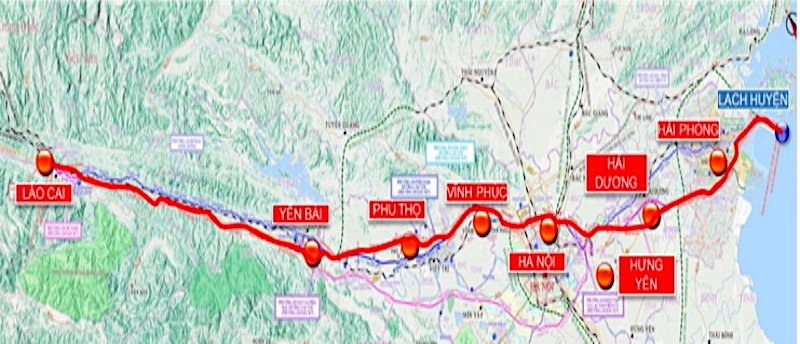
The proposed railway route is from Lao Cai to Hanoi, Hai Phong, and Quang Ninh.
According to the investment plan, by 2030, the single-track, electrified, 1435mm gauge railway line from Lao Cai to Hanoi to Hai Phong will be basically completed.
Therefore, the planning consultant anticipates a phased investment plan: Phase 1 (before 2030, construction phase) has a total capital requirement of VND 160,770 billion, including: Land acquisition costs (100%) VND 24,065 billion, construction and equipment costs (95%) VND 104,631 billion, other costs (95%) VND 15,299 billion, and contingency costs (50%) VND 16,775 billion.
Phase 2 (after 2030, completion and final settlement phase) requires a total capital of VND 23,086 billion.
The Vietnam Railway Authority proposed solutions for organizing the implementation of the plan, including: mobilizing and allocating investment capital; developing railway transport; developing the railway transport industry; addressing environmental issues, science and technology; developing human resources, and international cooperation; and organizing and monitoring the implementation of the plan…
Accordingly, regarding the mobilization and allocation of investment capital, it is necessary to ensure State budget funds for the management, maintenance, and investment in railway infrastructure. Therefore, priority should be given to allocating central government budget funds in the medium-term and annual public investment plans at an appropriate rate to ensure the development of national railway infrastructure according to the plan.
At the same time, preferential loans should be utilized. This is a breakthrough resource in the railway sector for large-scale projects with high spillover effects and inter-regional scope.
To attract socialized resources and encourage investment in transportation vehicles and supporting infrastructure (warehouses, yards, loading and unloading equipment, etc.), it is necessary to select a model and refine the policy framework for the socialization of investment in railway infrastructure.
"Specifically, allow land clearance to be separated into an independent project for implementation and mobilize investment resources right from the investment policy approval stage to proceed with implementation first. For new types of equipment and technologies, a roadmap for technology transfer after project investment should be stipulated," a representative from the Vietnam Railway Authority suggested.
Source: https://www.baogiaothong.vn/quy-hoach-tuyen-duong-sat-di-qua-10-tinh-phia-bac-192241102224801013.htm

![[Photo] Solemn bathing ceremony and Buddha procession in Hue](https://vphoto.vietnam.vn/thumb/1200x675/vietnam/resource/IMAGE/2026/05/31/1780228263543_1-jpg.webp)
![[Photo] Admire the coral "masterpiece" amidst the million-year-old heritage of Dak Lak province.](https://vphoto.vietnam.vn/thumb/1200x675/vietnam/resource/IMAGE/2026/05/31/1780221235105_anh-man-hinh-2026-05-31-luc-16-53-27.png)






















![[Video] Sunset at Lap An Lagoon – Where the sun sets over the fishing nets](https://vphoto.vietnam.vn/thumb/340x192/vietnam/resource/IMAGE/2026/05/31/1780192137701_beach-landscape-sea-water-nature-grass-745871-pxhere-com.jpeg)





































![[Photo] Admire the coral "masterpiece" amidst the million-year-old heritage of Dak Lak province.](https://vphoto.vietnam.vn/thumb/402x226/vietnam/resource/IMAGE/2026/05/31/1780221235105_anh-man-hinh-2026-05-31-luc-16-53-27.png)
































Comment (0)