

Addressing difficulties and obstacles after the reorganization of administrative units.
The Law amending and supplementing a number of articles of the Law on Urban and Rural Planning, recently passed by the National Assembly, consists of 4 articles, stipulating: amendments and supplements to a number of articles of the Law on Urban and Rural Planning; regulations on handling difficulties and obstacles in the preparation, adjustment and approval of zoning plans for urban areas when implementing the rearrangement of administrative units at all levels and the organization of two-tiered local governments; implementing provisions; and transitional provisions.
According to the new Law, the authority, procedures, and processes for establishing, adjusting, and approving zoning plans are stipulated as follows: The Provincial People's Committee assigns tasks to subordinate agencies and units to prepare planning tasks and zoning plans; the specialized agency on urban and rural planning under the Provincial People's Committee organizes the appraisal of planning tasks and zoning plans.
The Provincial People's Committee shall consider and approve the planning tasks and zoning plans based on the appraisal report and documents submitted by the provincial-level specialized agency on urban and rural planning; the Provincial People's Committee shall report to the Provincial People's Council for a decision before approval in cases where the preparation of zoning plans for urban areas results in changes exceeding the provincial-level land use indicators as stipulated in the land law.
The Provincial People's Committee shall report to the Provincial People's Council for decision before organizing the creation of new plans or making adjustments in cases where the projected population size is lower than the level stipulated in Clause 1 of this Article; The procedures for obtaining opinions, appraising, and approving planning tasks and zoning plans at points a, b, and c of this Clause shall comply with the provisions of the law on urban and rural planning.
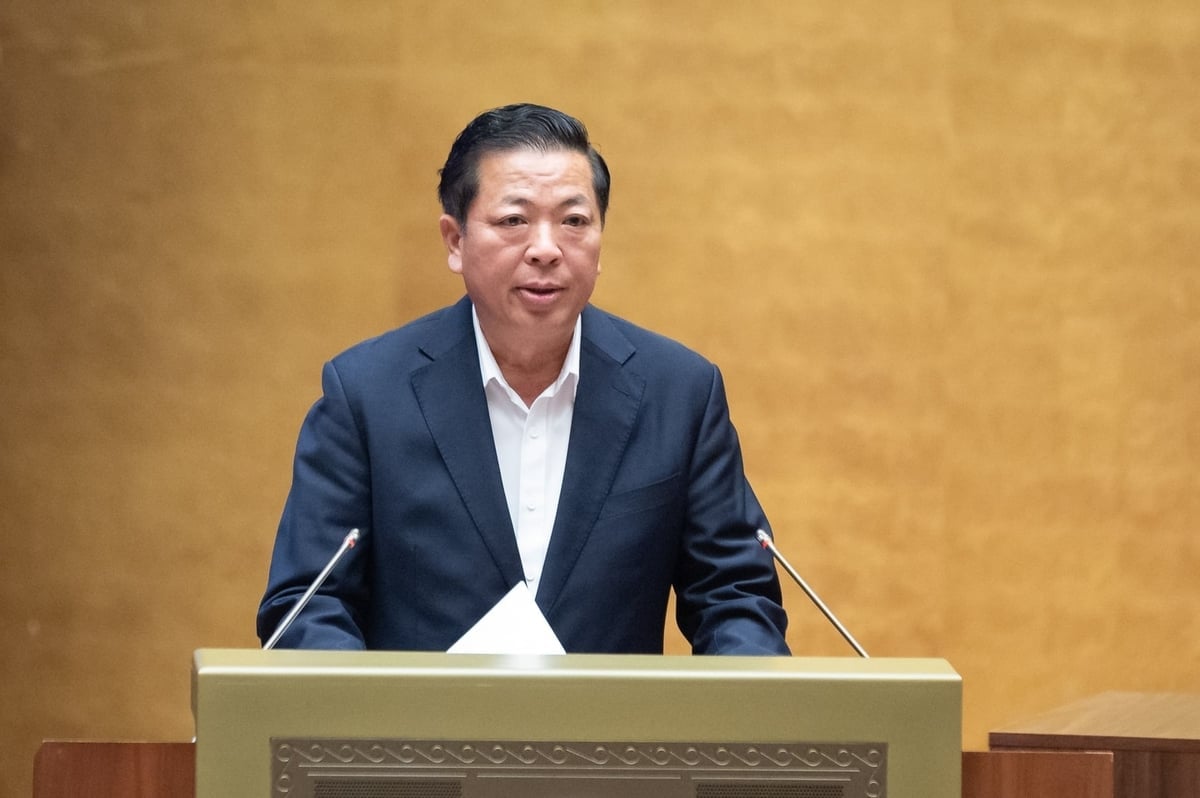
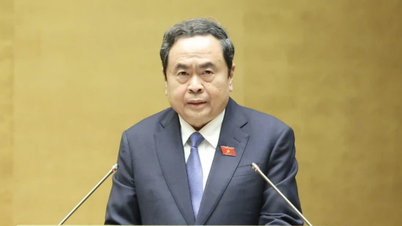
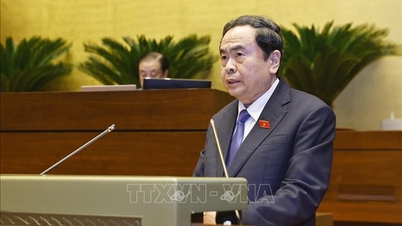
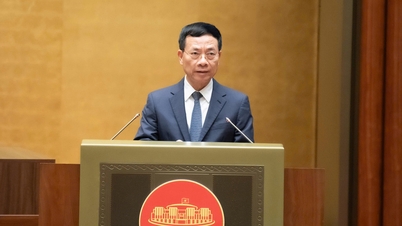
Minister of Construction Tran Hong Minh presents the report on receiving and explaining feedback. Photo: Pham Thang.
This Law shall come into effect on January 1, 2026. During the period from January 1, 2026 to February 8, 2027, the provisions of Article 2 of this Law shall take precedence.
A city master plan is necessary.
Earlier, presenting the Report on the acceptance and explanation of the opinions of the National Assembly Standing Committee on the acceptance, explanation, and revision of the draft Law amending and supplementing a number of articles of the Law on Urban and Rural Planning and the results of the review of language, format, and presentation techniques by the Ministry of Justice , Minister of Construction Tran Hong Minh stated that the draft Law amending and supplementing a number of articles of the Law on Urban and Rural Planning has been developed and perfected by the Government, the Ministry of Construction, and the drafting agency based on the full acceptance and explanation of the opinions of the National Assembly Standing Committee at the 50th Session, the opinions of the National Assembly's Economic and Financial Committee and other National Assembly agencies, and the opinions of National Assembly deputies discussed in groups and in the plenary session.
Specifically, regarding the regulations on the preparation of city master plans in Article 22 of Law No. 47/2024/QH15, the reviewing agency and National Assembly deputies gave opinions in discussions in committees and the plenary session. Besides the suggestion to study the consolidation of provincial plans and city master plans, there was a second group of opinions:
There are opinions in agreement with the proposal to create separate provincial and general city plans (and to specifically amend the draft Planning Law (amended) regarding the content of the Provincial Plan for the City, which should only define major development directions, strategic directions, and be distinct from the urban development direction of the City in the General City Plan, and different from the Provincial Plan for other provinces).
Some opinions suggest that only one plan should be created, namely the city's master plan (which needs to ensure it covers all aspects of socio-economic development, environmental protection, technical infrastructure, and urban spatial organization).
Some opinions support the policy of having a master plan for large cities and megacities like Ho Chi Minh City and Hanoi.
Some suggest that in cases where consolidation is not possible, the roles should be clearly defined, with provincial planning only outlining the overall direction, while the city master plan serves as a tool for guiding urban spatial development, and as a basis for developing sub-area plans and detailed plans…
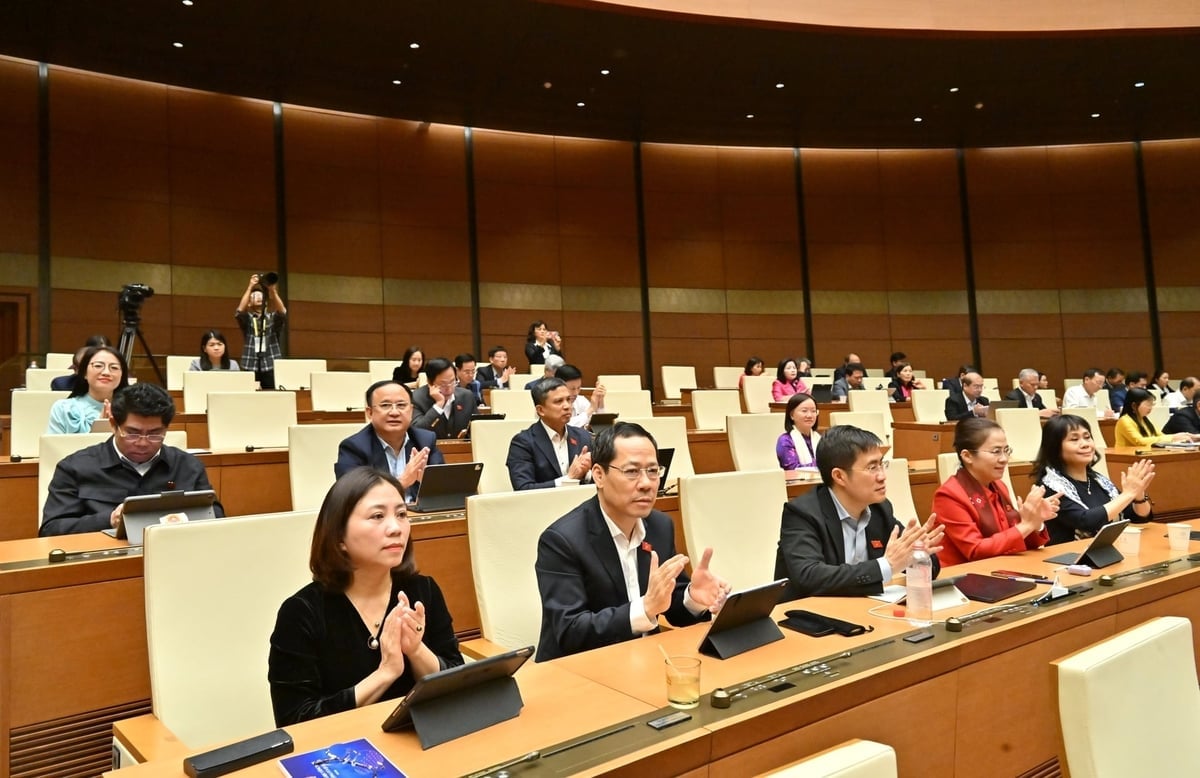
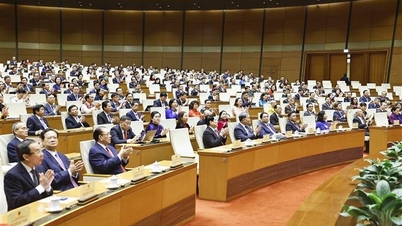
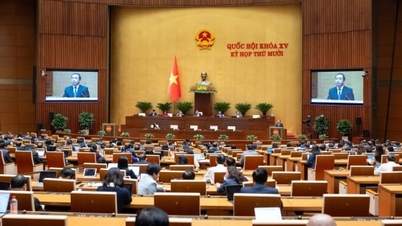
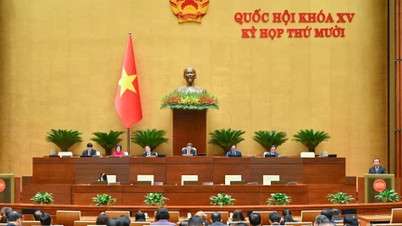
Delegates attending the session. Photo: Quang Khánh.
The Minister of Construction stated that the draft Law has been studied, incorporated, explained, and refined by the agency in charge of drafting the Law project in accordance with the second group of opinions mentioned above, in coordination with the Ministry of Finance, the agency in charge of drafting the Law on Planning (amended), and other relevant agencies.
Regarding the necessity of establishing a city master plan, the drafting agency explained the basic reasons as follows: cities play a central role in promoting socio-economic development at the regional and national levels, and serve as hubs for international trade; city master plans define overall development goals and orientations, long-term development plans; and guide and organize urban and rural spaces, technical infrastructure systems, social infrastructure, and housing for the city. The master plan serves as the basis for establishing urban and rural planning at various levels (sub-areas - detailed plans) within the city.
Furthermore, according to the 2024 Land Law, the city does not create a provincial-level land use plan; the city's land use plan is based on the general plan and other plans as stipulated by law on urban and rural planning... The amended Planning Law, passed by the National Assembly, revises the provincial planning content for centrally-governed cities to include strategic directions without overlapping content. Therefore, a general city plan is necessary as a territorial spatial plan to serve as the basis for implementing specific planning steps (zoning - details), investment in construction, and urban and rural development.
In accordance with Conclusion No. 224-KL/TW dated December 8, 2025, of the Politburo on continuing to implement Resolution No. 06-NQ/TW dated January 24, 2022, of the Politburo on planning, construction, management, and sustainable development of Vietnamese cities until 2030, with a vision to 2045, the agency in charge of drafting the Law project will continue to closely coordinate with relevant agencies in researching, summarizing, and evaluating practical experiences in implementing the National Assembly's pilot resolutions on special mechanisms and policies for Hanoi and Ho Chi Minh City. This will provide a more practical basis and arguments for proposing to competent authorities to consider the possibility of nationwide replication, according to a suitable roadmap and timeframe.
Source: https://nongnghiepmoitruong.vn/quoc-hoi-thong-qua-mot-so-van-de-luat-quy-hoach-do-thi-va-nong-thon-d788816.html
















































![[OFFICIAL] MISA GROUP ANNOUNCES ITS PIONEERING BRAND POSITIONING IN BUILDING AGENTIC AI FOR BUSINESSES, HOUSEHOLDS, AND THE GOVERNMENT](https://vphoto.vietnam.vn/thumb/402x226/vietnam/resource/IMAGE/2025/12/11/1765444754256_agentic-ai_postfb-scaled.png)














































Comment (0)