

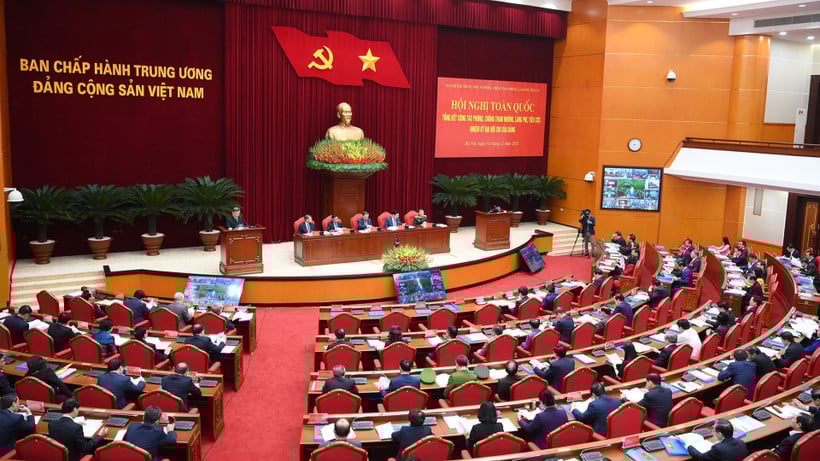
Attending the conference were members of the Politburo : President Luong Cuong; Prime Minister Pham Minh Chinh; Standing Member of the Secretariat Tran Cam Tu; Phan Dinh Trac, Secretary of the Central Committee, Head of the Central Internal Affairs Commission, and Standing Deputy Head of the Central Steering Committee; Le Minh Hung, Secretary of the Central Committee, Head of the Central Organization Commission, and Deputy Head of the Central Steering Committee; and General Luong Tam Quang, Secretary of the Central Public Security Party Committee, Minister of Public Security, and Deputy Head of the Central Steering Committee.
Also attending were members of the Politburo, members of the Secretariat, members of the Central Committee of the Party, members of the Central Steering Committee, leaders of the Government, the National Assembly , the Vietnam Fatherland Front, central Party committees, Party committees directly under the Central Committee, central ministries and agencies, Secretaries of Provincial and City Party Committees, Standing Committees of provincial-level Steering Committees, and heads of agencies and units with functions in preventing and combating corruption, waste, and negative phenomena at the central and local levels…
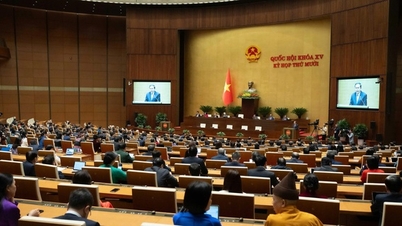
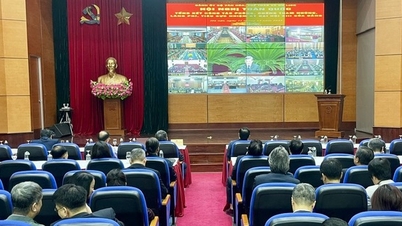
The conference was held in a hybrid format, combining in-person and online participation, connecting to over 4,000 locations across central ministries, departments, and agencies; military regions, branches of the armed forces; and provinces, cities, communes, wards, and special zones nationwide, with a total of over 190,000 delegates.
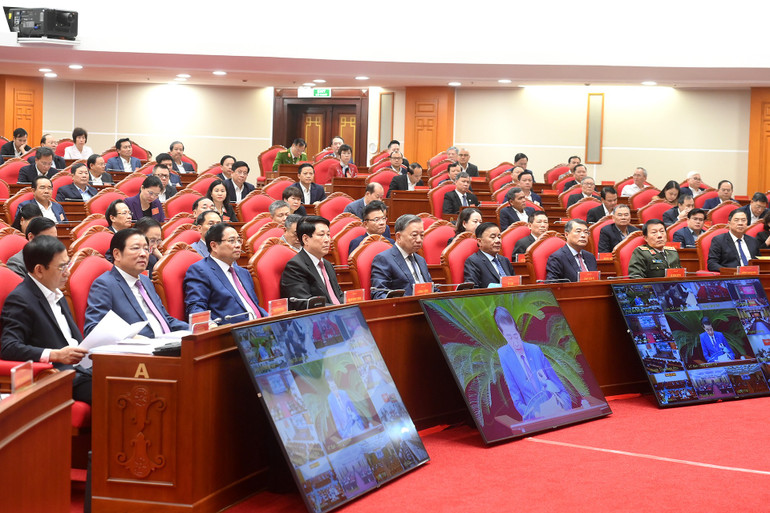
The conference conducted a comprehensive review and assessment of the nationwide fight against corruption, waste, and negative phenomena from the beginning of the 13th Party Congress term to the present; it summarized experiences, best practices, and lessons learned in leadership, direction, and implementation by Party committees, Party organizations, Steering Committees at all levels, agencies with functions in preventing and combating corruption, waste, and negative phenomena, and the entire political system. The conference also pointed out remaining limitations and weaknesses, and from there proposed appropriate policies, tasks, and solutions to ensure that the fight against corruption, waste, and negative phenomena achieves solid results in the future.
Looking back at the work of preventing and combating corruption, waste, and negative phenomena during the 13th National Congress term and after 20 years of implementing Resolution No. 3 of the 10th Central Committee, the work of preventing and combating corruption, waste, and negative phenomena has made strong progress, basically achieving the goals and requirements set forth in the resolution, especially during the 13th National Congress term, contributing to building a cleaner and stronger Party and political system, promoting socio-economic development, and consolidating the people's trust in the Party, the State, and the socialist regime.
The fight against corruption, waste, and negative phenomena is becoming increasingly mature and in-depth, involving the entire political system, the unanimous support of the people, and the close and coordinated cooperation of functional agencies. The understanding, theory, and principles and methods of combating corruption, waste, and negative phenomena have matured significantly and are becoming increasingly perfected; there has been a strong renewal of thinking and methods, correctly selecting the focus, breakthroughs, and long-standing problems to concentrate leadership and guidance; and the scope has expanded from combating corruption to combating negative phenomena and waste.
Internal affairs agencies, inspection, auditing, investigation, prosecution, trial, and enforcement agencies have made great efforts, demonstrated high determination, coordinated closely and smoothly, and proactively identified, detected, and strictly and comprehensively handled many serious and complex cases of corruption, waste, and negative practices, in accordance with the principle of no forbidden zones, no exceptions, and handling one case as a warning to the entire region.
Many cases have resulted in the recovery of 100% of lost or misappropriated assets. Some cases involved investigations, prosecutions, and trials conducted in the absence of defendants or those who had fled; the handling of violators was differentiated and managed in a way that was both strict and humane. During the 13th Party Congress term, disciplinary action was taken against 174 officials under central management, including some former key leaders of the Party and State; of these, 66 officials were prosecuted criminally, both currently serving and retired.
Preventive measures have been implemented more comprehensively and effectively, creating many noticeable changes. The improvement of institutions based on new thinking has both promoted development and closed loopholes that easily lead to corruption, waste, and negative practices. The revolution in restructuring and streamlining the political system's organizational apparatus and implementing a two-tiered local government model has saved a significant amount of resources. Digital transformation, transparency, and accelerated administrative procedure reform have reduced direct contact and eliminated many causes and conditions that give rise to corruption, waste, and negative practices.
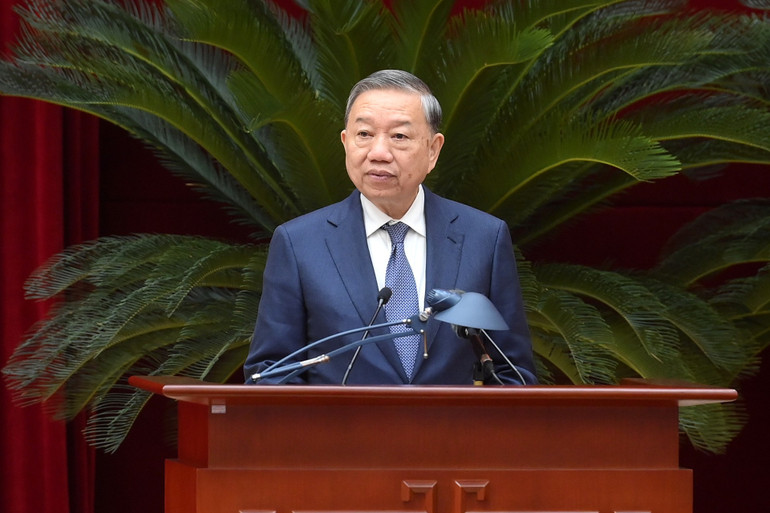
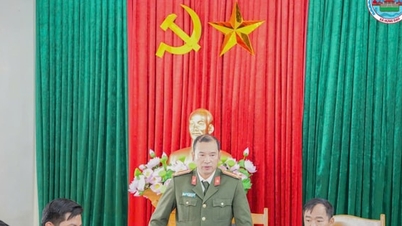
Speaking at the conference, General Secretary To Lam commended and highly appreciated the efforts, endeavors, and achievements in the fight against corruption, waste, and negative phenomena during the 13th Party Congress term and throughout the past period. The vibrant practical experience of the fight against corruption, waste, and negative phenomena during the 13th Party Congress term has yielded many valuable lessons, which can be summarized as: perseverance, determination, consensus, comprehensiveness, and breakthroughs. These breakthroughs encompass both awareness and action, with decisive, correct, timely, and practical policies that prioritize the interests of the nation, the people, and the country above all else, serving the best possible purpose of socio-economic development and ensuring national defense and security.
However, alongside the achievements, there are still shortcomings and limitations. The General Secretary pointed out that a segment of cadres and Party members lack self-cultivation and training, exhibiting ideological and political degradation, moral decay, and lifestyle deviations, showing signs of shirking responsibility, avoiding mistakes, and being afraid to act. The legal framework in some areas still has loopholes and inadequacies. The implementation of some preventive measures has not been substantive or effective. Corruption, waste, and negative practices in some areas remain complex and serious. Many violations are widespread, repeated, and prolonged, especially some cases involving collusion and connections between corrupt officials and businesses, forming interest groups for personal gain…
It is necessary to clearly define responsibilities, develop plans, and implement effective corrective measures to address existing shortcomings and limitations, ensuring they are not repeated and absolutely not allowed to recur in the future.
In thoroughly addressing the tasks of combating corruption, waste, and negative phenomena during the 14th Party Congress term and in the coming period, the General Secretary emphasized that in the coming period, many large-scale projects will be implemented, and many new policies and guidelines will be applied with more open mechanisms to promote socio-economic development. Alongside these positive aspects, there will be potential risks of corruption, waste, and negative phenomena if not strictly controlled. Therefore, we must absolutely not be complacent or satisfied with the results achieved. The general spirit is to be more decisive, more effective, more sustainable, resolute, and persistent in the fight against corruption, waste, and negative phenomena, with no forbidden areas and no exceptions, and with the highest political determination from the central to the grassroots level.
The requirement is that the fight against corruption, waste, and negative practices must prioritize the national interest, the interests of the people, and the country above all else. The struggle must be resolute, persistent, regular, and continuous, with strict yet humane handling of cases, without any forbidden areas or exceptions, while simultaneously protecting officials who are innovative, creative, and courageous in their thinking and actions for the common good.
We must shift strongly towards prevention, prioritizing prevention as the main focus, and promoting the role and fighting spirit of grassroots Party organizations and the supervision of the people. We must emphasize the exemplary responsibility of leaders in proactively identifying, predicting, and warning of violations early, from afar, and at the grassroots level, preventing minor violations from accumulating into major ones, and preventing the recurrence of past violations.
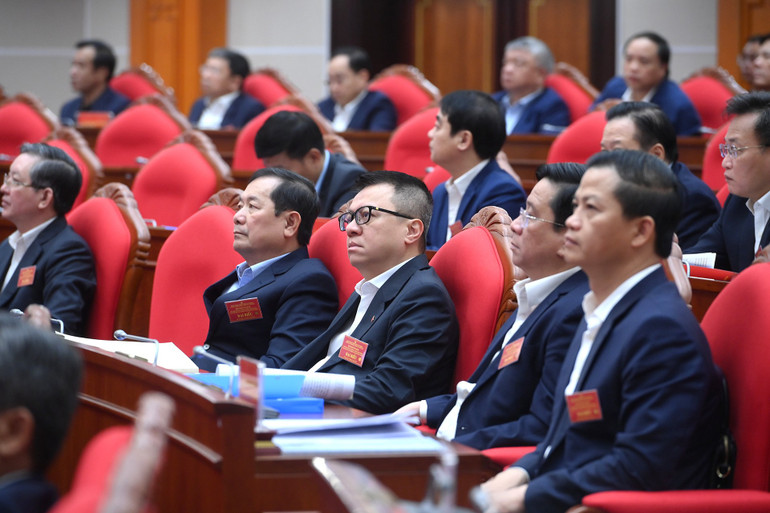
Regarding key tasks, the General Secretary proposed implementing comprehensive preventive measures early, from the outset, and at the root to eliminate corruption, waste, and negative practices. Prevention must become a mandatory requirement in all programs, plans, and tasks related to Party building, the political system, and socio-economic development.
Continue to improve the mechanisms for controlling power in all areas; the higher the power, the stricter the supervision must be. Strongly innovate inspection, supervision, auditing, and investigation work towards proactive prevention and regular monitoring from the moment policies and guidelines are issued; strengthen self-inspection and supervision at the grassroots level, from the Party branches; tighten regulations to prevent waste, and instill an economic accounting mindset in the use of state resources; put an end to scattered and inefficient investments, and promptly resolve delays in projects and works.
The General Secretary demanded that integrity education become a regular practice, a mandatory requirement at all levels of education, in all Party organizations, agencies, and units; that an action strategy be developed, and that the goal of building an honest nation and an honest society be resolutely achieved with three pillars: honest institutions, honest public service, and an honest team of officials and civil servants.
Strengthen judicial reform; accelerate the digitalization of administrative procedures, ensuring openness and transparency. Continue the proactive approach of detecting and strictly and comprehensively handling acts of corruption, waste, and negativity; focus on inspection, supervision, investigation, and auditing in areas and localities prone to corruption, waste, and negativity.
Building a truly honest, people-oriented, and people-serving two-tier local government apparatus, preventing delays, shirking of responsibility, and strictly detecting and handling acts of harassment and inconvenience to citizens and businesses. Improving and effectively implementing the mechanism of direct people's supervision; promoting the role of the Fatherland Front, mass organizations, and the press in preventing and combating corruption, waste, and negative practices.
Continue to improve the organizational structure, enhance the capacity and effectiveness of coordination among agencies responsible for preventing and combating corruption, waste, and negative phenomena; perfect the institutions for preventing and combating corruption, waste, and negative phenomena, ensuring there is no overlap in functions and tasks, and that operations are truly effective and efficient from the central to local levels.
In particular, corruption must be prevented and combated within anti-corruption agencies themselves; a truly honest, capable, and clean team of officials must be built. Every official and Party member must be exemplary, self-reflecting, self-correcting, and cultivating integrity; every agency must build a transparent and disciplined working environment; and every citizen must cooperate, monitor, and contribute with the highest political determination to continue pushing back corruption, waste, and negative phenomena, contributing to the successful implementation of the Party's 14th National Congress Resolution.
The General Secretary also emphasized three breakthroughs in the coming period: A breakthrough in institutions, immediately addressing loopholes and shortcomings in legal and Party regulations; promptly completing a set of indicators to assess the effectiveness of anti-corruption, anti-waste, and anti-negative practices, and applying them uniformly nationwide. A breakthrough in personnel work, tightening discipline and order, strengthening the management and supervision of cadres, and resolutely removing from the system those cadres who are corrupt, wasteful, negative, shirk responsibility, or are afraid to act. A breakthrough in the application of science, technology, and digital transformation, ensuring transparency, improving databases, expanding electronic invoices, conducting public bidding and auctions on digital platforms, and controlling assets and income using technology…
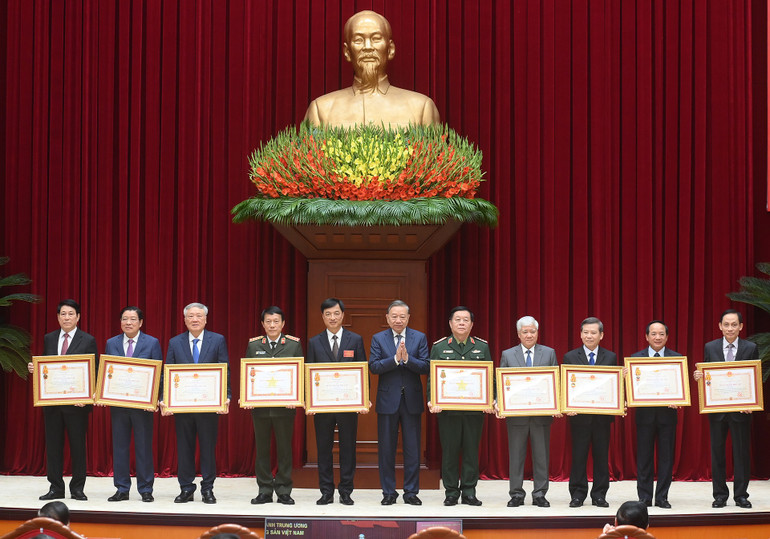
At the conference, General Secretary To Lam and other Party and State leaders awarded various medals to 35 collectives and 56 individuals who had achieved outstanding results in the fight against corruption, waste, and negative phenomena.
Source: https://nhandan.vn/quyet-liet-hieu-qua-ben-vung-hon-trong-dau-tranh-phong-chong-tham-nhung-lang-phi-tieu-cuc-post929549.html
![[Photo] Closing Ceremony of the 10th Session of the 15th National Assembly](/_next/image?url=https%3A%2F%2Fvphoto.vietnam.vn%2Fthumb%2F1200x675%2Fvietnam%2Fresource%2FIMAGE%2F2025%2F12%2F11%2F1765448959967_image-1437-jpg.webp&w=3840&q=75)












![[Video] Secretary General of the National Assembly presides over international press conference announcing the results of the 10th Session](https://vphoto.vietnam.vn/thumb/402x226/vietnam/resource/IMAGE/2025/12/11/1765457358315_img-2357-6607-png.webp)



















![[OFFICIAL] MISA GROUP ANNOUNCES ITS PIONEERING BRAND POSITIONING IN BUILDING AGENTIC AI FOR BUSINESSES, HOUSEHOLDS, AND THE GOVERNMENT](https://vphoto.vietnam.vn/thumb/402x226/vietnam/resource/IMAGE/2025/12/11/1765444754256_agentic-ai_postfb-scaled.png)












































Comment (0)