

At the northernmost point of the country, it is a great pride for the people of Lo Lo Chai when recently, Lo Lo Chai village in Tuyen Quang province was officially honored by the United Nations Tourism Organization - UN Tourism as "The best tourist village in the world in 2025".
Mentioning Dong Van commune, Tuyen Quang province is mentioning Lung Cu flagpole, the sacred northernmost point of the Fatherland. About a kilometer from the foot of the flagpole, there is a small village nestled peacefully at the foot of Dragon Mountain - Lo Lo Chai village.
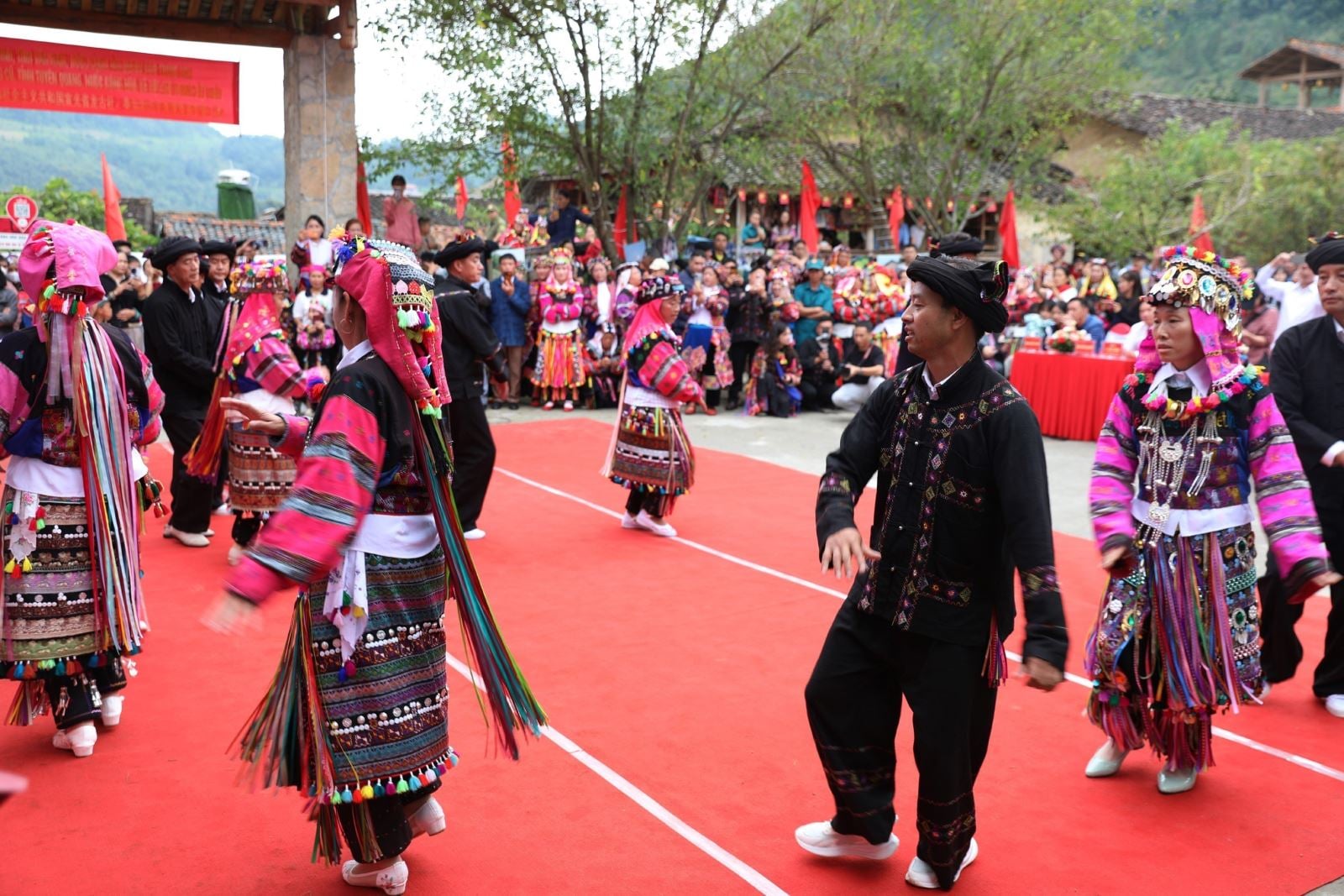
Just over 10 years ago, this was still a poor land. Yet today, Lo Lo Chai has become a "bright spot" of community tourism . In the cold morning mist, the ancient yin-yang tiled roofed rammed earth houses appear amidst the green of the mountains and forests. The Lo Lo ethnic people here still keep intact their houses, traditional costumes and bustling drum dances during the festival.
Accordingly:
1. All cultural heritages in the territory of Vietnam, originating domestically or from abroad, under any form of ownership, shall be managed, protected and have their values promoted in accordance with the provisions of this Law and other relevant legal provisions.
2. Managing, protecting and promoting the value of cultural heritage is the right, obligation and responsibility of all agencies, organizations, communities and individuals.
3. Vietnam's cultural heritage abroad is protected under international law and according to the provisions of international treaties to which the Socialist Republic of Vietnam is a member.
4. Ensure national and ethnic interests in harmony with the legitimate rights and interests of organizations, communities and individuals; respect cultural diversity, dialogue between communities and ethnic, regional and local characteristics.
5. Prioritize the protection and promotion of cultural heritage values at risk of being lost, historical and cultural relics, scenic spots, cultural heritage of ethnic minority communities, mountainous, border, island areas, very small ethnic minorities and cultural heritages of value to the entire community and society.
6. Ensure maximum preservation of the original elements constituting the relic and the originality of the documentary heritage; the inherent value and form of expression of the intangible cultural heritage.
7. Respect the rights of intangible cultural heritage owners and intangible cultural heritage artisans in deciding on the elements that need to be protected and the form and level of promotion of cultural heritage; identify risks and impacts that threaten the existence and choose solutions to protect cultural heritage.
8. Integrate the protection and promotion of cultural heritage values into national, regional and local socio-economic development strategies, planning and plans.
The pioneer of tourism in this village is Mr. Sinh Di Gai, Head of Lo Lo Chai village. Mr. Sinh Di Gai shared that he was born and raised in Lo Lo Chai, witnessed many generations of hard-working farmers, attached to corn and rice plants but still did not have enough to eat. The turning point in Mr. Sinh Di Gai's life began in 2009. At that time, Ha Giang province (old) organized a tour to visit and learn from experiences in Sa Pa (Lao Cai) and he was lucky to join the group. When he arrived, he was very surprised to see foreign guests eating, talking and resting at local people's houses. The next day, when the guests left, they gave money back to the host.
The young village chief was very excited at that time, thinking that he would learn this way of doing tourism because it would preserve the national identity, ensure environmental hygiene and have a stable source of income, many times higher than growing rice and corn. However, it was not until 2 years later that Sinh Di Gai's idea became a reality. In 2011, Gai encouraged his family to build the first homestay model on a small scale, with only one room, enough for 6 guests to stay. Thanks to his own efforts and desire to learn, the attention of authorities at all levels, and the support of the Embassy of Luxembourg in piloting the community tourism model, the development of community tourism and experiential tourism in Lo Lo Chai village has gradually taken shape.
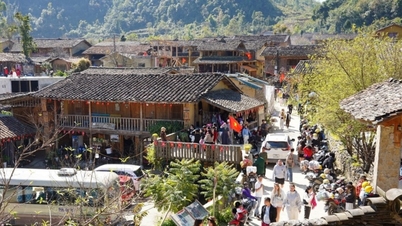
Located at the foot of Lung Cu flagpole, between the gray rocky mountainside and the high sky, Lo Lo Chai is like a "living museum" of the Black Lo Lo people with houses made of earthen walls, hand-folded stone walls and a lifestyle imbued with identity.
Mr. Do Ba Cong - Owner of A Loi homestay said: To keep tourists coming to visit and stay, the most important thing is that the families in the village have preserved the yin-yang tiled roofs and earthen houses, the rooms in the house are also decorated eye-catchingly. Although they are earthen houses, they are still modern, guests stay warm in winter, cool in summer, and clean.
Not only welcoming guests, Lo Lo women also preserve and spread traditional culture. From the hands that used to plow the fields, they now skillfully weave indigo fabrics, sew them into colorful costumes, and serve tourists. From a poor village with more than 70 near-poor households, now Lo Lo Chai has only a few poor households. Every house has a motorbike, television, refrigerator; the village roads are clean, garbage is treated, and the environment is clean.
According to Mr. Sinh Di Gai, the village was built as a cultural village in 2007, and in 2018 was recognized as an OCOP community tourism village. Currently, 40 households are doing community tourism. Each month, the village welcomes more than 1,000 guests, earning more than 5 billion VND per year. This proves the sustainable development path of community tourism. Tourists come here to experience local life - eating thang co, drinking corn wine, watching the Khen dance and immersing themselves in the highland festival atmosphere.
Preserving identity to develop, and developing to preserve identity is the path that the Lo Lo ethnic group in Lo Lo Chai is taking. Mr. Sinh Di Gai said that all households in the village have renovated their houses according to the architecture of the Lo Lo ethnic group. The village has a rule that everything must follow the architecture. Visitors can experience the dance of the Lo Lo ancestors and love songs. The costumes and houses are all of the Lo Lo ethnic group.
The valuable thing is that the community here has done tourism with all their heart - developing a green homestay model, collecting waste, limiting single-use plastic, planting trees, improving water resources while still preserving the spirit of the national culture. Each person becomes a "cultural ambassador", telling the story of the village with a smile, with friendly eyes, with a cup of fragrant corn wine to invite guests from afar.
Ms. Diu Di Huong, owner of Cuc Bac cafe, the most popular spot in Lo Lo Chai village, proudly shared: "Each individual must be aware of preserving the unique features of their ethnic culture. Tourism workers in the Lo Lo community work together to bring those cultural features to everyone. Each child of Lo Lo Chai village is an individual who preserves and spreads their ethnic culture."
Mr. Nguyen Toan Thang, a tourist from Hanoi said: “Coming to Lo Lo Chai, I had the opportunity to experience and listen to the flute playing and talk about the Lo Lo dance. I also learned about the culture and how labor developed. This was a very memorable experience and I will definitely come back here.”
Ms. Nguyen Thuy Hien, a tourist from Ho Chi Minh City, excitedly said: “This is the first time I have heard of Lo Lo Chai village and this is also the first time I have visited the design and planning of the village, it is very beautiful. I am very impressed because the people have a prosperous life, traditional culture is preserved with unique architecture, I even think it is the most beautiful compared to the villages I have been to.”
The above are just two of the many tourists who have visited Lo Lo Chai village at the foot of the sacred Dragon Mountain - that small village is telling a story about the changes, pride and aspirations of the land and people in the northernmost part of the country. If anyone has visited Lo Lo Chai village at least once, seen the ancient earthen houses, experienced the green homestay model, lived with the locals, and felt the peaceful life next to Lung Cu flagpole, then they will understand the comments about Lo Lo Chai village of these tourists.
Article ordered by the Department of Legislation, Ministry of Culture, Sports and Tourism.
Source: https://baotintuc.vn/van-hoa/sac-mau-lo-lo-chai-duoi-chan-nui-rong-20251205145418656.htm
![[Photo] 60th Anniversary of the Founding of the Vietnam Association of Photographic Artists](/_next/image?url=https%3A%2F%2Fvphoto.vietnam.vn%2Fthumb%2F1200x675%2Fvietnam%2Fresource%2FIMAGE%2F2025%2F12%2F05%2F1764935864512_a1-bnd-0841-9740-jpg.webp&w=3840&q=75)


![[Photo] National Assembly Chairman Tran Thanh Man attends the VinFuture 2025 Award Ceremony](/_next/image?url=https%3A%2F%2Fvphoto.vietnam.vn%2Fthumb%2F1200x675%2Fvietnam%2Fresource%2FIMAGE%2F2025%2F12%2F05%2F1764951162416_2628509768338816493-6995-jpg.webp&w=3840&q=75)


















































































Comment (0)