


According to the draft, construction activities are redefined to encompass a broader scope, from planning, project development, surveying, design, and construction to the management and operation of the project. The construction investor is the agency, organization, or individual responsible for organizing, managing, and utilizing capital to carry out construction investment activities.
A noteworthy new feature in the draft is the systematization of the classification of construction investment projects according to investment form (public investment, PPP, business investment) and according to scale and importance.
For projects requiring only an economic -technical report, the draft regulations clearly state that it "applies to religious buildings, small-scale projects, and projects with simple technical requirements," thus shortening procedures for these projects.
Individual houses owned by households or individuals are exempt from the requirement of preparing a feasibility study report or an economic-technical report, except for multi-story, multi-apartment buildings.
For business investment projects, the specialized construction agency only appraises the construction design, while the investment decision-maker is fully responsible for appraising the project.
Specifically, the draft adds several cases where construction permits are exempted. These include: constructions within investment projects whose feasibility studies or construction designs have been appraised by specialized construction agencies; individual houses within urban development projects or housing projects with approved 1/500 detailed planning; and level 4 construction works and individual houses under 7 stories in rural, mountainous, and island areas.
The draft dedicates a section to regulating investment in the construction of special projects, including state secret projects, urgent and critical projects, and temporary projects; allowing for the application of simplified procedures.
Another noteworthy aspect of the draft is the regulation on construction contracts. The draft clearly outlines the principles for signing and executing contracts, their validity and legal standing; it also provides more specific regulations on cases where contracts can be modified, especially in the event of force majeure or fundamental changes in circumstances, aiming to alleviate difficulties for both investors and contractors.
Source: https://www.sggp.org.vn/se-bo-sung-nhieu-truong-hop-duoc-mien-giay-phep-xay-dung-post811365.html
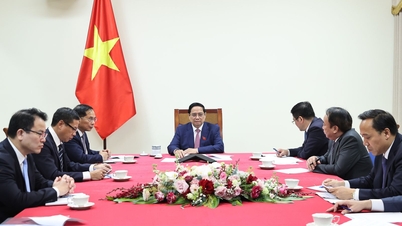
![[Photo] Prime Minister Pham Minh Chinh holds a phone call with the CEO of Russia's Rosatom Corporation.](/_next/image?url=https%3A%2F%2Fvphoto.vietnam.vn%2Fthumb%2F1200x675%2Fvietnam%2Fresource%2FIMAGE%2F2025%2F12%2F11%2F1765464552365_dsc-5295-jpg.webp&w=3840&q=75)

![[Photo] Closing Ceremony of the 10th Session of the 15th National Assembly](/_next/image?url=https%3A%2F%2Fvphoto.vietnam.vn%2Fthumb%2F1200x675%2Fvietnam%2Fresource%2FIMAGE%2F2025%2F12%2F11%2F1765448959967_image-1437-jpg.webp&w=3840&q=75)














![[Infographic] Preventing students from making their own firecrackers: 7 things parents need to know](https://vphoto.vietnam.vn/thumb/402x226/vietnam/resource/IMAGE/2025/12/11/1765466656703_img_0320_20251211183542.jpeg)































![[OFFICIAL] MISA GROUP ANNOUNCES ITS PIONEERING BRAND POSITIONING IN BUILDING AGENTIC AI FOR BUSINESSES, HOUSEHOLDS, AND THE GOVERNMENT](https://vphoto.vietnam.vn/thumb/402x226/vietnam/resource/IMAGE/2025/12/11/1765444754256_agentic-ai_postfb-scaled.png)












































Comment (0)