

Students struggle to find ways to get around
Hanoi and Ho Chi Minh City are preparing to apply low emission zones from 2026, while Hanoi will ban gasoline motorbikes depending on time frames or areas. This makes many students "laugh and cry" when they encounter awkward situations.
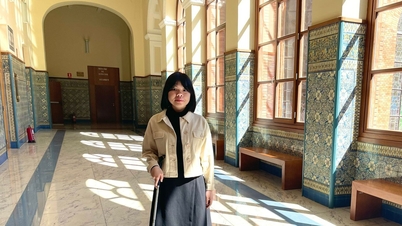
Bui Thi Trang (second year student, Diplomatic Academy) is using a gasoline motorbike to travel and rents a room in a collective housing area on Luong The Vinh street, Hanoi.
"Where I live, electric cars are completely banned," Trang said.
Reading the information about the restriction of petrol vehicles in the beltway 1, Trang was confused when her familiar roads would be in this area. If she did not switch to electric vehicles, she would not be able to get to school, but when she got back to her boarding house, she did not know where to park her vehicle.
Thu Hien (21 years old, University of Social Sciences and Humanities, Vietnam National University, Hanoi) also encountered a similar situation. Hien's boarding house is located in an alley, surrounded by many mini apartments for students. Like many other boarding houses today, the landlord where Hien rents "says no" to electric vehicles.
When asked about the biggest difficulty if they had to switch to electric vehicles, both students shared about where to park and the cost of parking.
"Landlords do not allow electric motorbikes and bicycles to be parked. Public parking lots do not have charging stations. I do not know if there is a service that allows parking of electric motorbikes and charging. But if there is, I guess the cost will be high. This will cause difficulties for students staying in boarding houses," Trang said.
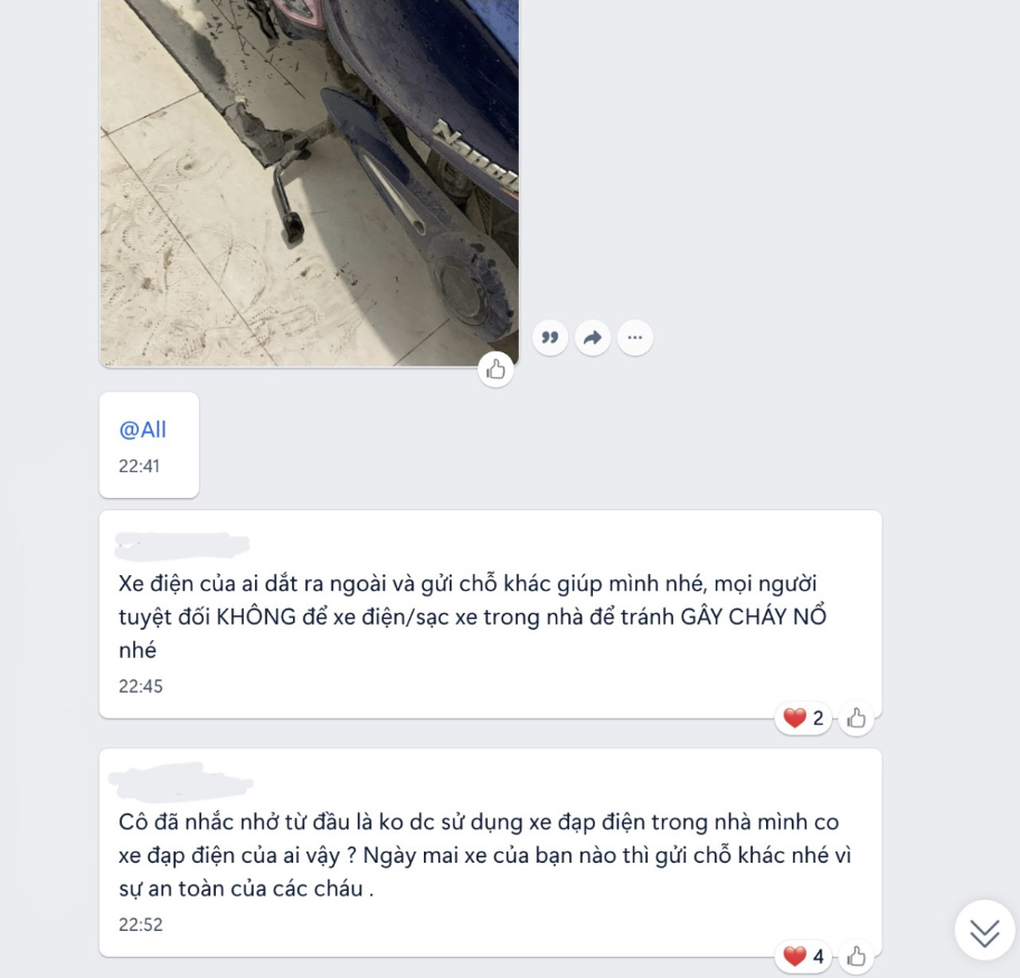
The landlord asked the student to take the electric bike to another place to park (Photo: NVCC).
Female students worry that electric cars will not be available for long-distance travel.
"When I want to go on a trip outside of Hanoi or back to my hometown, I'm not sure if an electric car can meet my needs. Are charging points as convenient as gas stations?" the female student wondered.
Thu Thao (first-year student, University of Social Sciences and Humanities) is one of the few lucky students who found a place to stay that allows the use of electric vehicles. However, the landlord requires charging the vehicle within the specified time, before 8:00 p.m., and does not allow charging overnight.
This is inconvenient for students when the time to recharge is when they go to school or work. The 7-8pm slot is also often overloaded due to high demand.
Besides, Thao said the limitations of electric cars with average price are not being able to go far, slow speed, and quick deterioration. Meanwhile, students do not have much money to buy high-end electric cars.
Need large scale electric vehicle parking service for students
Ms. My, manager of a boarding house at Lane 72 Nguyen Trai, Hanoi, has a different opinion when she allows tenants to park their electric bikes and charge them.
"Many people drive electric cars for rental services here. They are allowed to charge their batteries normally," said Ms. My.
According to Ms. My, the reason many boarding houses ban electric vehicles is due to the frequent fires that have occurred in recent years, often caused by short circuits.
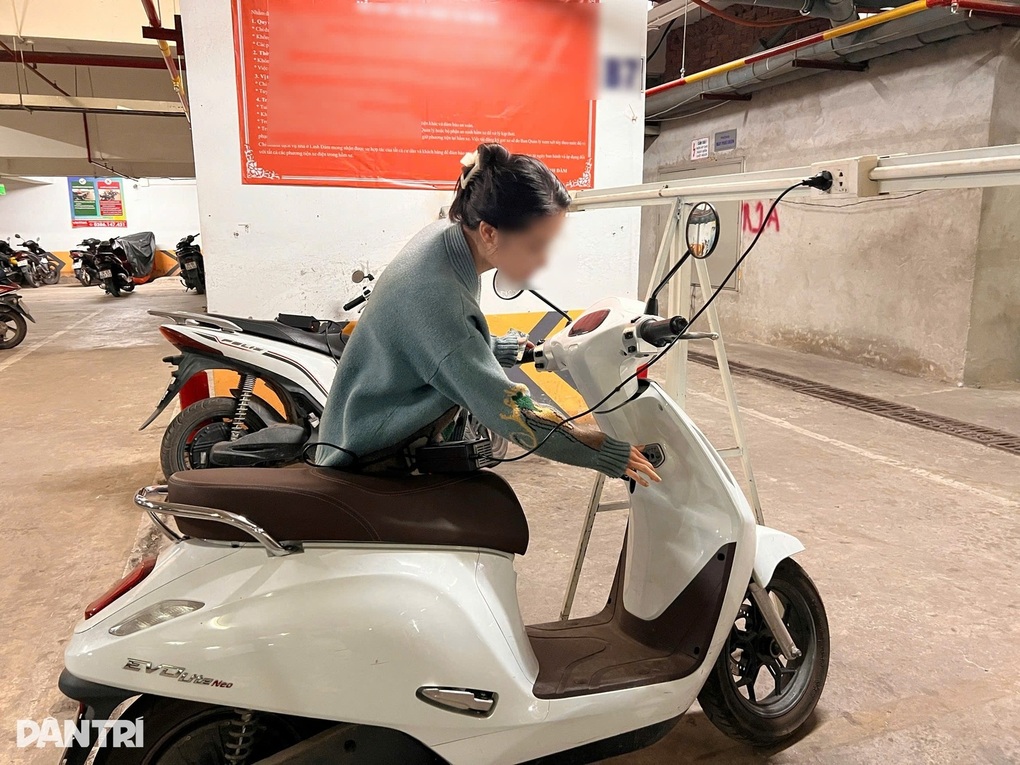
The ban on electric vehicles in many boarding houses comes from the frequent fires and explosions that have occurred in recent years (Photo: Tue Minh).
In addition, the neighborhood association also recommends that rental houses need to ensure fire safety, especially those with many electric vehicles. To avoid long-term problems, many landlords have decided to ban electric vehicles altogether for easier management.
However, Ms. My thinks that completely banning electric vehicles is not a humane solution, especially for students with limited economic conditions.
To facilitate tenants while still ensuring safety, Ms. My has set out specific regulations on parking and charging vehicles.
"Electric vehicles must not be too old to ensure that there is no short circuit or fire. Do not charge the vehicle overnight to avoid the vehicle being overloaded with electricity. Also, if there is a short circuit or fire, it will be handled more quickly during the day. At the same time, I only allow a maximum of 3-5 vehicles to charge," Ms. My listed the basic regulations.
The female manager further emphasized that these are some minimum regulations to ensure the safety of life and personal property of everyone living in the boarding house, and are only applicable to boarding houses with less than 10 rooms. For boarding houses with many rooms, this regulation is not feasible.
According to Ms. My, each dormitory is only capable of receiving a certain number of electric vehicles, due to the connection with the electrical system and fire prevention. Therefore, she believes that there should be more large-scale, professional electric vehicle parking services with a full, safe and reasonably priced battery charging system for students in the near future, when the inner city area limits gasoline vehicles.
Le Quynh Chi
Source: https://dantri.com.vn/giao-duc/sinh-vien-do-khoc-do-cuoi-khi-chu-tro-cam-xe-dien-20251205225120684.htm


![[Photo] National Assembly Chairman Tran Thanh Man attends the VinFuture 2025 Award Ceremony](/_next/image?url=https%3A%2F%2Fvphoto.vietnam.vn%2Fthumb%2F1200x675%2Fvietnam%2Fresource%2FIMAGE%2F2025%2F12%2F05%2F1764951162416_2628509768338816493-6995-jpg.webp&w=3840&q=75)
![[Photo] 60th Anniversary of the Founding of the Vietnam Association of Photographic Artists](/_next/image?url=https%3A%2F%2Fvphoto.vietnam.vn%2Fthumb%2F1200x675%2Fvietnam%2Fresource%2FIMAGE%2F2025%2F12%2F05%2F1764935864512_a1-bnd-0841-9740-jpg.webp&w=3840&q=75)



































































































Comment (0)