

Hungarian-Russian economic cooperation is still progressing despite the military conflict in Ukraine approaching its third anniversary and the EU still not satisfied with sanctions imposed on Moscow.
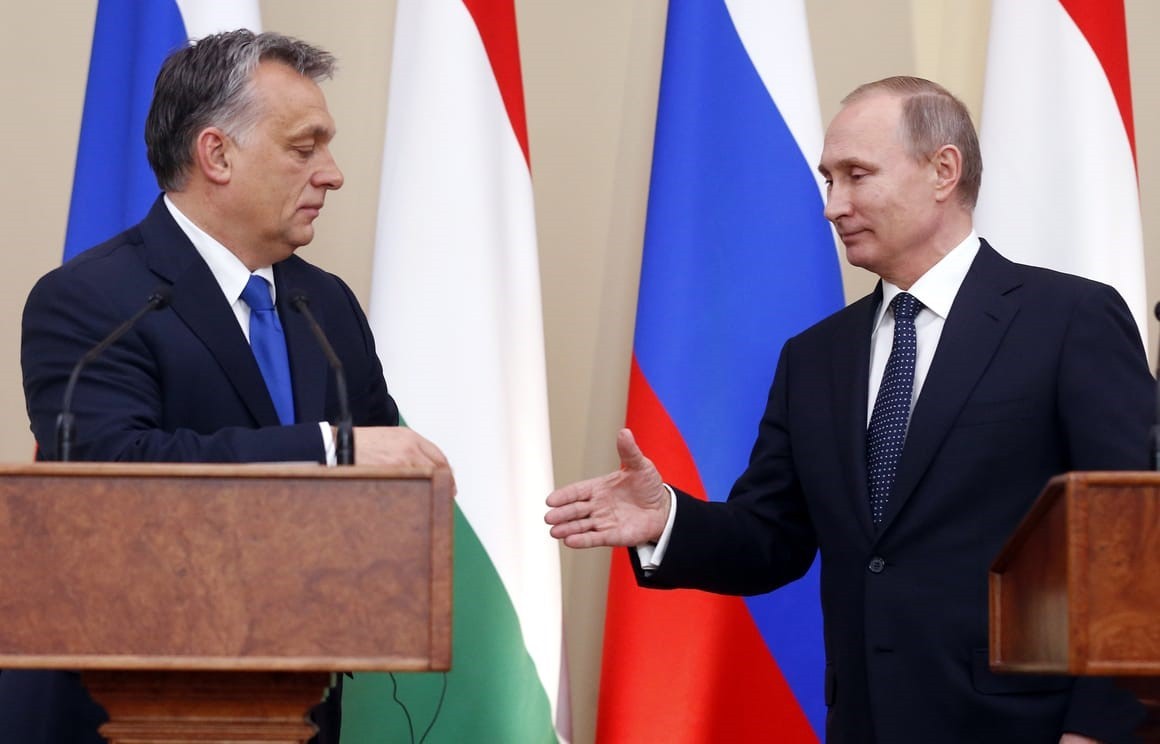 |
| Economic ties reveal why Hungarian Prime Minister Orban still chooses to move closer to Russia? (Source: Getty Images) |
Despite the imminent cutoff of Russian gas transit through Ukraine, Prime Minister Viktor Orban is trying to find ways to channel energy from Russia through other routes.
Russia is also Budapest's main partner when participating in important energy projects for Hungary's economic "lifeline", while implementing the construction of new nuclear power plants in this country.
Hungary's Foreign and Trade Minister Peter Szijjarto, known for his pro-Russian stance, often encourages large Hungarian companies to serve as role models for smaller companies in doing business in Russia, especially in sectors that are not subject to sanctions.
Mr. Peter Szijjarto made it clear that his contacts in the pharmaceutical, food, medical, construction, energy and agricultural sectors have no plans to leave the Russian market.
Foreign Minister Szijjarto stressed that by 2023, Hungary's exports to Russia would have exceeded $1 billion and the participation of giants such as Hungary's largest energy group MOL would inspire other companies to be more active in that region.
According to Bloomberg , Prime Minister Viktor Orban has informed EU leaders that he will not agree to extend sanctions against Russia until Donald Trump takes office as US President. This move is believed to be a strategy to prevent further Western sanctions against Russia.
Despite the military conflict in Ukraine, the Budapest government continues to build the Paks II nuclear power plant with Russia's Rosatom as the main contractor.
The Hungary-Russia deal, signed in 2014 in the presence of Prime Minister Viktor Orbán and President Vladimir Putin, includes a loan of around €8 billion to €9.5 billion over 30 years to build two new nuclear power plant blocks.
The expansion of the Hungarian nuclear power plant is Prime Minister Orban's biggest economic project and, according to experts from the Center for Oriental Studies, is the flagship project in Russian-Hungarian cooperation.
The first block was originally scheduled for completion in 2032, but it could be put into service up to a decade later. Investigations by the European Commission have uncovered irregularities related to a temporary monopoly on fuel supplies, possible breaches of public procurement rules and the provision of allegedly illegal state aid.
Dominik Hejj, an expert on Hungarian politics, mentioned in an interview on businessalert.pl that economic relations with Russia are beneficial for Hungary, "they support the maintenance of good political relations, which is very important in times of conflict that exist in many parts of the world".
Hungary faces gas challenges as its gas deal with Russia via the Ukrainian transit pipeline looks less optimistic. Like Slovakia and Austria, which previously benefited from cheap Russian gas, these central European countries will have to stop receiving resources from the East via the “Friendship” pipeline.
This was confirmed by Russian President Vladimir Putin on December 19 at his annual press conference at the Kremlin. The Russian leader said that the transit agreement between Gazprom and gas companies will end at the end of 2024, due to Ukraine's refusal to extend the transit contract.
"This contract will no longer exist, that's clear. But it's okay — we will survive, Gazprom will survive," President Putin summed up the situation succinctly.
The situation arose mainly because Ukraine refused to renegotiate the deal. Kiev blocked gas transit to Hungary and Slovakia, which still depend on Russian supplies.
On December 19, Ukrainian President Volodymyr Zelensky reaffirmed that Ukraine will not extend the transit of Russian gas. Hungary can only rely on the transportation of gas from Russia via the southern route.
According to Foreign Minister Peter Szijjarto, the gas flow to Hungary will flow through the "Turkish Stream" pipeline.
“This will not be a problem for us, because Hungary can import gas via the Turkish Stream pipeline,” Szijjarto said, adding that the Turkish Stream, a pipeline system running from Russia under the Black Sea to Turkey and then to southern Europe, could soon become an important alternative for gas shipments, including to other Central European countries.
Hungary imports about 4.5 billion cubic meters (about 160 billion cubic feet) of natural gas annually under a 15-year contract with Gazprom signed in September 2021. Russian gas accounts for 80% of Hungary's total gas imports.
Source: https://baoquocte.vn/soi-day-rang-buoc-he-lo-ly-do-thu-tuong-hungary-orban-chon-huong-tien-gan-hon-ve-phia-nga-298599.html


![[Photo] 60th Anniversary of the Founding of the Vietnam Association of Photographic Artists](/_next/image?url=https%3A%2F%2Fvphoto.vietnam.vn%2Fthumb%2F1200x675%2Fvietnam%2Fresource%2FIMAGE%2F2025%2F12%2F05%2F1764935864512_a1-bnd-0841-9740-jpg.webp&w=3840&q=75)

![[Photo] National Assembly Chairman Tran Thanh Man attends the VinFuture 2025 Award Ceremony](/_next/image?url=https%3A%2F%2Fvphoto.vietnam.vn%2Fthumb%2F1200x675%2Fvietnam%2Fresource%2FIMAGE%2F2025%2F12%2F05%2F1764951162416_2628509768338816493-6995-jpg.webp&w=3840&q=75)





































































Comment (0)