

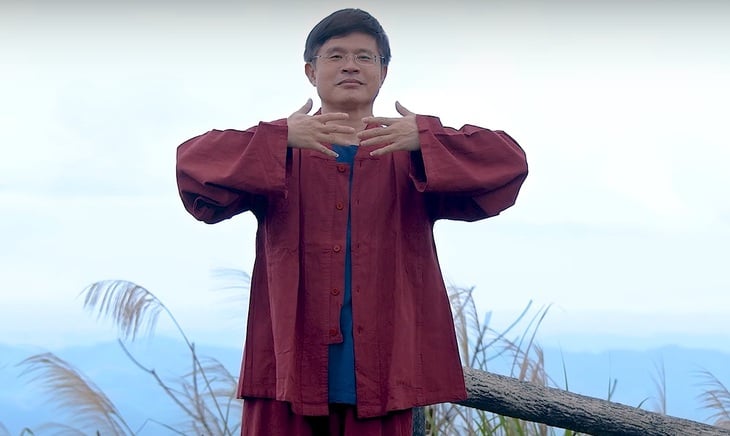
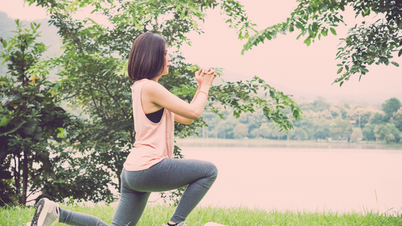
Today, many people practice Yi Jin Jing - Photo: CN
Is the Yi Jin Jing (Muscle and Tendon Strengthening Exercise) from the Shaolin Temple?
Yi Jin Jing is also one of the martial arts that Jin Yong drew inspiration from real life. And of course, it was exaggerated excessively through the author's writing.
One of the most fictional details about the Yi Jin Jing is its origin at the Shaolin Temple. There is no historical evidence to suggest that this martial art originated during the time of Bodhidharma or was ever the ultimate secret technique of the Shaolin Temple.
According to historical records, the oldest known manuscript of the Yi Jin Jing dates back to the 17th century, found in a book called "Essentials of Internal Cultivation," which appeared during the Ming and Qing dynasties. The author of this book was Cheng Duanxiang, a Taoist and health practitioner, not a Zen master or martial arts monk.
Later popular versions often attributed the teachings to Bodhidharma to enhance the mystique. However, most modern historians view this as a way of borrowing the legend to elevate the value of the health-preserving exercises in the Yi Jin Jing.
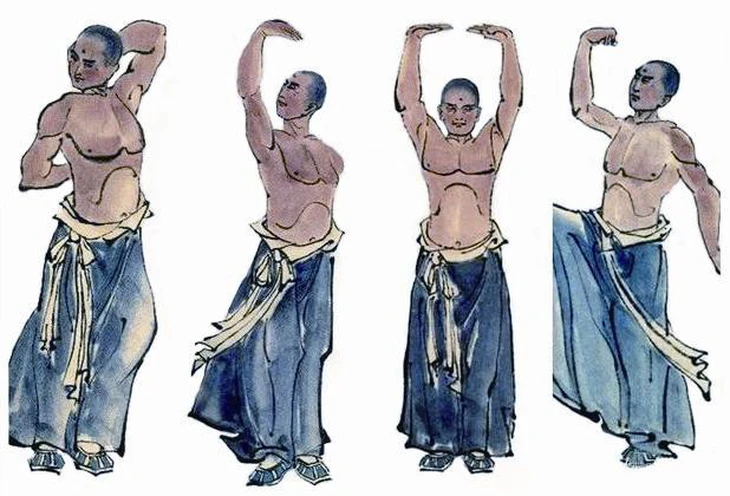
One of the diagrams for the Yi Jin Jing (Muscle and Tendon Strengthening Exercise) - Photo: CN
So what exactly is Yi Jin Jing in real life?
This is not a martial art, nor is it some mysterious "internal energy technique." It is a series of qigong exercises – movement and breath control – combining full-body movement and controlled breathing.
A basic set of Yi Jin Jing exercises consists of 12 to 18 movements. It mainly revolves around stretching, shifting weight, raising arms, and regulating breathing.
The goal is to stretch muscles and tendons, increase blood circulation, improve motor function, regulate the mind, and help prevent certain chronic diseases.
In recent years, Yi Jin Jing has been adopted by many traditional medicine institutes in China, Taiwan, Hong Kong, and Vietnam as a Qigong exercise for the elderly or patients needing rehabilitation.
There are many health benefits.
A 2020 study by the Beijing Institute of Traditional Chinese Medicine showed that elderly people who regularly practiced Yi Jin Jing for 12 weeks experienced significant improvements in blood pressure, respiratory capacity, and sleep.
A similar study at Nanjing Medical University also noted that over 80% of patients with chronic neck and shoulder pain experienced significant pain relief after practicing this Qigong exercise for two months.
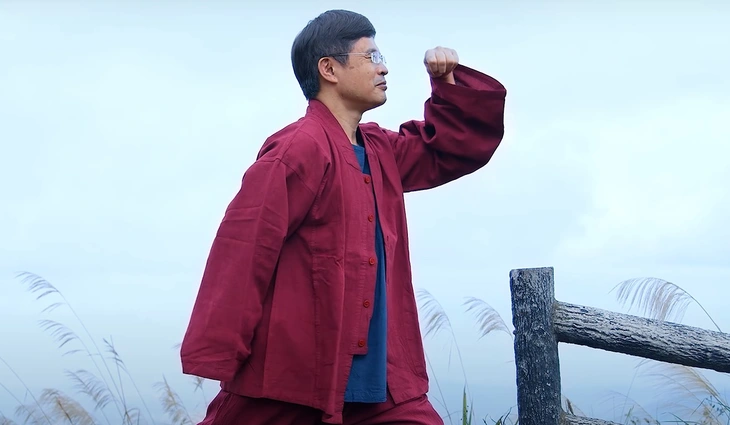
The Dịch Cân Kinh is similar to Tai Chi exercises in traditional Chinese health practices - Photo: CN
"The Yi Jin Jing may not turn you into a martial arts master. But it is a gentle, effective, and safe exercise method for maintaining health," said Dr. Yang Zhenwu, an expert in Qigong and traditional Chinese medicine.
According to him, the movements of the Yi Jin Jing are simple but help the body move rhythmically throughout. They are especially beneficial for office workers, the elderly, or those recovering from illness.
According to the WHO, in its 2013 guidelines on traditional medicine, Qigong exercises such as Yi Jin Jing are classified as an effective supportive method for disease prevention, alongside Tai Chi and Yoga.
Practicing Yi Jin Jing does not require a large space or equipment. Practitioners should warm up thoroughly to heat their joints. Then, perform the movements slowly and synchronously with deep, even breathing.
The key is to keep your mind calm, focusing on the movement and the flow of air in and out. Each session should last 15 to 30 minutes, and can be done early in the morning or late in the evening.
Although not a martial arts technique that "unblocks the eight meridians" as depicted in Jin Yong's novels, the Yi Jin Jing is still a testament to the enduring spirit of exercise and health maintenance in traditional Eastern medicine.
In the midst of modern life, filled with stress and illness, maintaining a gentle, rhythmic exercise routine like Yi Jin Jing can be a simple yet effective key to long-term health.
Source: https://tuoitre.vn/su-that-ve-dich-can-kinh-than-cong-thieu-lam-tu-20250729232540514.htm



![[Image] National Assembly discusses the implementation of the socio-economic development plan.](https://vphoto.vietnam.vn/thumb/1200x675/vietnam/resource/IMAGE/2026/04/20/1776696707422_ndo_br_img-20260420-185419-jpg.webp)
![[Photo] General Secretary and President To Lam meets with National Assembly delegates from ethnic minorities.](https://vphoto.vietnam.vn/thumb/1200x675/vietnam/resource/IMAGE/2026/04/20/1776696701056_a1-bnd-8331-3342-jpg.webp)





























































Comment (0)