

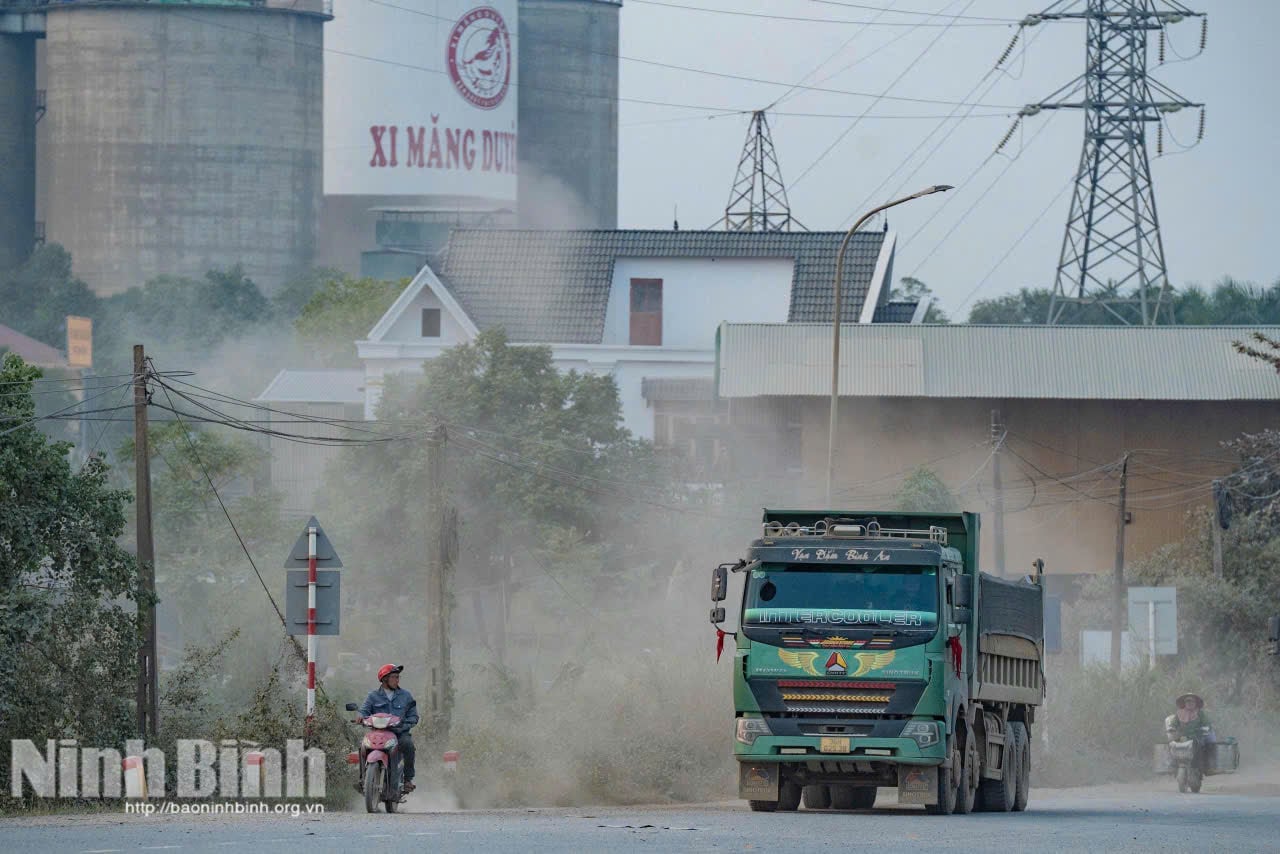
When the fine dust index exceeds the safe limit
In late November and early December 2025, the northern region in general and Ninh Binh province in particular were affected by a temperature inversion phenomenon, combined with calm wind conditions that made it difficult for fine dust to disperse.
Observations made on the night of December 9th at the Nam Cao Park automatic monitoring station (Phu Ly ward) showed that the air quality index (AQI) reached 180 - the Red level, which is warned as "Harmful to health".
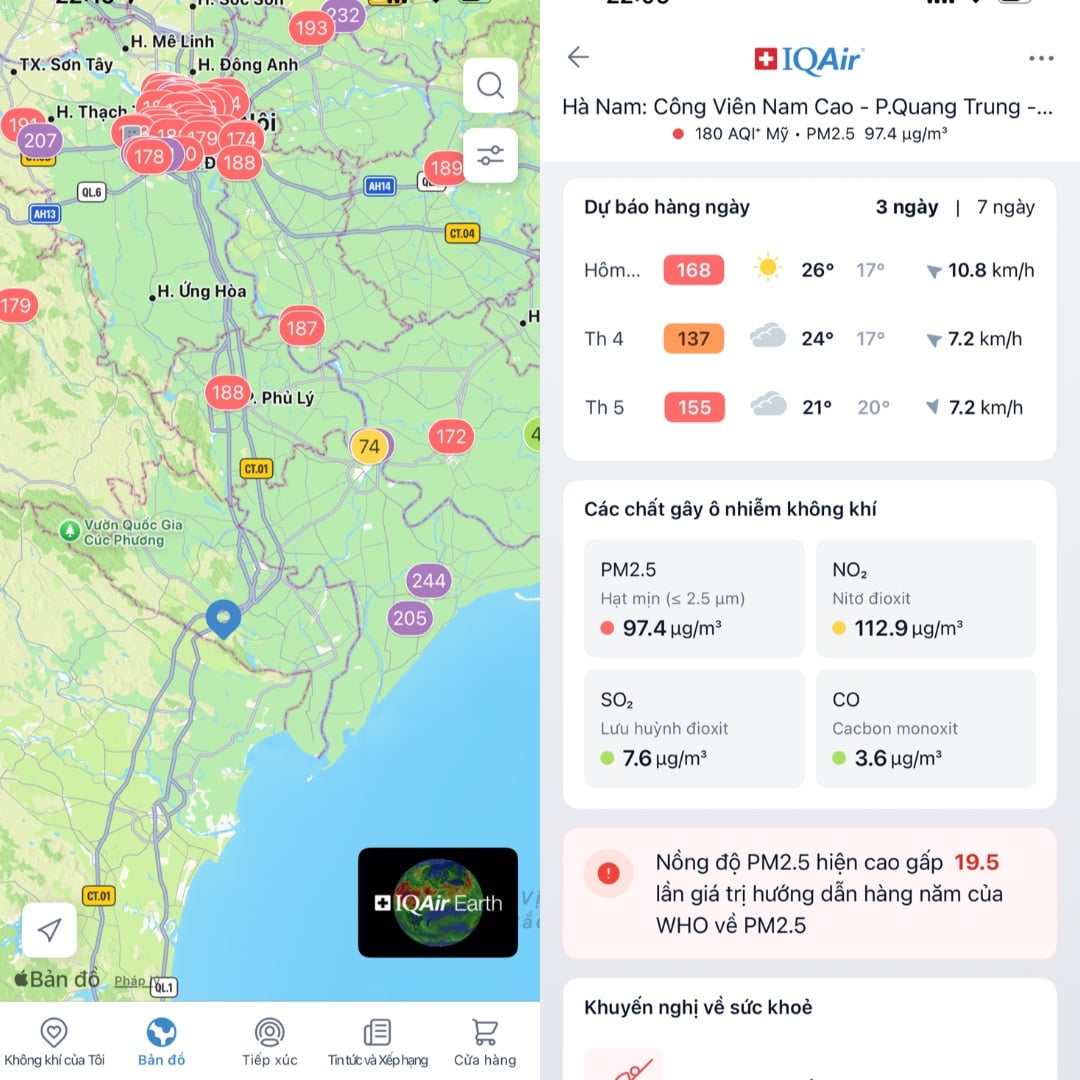
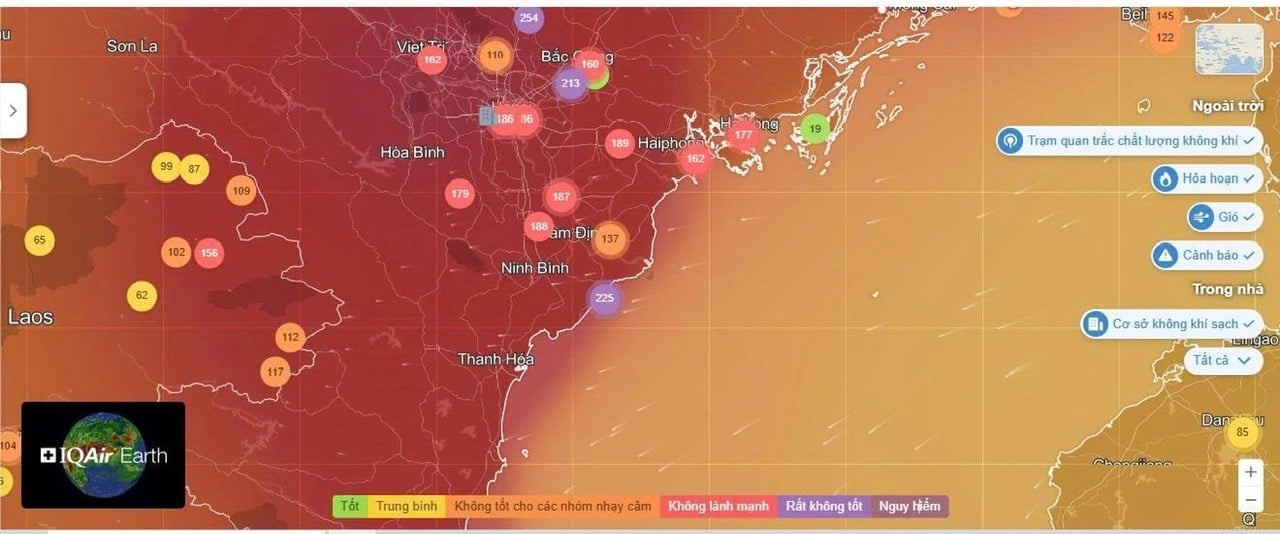
More serious is the PM2.5 fine dust index – a substance that can penetrate deep into the body. At the time of monitoring, the PM2.5 concentration reached 97.4 µg/m³, a figure 19.5 times higher than the World Health Organization's (WHO) annual guideline for PM2.5. Not just at one location, a broader view on IQAir's satellite map at the same time also shows a widespread red warning band covering the entire province. This indicates that dust pollution is no longer a localized issue of a single quarry or factory.
Ms. Pham Thi Thanh (Group 18, Tam Diep Ward) shared: “In recent days, visibility in the morning and at night has been limited due to fog and dust. To protect the health of my family members, I limit opening windows and reduce outdoor activities during peak hours.”
Separated from the causes of environmental pollution due to short-term weather factors, the Ninh Binh province environmental status overview report for the period 2020-2025 provides a more detailed perspective on air quality trends. Data shows an increasing emission of dust and exhaust gases into the air, while also noting significant differences in dust pollution levels between functional areas. Accordingly, areas with high dust concentrations are concentrated in key industrial and transportation zones.
In the former Ha Nam area, monitoring data shows that dust pollution along traffic routes is on the rise. From 2021 to 2024, between 20 and 23 out of 26 locations exceeded the standard, and by 2025, 32 out of 36 locations exceeded the standard. In particular, areas near quarries or intersections close to cement factories have total suspended dust concentrations exceeding the standard by several times to more than 20 times.
In the former Ninh Binh area, although the levels are lower, key intersections still frequently exceed permissible limits. Specifically, points such as the intersection of National Highway 1A and Road 477, or the area near The Vissai cement factory, often have dust concentrations exceeding the standard by 1.2 to 1.69 times.
Alarmingly, dust pollution in industrial zones is on the rise. Notably, in the former Ha Nam area, the percentage of locations exceeding standards has sharply increased from 10/27 locations in 2022-2023 (37%) to 27/35 locations in 2024 (77%), and 42/61 locations as of April 2025 (nearly 69%). The sharp increase in the number of locations with airborne dust exceeding standards not only reflects high levels of dust pollution but also indicates that emissions from industrial production activities are becoming more complex.
Conversely, the old Nam Dinh area and tourist areas maintain relatively good air quality, with most dust and emission indicators (NO2, SO2, CO) remaining within the permissible limits of QCVN 05:2023/BTNMT.
"Gaps" in monitoring
To effectively monitor air quality trends, the automated monitoring infrastructure – a tool for continuous monitoring and immediate warning – is too limited and has not been invested in uniformly across the province.
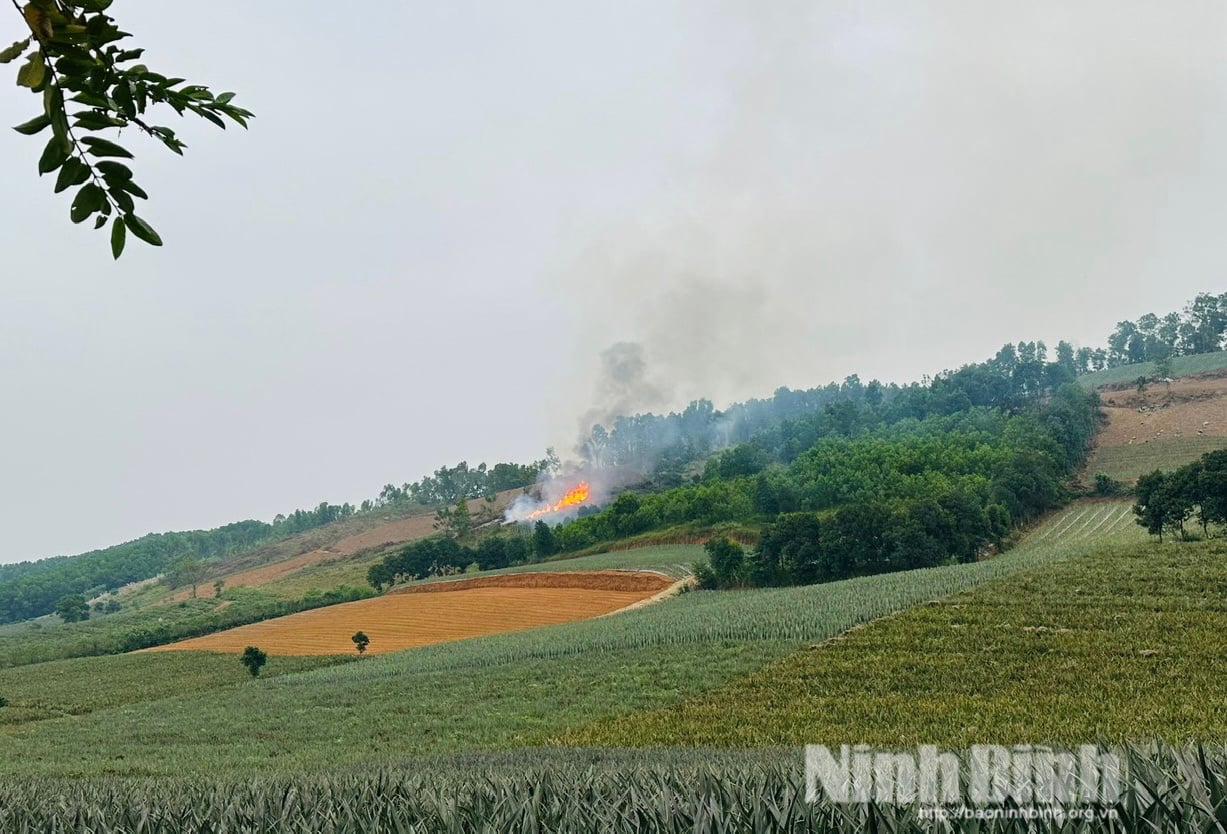
The practice of people burning grass, garbage, and agricultural by-products is further contributing to air pollution.
According to information from the Department of Agriculture and Environment, there are currently only two base stations in the entire province. One station is located at 192 Cu Chinh Lan Street, Nam Dinh Ward, and the other is at Nam Cao Park, Phu Ly Ward. In addition, there are four other satellite stations in the former Nam Dinh province. The former Ninh Binh area has no automatic air quality monitoring stations.
On the PAM Air air quality monitoring app, while the Hanoi metropolitan area is densely packed with colorful monitoring points, further south towards Ninh Binh province, the map suddenly becomes sparse and fragmented with large white spaces or points displaying "N/A" (no data).
Most current assessment data still relies on periodic (semi-automatic) monitoring. While this method provides highly accurate data, it has a time lag, making it difficult to detect sudden pollution incidents or hourly changes in air quality (such as at night) in a timely manner.
This lack of monitoring infrastructure is creating information "blind spots." For a newly merged province with one of the largest industrial and mining sectors in the North, relying solely on baseline monitoring stations, such as the Nam Cao or 192 Cu Chinh Lan stations, is insufficient to represent the situation. In the context of temperature inversion and increasing pollution, this information deficit poses the greatest risk to public health.
Mr. Nguyen Van Ha, a retired official in Hoa Lu ward who is concerned about the environment, commented: "The lack of automatic monitoring stations in key industrial areas makes it difficult for people to know the exact daily pollution levels. We hope that the monitoring network will be more widespread so that we can live in peace of mind."
Solutions and action plan until 2030
Recognizing the challenges from the actual data, the Provincial People's Committee has been implementing many fundamental solutions to control environmental pollution in general and air pollution in particular, shifting from "response" to "proactive control". Notably, the province recently issued Decision No. 1619/QD-UBND dated November 26, 2025, approving the roadmap for controlling air and water pollution in Ninh Binh province for the period 2025-2030.
Accordingly, the province will invest in the construction of 7 new air quality monitoring stations and 12 automatic, continuous surface water monitoring stations. This will address the data "gap" problem, enabling 24/7 monitoring of air and water quality throughout the province, providing real-time information for management purposes.
The Provincial People's Committee has assigned the Department of Agriculture and Environment to investigate, survey, and compile data on activities serving the national and sectoral greenhouse gas inventory, and to propose solutions for mitigating greenhouse gas emissions in the province. It will strengthen control over production, business, and service establishments, especially those with large emissions (such as cement, thermal power, iron and steel, textile dyeing, etc.). Existing establishments will be encouraged to innovate technology and use clean fuels. Production facilities with large emissions will be required to install automatic emission monitoring systems and transmit data directly to the Department of Agriculture and Environment for regular monitoring.
Ninh Binh province is also determined not to grant new licenses or increase the capacity of existing cement and lime production projects. In addition, the province is researching the development of public transportation, encouraging the use of clean energy vehicles, and gradually phasing out polluting vehicles.
To cope with the predicted increase in air pollution in early December, following the directives of the Ministry of Agriculture and Environment, the province has requested localities to strengthen street cleaning, prioritizing nighttime street washing on main roads. At the same time, authorities are tightening inspections of vehicles transporting construction materials, strictly penalizing those who spill dust, and requiring the temporary suspension of construction projects that lack adequate environmental protection measures.
By frankly acknowledging existing problems and committing to strong action, Ninh Binh is gradually transforming from a reactive to a proactively controlled approach, striving to provide a safe and healthy living environment for its people. This also lays the foundation for Ninh Binh province's strategic vision in the new era: the aspiration to become a centrally-governed city, with a green urban character linked to heritage as its core feature.
Source: https://baoninhbinh.org.vn/moi-truong-khong-khi-tinh-ninh-binh-nhin-tu-nhung-chi-so-canh-bao-va-bai-toan-h-251210125518294.html




















































































Comment (0)