

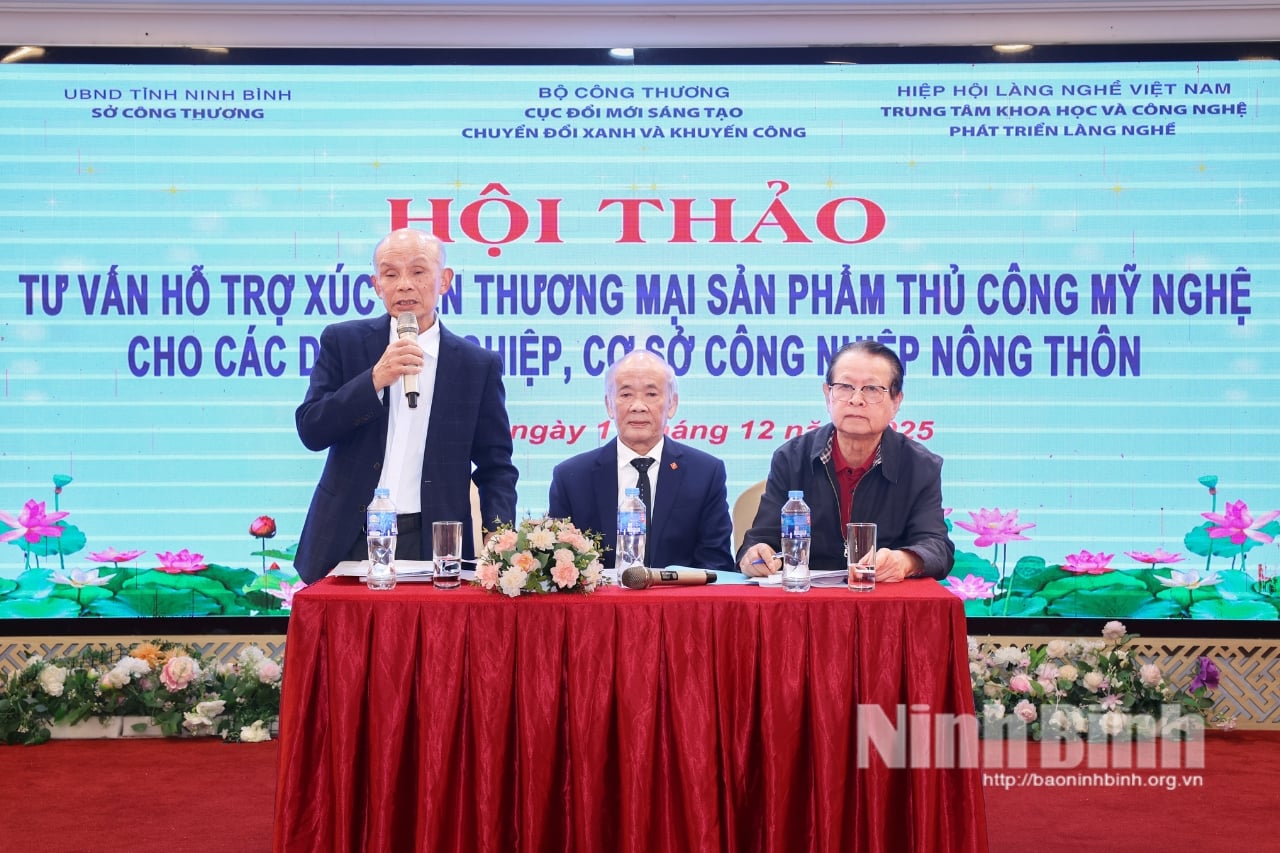
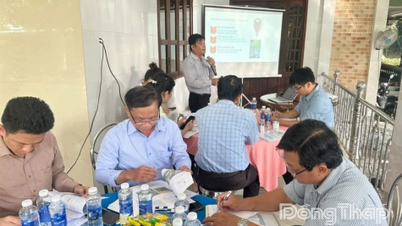
The workshop was attended by delegates including experts, managers, businesses, cooperatives, and representatives of traditional craft villages in the province and surrounding areas.
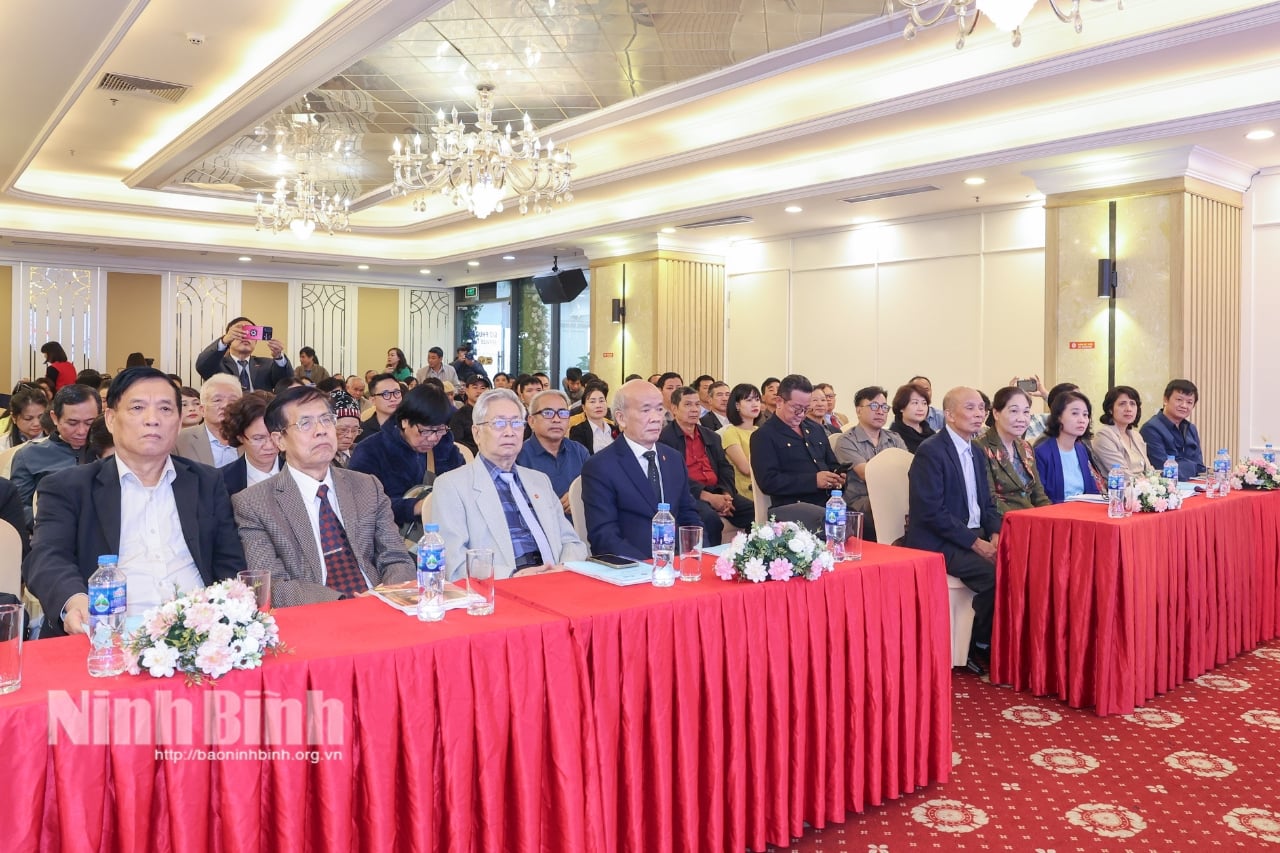
In his opening remarks at the workshop, Mr. Trinh Quoc Dat, Chairman of the Vietnam Handicraft Village Association, emphasized that the handicraft industry is facing a great opportunity as the demand for environmentally friendly products and culturally and creative products is increasing. Organizing this workshop is of practical significance, helping businesses and production facilities access information, improve product quality, and enhance the effectiveness of trade promotion, especially during the green transformation and digital transformation phases.
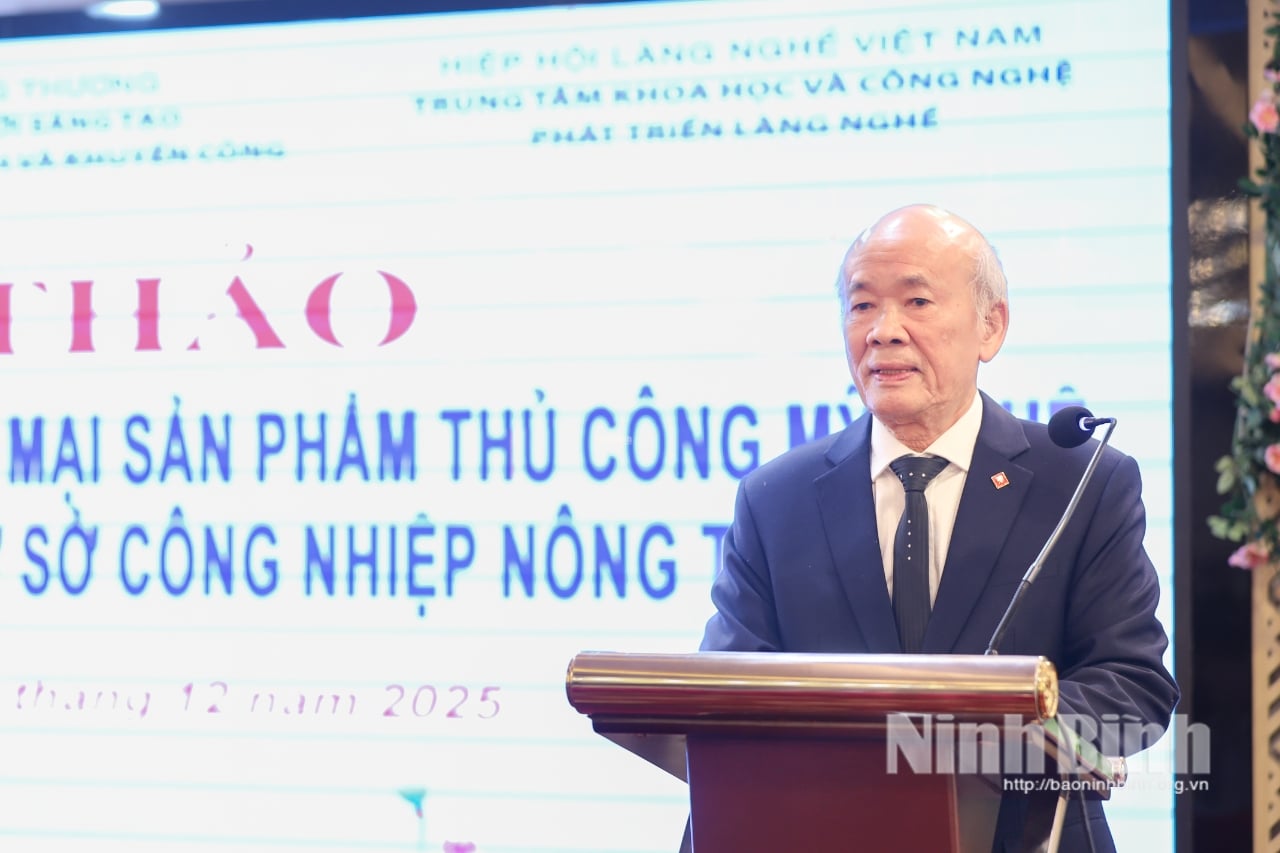
In his opening remarks at the workshop, Dr. Ton Gia Hoa, Vice President of the Vietnam Handicraft Village Association, stated that handicraft villages are widely distributed throughout the country with thousands of production facilities, but the majority still operate on a small scale, with 98% being family businesses; the workforce lacks technical skills, and management capacity is limited. Natural raw material resources are declining, and the lack of planned cultivation areas prevents many facilities from expanding production. Infrastructure in handicraft villages is weak, with production interspersed within residential areas, and a lack of facilities for tourism and product promotion.
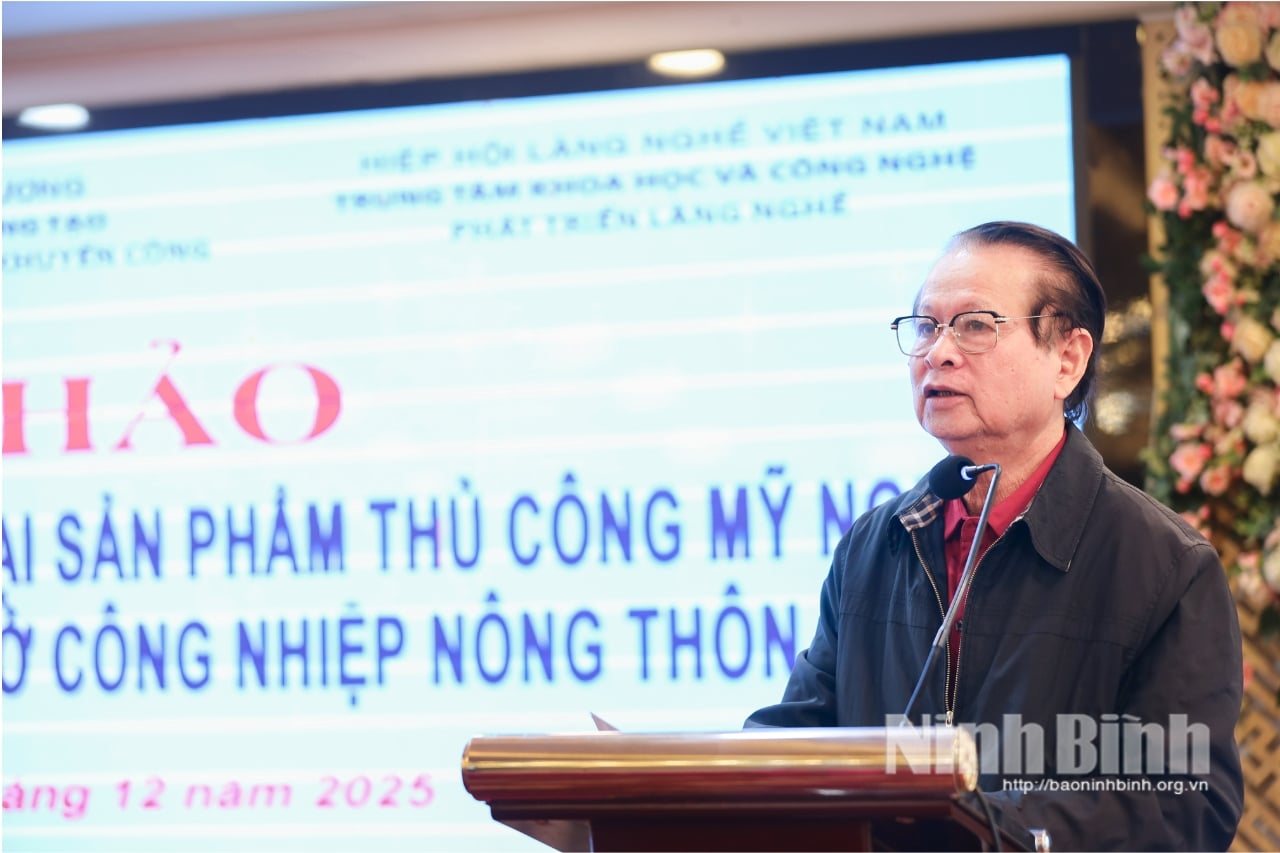
Trade promotion activities are weak and unprofessional; businesses find it difficult to participate in international trade fairs due to high costs; many craft villages have not yet built distinctive brands, making it difficult to access export markets. Marketing and online sales channels are not effectively exploited, and products are heavily dependent on intermediaries. Human resource training and the application of science and technology are limited; the lack of skilled artisans and design skills reduces competitiveness. In the context of a rapidly changing market, small businesses struggle to grasp trends, preventing the full potential of handicraft products from being realized.
At the workshop, delegates focused on discussing many important topics such as analyzing effective trade promotion models for businesses and rural industrial establishments; solutions to improve product quality and design, increase creativity and aesthetic value; and experiences in building trade promotion support models in the handicraft sector to boost product consumption in the market.
The workshop also included presentations from businesses and craft villages on many practical topics, such as: developing handicrafts into products serving culture, tourism, and export; the need for green transformation and sustainable development to expand markets; experiences in enhancing the aesthetic appeal of Bat Trang ceramic products; policies supporting import and export; marketing and customer acquisition experiences in the US market; and solutions for utilizing e-commerce platforms to promote craft village products and expand opportunities to reach global customers.
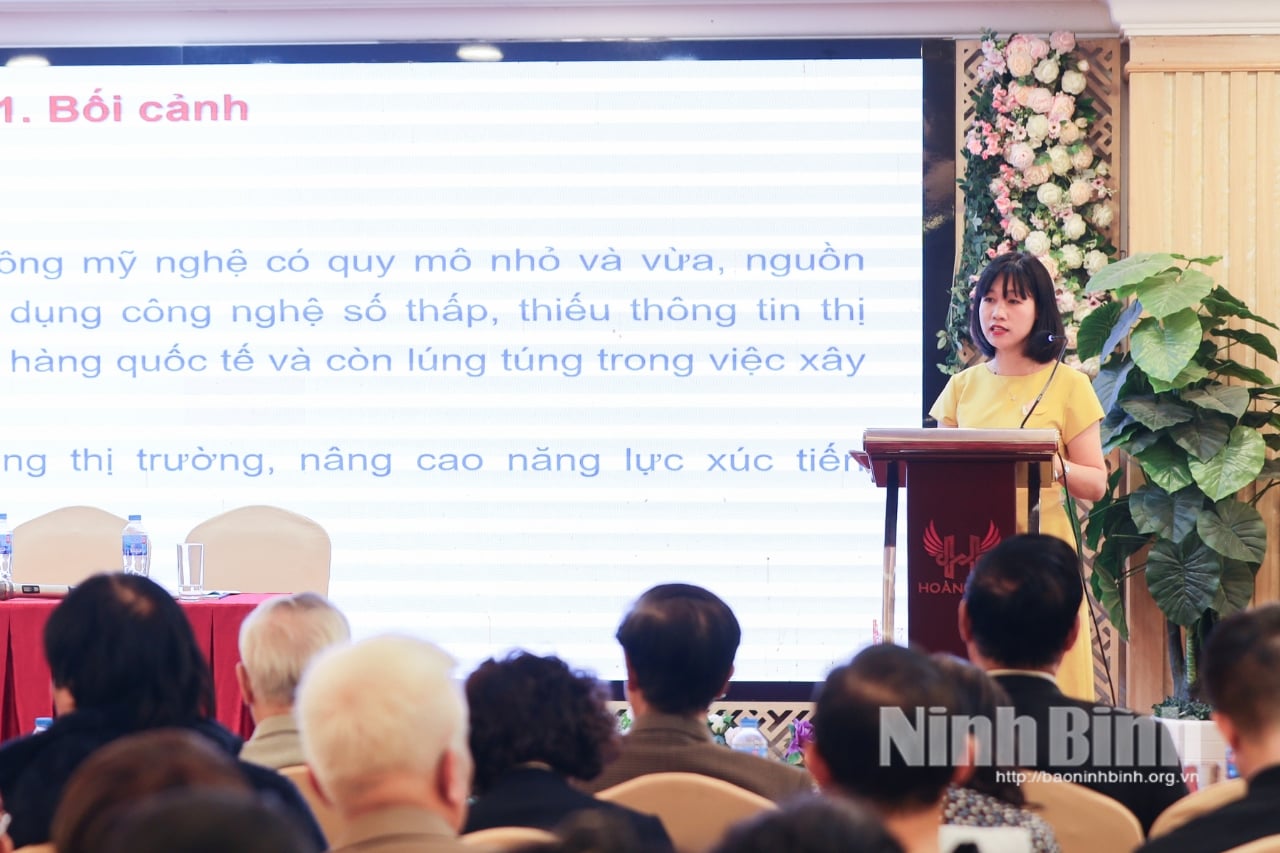
At the workshop, businesses highlighted the difficulties they faced regarding product design, quality standards, international trade promotion, and access to new distribution channels. Experts provided direct advice on various solutions tailored to each product group.
At the conclusion of the workshop, the co-organizing units affirmed their commitment to continue supporting businesses through consulting, innovation support, human resource training, and trade promotion. This is a crucial foundation for promoting the sustainable development of the handicraft industry, contributing to increased economic value and the promotion of Vietnamese culture.
Source: https://baoninhbinh.org.vn/hoi-thao-tu-van-ho-tro-xuc-tien-thuong-mai-san-pham-thu-cong-my-nghe-cho-doanh--251211121200051.html


![[Photo] Closing Ceremony of the 10th Session of the 15th National Assembly](/_next/image?url=https%3A%2F%2Fvphoto.vietnam.vn%2Fthumb%2F1200x675%2Fvietnam%2Fresource%2FIMAGE%2F2025%2F12%2F11%2F1765448959967_image-1437-jpg.webp&w=3840&q=75)
![[Photo] Prime Minister Pham Minh Chinh holds a phone call with the CEO of Russia's Rosatom Corporation.](/_next/image?url=https%3A%2F%2Fvphoto.vietnam.vn%2Fthumb%2F1200x675%2Fvietnam%2Fresource%2FIMAGE%2F2025%2F12%2F11%2F1765464552365_dsc-5295-jpg.webp&w=3840&q=75)

























![[OFFICIAL] MISA GROUP ANNOUNCES ITS PIONEERING BRAND POSITIONING IN BUILDING AGENTIC AI FOR BUSINESSES, HOUSEHOLDS, AND THE GOVERNMENT](https://vphoto.vietnam.vn/thumb/402x226/vietnam/resource/IMAGE/2025/12/11/1765444754256_agentic-ai_postfb-scaled.png)




































Comment (0)