

In general, the price of live pigs last week continued to increase slightly in some provinces and cities in the North and Central regions, fluctuating in the opposite direction in the South. Surveys show that the price of live pigs nationwide is being traded in the range of 60,000 - 64,000 VND/kg; 8 forecasts on pig farming in Vietnam in the period 2025-2030.
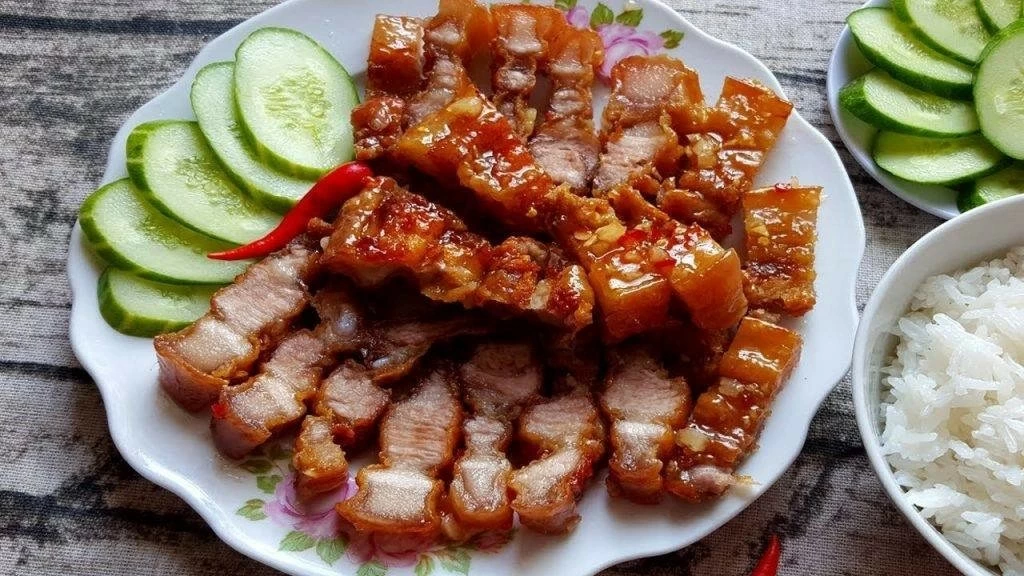 |
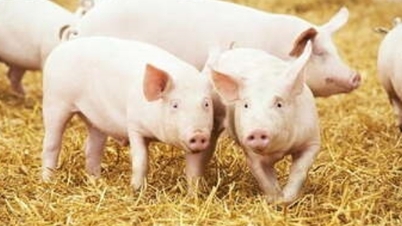
| Pig price today, November 10: Pig price increased slightly in some localities. Illustrative photo. (Source: Vincom) |
Pork price today, November 10th
*Pork prices in Northern Vietnam:
The market for live pigs in the North increased by 1,000-2,000 VND/kg in many provinces and cities last week. Currently, live pigs in this area are being sold at around 62,000 - 64,000 VND/kg.
In particular, the highest transaction threshold in the country is 64,000 VND/kg, which appeared in many provinces and cities, including: Hanoi, Bac Giang, Hung Yen, Hai Duong, Thai Binh , Thai Nguyen, Phu Tho and Vinh Phuc. In contrast, the lowest price in the region is 62,000 VND/kg, recorded in the two provinces of Ninh Binh and Lao Cai.
* Pig price in the Central Highlands region
The Central Highlands region also increased prices by 1-2 in the provinces: Thanh Hoa, Nghe An, Quang Binh, Ha Tinh, Dak Lak, Khanh Hoa, Quang Nam , Binh Dinh and Lam Dong.
Accordingly, there is currently no locality nationwide trading below 60,000 VND/kg. The live hog market in the Central region is trading at a difference of 60,000-63,000 VND/kg.
*Pork prices in the Southern region
Last week, the price of live pigs in the South fluctuated up and down. Traders in this area are buying live pigs from 60,000 - 63,000 VND/kg.
Specifically, the provinces of Binh Phuoc, An Giang, Ben Tre, and Can Tho City adjusted their pork prices upwards by 1,000 - 3,000 VND/kg. Conversely, Hau Giang, Tra Vinh , and Soc Trang saw their pork prices decrease by 1,000 - 2,000 VND/kg.
*According to Dr. Nguyen Xuan Duong, Chairman of the Vietnam Livestock Association, there are 8 forecasts for pig farming in Vietnam in the period 2025-2030.
1. Domestic market demand for pork is still large, but will gradually decrease, as consumers switch to other foods, such as poultry, shrimp, fish, red meat, and vegetable protein.
2. In addition to competition with other food products, domestic pig farming also has to increasingly compete with imported pork products, which are increasing (an average of 15-20%/year).
3. Disease outbreaks, especially African swine fever, remain complex and pose difficulties for livestock farmers. Safe and sustainable farming practices are still a crucial measure in controlling African swine fever.
4. Environmental control and greenhouse gas emissions will increase pressure on the livestock industry, especially pig and cattle farming. Whether greenhouse gas inventory in livestock farming should be voluntary or mandatory will be a subject of debate. Without convincing justifications and genuine participation from farmers, associations, and organizations, the State may include pig farms with a scale of 3,000 pigs or more in the greenhouse gas inventory requirement starting in 2027.
5. The number of pig farming households will decrease, but the total pig herd in the country will still increase at a rate of 2-3% per year. The size of the national pig herd as of April 1, 2024 will be 25.54 million pigs (excluding piglets with their mothers); 22.36 million fattening pigs; and 3.1 million breeding sows (of which 2.4 million are farrowing sows). The size of the national pig herd could peak at approximately 28.5 million pigs in 2028.
6. Domestic pig farming methods will follow three trends:
– Pig farming according to the chain link, the model of processing pig farming for large corporations and companies. The scale of pig herds in this farming area accounts for an increasingly high proportion. This farming model is stable and has low risks.
– Pig farming in large-scale households, farms that mix their own feed or order feed processing from animal feed processing facilities will appear more and more. This farming model is effective, but requires farmers to have capital and good management skills.
– Pig farming using traditional methods, utilizing by-products from communal kitchens. This farming model carries many risks, especially regarding disease control and food safety.
7. Building new pig farms will face many difficulties, so existing pig farms will play an important role in stabilizing the pig herd size, meeting development requirements in the coming time.
8. The issue of creating breeds and hybrid formulas to have specific pork products to meet the needs of Vietnamese consumers and suitable slaughtering technology to popularize the habit of consuming chilled meat is an important solution to improve the competitiveness and self-defense ability of the Vietnamese pig farming industry in the trend of increasingly deep integration of the Vietnamese economy and livestock farming with the region and the world.
Source: https://baoquocte.vn/gia-heo-hoi-hom-nay-1011-tang-nhe-ca-3-mien-du-bao-ve-chan-nuoi-heo-tai-viet-nam-giai-doan-2025-2030-293237.html





























![[Video] The craft of making Dong Ho folk paintings has been inscribed by UNESCO on the List of Crafts in Need of Urgent Safeguarding.](https://vphoto.vietnam.vn/thumb/402x226/vietnam/resource/IMAGE/2025/12/10/1765350246533_tranh-dong-ho-734-jpg.webp)





























































Comment (0)