

In order to protect the environment and green the chemical industry, the Vietnam Chemical Corporation has implemented many solutions over the years.
Greening production – an urgent requirement for the chemical industry.
Over the past period, the Ministry of Industry and Trade has actively implemented programs and plans to strengthen environmental protection, fulfilling the tasks under the Ministry's Environmental Protection Plan for the period 2020-2025, which was approved by the Prime Minister. One of the solutions in the Plan that has received attention is promoting pilot green industrial models in various industrial sectors.
Accordingly, industrial greening is becoming a development trend that brings efficiency in economic growth, solves social problems, and mitigates the consequences of environmental pollution. For the chemical and fertilizer manufacturing industries – industries with high emission risks and high energy consumption – the requirements for green standards are even more stringent.
In order to protect the environment and "green" the production of chemicals and fertilizers, Mr. Phung Ngoc Bo - Head of the Technical Department of Vietnam Chemical Corporation, said: The Corporation focuses on five main groups of solutions, including: using energy efficiently; reducing greenhouse gas emissions; fuel saving solutions; waste treatment and recycling; and emphasizing public awareness campaigns.
With these solutions, the awareness of environmental protection and greening production among leaders, especially business leaders and workers in the Vietnam Chemical Corporation, has improved significantly in recent times.
"The units within the Group, as well as the Group itself, not only consider green production and environmental protection as a responsibility but have actually brought very clear economic benefits to the business and the community," Mr. Phung Ngoc Bo stated.
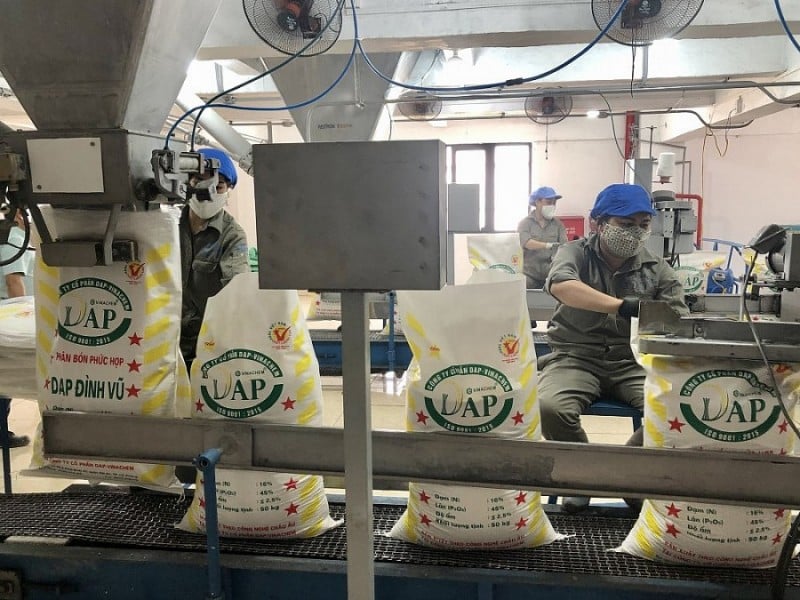 |
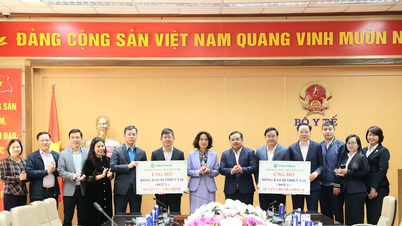
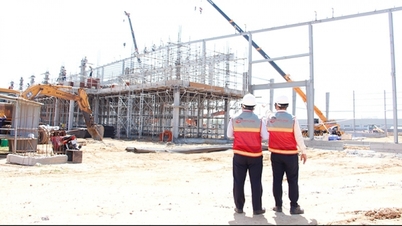
| Vietnam Chemical Corporation is implementing various solutions to green its production. (Photo: CT) |
Many practical benefits from greening production.
According to Mr. Phung Ngoc Bo, Head of the Technical Department of Vietnam Chemical Corporation, eliminating environmental pollution in production brings many key benefits to the chemical industry, in terms of environment, society, economy, and enhancing the position of businesses when integrating into the global supply chain.
More specifically regarding the socio-environmental benefits, Mr. Phung Ngoc Bo stated: Removing impurities and waste, as well as managing environmental protection effectively, creates a healthier and safer living and working environment. This fosters employee confidence and loyalty to the company, leading to improved efficiency and increased labor productivity.
Regarding economic benefits, "in principle, when we do this work well, we will reduce consumption rates, reduce waste treatment costs, and bring about very positive economic results," Mr. Phung Ngoc Bo affirmed.
Another benefit is the enhancement of the company's standing, especially when integrating into the global supply chain. Chemical companies that have managed their environmental practices well and eliminated waste can penetrate demanding markets. This also contributes to Vietnam achieving its goal of net-zero emissions by 2050, as committed by the Government at COP26.
Regarding energy saving and transition, according to Mr. Phung Ngoc Bo, the Prime Minister has issued Directive 20 on electricity saving for the period 2023-2025 and subsequent years. The Vietnam Chemical Group and its member units have also developed a plan, aiming to save 2% to 5% of total electricity consumption annually starting from 2025 onwards.
Accordingly, the Vietnam Chemical Corporation encourages its units to install and use rooftop solar power, and many units within the corporation have already adopted this solution. Examples include Ninh Binh Fertilizer Company, Da Nang Rubber Joint Stock Company, and Southern Rubber Company. Many units utilize environmentally friendly energy sources such as biomass, including sawdust and rice husks, for steam production and product drying, such as Lam Thao Superphosphate and Chemical Company and Viet Tri Chemical Company.
Although it brings many practical benefits, according to representatives of the Vietnam Chemical Corporation, the corporation's enterprises also face many challenges in the process of greening production. Specifically, regarding the treatment of gypsum waste from the production of phosphoric acid, currently only the Dinh Vu Gypsum Joint Stock Company's plant processes gypsum to produce additives for cement, and its capacity is limited.
Furthermore, economic experts believe that securing investment capital for businesses transitioning to green production is also a challenge. Therefore, to support greening in industrial production in general, and the chemical and fertilizer industries in particular, experts suggest that, in addition to the efforts of the business community, the "joint efforts" of relevant ministries and agencies are needed to support businesses with technology and capital.
Source: https://congthuong.vn/tap-doan-hoa-chat-viet-nam-trien-khai-nhieu-giai-phap-xanh-hoa-trong-san-xuat-354826.html










































































Comment (0)