

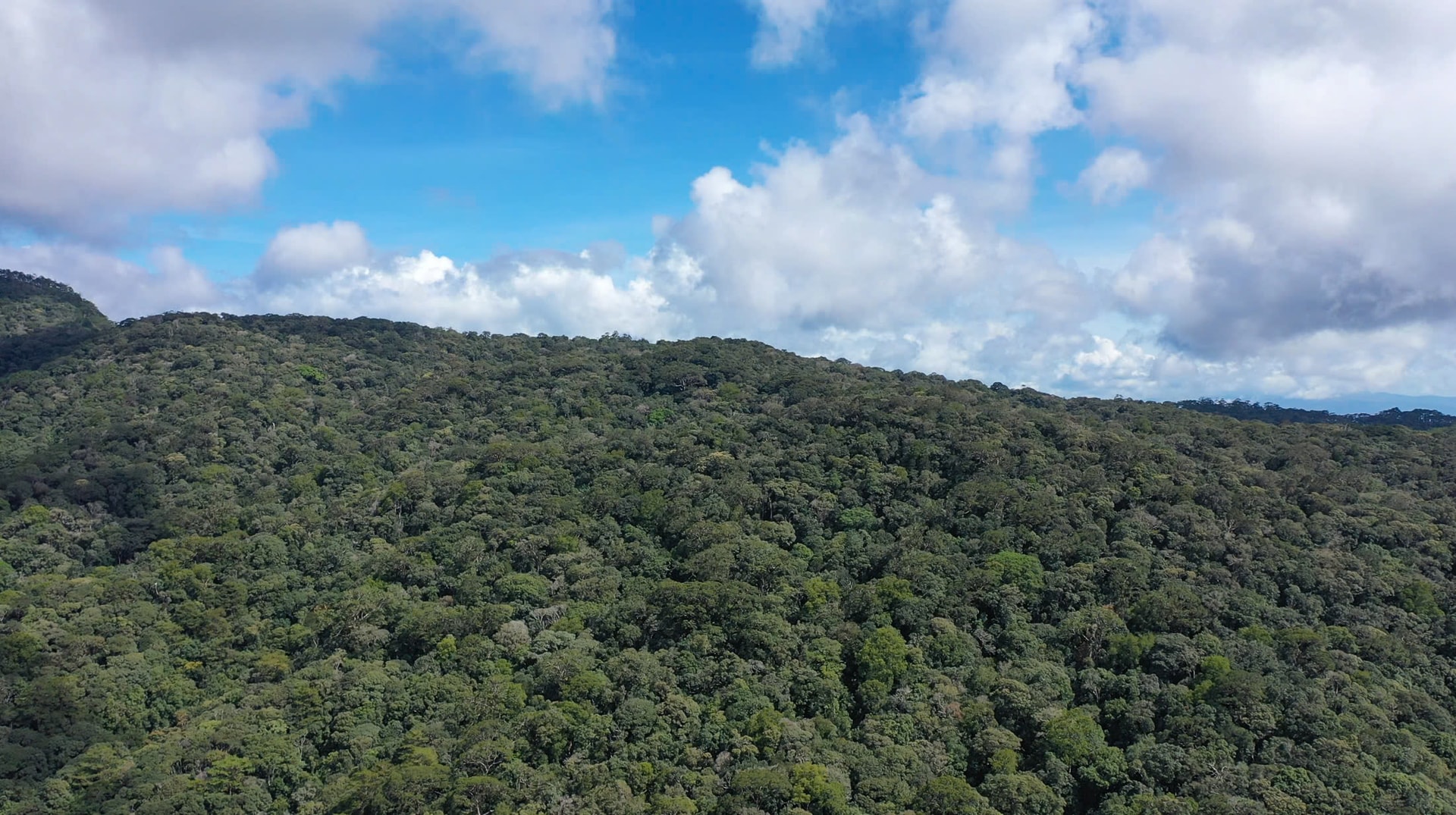
From Hiep Thanh commune, travelers can easily spot the cluster of red pine trees that stand tall and lush green all year round on the Elephant Mountain range. According to Mr. Tran Manh Truong, Head of the Specialized Forest Management and Protection Station No. 1 in Hiep Thanh commune, the red pine cluster on Elephant Mountain currently comprises about 224 trees, spread across an area of approximately 400 hectares, distributed across two sub-areas (268 and 277A) within the Duc Trong Protective Forest Management Board's forest area – located within the administrative boundaries of Hiep Thanh commune.
Red pine is a species belonging to "Group IA," an endemic species listed in the Vietnamese Red Book. It is classified as requiring strict protection. Because it is a valuable timber species, it is constantly targeted by illegal loggers, further increasing pressure on forest protection efforts.
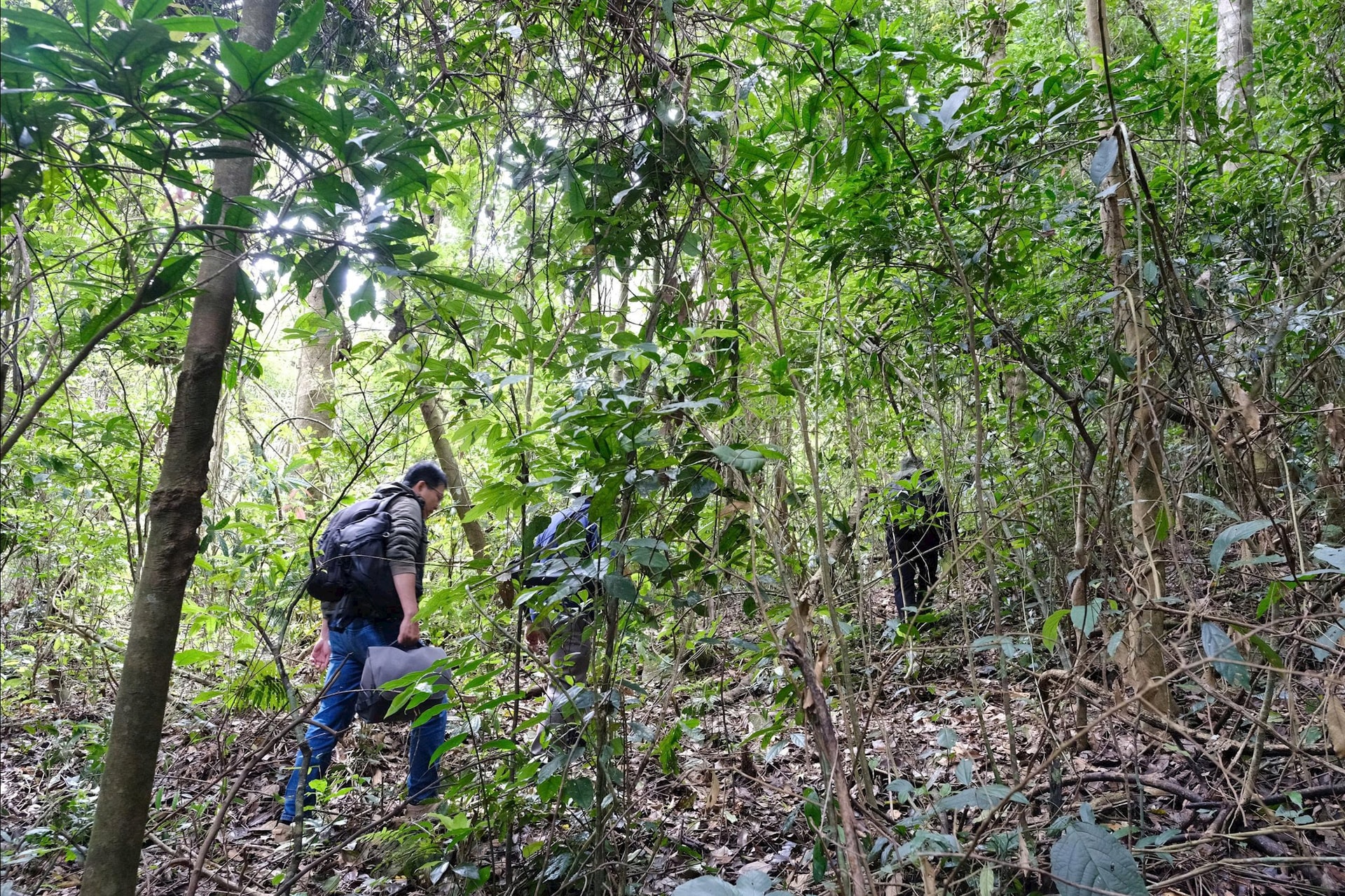
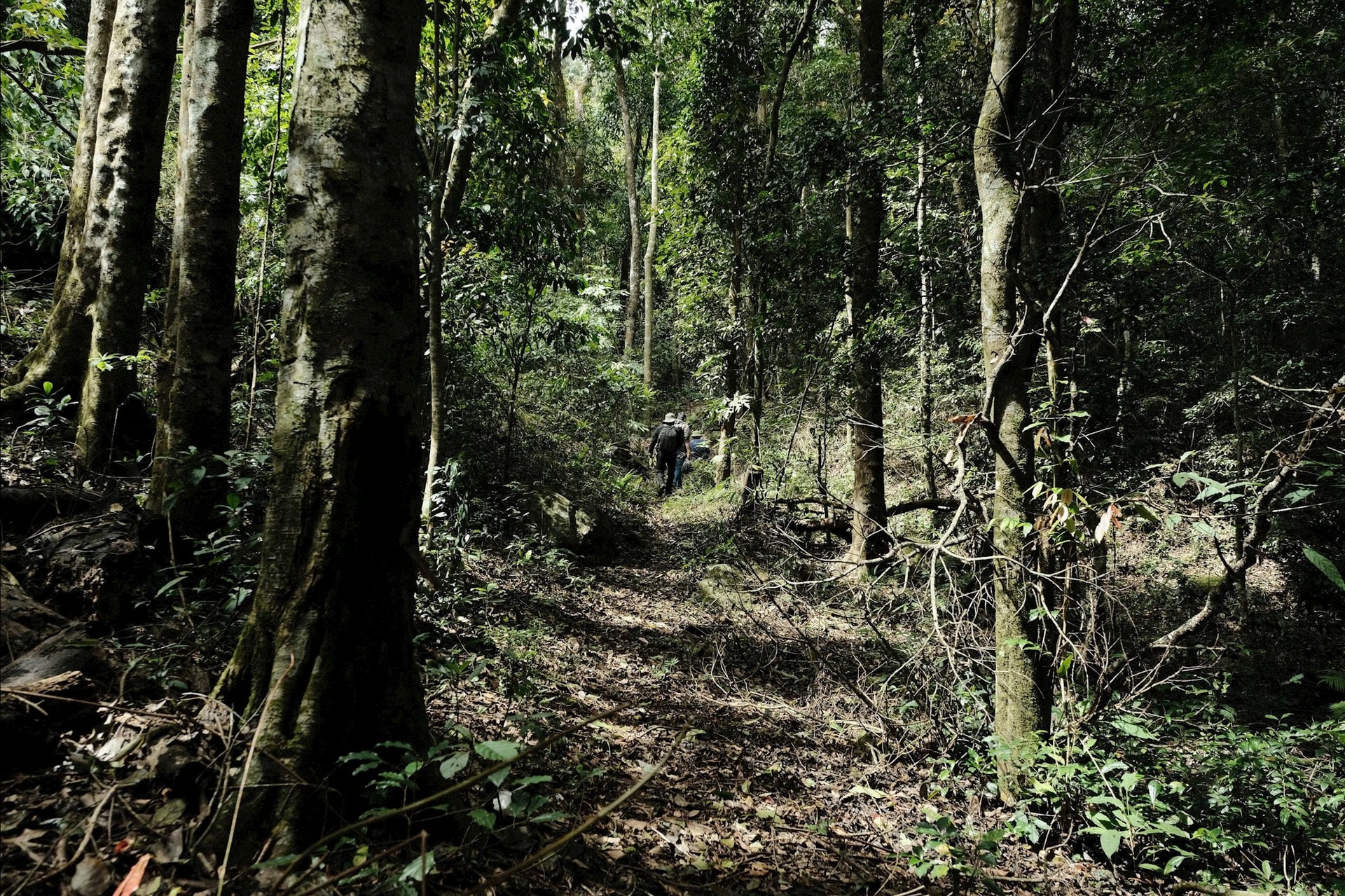
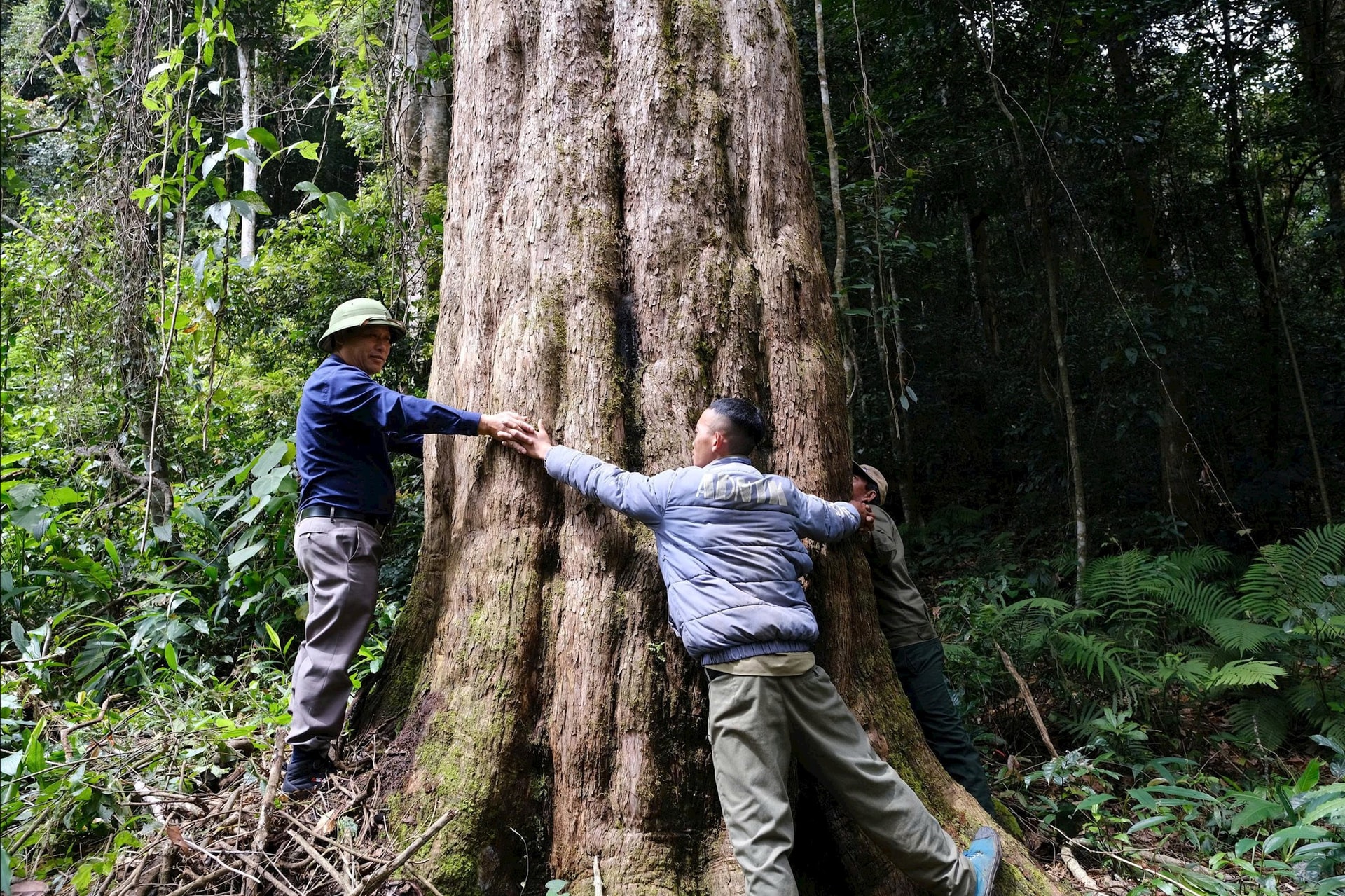
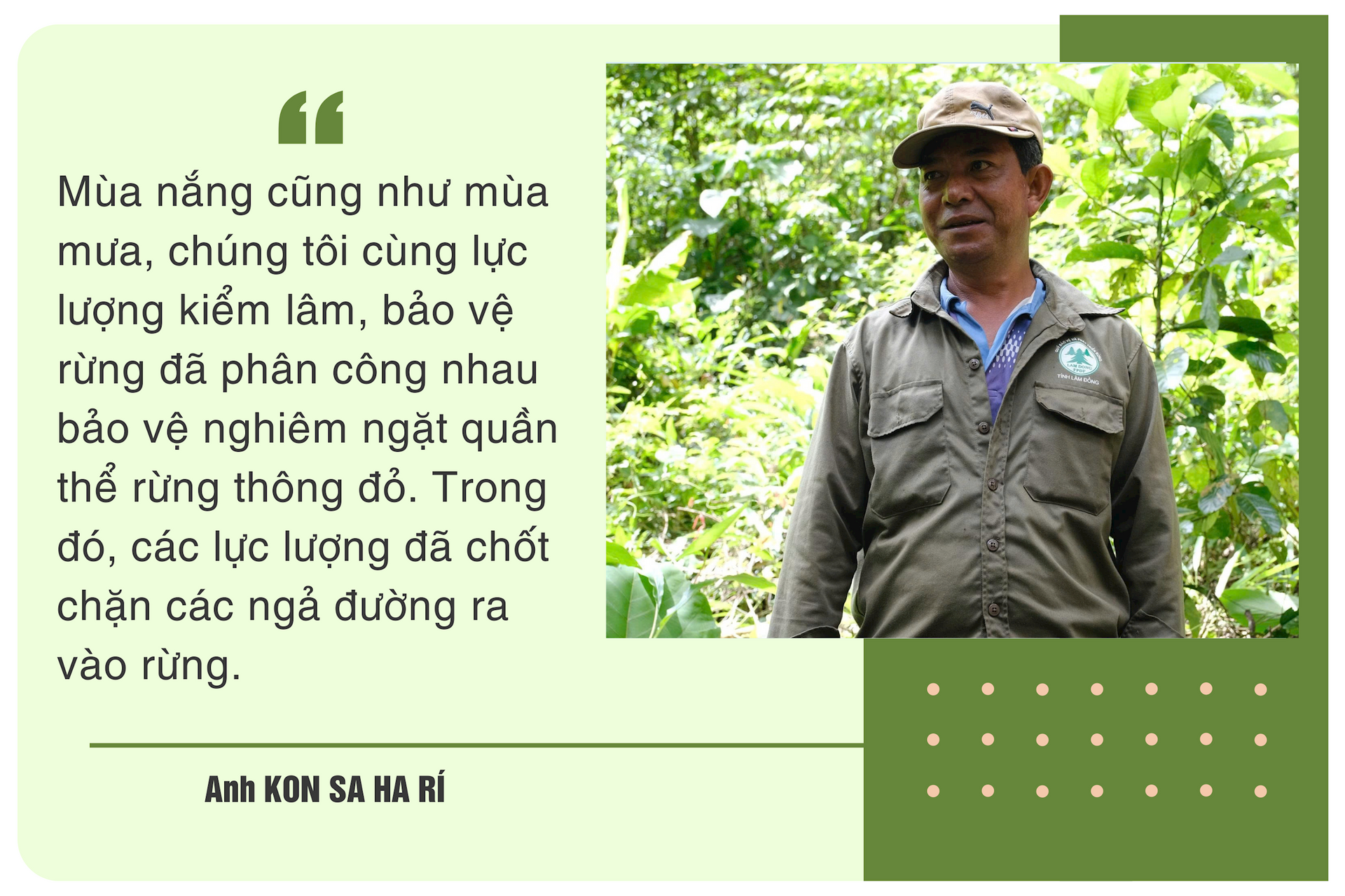
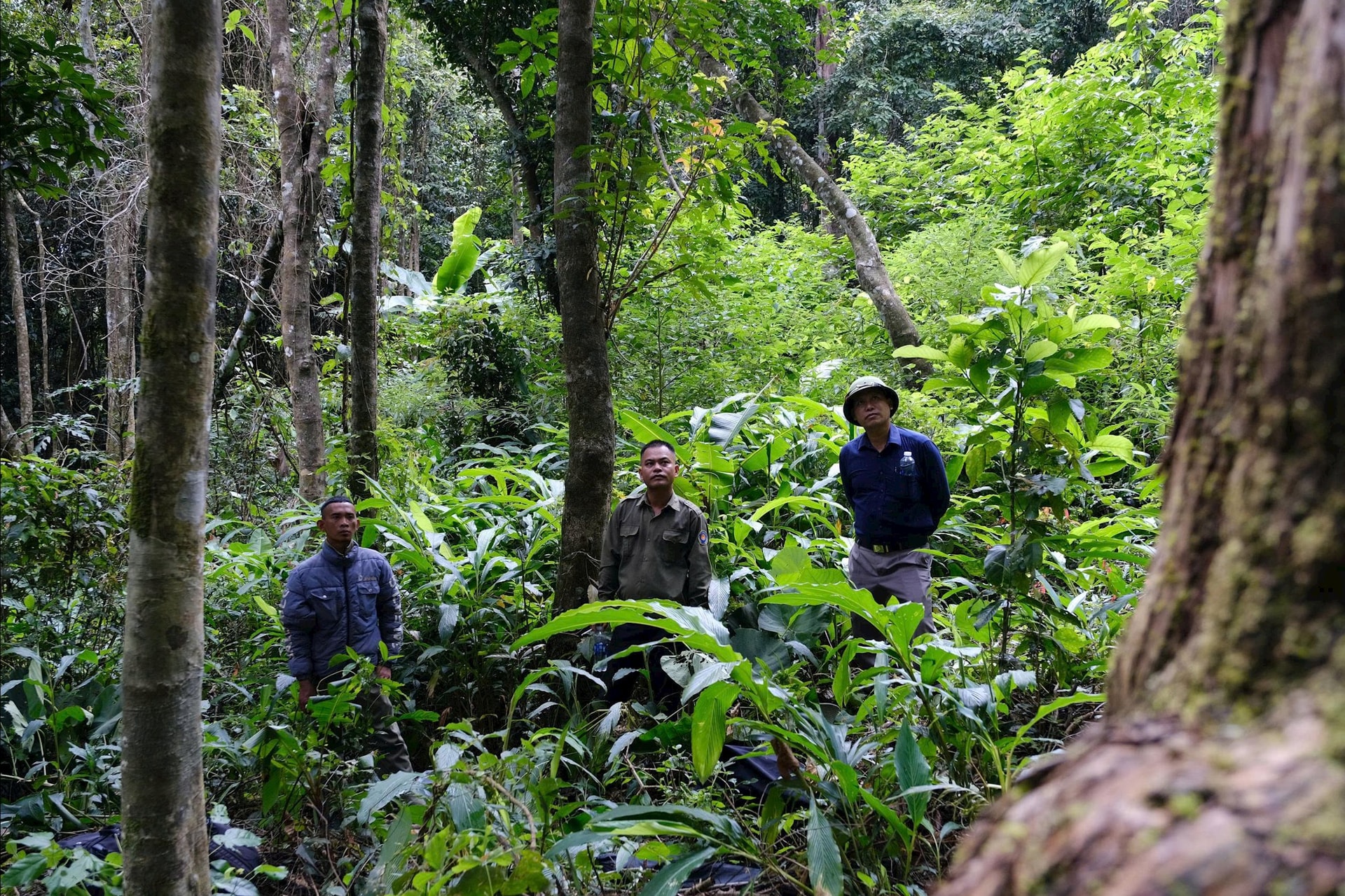
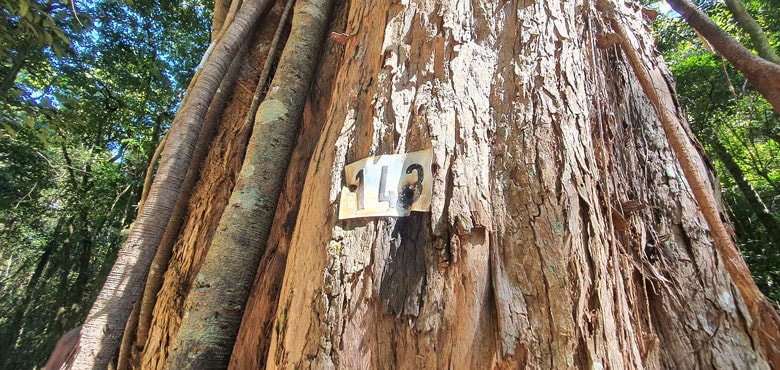
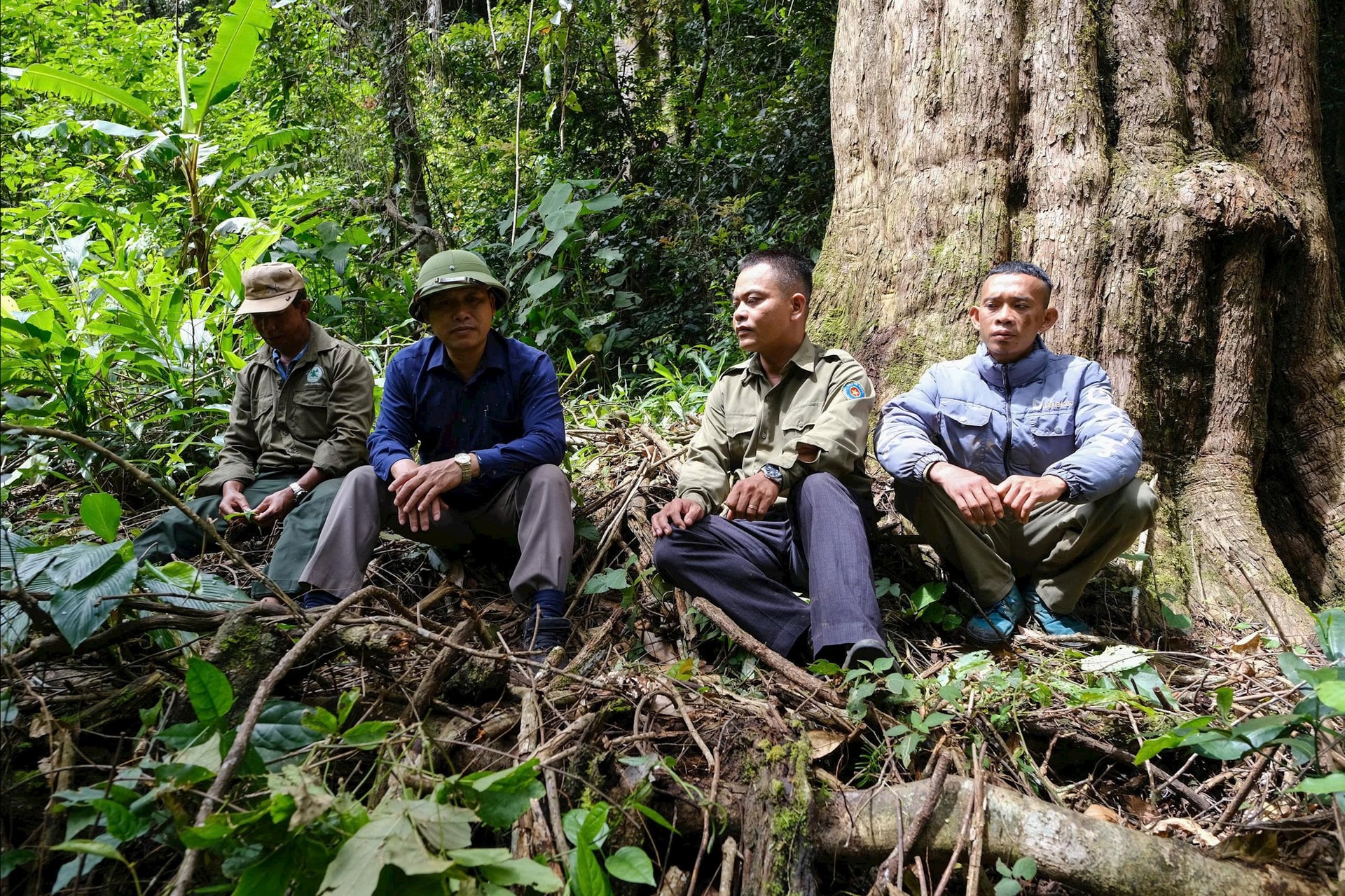
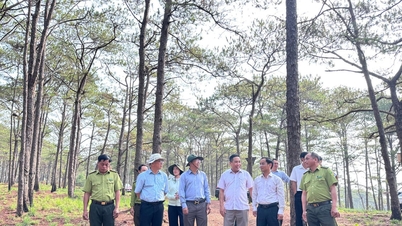
Following the households participating in the forest protection contract at Specialized Forest Management Station No. 1, we traversed the hills of Darahoa village. The patrol team was led by Mr. Kon Sa Ha Ri. After traveling another 2 km through the forest, ancient red pine trees appeared one after another, still intact. Dozens of red pine trees, 25-30 meters high, with gnarled trunks so large that it would take 3-4 people to encircle them.
Following the trail, the inspection team continued moving towards the summit of Elephant Mountain. Every few dozen meters, they encountered more large red pine trees clustered together in groups of 5-7, each tree spaced about 30 meters apart.
During their patrols, forest rangers also carry GPS devices and tape measures to measure and mark the coordinates of the massive red pine trees.
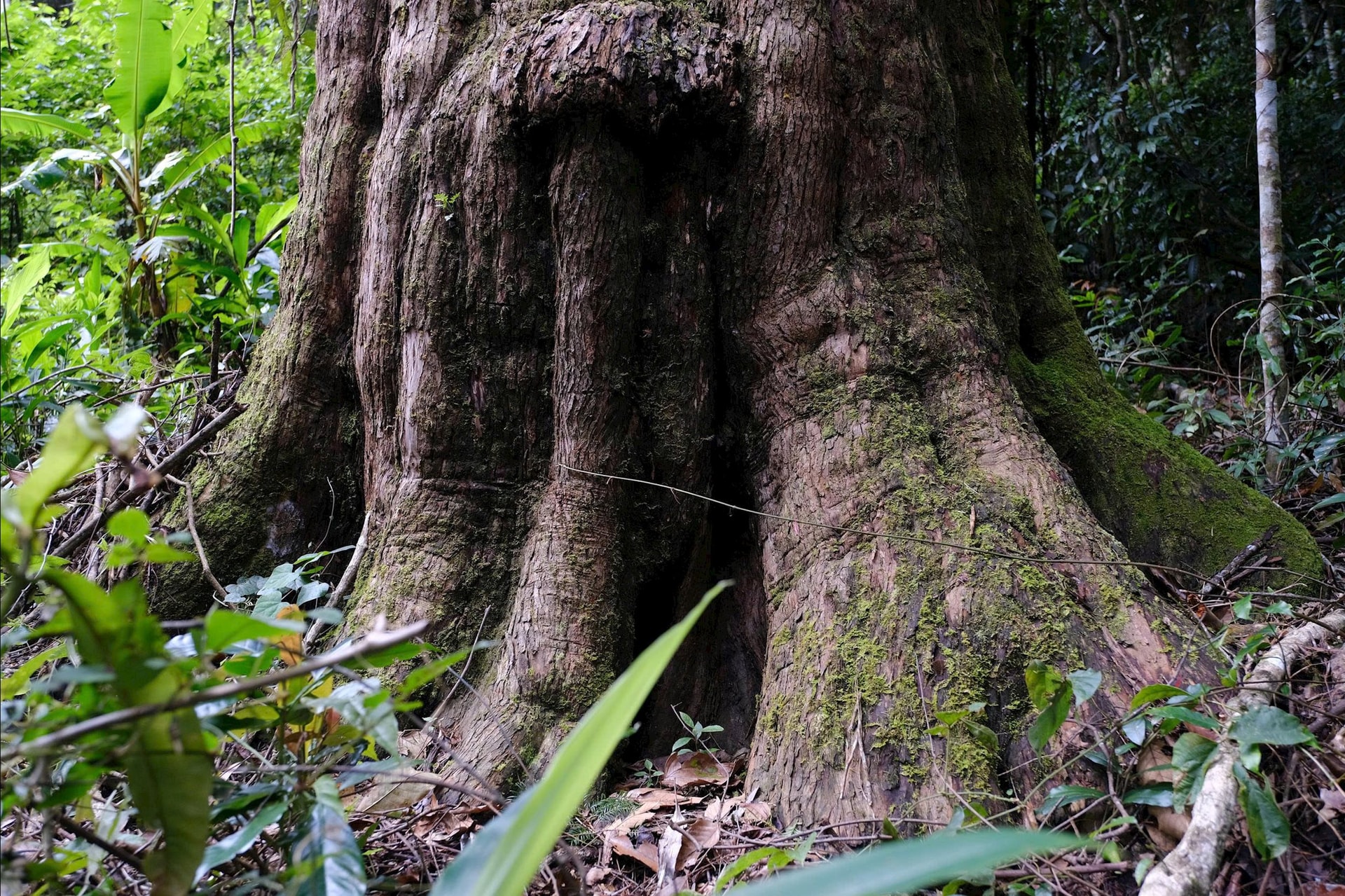
Kon Sa Ha Ri shared that when the red pine population in the Elephant Mountain area was included in the Vietnamese Red Book and designated by the Government as a "specially protected plant," the patrol and protection activities of the team members became more frequent.
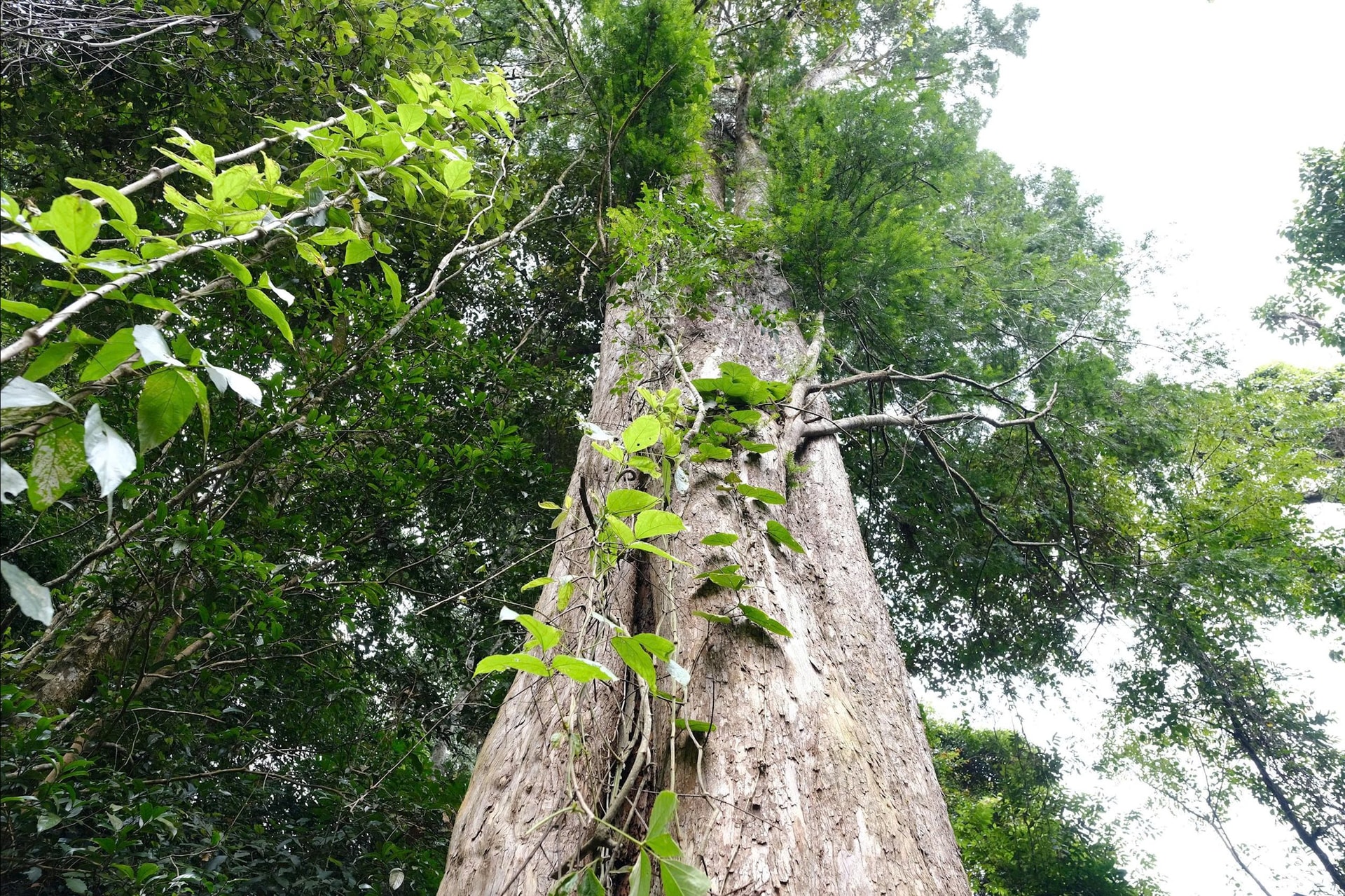
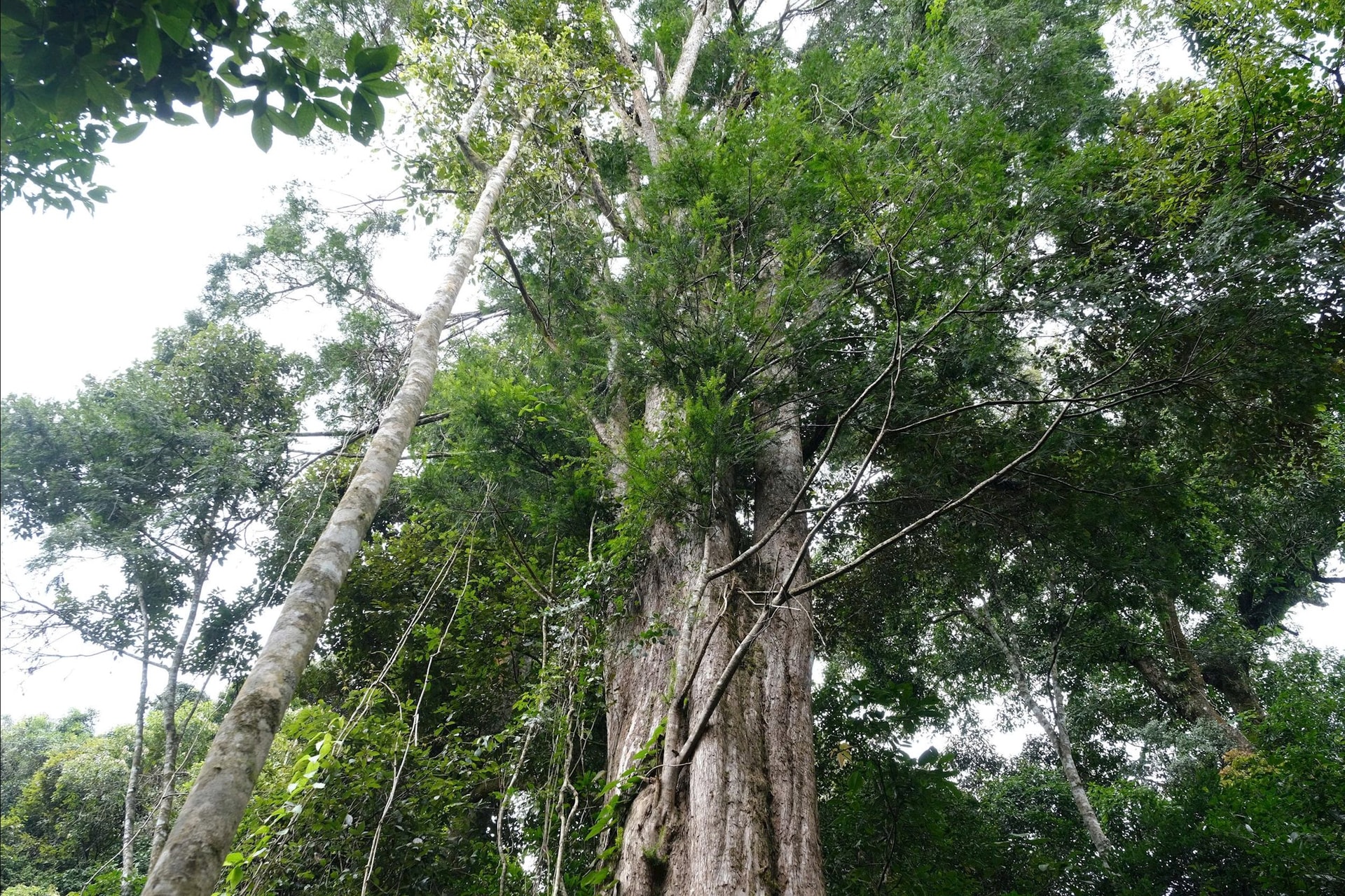
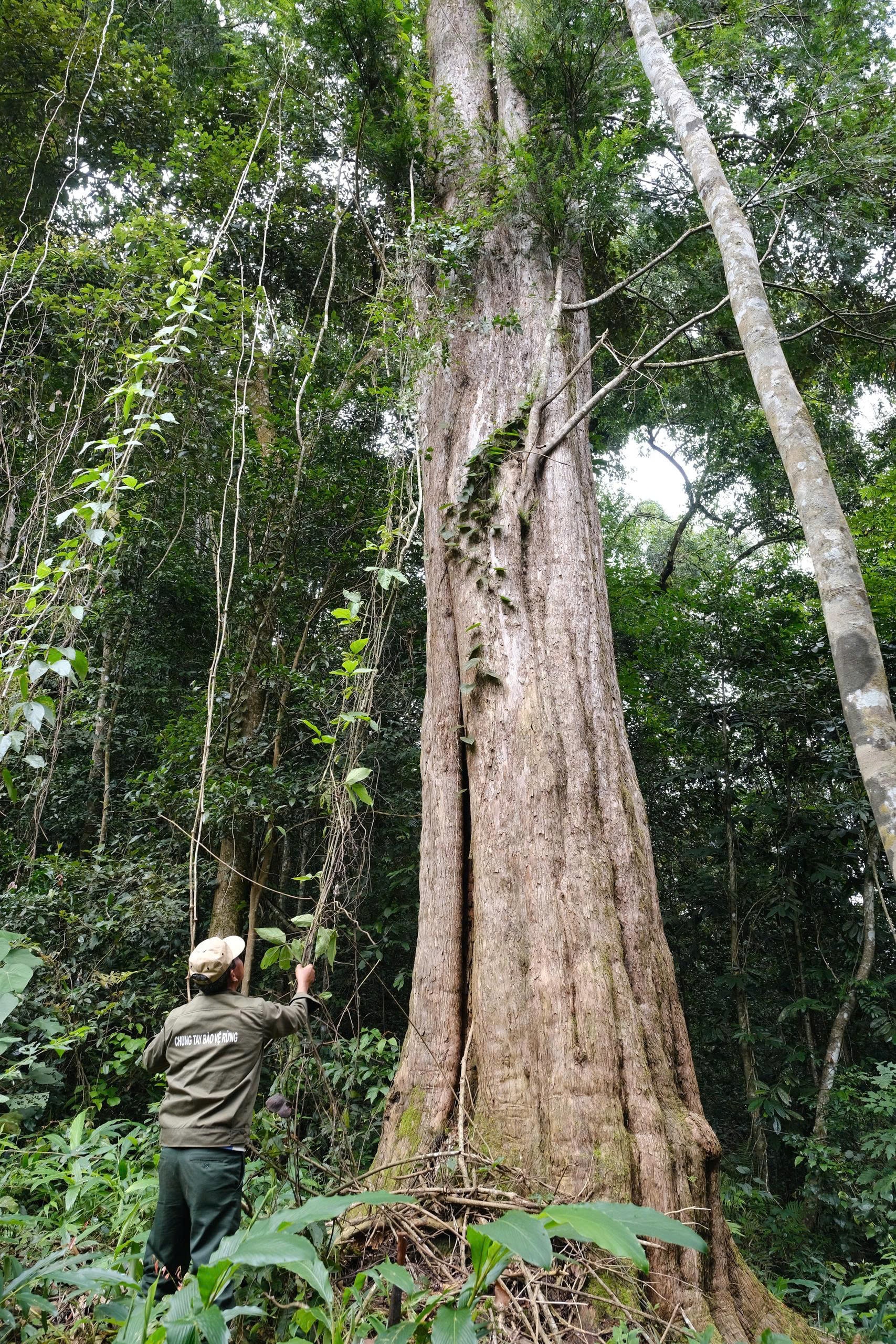
To protect the red pine population on Elephant Mountain, the contracted team has intensified patrols and established checkpoints in the forest, assigning members to be on duty 24/7 to be ready to handle any violations that may occur.
According to Station Chief Tran Manh Truong, although the red pine population on Elephant Mountain is currently protected, there are still potential threats to this red pine forest in the future due to its immense value.
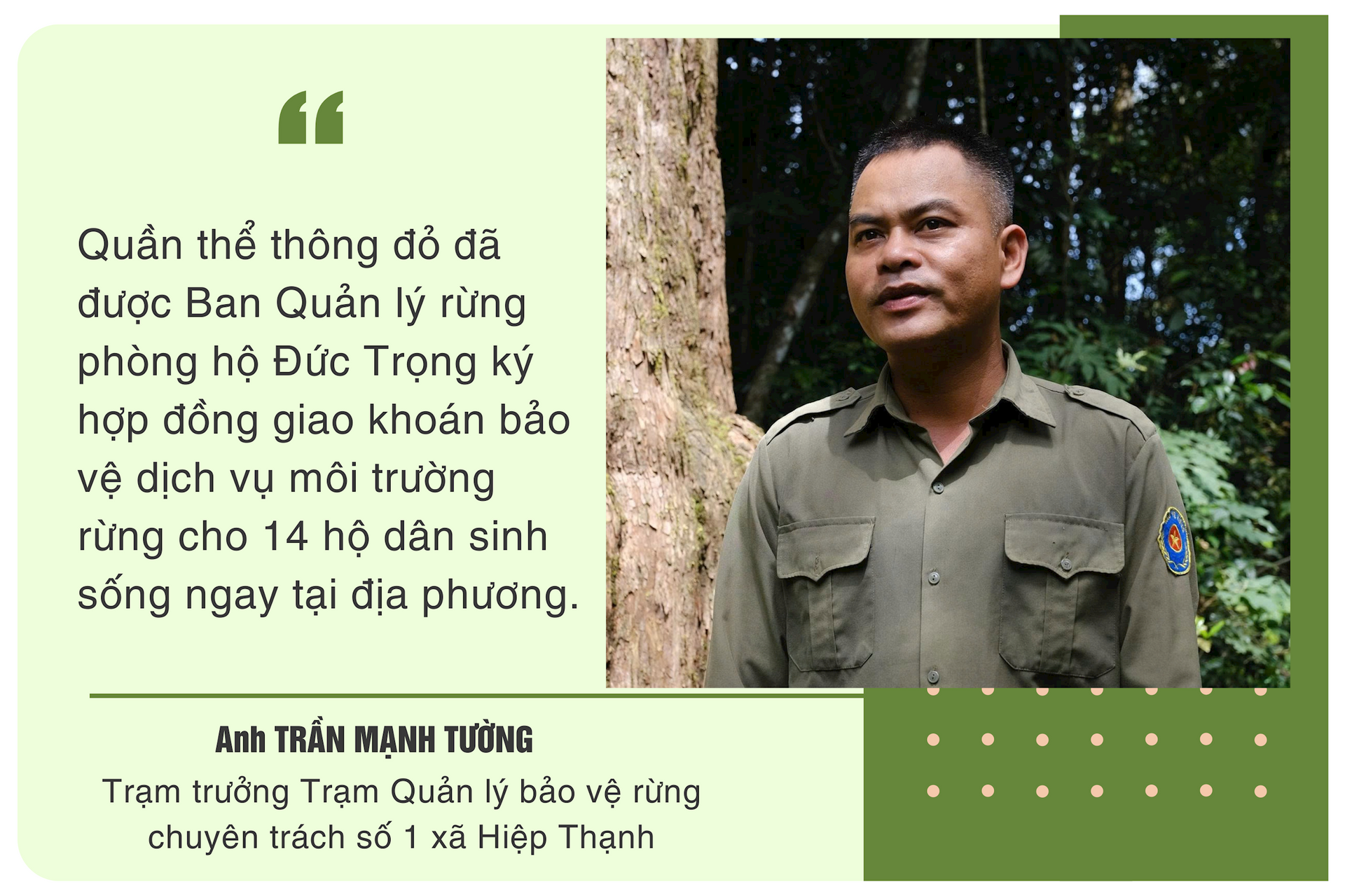
Currently, the Duc Trong Protective Forest Management Board has contracted out forest protection services to 14 households in sub-areas 268 and 277A, where the red pine population is located. These households are ethnic minorities living at the foot of Mount Voi, making them very suitable for forest protection in general and the red pine population in particular.
Every day, officers from Specialized Forest Protection and Management Station No. 1, along with contracted households, conduct forest patrols (4 households per patrol) according to a schedule. In addition, we focus on building an information network at the grassroots level, enabling units to promptly prevent incidents from occurring. Thanks to continuous patrols, no damage or impact to the red pine population has occurred.
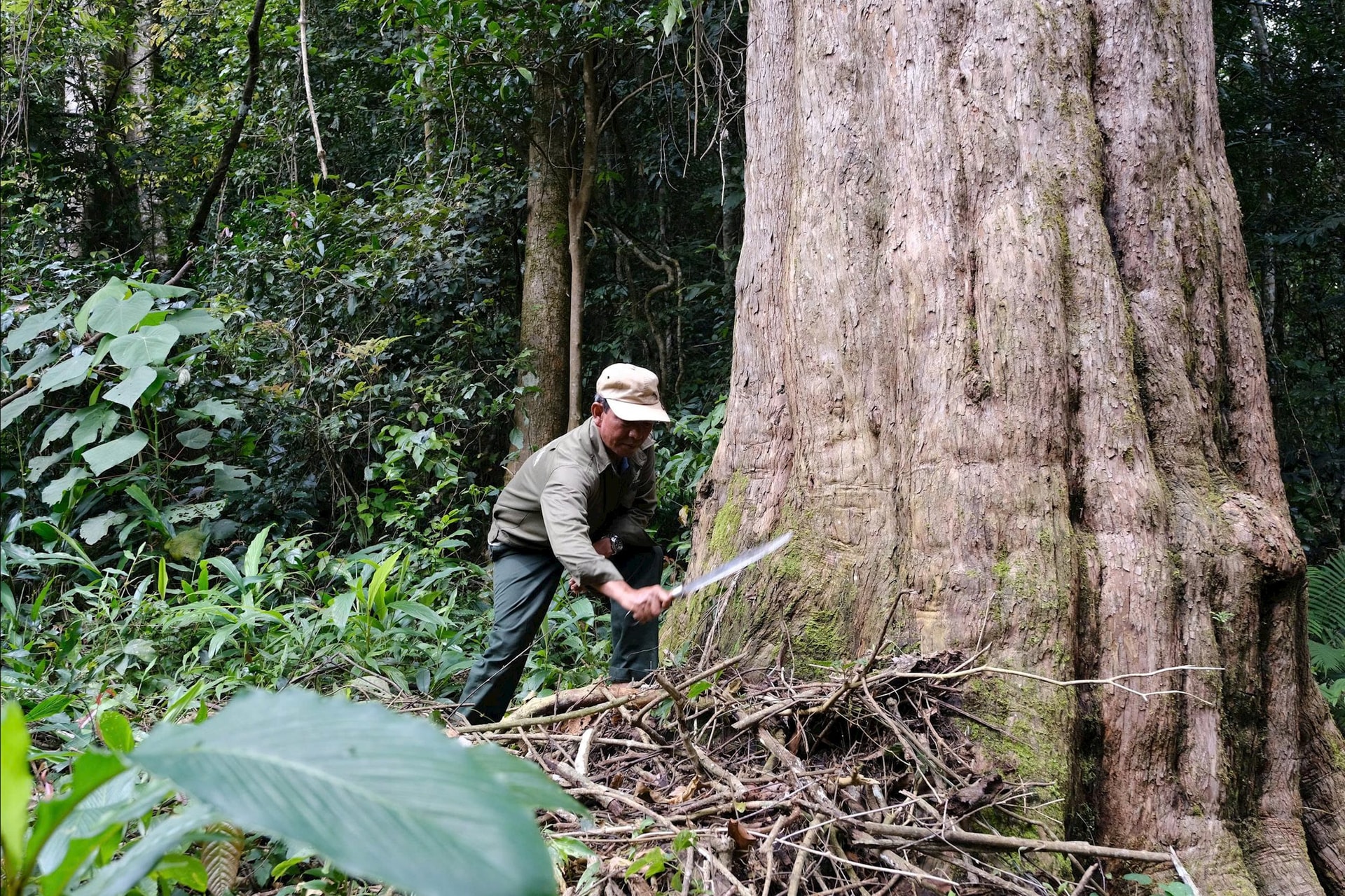
The red pine (Taxus wallichiana Zucc), listed in the Vietnam Red Book (2012), is an endemic, rare plant species with a limited distribution in Lam Dong province, belonging to group IA in the List of endangered, rare, and precious forest plants and animals.
Mr. Vuong Van Dung, Deputy Head of the Duc Trong Protective Forest Management Board, said:
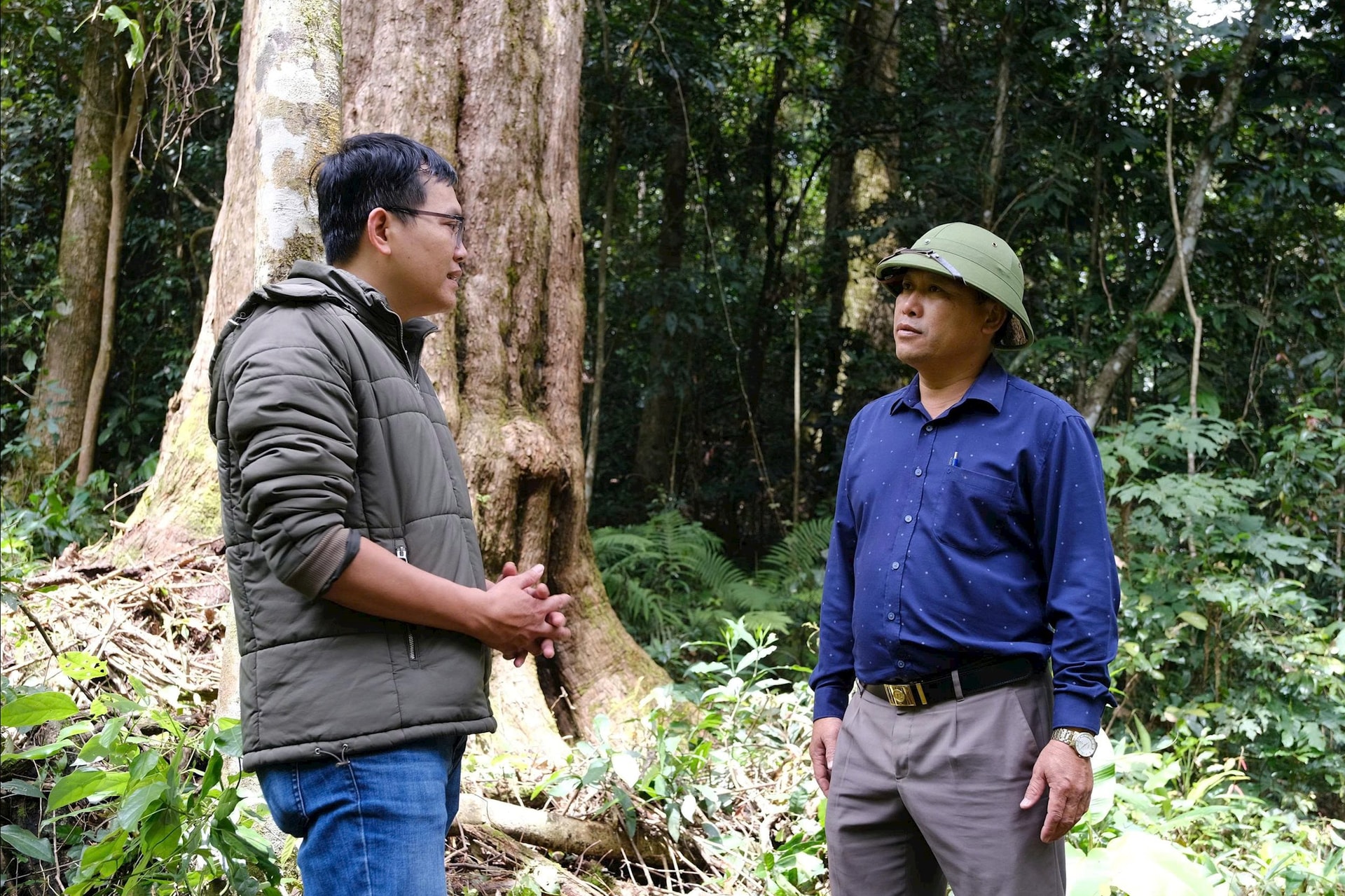
"Regarding the Red Pine, the Forest Protection Department has identified it as an endangered, rare, and precious species as stipulated in Government Decree No. 32/2006/ND-CP dated March 30, 2006, on the management of endangered, rare, and precious forest plants and animals (classified in Group IA in the List of Forest Plants and Animals); it is a species of special scientific value, with a very small population remaining in nature, and its exploitation and use for commercial purposes are strictly prohibited; according to the Vietnam Red Book (2007), the Red Pine is classified as Vulnerable (VU) with a high risk of extinction in the wild."
Currently, there are no specific protection measures for the red pine species in the province. The only approach implemented is through contracting out management and protection alongside other forest tree species, funded by the state budget or from forest environmental service payments. This contracted funding only links a small portion of the state's budget to the people's responsibility in forest protection, thus failing to encourage people to preserve and develop forests, including red pine forests.
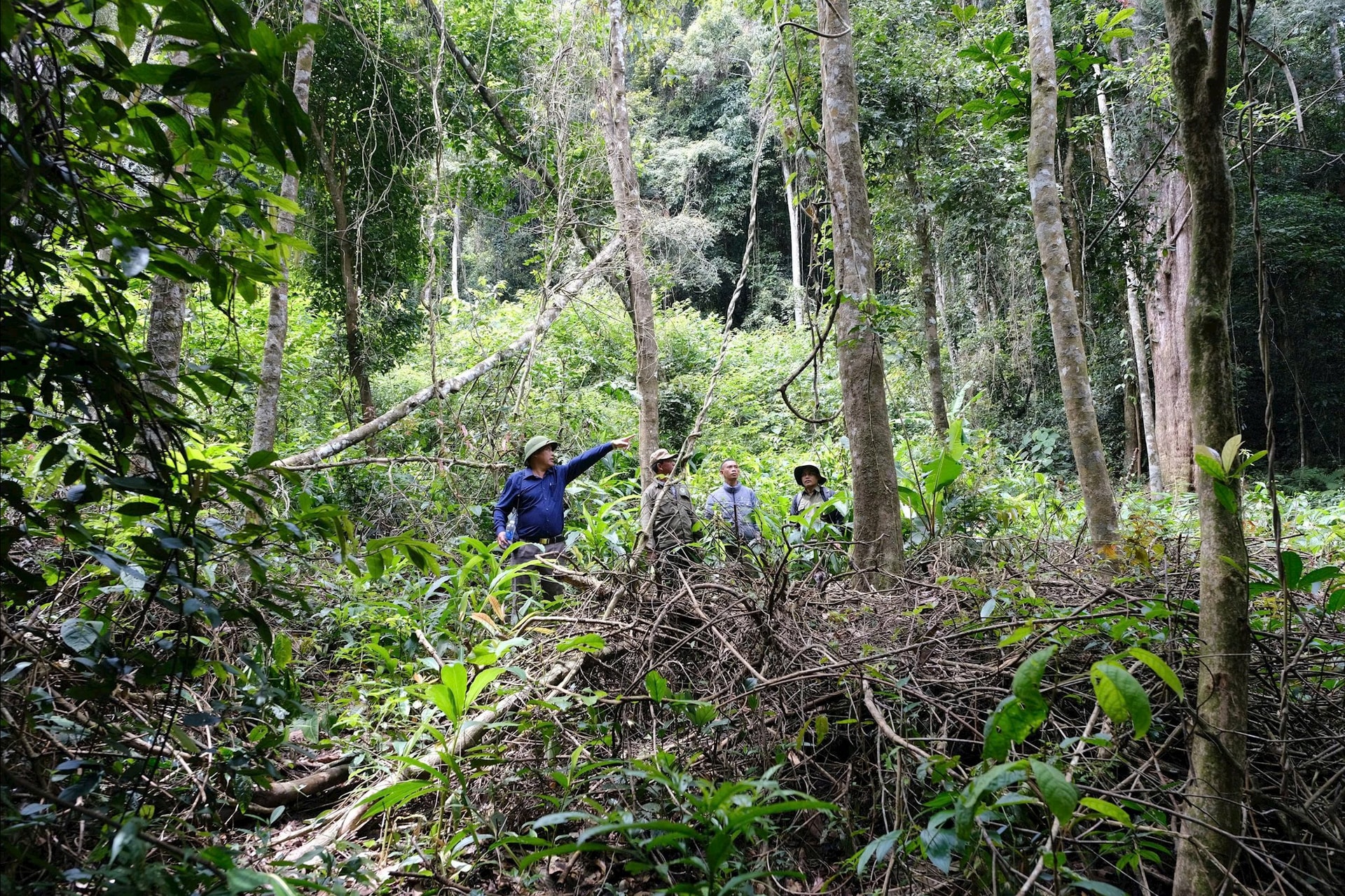
In the Elephant Mountain area in particular, the red pine population is at risk of decline due to its scattered and fragmented nature, leading to genetic degradation. Furthermore, because it grows in mixed evergreen broadleaf forests, most mature red pine trees are often suppressed by climbing vines and other plant species, competing for space and nutrients. This results in poor quality trees, susceptibility to pests and diseases, and hollow trunks; regeneration is very low and distribution is uneven. Research on red pine propagation mainly focuses on cuttings, primarily for providing raw materials for medicinal processing; there are no studies on propagation by seeds for conservation purposes.
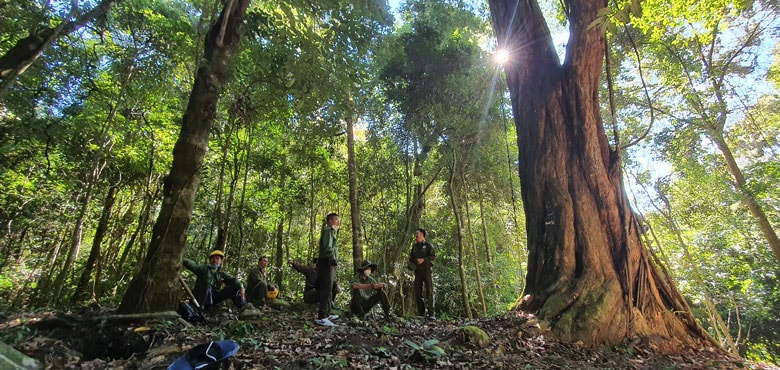
Although the population of red pine trees in Hiep Thanh commune is quite large, it is being effectively protected and nurtured by the local people. In the context of the continuous destruction of forests in the Central Highlands and the gradual disappearance of rare and valuable timber due to illegal logging, the efforts of the ethnic minority people in Darahoa village, Hiep Thanh commune, along with the authorities and local government, to raise awareness and protect the red pine population – a species with rare genetic resources – for future generations is highly commendable and worthy of recognition.
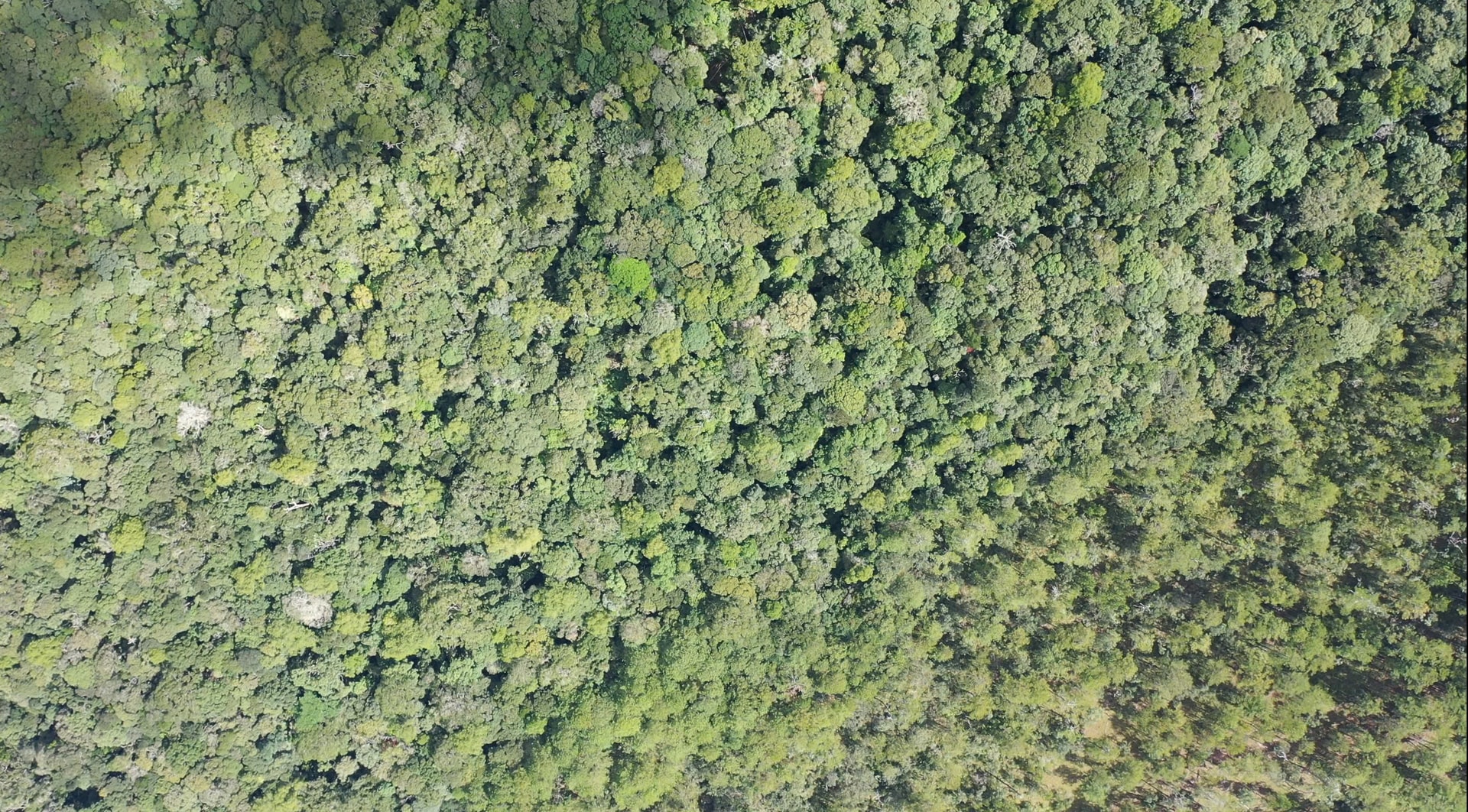
However, in order to preserve and develop the aforementioned red pine population, it is suggested that the State should implement conservation policies to encourage forest owners and local people to protect them more effectively. In addition, it is necessary to develop and implement projects for managing, protecting, promoting natural regeneration, and improving the quality of the existing scattered red pine forests.
Source: https://baolamdong.vn/tham-lang-giu-rung-thong-do-tram-tuoi-391341.html
















































![[Video] Sunset at Lap An Lagoon – Where the sun sets over the fishing nets](https://vphoto.vietnam.vn/thumb/1200x675/vietnam/resource/IMAGE/2026/05/31/1780192137701_beach-landscape-sea-water-nature-grass-745871-pxhere-com.jpeg)




































Comment (0)