

The plaintiffs, comprising 14 U.S. states, argue that Elon Musk's role as head of DOGE is unconstitutional because he was not confirmed by the Senate. The plaintiffs also seek to prevent DOGE from accessing data from seven federal agencies.
However, Judge Tanya Chutkan rejected these requests, stating that the lawsuits from the states failed to prove that Musk and DOGE's actions caused "irreparable harm," The Hill reported on February 18.
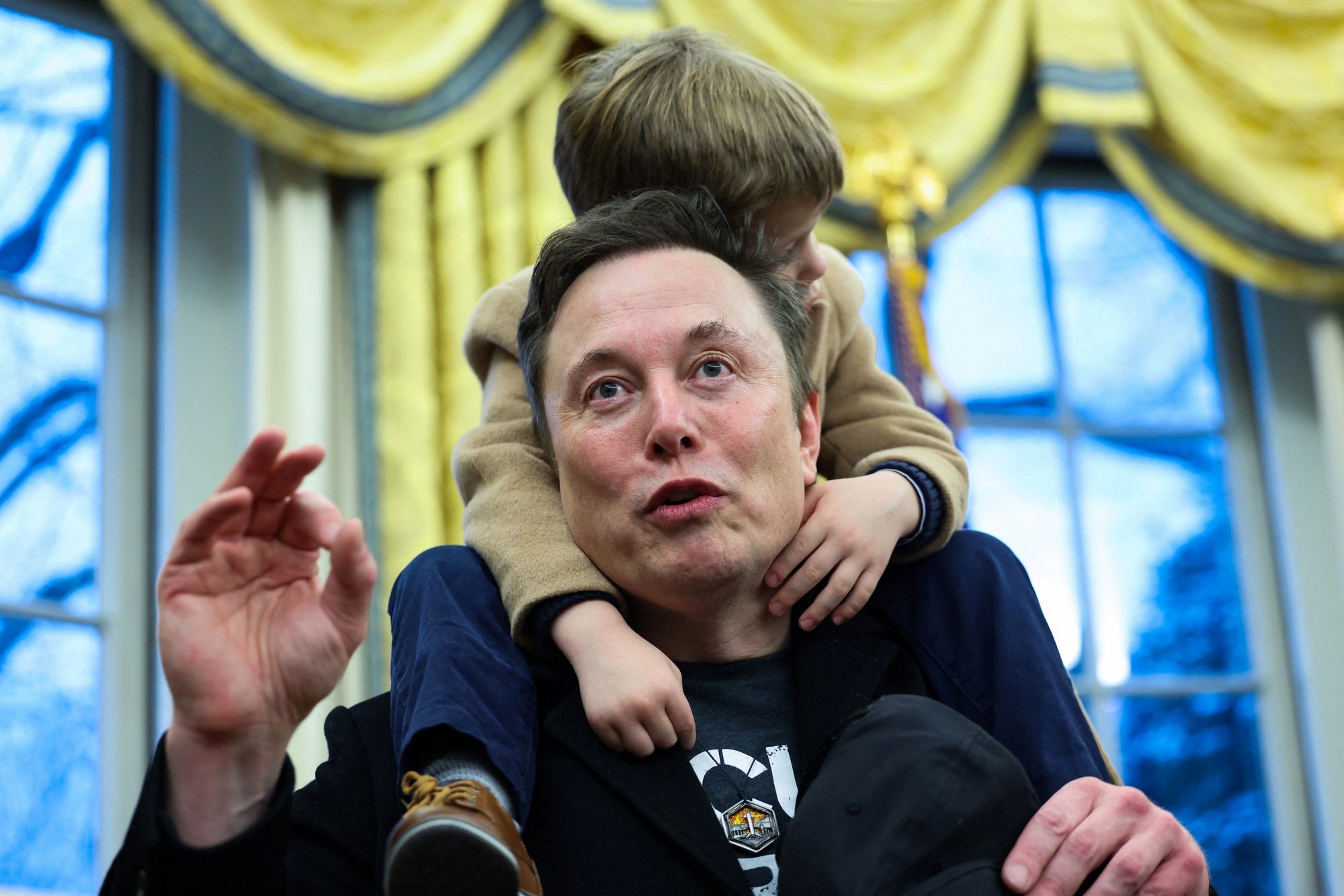
Billionaire Elon Musk and his son at the White House on February 11.
“The court cannot issue a temporary restraining order (TRO), especially with a broad-based injunction requested by the plaintiff, without clear evidence of immediate or irreparable harm,” Ms. Chutkhan said.
The judge added that the plaintiff had asked the court to consider media reports indicating that DOGE had taken, or would soon take, actions such as mass contract terminations. “The court cannot act on information from the media. What I hear is clearly concerning, but I need reports and to find out the facts before making a decision,” ABC News quoted Ms. Chutkhan as saying.
On February 17, the White House announced that Elon Musk is not an employee of DOGE and does not have the authority to lead the organization; instead, the billionaire serves as an advisor to US President Donald Trump.
DOGE faces legal challenges as it moves to cut thousands of jobs and budgets across government agencies. In a recent development, Reuters reported on February 17th that employees of the US Food and Drug Administration (FDA) responsible for evaluating Elon Musk's Neuralink company (which specializes in brain implants) have been fired.
Source: https://thanhnien.vn/tham-phan-bac-yeu-cau-ngan-ong-elon-musk-doge-sa-thai-nhan-su-hang-loat-185250219065734401.htm
![[Photo] Closing Ceremony of the 10th Session of the 15th National Assembly](/_next/image?url=https%3A%2F%2Fvphoto.vietnam.vn%2Fthumb%2F1200x675%2Fvietnam%2Fresource%2FIMAGE%2F2025%2F12%2F11%2F1765448959967_image-1437-jpg.webp&w=3840&q=75)










































![[OFFICIAL] MISA GROUP ANNOUNCES ITS PIONEERING BRAND POSITIONING IN BUILDING AGENTIC AI FOR BUSINESSES, HOUSEHOLDS, AND THE GOVERNMENT](https://vphoto.vietnam.vn/thumb/402x226/vietnam/resource/IMAGE/2025/12/11/1765444754256_agentic-ai_postfb-scaled.png)












































Comment (0)