

 |
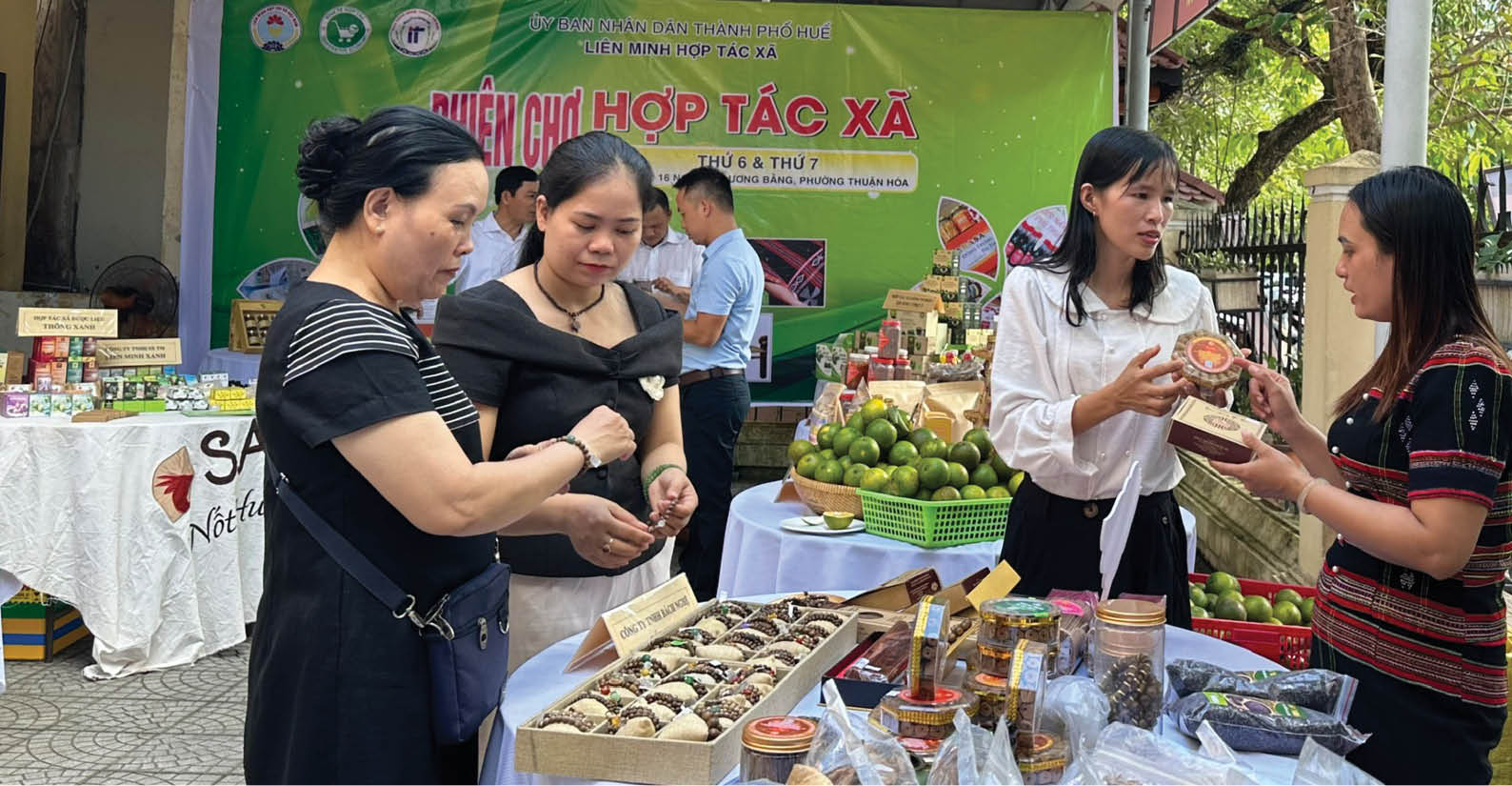
| Cooperative societies participate in promoting their products at trade promotion events. |
Administrative reforms pave the way for cooperatives to accelerate their growth.
Currently, the city has 319 cooperatives, including 10 newly established cooperatives in 2025, demonstrating the increasing attractiveness of the collective economic model in the new era.
This result is partly due to the attention given to administrative reform, shortening the time and procedures for business registration, increasing transparency in the food safety certification process, and supporting digital transformation… As a result, young cooperatives have boldly invested, accessed capital, implemented the production of new products, and expanded their consumer markets.
Mr. Nguyen Van Hung, Vice Chairman in charge of the City's Cooperative Union, commented: "Digital transformation and administrative reform are becoming important driving forces to enhance the competitiveness of cooperatives. Cooperatives have proactively applied e-commerce platforms, traceability systems, digital management, etc., thereby expanding markets, improving production and business efficiency, and ensuring livelihoods for members and workers."
Simultaneously, the City Cooperative Union has actively implemented numerous support programs such as opening training courses on digital skills, online marketing, applying cooperative management software, connecting product consumption, protecting the rights of members, organizing cooperative fairs, etc., contributing to enhancing the capacity of collective economic models. Many cooperatives have demonstrated strong resilience by leveraging technology and administrative reforms. Among them, Dafusa Phu Da Cooperative (Phu Vang) stands out as one of the leading cooperatives in producing clean food in the "digitalization journey".
Despite being established only at the beginning of 2024, Dafusa Phu Da Cooperative has quickly made its mark on the market with clean products such as tofu, bean curd, chilled tofu, and peanut oil. Adhering to the motto "clean food - say no to additives," the cooperative's products have quickly won over many large kitchens, shops, and consumers.
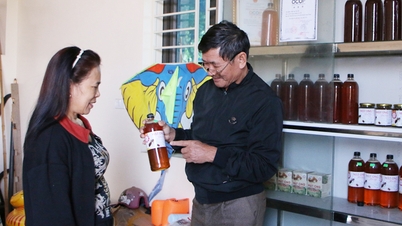
In addition to focusing on tofu products, Dafusa Phu Da Cooperative has also invested in a modern peanut oil production line, from shelling, grinding, steaming, pressing to bottling and labeling, meeting food safety and hygiene standards.
Mr. Vo Van To, Director of Dafusa Phu Da Cooperative, shared: “The younger generation has an advantage in accessing technology, so we are boosting online sales, using QR codes, and promoting on social media. The rapid increase in sales has helped the cooperative expand its scale and establish its product brand. The cooperative also invests in designing modern, eye-catching packaging that suits the e-commerce ecosystem and new consumer trends. For the cooperative to successfully enter the market, in addition to the continuous efforts of its members, preferential loan mechanisms and increasingly simplified administrative procedures are also a significant advantage.”
Promoting digital transformation
The Thuy Bang General Agricultural Service Cooperative has partnered with 17 tea-growing households in the area that meet VietGAP standards to purchase raw materials. They then clean, process, vacuum-pack, label, and promote the products on e-commerce platforms and social media. As a result, local green tea products have expanded their market, increased consumption, and are moving towards professionalism in production and packaging processes. Each product from the cooperative reaches consumers with guaranteed food safety, traceability labels, and enhanced brand recognition.
Mr. Nguyen Van Hung stated: "The application of digital technology , improved packaging, traceability, and multi-channel sales have helped cooperatives become more proactive and dynamic, gradually elevating the quality of local products. This is an essential direction for building a new, sustainable cooperative model in the current period. Currently, the city is strengthening trade promotion, supporting cooperatives in connecting with cooperative economic platforms, distribution systems, and trade fairs to promote and introduce products for member cooperatives through diverse consumption channels. At the same time, more training courses on digital transformation, management skills, and marketing will be organized for cooperative officials to improve operational capacity. The goal in the future is to develop cooperatives linked to value chains, the OCOP program, and green and clean production in line with international trends."
The development of cooperatives in the city today not only has economic significance but also builds sustainable communities by creating stable livelihoods for local workers; developing clean and safe products, protecting the environment. At the same time, it preserves traditional cultural identity through local specialties; and spreads models of community linkage and sharing, an important foundation for sustainable social development.
Throughout this journey, digital transformation and administrative reform are crucial "leverage" helping cooperatives thrive. As cooperatives change their mindset, leverage technology, and receive government support, the collective economy will increasingly assert its role as a vital pillar in the socio-economic development of the city in the new era.
Source: https://huengaynay.vn/kinh-te/don-bay-giup-hop-tac-xa-tang-suc-canh-tranh-160801.html
![[Photo] Prime Minister Pham Minh Chinh holds a phone call with the CEO of Russia's Rosatom Corporation.](/_next/image?url=https%3A%2F%2Fvphoto.vietnam.vn%2Fthumb%2F1200x675%2Fvietnam%2Fresource%2FIMAGE%2F2025%2F12%2F11%2F1765464552365_dsc-5295-jpg.webp&w=3840&q=75)
![[Photo] Closing Ceremony of the 10th Session of the 15th National Assembly](/_next/image?url=https%3A%2F%2Fvphoto.vietnam.vn%2Fthumb%2F1200x675%2Fvietnam%2Fresource%2FIMAGE%2F2025%2F12%2F11%2F1765448959967_image-1437-jpg.webp&w=3840&q=75)


















































![[OFFICIAL] MISA GROUP ANNOUNCES ITS PIONEERING BRAND POSITIONING IN BUILDING AGENTIC AI FOR BUSINESSES, HOUSEHOLDS, AND THE GOVERNMENT](https://vphoto.vietnam.vn/thumb/402x226/vietnam/resource/IMAGE/2025/12/11/1765444754256_agentic-ai_postfb-scaled.png)















































Comment (0)