

These are the provisions that the Ministry of Health has included in the decree guiding the implementation of the amended Law on Pharmaceuticals (which was recently passed by the National Assembly at the end of November).

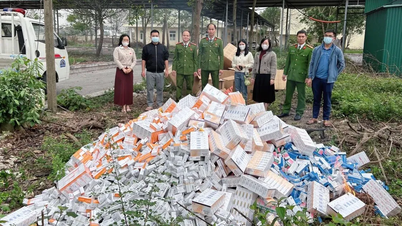
The Ministry of Health is drafting a decree guiding the implementation of the amended Law on Pharmaceuticals - Illustration image.
According to Mr. Chu Dang Trung, head of the legal and integration department of the Drug Administration of Vietnam, and representative of the drafting committee for the decree, many new points have been included in this draft decree. This decree also amends two existing documents: Decree 54 and Decree 155 guiding the 2016 Law on Pharmaceuticals.
One point of great concern to many is how to obtain rare or rarely used but essential drugs in emergency situations (such as the case of Botulinum antitoxin, which costs thousands of USD per vial, or the shortage of antivenom serum that patients urgently needed). Mr. Trung stated that the draft proposal allows hospitals to register with authorized businesses to purchase rare drugs that few companies import and whose absence would endanger patients' lives.
These drugs may include rare drugs, immunosuppressants, drugs for treating class A infectious diseases, drugs for cancer, emerging diseases, detoxification drugs, etc.
Mr. Trung also proposed measures to resolve the existing problems. According to him, current regulations stipulate that businesses with two or more batches of imported drugs violating level 2 regulations, or one or more batches violating level 1 regulations, may be subject to temporary suspension of import licenses. However, this measure could be problematic when it is necessary to import rare or urgently needed drugs.
Therefore, the new draft allows businesses currently under sanctions to be exempted in certain situations, so that they can import medicines in a timely manner to serve medical examinations and treatment.
Furthermore, in the past, vaccines and medicines donated to Vietnam had to have their prices declared before being distributed to users. This was intended to manage prices, but in reality, those medicines and vaccines were not for sale, so price management was useless and time-consuming, especially in situations of epidemics when medicines and vaccines are needed.
Therefore, this draft states that only "targeted price management" will be implemented, meaning that free medicines, medicines/vaccines used in national health programs, and donated medicines will not have to declare prices; only essential medicines, covering 82.5% of the medicines currently available on the market, will have their prices managed.
According to Mr. Do Xuan Tuyen, Deputy Minister of Health, the recently passed Law on Pharmaceuticals amends nearly 50 articles, including notable points aimed at developing the domestic pharmaceutical industry, reducing administrative procedures, and ensuring that people can buy good quality medicines quickly and at reasonable prices.
Mr. Tuyen also advised that when drafting guiding documents for the implementation of the amended Law on Pharmaceuticals, it is necessary to boldly review regulations that have been issued later than required by the law. "Looking back at the current regulations, some requirements are excessive, potentially leading to additional sub-licenses," Mr. Tuyen frankly stated.
Mr. Tuyen also requested that information technology be further promoted. "Sitting at the Ministry of Health, we can immediately see how many people have undergone surgery at a hospital, how many have been discharged, how many are waiting, and what medicines and medical supplies are in short supply. Waiting for hospitals to report would take forever."
"Promoting information technology in management also speeds up the process of issuing drug marketing authorization certificates," Mr. Tuyen emphasized.
The Vietnamese pharmaceutical market is worth approximately US$7 billion per year and is experiencing double-digit annual growth. Currently, there are 238 pharmaceutical manufacturing plants that meet the Good Manufacturing Practice (GMP) standards recommended by the World Health Organization (WHO), 17 plants that meet GMP-EU standards, and 4 plants that meet GMP standards equivalent to GMP-EU.
Currently, domestic drug production accounts for over 50% of the drug market value. In 2024, Vietnam imported $3.8 billion worth of medicines and vaccines; it exported $280 million worth of medicines/vaccines, an increase of over $80 million compared to the same period. The target of $2 billion in exports by 2030 seems difficult to achieve.
The amended Pharmacy Law will officially come into effect in July 2025, but some provisions will apply as early as January 2025.
Source: https://tuoitre.vn/thieu-thuoc-hiem-thuoc-cap-cuu-benh-vien-co-the-tu-mua-20241217173626804.htm






























































































Comment (0)