

Disbursement progress is too slow.
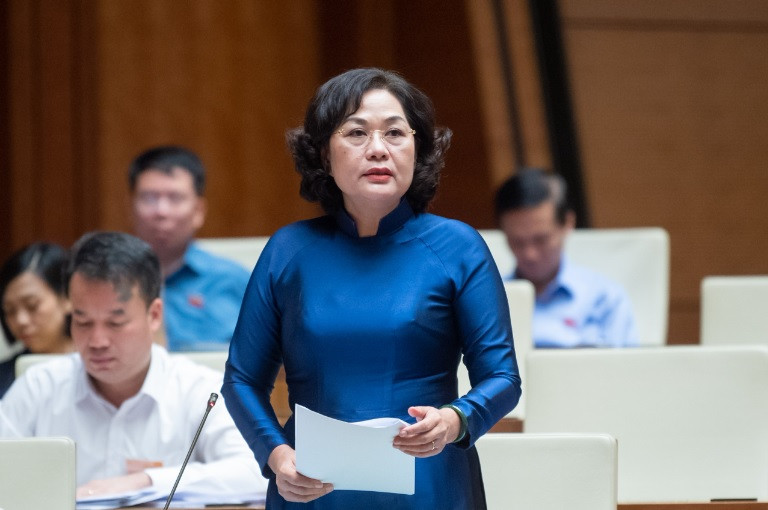
Responding to questions before the National Assembly on the progress of disbursing the 120,000 billion VND credit package for social housing loans on the morning of November 6th, Governor of the State Bank of Vietnam Nguyen Thi Hong stated that 18 out of 63 provincial People's Committees have announced projects participating in the program, totaling 53 projects. To date, 105 billion VND has been disbursed for 3 projects in 3 provinces/cities.
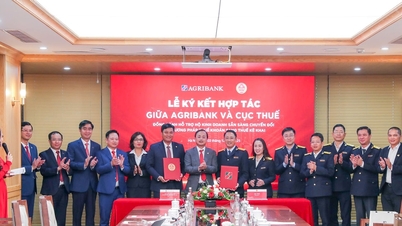
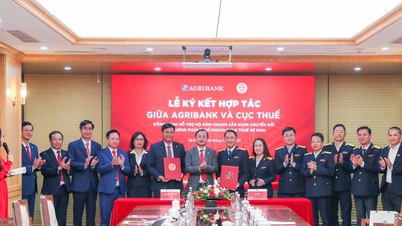
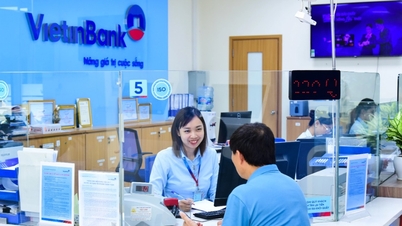
In line with the Government's Resolution to achieve the goal of 1 million apartments in the next 10 years, the 120,000 billion VND credit package utilizes funds from credit institutions, with preferential interest rates also offered by banks. Four banks have voluntarily participated: Agribank , Vietcombank, VietinBank, and BIDV, each committing to disburse 30,000 billion VND.
The State Bank of Vietnam (SBV) has issued guidance to these four banks on implementation; it has also sent a document to the People's Committees of provinces and cities, urging them to publicize projects eligible for loans under this credit package. The SBV requires the banks to issue internal procedures for implementation.
However, Governor of the State Bank of Vietnam, Nguyen Thi Hong, acknowledged that the limited disbursement is due to the limited supply of housing for eligible buyers.
According to the Governor, there is a high demand for housing, but the need to borrow money to buy a house is something people consider carefully.
The loan conditions still have some shortcomings. On the other hand, the program will be implemented over a long period of 10 years, and will expand to include commercial banks, so the value of this loan package will be increased. Currently, several banks have participated in this credit package with a value of 5,000 billion VND.
"Over the past period, the disbursement of credit packages has been limited due to the limited supply of eligible housing. There is a high demand for housing, but people carefully consider whether or not to borrow money to buy a house. The lending conditions still have some shortcomings," Governor Nguyen Thi Hong stated.
The State Bank of Vietnam (SBV) recommends that the People's Committees of provinces and cities promptly announce the list of projects eligible for loans. At the same time, the SBV will strengthen information dissemination to ensure that people are well-informed.
The investor wasn't very enthusiastic either.
According to the Government 's report to the National Assembly, by the end of September 2023, the whole country had completed 46 urban social housing projects, with a scale of approximately 20,210 units; and 419 projects were underway, with a scale of approximately 392,635 units.
It is evident that the disbursement of this credit package is progressing too slowly. However, the difficulties and obstacles stem from many sides, including banks, investment companies, local authorities, and even borrowers.
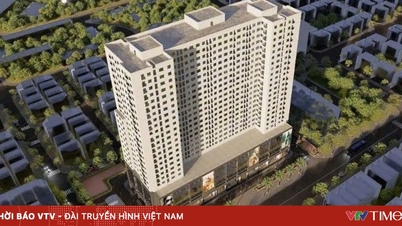
In early July 2023, the Ho Chi Minh City People's Committee announced 6 eligible projects with a total projected loan amount of VND 2,776.7 billion. These included 3 social housing projects for low-income earners with a total projected loan of VND 910 billion; 1 social housing project for workers with a projected loan of VND 700 billion; and 2 projects for renovating and rebuilding apartment buildings with a total projected loan of VND 1,166.7 billion.
However, of the six projects mentioned above, only the social housing project for workers renting accommodation in the Industrial Cluster in Thanh My Loi Ward, Thu Duc City, invested by ThuThiemGroup Joint Stock Company (ThuThiemGroup Company), has received a loan commitment from the bank.
Specifically, BIDV Bank – District 7 Branch has assessed and approved a loan for ThuThiemGroup under the VND 120,000 billion credit program with a maximum loan limit of VND 585 billion.
However, BIDV stated that the investor, ThuThiemGroup, does not yet have a need for disbursement to implement the project, and therefore has not signed the credit agreement and guarantee contracts with the bank as required. The bank said it will disburse the funds after the project owner completes and provides all relevant documents.
Meanwhile, a business representative shared with VietNamNet that when receiving loan applications for appraisal, banks have their own regulations regarding loan conditions to ensure debt recovery.
According to this source, bank regulations for social housing and worker housing projects require a land use right certificate. Meanwhile, according to the Land Law, organizations to which the State allocates land without collecting land use fees do not have the right to mortgage it.
Therefore, the investor cannot use the land designated for the social housing project as collateral to borrow from the bank, but must use other assets, even though the investor has already cleared the land and converted it to social housing project land in accordance with the plan.
The company representative also stated that most developers of social housing projects, after receiving land allocation or land use conversion decisions, have not yet completed the procedures for obtaining land use certificates, and therefore are not eligible for loans.
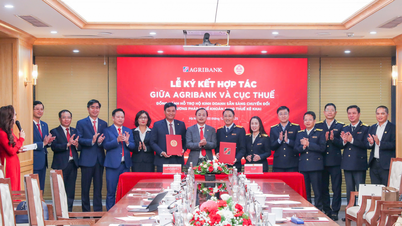
In an interview with VietNamNet in early October, Ms. Phung Thi Binh, Deputy General Director of Agribank, said that although they are approaching many projects, the implementation process faces many obstacles in resolving legal procedures, causing a lot of time loss for businesses.
Ms. Binh argued that businesses are not enthusiastic about participating in projects under this credit package because they are limited to a profit margin of no more than 10%. Furthermore, the selling price and the buyers are chosen by the departments and agencies of the province/city where the project is located.
"Even a slight delay in a project means the investor won't make a profit, so they're not keen on participating in projects like this," Ms. Binh said.
Source

![[Photo] Prime Minister Pham Minh Chinh holds a phone call with the CEO of Russia's Rosatom Corporation.](/_next/image?url=https%3A%2F%2Fvphoto.vietnam.vn%2Fthumb%2F1200x675%2Fvietnam%2Fresource%2FIMAGE%2F2025%2F12%2F11%2F1765464552365_dsc-5295-jpg.webp&w=3840&q=75)












































































Comment (0)