

Upon taking his medical history, Mr. A. stated that he had recently reunited with two friends after a long time and they had been drinking together. Normally, he rarely drinks alcohol, but having heard about a specialty liquor, he tried three glasses and felt slightly tipsy, so he went home to rest.
Later, Mr. A started vomiting and feeling tired, but thought it was due to alcohol. The next morning, he experienced a headache, shortness of breath, photophobia, blurred vision as if obscured by clouds, and sometimes saw white as snow. On the third day, upon learning that two friends had similar symptoms, he called his wife to take him to Tam Anh General Hospital in Ho Chi Minh City.
On September 22nd, Dr. Dinh Tuan Vinh, a specialist in the Intensive Care Unit (ICU) at Tam Anh General Hospital in Ho Chi Minh City, stated that patient A. was admitted with typical symptoms of methanol poisoning such as restlessness, vomiting, lethargy, blurred vision, migraine, and difficulty breathing. Immediately, the patient underwent blood and urine tests, received intravenous fluids to reduce dehydration, and was given oxygen. The results confirmed the initial diagnosis: he had metabolic acidosis with an arterial pH level of 7.29 (normal range is 7.35-7.45).
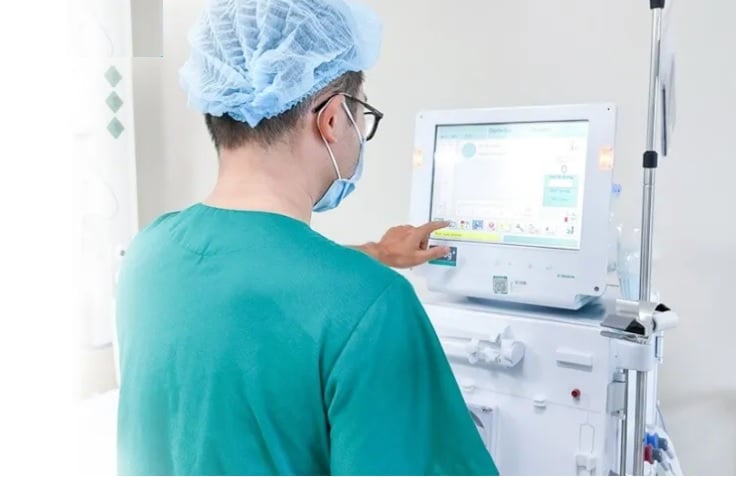
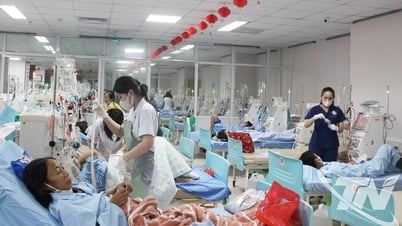
Doctor Vinh is checking the parameters on the intermittent hemodialysis machine.
"However, waiting for accurate test results would prolong the time it takes for methanol to be absorbed into the patient's body. Therefore, based on clinical symptoms and metabolic acidosis results, patients are immediately given intermittent hemodialysis to avoid dangerous complications such as optic nerve damage leading to blindness, multiple organ failure, or even death," Dr. Vinh shared.
After undergoing intermittent hemodialysis every 4 hours, followed by a 12-hour monitoring period and a second intermittent hemodialysis session, the patient's blurred vision disappeared, and their acidosis improved. Currently, the patient's health is stable, laboratory test results are within safe limits, and liver and kidney function are stable.
Just 30 ml of pure methanol can be fatal.
Dr. Dinh Tuan Vinh stated that methanol is an industrial alcohol. Methanol is used for various purposes such as solvents, paints, cleaning solutions, and antifreeze. Products containing methanol include perfumes, windshield washer fluid, and carburetor cleaners. Due to its high toxicity to the body, methanol is only used in small quantities in industrial solutions and is not permitted for use in alcohol production or food processing.
If accidentally ingested, methanol poisoning can occur rapidly within 30-60 minutes. Just 30 ml of pure methanol can be fatal, and 10 ml can cause blindness. Methanol is quickly absorbed through the digestive tract, and most of it is metabolized in the liver into formic acid, causing metabolic acidosis, damaging organs, nerves, and vision, and posing a life-threatening risk. Initially, ingestion may produce a sensation similar to being drunk.
When methanol enters the body, the symptoms of methanol poisoning become more apparent and include: vomiting, headache, dizziness, restlessness, back pain, body aches, muscle stiffness, sweating, lethargy, blurred vision, weak breathing, hallucinations, coma, seizures… Clinical manifestations include vasodilation, hypotension, heart failure, changes in liver function, acute renal failure…
To prevent methanol poisoning, people should choose alcoholic beverages with clear origins and licensed by the Food Safety Administration. If you experience symptoms suspected of alcohol poisoning after drinking alcohol, go to the nearest medical facility with adequate equipment, especially a blood dialysis system, for timely treatment to avoid dangerous complications that could affect your life later on.
Source link


![[Image] Close-up of the newly discovered "sacred road" at My Son Sanctuary](/_next/image?url=https%3A%2F%2Fvphoto.vietnam.vn%2Fthumb%2F1200x675%2Fvietnam%2Fresource%2FIMAGE%2F2025%2F12%2F13%2F1765587881240_ndo_br_ms5-jpg.webp&w=3840&q=75)
















































































Comment (0)