

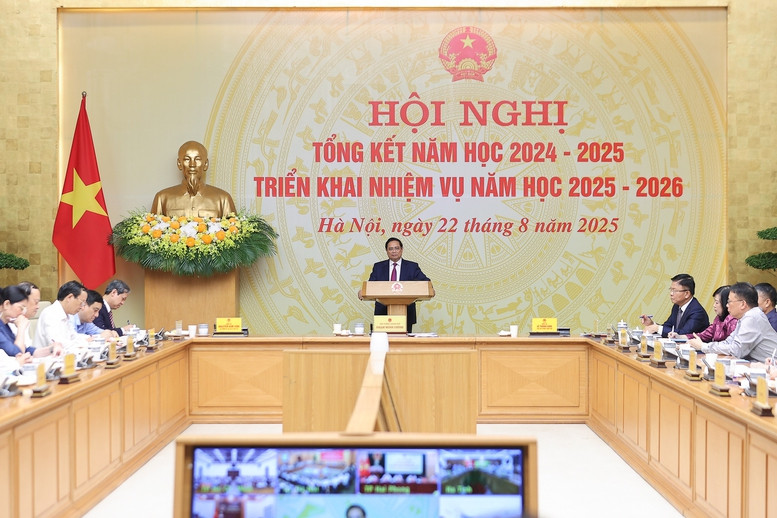
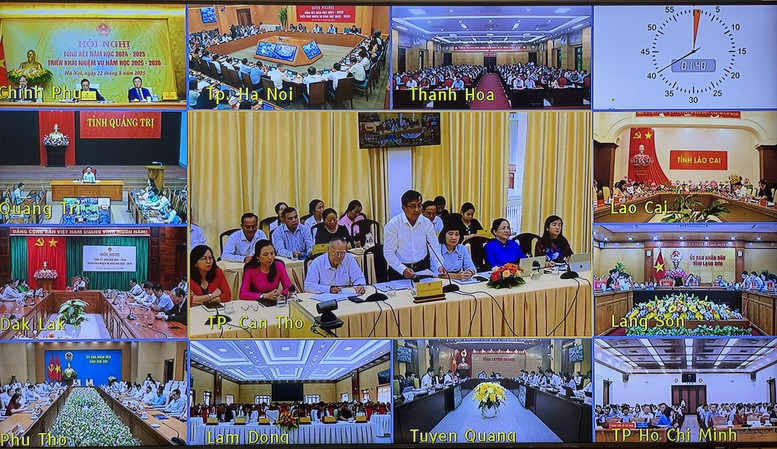
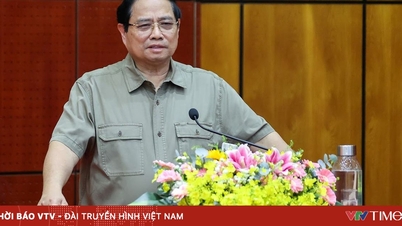
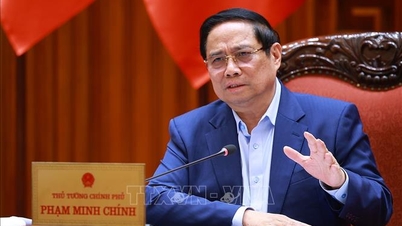
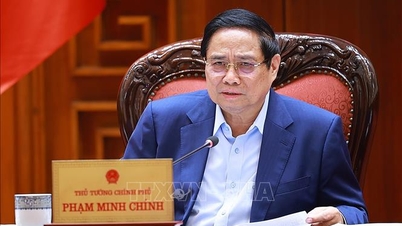
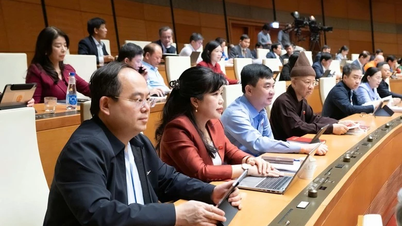
On the afternoon of August 22nd, at the Government headquarters, Prime Minister Pham Minh Chinh attended and co-chaired the conference summarizing the 2024-2025 school year and outlining tasks for the 2025-2026 school year.
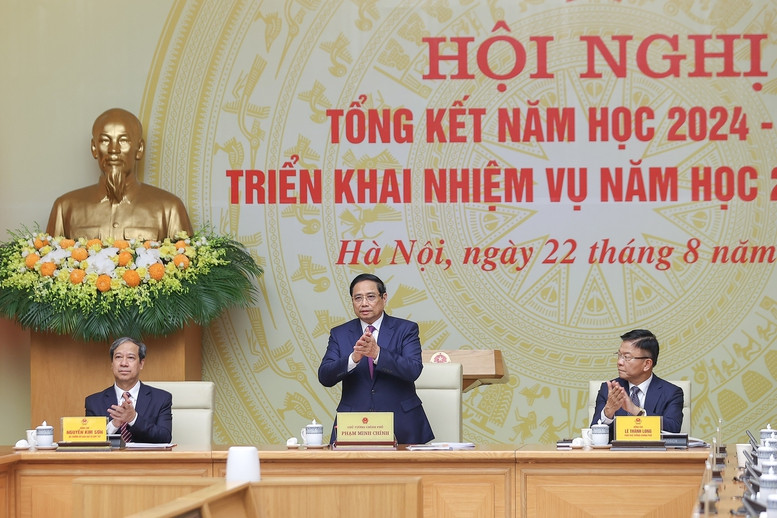
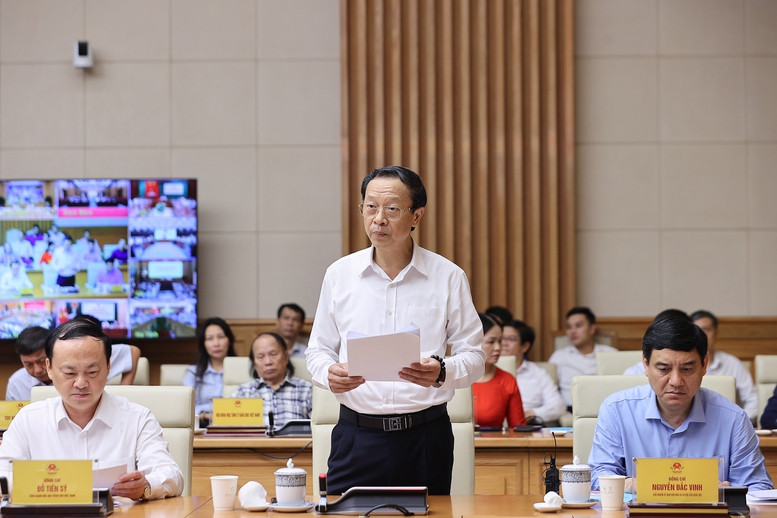
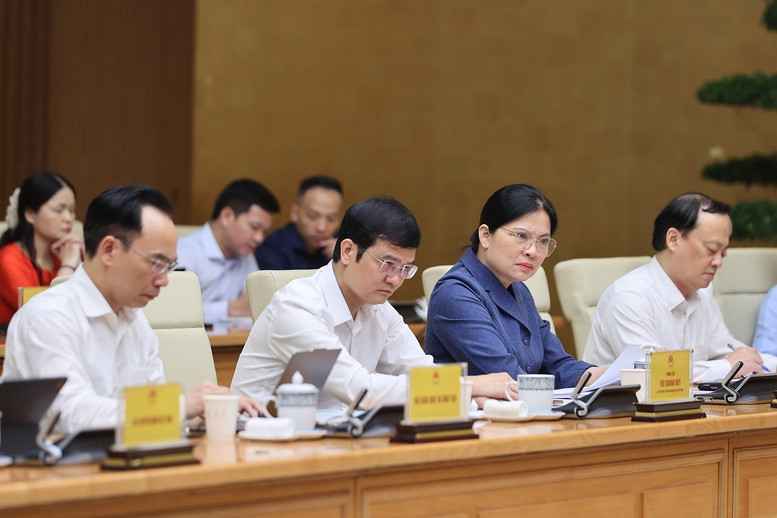
The conference was connected online to provinces and centrally-administered cities. The conference was co-chaired by Deputy Prime Minister Le Thanh Long and Minister of Education and Training Nguyen Kim Son. Also attending the conference were leaders from ministries, central agencies, provincial and city Party Secretaries, and Chairmen of People's Committees of provinces and centrally-administered cities.
By 2026, allocate at least an additional 134 trillion VND to education.
According to the report of the Ministry of Education and Training, based on the opinions expressed at the Conference, in the 2024-2025 academic year, with the attention of the Party and the State, the close and timely guidance of the Government, the Prime Minister, and the Deputy Prime Minister in charge, the effective coordination of central ministries and agencies, the regular and thorough leadership and guidance of local Party committees and authorities, the determination and responsibility of teachers and education management staff at all levels, and the efforts of students, the entire education sector has completed the key tasks and solutions for the 2024-2025 academic year and achieved many important results.
Some notable achievements include: Breakthroughs in perfecting the institutional framework and policies for educational development; proactive and effective implementation of organizational restructuring and the two-tiered local government system; continued maintenance and improvement of educational quality, with results this academic year higher than the previous year in all indicators across all levels/stages; continued strengthening of quality assurance conditions such as the teaching staff and facilities; promotion of digital transformation and the application of artificial intelligence in education; and positive improvements in the quality of vocational and higher education.
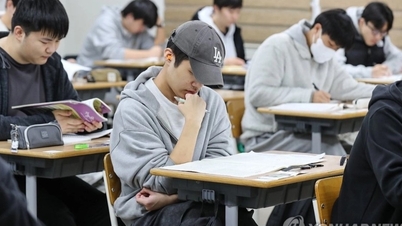
Notably, the 2025 High School Graduation Examination was held in a context of three special circumstances: special in terms of expertise (the exam was organized according to two curricula, including the 2018 General Education Curriculum for the first time); special in scale (the largest ever with over 1.16 million candidates; and over 200,000 officials directly involved); and special in terms of organizational structure (the context of merging provincial-level administrative units, with 63 provinces and cities nationwide; a three-tiered local government at the time of the exam and 34 provinces and cities with a two-tiered local government at the time of grading). The Ministry of Education and Training organized the exam ensuring safety, seriousness, and objectivity, meeting the set objectives. This demonstrates the adaptability, transformation, spirit, and capacity of the education and training sector.

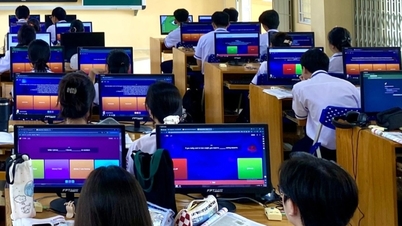
In addition, the education sector's database system has been basically completed with 24.55 million records connected to the national database. The online enrollment system on the National Public Service Portal has been fully completed, allowing 100% of candidates to register for the high school graduation exam and university/college admissions entirely online.
Over 10 million school transcripts and more than 1.5 million high school diplomas have been digitized and synchronized to the Ministry's centralized database, and are being linked to the national database and the VNeID e-wallet. Students can look up their transcript and diploma information on VNeID. It is expected that after September 2nd, 2025, students will be able to access their digital transcripts and diplomas on VNeID.
In the 2025-2026 academic year, the nationwide implementation of digital school records will take place across all educational levels, along with digital diplomas from high school to postgraduate levels. Simultaneously, data for previously issued diplomas will be digitized. The Ministry of Education and Training is currently developing and refining the institutional framework for digital school records, diplomas, and certificates within the national education system to replace paper documents in administrative procedures and online public services.
The Ministry has submitted a plan to the Prime Minister for approval to achieve the goal of abolishing at least 30% of unnecessary investment and business conditions, reducing processing time by at least 30%, and reducing administrative compliance costs by at least 30%.
The 2025-2026 academic year is the first year of implementing the Resolution of the 14th National Congress of the Communist Party of Vietnam. It is also the year in which the entire country will implement the Politburo's Resolution on breakthroughs in education and training development and the amended laws in the field of education and training.
The education sector has identified key tasks and solutions focusing on institutionalizing the viewpoints, goals, tasks, and solutions assigned in the Politburo's Resolution; implementing universal preschool education for children aged 3 to 5; preparing the necessary conditions to gradually make English the second language in schools; implementing the recruitment and utilization of all allocated teacher positions; effectively utilizing state budget funds; urgently completing the sector's databases, ensuring data connectivity and interoperability within the sector with national databases; improving the quality of human resource training; attracting and effectively utilizing foreign resources; and effectively implementing emulation movements…
According to Deputy Minister of Finance Bui Van Khang, in order to meet the requirements set forth in the new policies and decisions of the Party and State on education and training, it is projected that in 2026, the total state budget expenditure on education and training will be at least 630 trillion VND, an increase of about 134 trillion VND compared to 2025.
People are the decisive factor in the success or failure of nations.
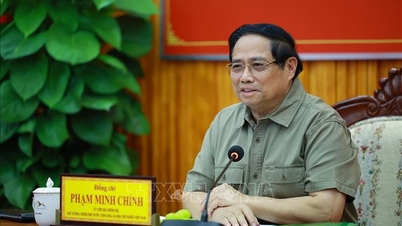
In his address at the conference, Prime Minister Pham Minh Chinh emphasized that a love of learning, respect for teachers, and the belief that "talented individuals are the lifeblood of the nation" are long-standing and cherished traditions of our nation. The Party and State have always considered education and training a top national priority, playing a particularly important role in shaping and developing the personality and abilities of each individual. According to the Prime Minister, teachers are a very noble figure; they are always respected and honored in society; and working in the education sector is a great honor and source of pride.
"Human resources are the most important factor determining the success or failure of each nation. Education and training shape the 'morality, intellect, physical fitness, and aesthetics' of individuals, therefore, education and training play a particularly important role in the rapid and sustainable development of the country," the Prime Minister emphasized.
To achieve the country's two centenary strategic goals, the Party, the State, the Politburo, the Secretariat, and General Secretary To Lam have advocated for the issuance of numerous breakthrough policies, implementing a revolution in organizational structure, "reorganizing the country," and deploying the "four pillars" of breakthrough development in science and technology, innovation, national digital transformation; international integration; lawmaking and enforcement; and private sector development. Simultaneously, the Politburo will issue resolutions creating breakthroughs in the development of education and training, public health care, cultural development, and the development of the state-owned economy.
"All these policies and decisions are related to education and training. Therefore, more than ever, we need to prioritize all resources for the development of education and training, creating truly open and favorable mechanisms and policies, modern and seamless infrastructure, and intelligent human resources and management," the Prime Minister emphasized.
Regarding the results of the 2024-2025 school year, basically agreeing with the report content and opinions of the delegates, the Prime Minister emphasized that the achievements are very basic and summarized in 36 words: "Perfect institutions, streamlined apparatus, improved quality, professional exams, upgraded teachers, expanded integration, spacious facilities, developed science, early blooming talents".
Firstly, regarding the improvement of institutions, mechanisms, policies, and the implementation of Conclusion No. 91 dated August 12, 2024 of the Politburo, the agencies have submitted to the National Assembly for approval the Law on Teachers; Resolution on universalizing preschool education, Resolution on tuition exemption and support for preschool children and primary school students. Actively amending laws on education, higher education, and vocational education to submit to the National Assembly at the next session. Efforts have been made to focus on drafting the Resolution of the Politburo on breakthroughs in education and training development.
Secondly, regarding organizational restructuring and streamlining , the Ministry of Education and Training has successfully taken over the functions and tasks related to vocational education from the Ministry of Labor, War Invalids and Social Affairs; it has reorganized the organizational structure of the Ministry's agencies towards a more streamlined, effective, and efficient model, reducing the number of units from 23 to 18.
Third, in terms of quality, innovation in teaching and learning methods, testing and assessment of students' learning outcomes has gradually stabilized; pre-testing has been reduced and post-testing has been increased.
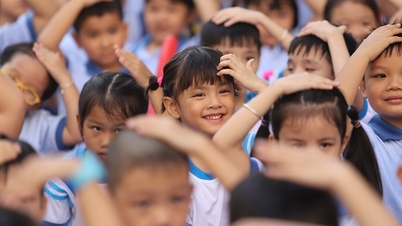
The network of preschool, general education, and continuing education facilities has received investment attention. In the 2024-2025 school year, the country will have a total of 15,077 preschool facilities for 4,727,657 children in nurseries and kindergartens; 25,716 general education facilities for 18,539,725 students.
The scale of university enrollment in science and technology (STEM) fields has increased significantly. Vietnam's regional and international rankings have been improving. To date, there are 5 Vietnamese higher education institutions in the top 200 in Asia according to international rankings.
Fourth, the 2025 high school graduation exam will be professionally organized . The total number of candidates who submitted applications is 1,165,289 (an increase of nearly 100,000 candidates compared to 2024). The national high school graduation rate in 2025 will be 99.25%.
Fifth, regarding the development of the teaching staff, the rate of qualified teachers increased at all levels of education (reaching 90.5% for preschool education; 91.9% for primary education; 94.8% for secondary education; 99.9% for high school).
Sixth, regarding integration , to date, Vietnam has bilateral and multilateral cooperation in education and training with more than 100 countries and many reputable international organizations; it has signed and implemented hundreds of international treaties and agreements on education and training, scientific research, scholarship programs, and exchanges of students, lecturers, and experts...

Seventh, the infrastructure for education is becoming increasingly modern. Currently, the whole country has 618,284 classrooms at all levels of public preschool and primary education; of which, 554,142 classrooms are structurally sound, achieving a structuralization rate of 89.6%.
Eighth, regarding science, in the 2024-2025 academic year, the Ministry of Education and Training submitted to the Prime Minister for promulgation and implementation several important projects aimed at promoting the development of science and technology and innovation. From 2022 to the present, the average number of publications has increased by 12-15% per year, and the number of educational institutions with authors publishing internationally has steadily increased annually. The education sector's database system has been basically completed with nearly 24.55 million digitized electronic records.
Ninth, Vietnam has consistently won awards in international and regional Olympic competitions , ranking among the top 10 countries with the highest achievements. This is a significant achievement considering Vietnam is a developing country.
On behalf of the Government, the Prime Minister acknowledged, highly appreciated, commended, and warmly congratulated the entire education sector on the important results achieved in the past academic year, making a significant contribution to the overall achievements of the country.
At the same time, the Prime Minister outlined the limitations, shortcomings, difficulties, and challenges: the program is inadequate, the scale is fragmented, the fields of study are unbalanced, ethics are not high enough, skills are lacking, there are not enough teachers, the network is not well-connected, and funding is passive.
Accordingly, the implementation of the 2018 General Education Program is still inadequate. Facilities and equipment are still lacking; innovation in teaching and learning methods, testing and assessment in many educational institutions is not effective. On this occasion, the Prime Minister also noted the need to study organizing the high school exam earlier and adjusting the registration regulations to be more reasonable.
The scale of vocational education is still fragmented and outdated; the structure of occupations and training levels are not suitable; the quality and effectiveness of training are not high; innovation is slow, not flexible and diverse enough to meet the needs of the labor market; retraining has not been given attention.
The scale of university training has increased but is still concentrated in economic and social sectors and fields, while basic science and technology sectors have not yet attracted many students; training of high-quality, highly qualified human resources has not really met the requirements.
The work of educating children, pupils and students on ideology, tradition, ethics, lifestyle and life skills is not really effective. School violence and drug use still occur.
Currently, the whole country is lacking about 102,097 teachers at all levels of public preschool and primary education while there are about 60,000 assigned positions that have not been recruited.
The review and arrangement of the network of preschool and general education facilities are still inadequate; the planning of the network of higher education facilities is slow to be implemented. Facilities and equipment for training and research do not meet the requirements. There is a lack of schools and classes, especially in remote, border and island areas...
Implementing financial autonomy to develop schools and classes faces many difficulties; career revenue is still low, mainly from the state budget.
We must absolutely not allow students to lack schools, classrooms, teachers, food, or clothing.
The Prime Minister stated that, in the coming period, the situation is expected to continue to be complex and unpredictable, with generally more difficulties and challenges than opportunities and advantages. The education sector faces the urgent need for more breakthroughs and innovation, both to overcome limitations and shortcomings, to solve its own problems, and to make a significant contribution to the successful implementation of new policies of the Party and the State, creating a solid foundation for the country to enter a new era.
Based on the achievements and practical experience in directing and managing the work over the past period, the Prime Minister requested the Minister, the leadership team of the Ministry, and the entire education sector to continue focusing on thoroughly understanding and effectively implementing the main guiding principle: "Putting students at the center, as the subjects - Teachers as the driving force - Schools as the support - Families as the foundation - Society as the basis".
The Prime Minister also highly appreciated the motto of the Party Congress of the Ministry of Education and Training: "Discipline - Creativity - Breakthrough - Development"; the Congress also set forth directions, tasks, and solutions for the new term 2025-2030 with 8 key breakthrough areas; these are very correct and relevant contents that need to be thoroughly understood and implemented seriously, promptly, and effectively throughout the entire sector.
Regarding the key directions and tasks for the 2025-2026 school year, the Prime Minister emphasized the need to focus on transforming the current state of education, shifting from considering education and training as solely the responsibility of the sector to a common task of the entire political system, the whole population, and society as a whole; and moving from equipping students with knowledge to developing their comprehensive competencies.
Along with that, the Prime Minister emphasized that all thinking, methodology, and approaches to solving problems must be innovated more strongly, and actions must be more drastic in the direction of: All citizens must have equal access to education and training, especially the disadvantaged, people in remote areas, ethnic minority areas, border areas, and islands; develop advanced, modern, and more practical programs and curricula; combine learning with practice, real learning, real exams, real results; teachers create motivation and inspiration for students; families, society, and schools are the foundation, support, and solid support for teachers and students; absolutely do not let students lack schools, classes, teachers, food, and clothing.

Regarding regular tasks, the Prime Minister requested to focus on carefully preparing the necessary conditions for the new school year, including the nationwide online opening ceremony down to the commune level, ensuring solemnity, coziness, neatness, efficiency, joy, and not causing fatigue for students.
Continue to improve institutions and enhance the effectiveness and efficiency of state management in education and training. Prioritize resource investment in infrastructure and teaching equipment for preschool and general education institutions to meet the needs of the 2018 Preschool and General Education Programs. Focus on implementing the National Target Program for Modernizing and Improving the Quality of Education and Training for the period 2026-2035 after its approval by the National Assembly, in order to strengthen investment in infrastructure and equipment for preschool and general education.
Building and developing a team of teachers with sufficient qualities and capabilities to meet the demands of their tasks. Focusing on overcoming the shortage and surplus of teachers, ensuring the principle of "where there are students, there must be teachers" but in a reasonable and effective manner. Strengthening teacher training and retraining, both in professional ethics and specialized knowledge, to meet the requirements of educational reform. Developing mechanisms to mobilize artisans, artists, professional athletes, foreigners, etc., to participate in educational activities in schools.
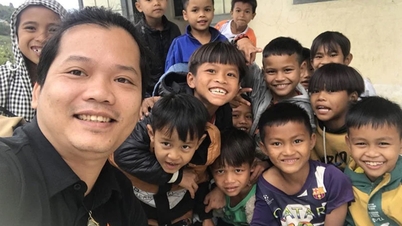
Prioritize the development of education and training for children and students in areas with difficult socio-economic conditions, ethnic minority areas, mountainous regions, border areas, and islands.
Regarding some breakthrough tasks, the Prime Minister requested focused preparation to thoroughly understand and implement the Politburo's Resolution on breakthroughs in education and training development in a comprehensive, decisive, and effective manner as soon as the Resolution is issued.
Continue to review and plan the network of preschool, general education, continuing education, education for the disabled, higher education and pedagogical colleges, and vocational education; mobilize all resources. Ensure appropriate land funds to build schools and classrooms, especially to add schools and classrooms to implement universal preschool education for children from 3 to 5 years old; build inter-level primary and secondary boarding schools in 248 land border communes, initially piloting investment in building new or renovating 100 schools in 2025.
Improve the quality of preschool and general education. Implement universal preschool education for children from 3 to 5 years old; ensure child safety. Improve the quality of digital capacity development and artificial intelligence (AI); gradually make English the second language in schools.
Improve the quality of human resource training, especially high-quality human resources associated with scientific research and innovation; focus on industries and fields of knowledge economy, digital economy, green economy, circular economy, especially basic sciences, engineering, technology and new industries (such as artificial intelligence, semiconductors, high-speed railways, nuclear power, etc.).
Promote digital transformation, enhance the application of information technology. Encourage the development and exploitation of big data, application, and development of appropriate artificial intelligence. Continue to build a national learning infrastructure, a shared digital learning resource warehouse for the entire industry to create a foundation for promoting a learning society and lifelong learning.
Strengthen international cooperation and integration. Expand, diversify, and deepen international cooperation mechanisms; promote negotiations and signing of agreements and treaties on cooperation in education and training.
Implement the policy of supporting lunch for primary and secondary school students in land border communes from the 2025-2026 school year; exempt and support tuition fees for preschool children and primary school students.
Regarding specific tasks of ministries, agencies, and localities, in the spirit of assigning "6 clear responsibilities: clear person, clear task, clear time, clear responsibility, clear output, clear authority," the Prime Minister directed the Ministry of Education and Training to take the lead and coordinate with ministries, agencies, and localities to continue implementing Conclusion 91 of the Politburo; especially focusing on drafting a Resolution of the National Assembly on specific mechanisms and policies and a Government Action Plan to implement the Politburo's Resolution on breakthroughs in education and training development.
The Ministry of Finance, in close coordination with the Ministry of Education and Training and other relevant ministries and agencies, prioritizes the allocation of central government budget funds for education and training; using state resources to guide and activate social resources.
The Ministry of Interior, in coordination with the Ministry of Education and Training and local authorities, is urgently reviewing the recruitment situation for additional teacher positions in localities for the 2022-2026 period; and reviewing and proposing additional teacher positions for the 2026-2030 period to address the teacher shortage.
The Ministry of Construction continues to review and inspect construction planning, ensure land funds for building schools and classrooms; urgently develop and complete overall designs and model designs for inter-level schools in border communes for localities to implement, in accordance with the conditions of each region and locality.
The Ministry of Culture, Sports and Tourism is strengthening its efforts to disseminate information about the policies and guidelines for the development of education and training, fostering social consensus; highlighting exemplary teachers and students to create a ripple effect; and rectifying and strictly handling cases of disseminating false and distorted information.
The People's Committees of provinces and centrally-administered cities will closely coordinate with the Ministry of Education and Training to focus on directing the Departments of Education and Training and the local authorities at the commune and ward levels to strengthen state management of education and training in their respective areas.
The Prime Minister recalled that in his letter to students on the first school opening day of the Democratic Republic of Vietnam (September 15, 1945), beloved President Ho Chi Minh wrote: "Whether Vietnam's mountains and rivers become beautiful or not, whether the Vietnamese people can step up to the stage of glory to stand shoulder to shoulder with the great powers of the five continents or not, depends largely on your studies." The Prime Minister stated that the education and training sector needs to deeply imbue Uncle Ho's teachings in carrying out the glorious mission and responsibility of "teaching letters and teaching people" to students, the young generations - the future owners of the country.
The Party, the State, the Government, and the Prime Minister always understand and share the difficulties and hardships of the education sector, of more than 1 million teachers who are tirelessly striving, working day and night, dedicating themselves to the cause of "nurturing people," as beloved President Ho Chi Minh once advised us: "For the benefit of ten years, plant trees; for the benefit of a hundred years, cultivate people."
On the eve of the new academic year 2025-2026, on behalf of the Government, the Prime Minister wished the education sector and all teachers to always uphold their sense of responsibility and enthusiasm for the profession, overcome all difficulties, persevere in the goal of fundamental and comprehensive reform of education, and make an important contribution to helping our country move steadily forward in the new era, developing into a prosperous, civilized, thriving, and affluent nation, with the people becoming increasingly well-off and happy.
(Source: Baochinhphu.vn)
Source: https://vietnamnet.vn/thu-tuong-can-tap-trung-uu-tien-moi-nguon-luc-cho-giao-duc-va-dao-tao-2435092.html


























![[Video] The craft of making Dong Ho folk paintings has been inscribed by UNESCO on the List of Crafts in Need of Urgent Safeguarding.](https://vphoto.vietnam.vn/thumb/402x226/vietnam/resource/IMAGE/2025/12/10/1765350246533_tranh-dong-ho-734-jpg.webp)













































Comment (0)