

With the theme "Shifting connections and exploiting export markets for the wood, textile, and footwear industries," the conference was held in a hybrid format, combining in-person and online participation, to facilitate the involvement of a large number of delegates from Vietnamese trade offices abroad, relevant agencies, and businesses from all 63 provinces and cities nationwide.
The conference focused on exchanging and updating information on the situation, developments, regulations, and new requirements for imports; assessing consumer preferences in import markets for goods and products in the wood, textile, and footwear industries; discussing and evaluating opportunities; proposing solutions to overcome difficulties and obstacles in import and export activities; and requesting trade promotion.
 |
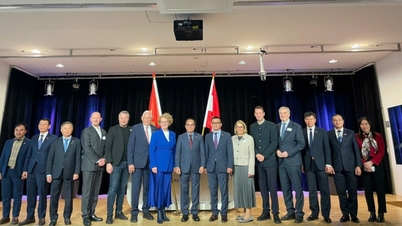
| Meeting to promote trade with the system of Vietnamese Trade Offices abroad, July 2023. (Source: Investment Newspaper) |
The processing and manufacturing industry is running out of steam.
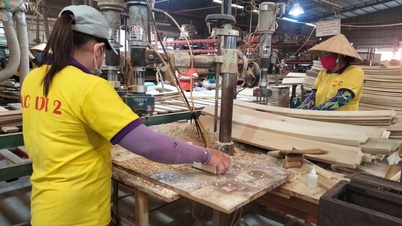
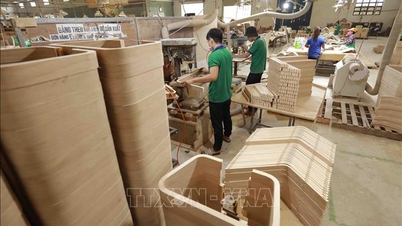
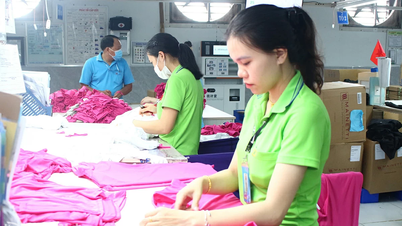
Speaking at the conference, Deputy Minister of Industry and Trade Do Thang Hai emphasized that the processing and manufacturing industry has always been considered one of the key economic sectors, playing a driving role in driving economic growth, expanding production and business, and promoting trade and exports. In particular, some key processing and manufacturing industries such as textiles, footwear, and wood products have consistently maintained high and stable growth rates.
However, in the recent period, the global and regional situation has continued to be very complex and unpredictable, profoundly impacting global stability, most notably the armed conflict between Russia and Ukraine; meanwhile, the prolonged consequences of the Covid-19 pandemic have led to disruptions and breakdowns in supply chains, and a decline in global demand.
High inflation in many countries, tight monetary policies, and prolonged interest rate hikes have led to a slowdown in growth and a decline in consumer demand in many countries, especially in major trading partners of Vietnam such as the United States, the European Union (EU), and Japan. This has significantly impacted domestic production in general and industrial production in particular, as these are major import markets for key industrial products such as textiles, footwear, and wood products.
From the end of 2022 to the present, due to the impact of the global economic recession, these export sectors have experienced a sharp decline in orders, leading to a decrease in export turnover of several billion USD compared to the same period.
According to the General Statistics Office, in the first seven months of 2023, textile and garment exports reached nearly US$19 billion, down 15.1% compared to the same period last year; wood products reached US$7.2 billion, down 26.2%; and footwear reached nearly US$11.7 billion, down 17.1%. Overall, in the first seven months of 2023, the country's total merchandise export value reached only US$194.73 billion, down 10.6% compared to the same period last year, equivalent to a decrease of over US$23 billion.
Deputy Minister Do Thang Hai emphasized: "The domestic and international situation remains challenging, but forecasts indicate that demand for imported goods in various markets will gradually recover from now until the end of the year. Trade representatives in these markets should strengthen order connections and effectively promote trade to accelerate export growth for relevant sectors."
Trade agencies need up-to-date information on import and export markets, recommendations for businesses in market development promotion activities, and feedback from associations and localities to develop more practical market support plans that are closely aligned with the needs of the business community.
Make full use of FTAs.
Updating on the EU market situation, Mr. Tran Ngoc Quan, Commercial Counselor of the Vietnam Trade Office in Belgium and the EU, noted that consumer demand in the EU has decreased, but EU standards have been raised, forcing manufacturers to meet them. The EU has been preparing to issue many regulations related to the environment, sustainable development, carbon emissions, the right to repair and recycle, human rights, anti-deforestation laws, etc.
For example, in the textile and garment industry, the EU has outlined a strategy by introducing new legal measures to increase the circularity of textiles and garments. The EU is also considering introducing EPR (Extended Producer Responsibility) across the EU for clothing...
"It should be added that the EU market is a huge export destination for our country's footwear industry. In 2022, exports of all types of footwear to the EU reached $5.8 billion, accounting for 24.5% of our total footwear exports," Mr. Quan said.
According to Mr. Quan, Vietnamese businesses have certain advantages due to leveraging the Vietnam-EU Free Trade Agreement (EVFTA). Last year, Vietnam exported goods worth over $46 billion to the 27 EU countries, a 15% increase compared to 2021. In the future, the Vietnamese Trade Office will support domestic businesses in participating in trade fairs and exhibitions, seeking business networking opportunities, and expanding export opportunities in the EU.
Ms. Tran Thu Quynh, Commercial Counselor of the Vietnam Trade Office in Canada, stated that the growth rate of Vietnam's footwear trade turnover and market share in Canada demonstrates the positive effects of the Comprehensive and Progressive Trans-Pacific Partnership Agreement (CPTPP).
“Recent research by the Trade Office shows that although footwear is the product with the highest utilization rate of CPTPP preferences (72%) compared to other Vietnamese products, it is estimated that over $230 million of our exports are still subject to MFN tariffs ranging from 5-20%; while we should have enjoyed a 0% CPTPP tariff; mainly sports shoes, football shoes (17.5%), low-value leather footwear (11%), fabric footwear (10%), and footwear accessories (5-8%),” Ms. Quynh informed.
To ensure sustainable growth in trade turnover and expand market share, according to Ms. Quynh, Vietnamese businesses need to quickly shift towards building their own brands. Analyzing competitors in the Canadian market segment, such as China, Indonesia, India, and Bangladesh, reveals that Vietnam is quite weak in terms of a complete supply chain for the industry.
Vietnamese private label brands need to target the lower-middle-income segment of young people who are adaptable and willing to consume, as these are still niche markets with high potential and profit margins.
"Vietnamese businesses need to actively participate in international trade fairs and exhibitions because this is both an opportunity to work directly with wholesalers to find processing orders, and an opportunity to expand their participation in fashion footwear, beachwear, children's shoes, and indoor shoes segments," Ms. Quynh said.
Regarding the US, the largest export market for Vietnamese goods, including the three aforementioned product categories, Mr. Do Manh Quyen, Head of the Vietnam Trade Office in Houston, USA, noted that businesses need to invest more in production to adopt green and clean production processes, reducing emissions to keep up with the increasingly high demands from buyers.
Source




















![[Photo] Prime Minister Pham Minh Chinh holds a phone call with the CEO of Russia's Rosatom Corporation.](/_next/image?url=https%3A%2F%2Fvphoto.vietnam.vn%2Fthumb%2F1200x675%2Fvietnam%2Fresource%2FIMAGE%2F2025%2F12%2F11%2F1765464552365_dsc-5295-jpg.webp&w=3840&q=75)
















































Comment (0)