

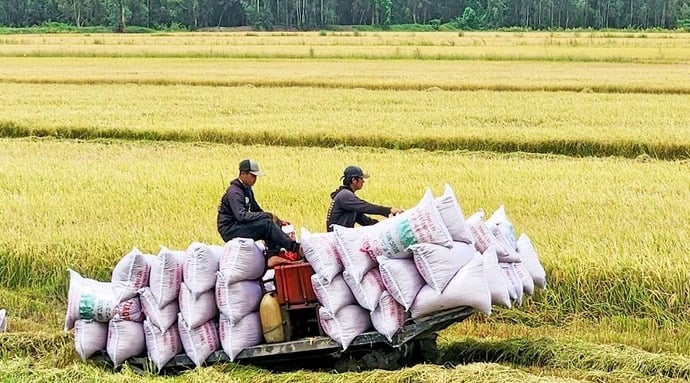
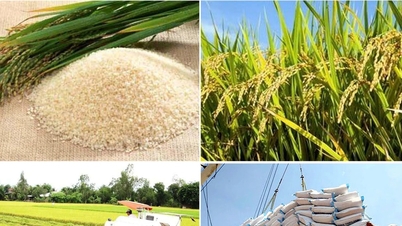
Following the Philippines' temporary suspension of Vietnamese rice imports for 60 days, starting September 1st, the Ministry of Industry and Trade has sent a document to the People's Committees of provinces and cities, the Vietnam Food Association (VFA), and rice traders. rice exports Production and business operations need to be adjusted accordingly.
According to the ministry, the rice items that the Philippines has temporarily suspended importing are regular milled rice and finely milled rice (excluding specialty rice varieties not commonly grown by local farmers). Therefore, to ensure rice exports in 2025 and contribute to achieving the annual export target, the People's Committees of provinces and cities are requested to promptly inform rice export businesses in their areas about this information.
Review and promptly compile information and opinions from the business community regarding emerging difficulties and obstacles in order to report and propose appropriate solutions. The VFA needs to promptly inform rice export businesses so they can adjust their production and business activities accordingly.
Enhance the updating, monitoring, and forecasting of information on domestic and international rice production and markets to report and propose solutions to the Government and relevant ministries to promote domestic rice consumption and boost exports.
We will work closely with the Philippine Rice Importers Association to actively monitor and gather market information and policy changes in the Philippines, promptly reporting and proposing appropriate solutions. We will support member businesses in diversifying export markets and strengthening trade promotion, especially with traditional trading partners.
The Ministry of Industry and Trade also recommends that rice exporters, in addition to maintaining traditional markets, should proactively seek and exploit new potential markets to diversify risks and improve adaptability. They should actively purchase and stockpile rice from farmers, and strictly comply with Decree 107 and other relevant regulations on rice export business.
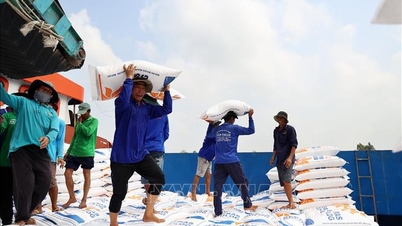
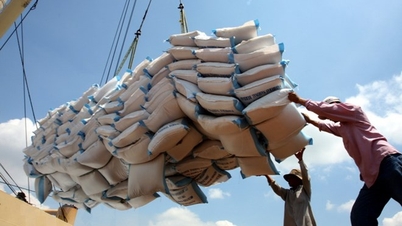
Speaking with us, Mr. Nguyen Tuan Viet, General Director of VietGo Company - an export consulting unit, said that Vietnam exports 8-9 million tons of rice annually, but about 3.6 million tons are exported to the Philippines, accounting for more than 40% of the total export value.
Accordingly, this country imports about 300,000 tons from Vietnam each month, so if imports are stopped for 60 days, it would be equivalent to about 600,000 tons, or 7% of Vietnam's rice exports, although this may vary depending on the year's demand.
According to Mr. Viet, the temporary suspension of rice imports by this country is partly due to the impact of US President Donald Trump's tariff policies, which have disrupted global trade. Some rice-exporting countries that are direct competitors of Vietnam, such as India and Thailand, are adjusting rice prices and seeking strong neighboring markets like the Philippines.
Therefore, Mr. Viet believes that not only the rice industry but all export businesses must proactively seek new alternative markets, as traditional markets are difficult to maintain due to the disruption of the global trade order caused by tariffs. Countries facing high tariffs will also tend to lower prices in other markets to save their products, leading to oversupply and price drops, thus halting or postponing imports and exports.
"Finding new alternative markets is a necessary trend and requirement in the context of changing global trade and the limited role played by traditional markets. Therefore, businesses need to strengthen trade promotion and export promotion," Mr. Viet said.
Source: https://baoquangninh.vn/tich-cuc-tim-thi-truong-moi-cho-gao-xuat-khau-3374642.html



















![[Photo] Prime Minister Pham Minh Chinh holds a phone call with the CEO of Russia's Rosatom Corporation.](/_next/image?url=https%3A%2F%2Fvphoto.vietnam.vn%2Fthumb%2F1200x675%2Fvietnam%2Fresource%2FIMAGE%2F2025%2F12%2F11%2F1765464552365_dsc-5295-jpg.webp&w=3840&q=75)















































Comment (0)