


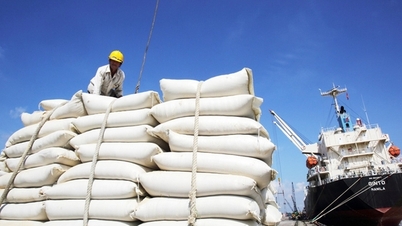
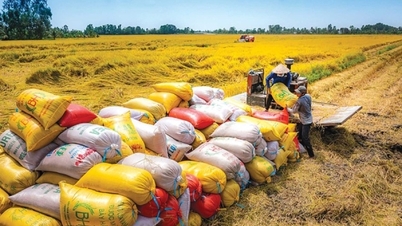
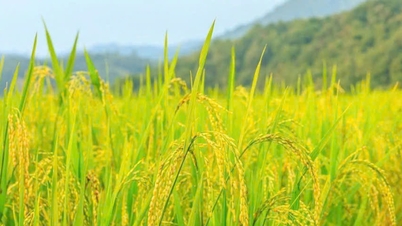
The average export price of Vietnamese rice in the first seven months of 2025 reached only US$514 per ton, a decrease of 18.4% compared to the same period in 2024. Rice exports declined sharply in traditional markets such as the Philippines, Malaysia, and Indonesia.
Opportunities from new markets
According to the Ministry of Agriculture and Environment , in the first seven months of 2025, among major export markets, the value of rice exports increased most significantly in Bangladesh, with a 188.2-fold increase, while the sharpest decline was in Malaysia, with a 58.5% decrease. The traditional market of the Philippines also recorded a 13.5% decrease. This is due to traditional markets increasing their rice reserves and boosting production to achieve food self-sufficiency.
Data from the Vietnam Food Association shows that, as of early June 2025, the total rice reserves of the Philippines reached 2.239 million tons, an increase of 3.5% compared to the same period in 2024. In Indonesia, the country has raised its rice production target for 2026 to 33.8 million tons, up from the initial target of 32 million tons.
While export rice prices are falling and traditional markets are shrinking, the "survival" requirement for export businesses is to expand markets and prioritize exporting high-quality, high-priced rice.
Mr. Truong Sy Ba, Chairman of the Board of Directors of Tan Long Group, said: The Group maintains rice exports to high-priced markets, including Japan. In 2024, Tan Long exported approximately 5,000 tons of A An branded rice to Japan. It is projected that in 2025, the amount of rice exported to Japan will reach 30,000 tons.
"Exporting rice to Japan" "It requires meeting many strict criteria, including controlling over 600 different substances. If any substance exceeds the permitted limit, the entire shipment of rice can be returned. However, the export value to this market is very high; exporting 1,000 tons of rice to Japan is equivalent to exporting tens of thousands of tons to other markets," Mr. Ba emphasized.

Besides Japan and South Korea, European countries are also gradually becoming potential markets for high-quality rice. According to the Vietnam Trade Office in Austria, Austria, located in Central Europe, has a population of approximately 9 million people. Although not a traditional rice-consuming country like Asian countries, in recent years, the demand for rice in Austria has increased rapidly due to people's greater concern for health, the trend towards vegetarianism, and diverse culinary styles. Rice has become a preferred choice for dishes such as sushi, fried rice, and many other Asian foods.
In Canada, with approximately 7 million people of Asian descent, the country is one of the potential markets for rice consumption. Currently, Vietnam is one of the top 5 rice exporters to Canada. However, according to statistics from the Vietnamese Trade Office in Canada, Canada's rice import demand is around US$500 million per year, while Vietnam's rice exports to the country only reach about US$12 million per year, so there is still significant room for market expansion.
Improve quality, enhance trade promotion.
According to Dinh Thi Hoang Yen, Commercial Counselor of the Vietnamese Trade Office in Austria, more and more consumers in Austria are choosing this option. Vietnamese rice in daily meals. Recent surveys show that Austrians appreciate Vietnamese rice for its long, white, sticky, and fragrant grains, suitable for many traditional and modern dishes. Recently, the Vietnamese Trade Office in Austria connected with 3Brothers to import Vietnamese sushi rice into the market in 10 kg packages, which are popular with customers.
However, the challenge in exporting rice to Austria lies in the stringent requirements regarding quality, traceability, and regulations related to environmental protection and consumer rights. Furthermore, Vietnamese rice must compete directly with rice from other countries, requiring businesses to invest heavily in processing technology and market research.
Recognizing that improving rice quality is the "key" to unlocking new markets, many Vietnamese rice export businesses have strived to apply technology and invest in the entire production, processing, and consumption chain to build a Vietnamese rice brand.
According to Huynh Van Thon, Chairman of the Board of Directors of Loc Troi Group Joint Stock Company, the Group has strongly applied technology to production and management in recent years; developed the Japo 3 Season rice variety, which can be cultivated three times a year, with a light aroma, moderate stickiness, and rich flavor, meeting the stringent standards of the high-end market; and launched the Vibigaba sprouted rice product line, which offers both health benefits and high economic value, with export prices 10 times higher than regular white rice. The Group has also established a farm management system that ensures each plot of land has its own data…
Currently, Loc Troi owns 12 rice varieties licensed for production and business, including 10 new varieties that Loc Troi has proactively researched and approved for circulation. Many of these varieties are exported to Japan and Indonesia with high economic value.
Against the backdrop of a continued downward trend in global export rice prices, coupled with fluctuating demand in traditional import markets, potential high-quality export markets are expected to generate new revenue for Vietnamese rice. This also presents a great opportunity for Vietnamese rice to assert its value through quality and brand recognition in the international market.
Source: https://baoquangninh.vn/ky-vong-xuat-khau-gao-vao-thi-truong-moi-3371294.html


![[Photo] Prime Minister Pham Minh Chinh holds a phone call with the CEO of Russia's Rosatom Corporation.](/_next/image?url=https%3A%2F%2Fvphoto.vietnam.vn%2Fthumb%2F1200x675%2Fvietnam%2Fresource%2FIMAGE%2F2025%2F12%2F11%2F1765464552365_dsc-5295-jpg.webp&w=3840&q=75)

![[Photo] Closing Ceremony of the 10th Session of the 15th National Assembly](/_next/image?url=https%3A%2F%2Fvphoto.vietnam.vn%2Fthumb%2F1200x675%2Fvietnam%2Fresource%2FIMAGE%2F2025%2F12%2F11%2F1765448959967_image-1437-jpg.webp&w=3840&q=75)






































![[OFFICIAL] MISA GROUP ANNOUNCES ITS PIONEERING BRAND POSITIONING IN BUILDING AGENTIC AI FOR BUSINESSES, HOUSEHOLDS, AND THE GOVERNMENT](https://vphoto.vietnam.vn/thumb/402x226/vietnam/resource/IMAGE/2025/12/11/1765444754256_agentic-ai_postfb-scaled.png)









































Comment (0)