

Dong down 2.2%, no exchange rate pressure
During the trading session on September 6th, the USD/VND exchange rate, despite a slight adjustment, remained stable above the 24,000 VND/USD mark.
According to Bao Viet Securities Company (BVSC), compared to the end of 2022, as of August 30, 2023, the VND decreased by 2.2% against the USD.
Global inflation, especially food prices, is showing signs of rising again, raising concerns that the US Federal Reserve (FED) will have to maintain high interest rates for a longer period of time, and may even raise interest rates once more between now and the end of the year.
This has caused the DXY index to continue its upward trend (up 1.74% compared to the end of last month and currently at a 5-month high). However, with the FED planning to lower interest rates in 2024, BVSC believes that the increase in the USD will only be short-term and will not create significant pressure on the USD/VND exchange rate as it did in 2022.
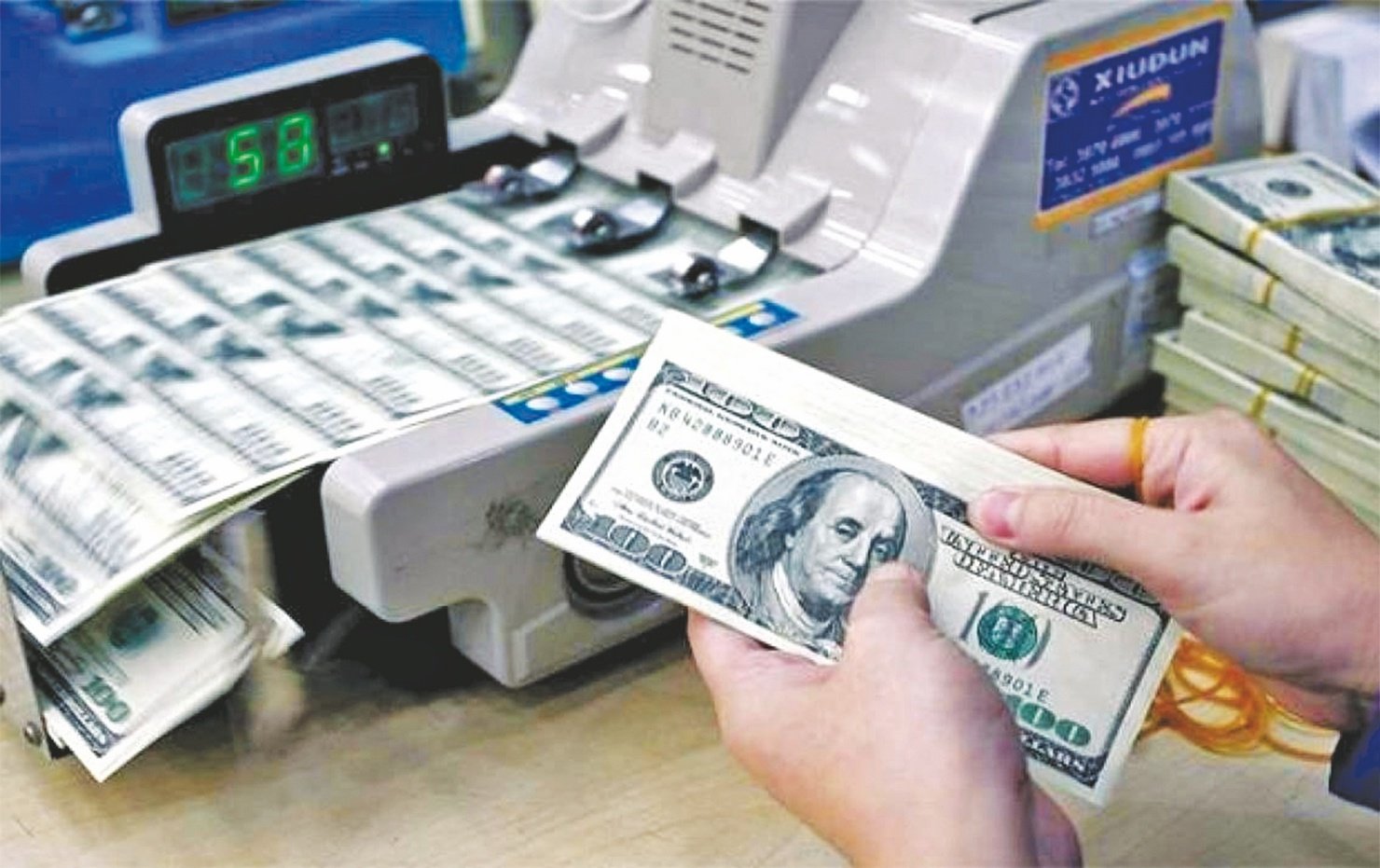
Although the USD/VND exchange rate has decreased by 2.2% compared to the end of 2022, BVSC still believes that there will be no exchange rate pressure in 2023. Illustrative photo
“We believe the State Bank of Vietnam’s current priority is to lower interest rates and boost credit growth to support economic growth, which is somewhat contrary to major central banks around the world, especially the FED. This could cause the VND to depreciate rapidly at certain times. However, with less pressure from the USD than in 2022, we assess that the exchange rate risk will not be as strong as in the latter part of last year. In our view, the depreciation of the VND could even support exports in the remaining months of the year,” BVSC forecasts.
The USD remains "hot" in the Asian market
While the USD/VND exchange rate cooled down, the USD continued to heat up in the Asian market and reached a 6-month "peak".
The dollar hit a near six-month high on Wednesday as concerns about China and global growth dragged on risk sentiment, while the yen stayed near a 10-month low, drawing the strongest warning since mid-August from Japan's top currency diplomat .
The yen was at 147.66 per dollar in early Asian hours, just off 147.8 per dollar, its lowest since November 4. The Asian currency has hovered around the key 145 per dollar level in recent weeks, keeping traders on alert for signs of intervention.
“We will not rule out any options if speculative moves continue,” Japan’s top currency diplomat Masato Kanda told reporters on Wednesday.
Japan intervened in currency markets last September when the dollar rose above 145 yen, prompting the Ministry of Finance to buy yen and push the rate back to around 140 yen.
“It is not surprising that officials are stepping up the adjustment as the yen weakens,” said Christopher Wong, a currency strategist at OCBC in Singapore.
"We could see more verbal intervention like this if the yen's move is perceived as biased and excessive."
Against a basket of currencies, the dollar rose 0.067% to 104.80, not far from a six-month high of 104.90. Economic data from China and Europe on Tuesday raised some concerns about slowing global growth, prompting investors to scramble for the dollar.
Data from the euro zone and Britain showed business activity contracted last month, while a private sector survey showed China's services activity grew at its slowest pace in eight months in August.
The euro was unchanged at $1.0721 in Asian trading hours, after hitting a three-month low of $1.0705 overnight. The British pound traded at $1.2559, down 0.03% on the day. It also touched a three-month low of $1.25285.
The Australian dollar fell 0.17% to $0.637, after falling 1.3% on Tuesday following a policy decision from the Reserve Bank of Australia to keep interest rates steady.
According to the CME FedWatch tool, markets are pricing in a 93% chance the Fed will hold rates steady later this month and a 55% chance of no further rate hikes this year.
Source






![[Infographic] Cross-exchange rates for determining taxable value from December 11-17](https://vphoto.vietnam.vn/thumb/402x226/vietnam/resource/IMAGE/2025/12/11/1765413245543_infographic-ty-gia-tinh-cheo-de-xac-dinh-tri-gia-tinh-thue-tu-11-1712-20251211021920.jpeg)






























































































Comment (0)