

Nearly a decade ago, agricultural production in Thoi Hung commune relied primarily on rice cultivation and some fruit trees, resulting in low efficiency and unstable income. Following local efforts to promote and encourage crop diversification linked to poverty reduction policies, many households boldly experimented with growing soursop – a crop considered suitable for the local soil, easy to care for, and with a stable market.
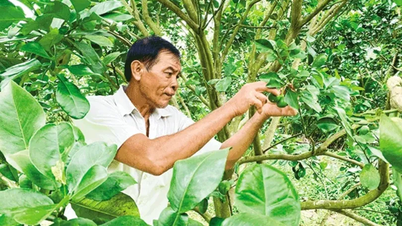
Mr. Tran Van Dong Em, residing in Hamlet 7 (Thoi Hung Commune), was previously considered a disadvantaged household in the commune. His family owned only 5,000 square meters of land for rice cultivation and other crops, and due to limited finances , he had to work as a hired laborer to supplement his income. Only after participating in policy communication programs and receiving capital support from the Commune Farmers' Association did he dare to convert his entire land to soursop cultivation, and also rent an additional 5,000 square meters of land to expand production.
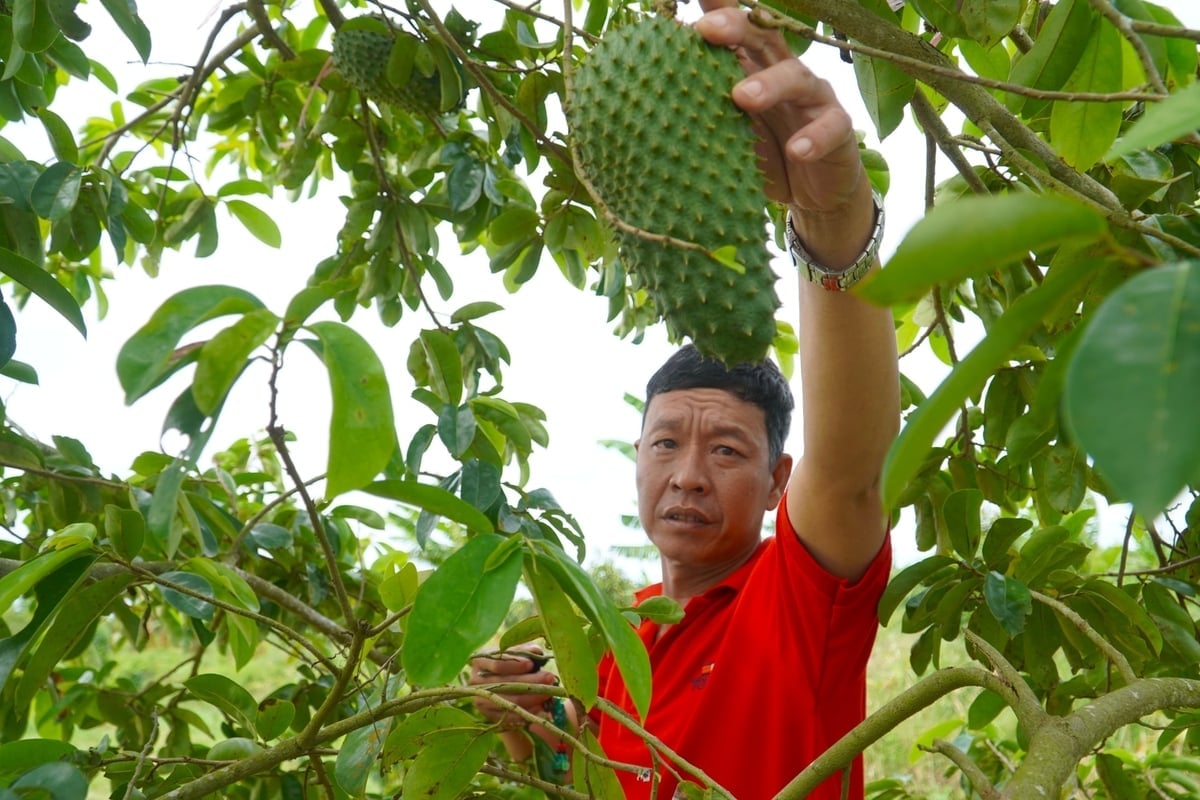
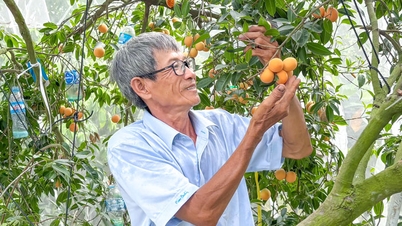
Originally a struggling household in Hamlet 7 (Thoi Hung Commune), Mr. Tran Van Dong Em's family has achieved stable living conditions thanks to developing a soursop cultivation model. Photo: Kim Anh.
Besides receiving preferential loans from the Social Policy Bank of Can Tho City, Mr. Dong Em's family also received support from the local authorities for house repairs. He himself joined a cooperative for growing soursop, receiving technical training and technology transfer from relevant departments. As a result, after 10 years of cultivating soursop, he now earns approximately 50 million VND annually – an income he never had before.
“Custard apple is now the leading crop in Thoi Hung, suitable for farmers to develop sustainably. Thanks to this crop, my family's life has changed significantly, and our income is much more stable. I also need to borrow more capital to expand production, and the preferential interest rate helps me invest with peace of mind,” Mr. Dong Em shared.
Also residing in Hamlet 7 (Thoi Hung Commune), Mr. Nguyen Van Nhu happily shared that he had just received a loan of 120 million VND to continue investing in a new soursop crop. Mr. Nhu explained that previously, his family cultivated 7,000 square meters of Hoa Loc mangoes, but the risks were high because this crop is heavily dependent on the weather.
Seeing that the local area had a policy of crop diversification and that many households were successfully growing custard apples, in 2014 he decided to convert the entire area to planting 450 soursop trees.
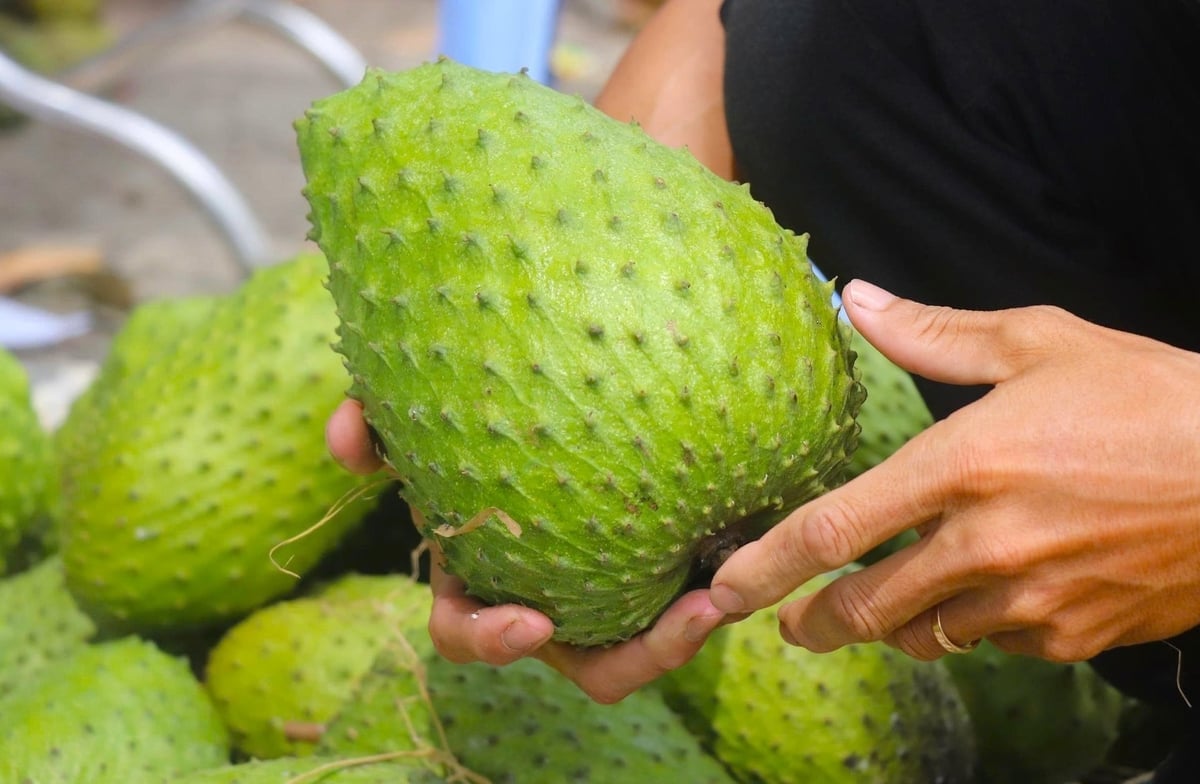
Besides being sold fresh, soursop is also processed into many value-added products. Photo: Kim Anh.
Thanks to the application of hand-pollination techniques, Mr. Nhu has been able to proactively manage his yield, with his soursop orchard producing an average of over 20 tons of fruit per year. Previously, the price of soursop was only around 12,000 VND/kg, but in the last 5 years, with the strong development of this model and the formation of large purchasing centers in the area, the price has increased 2-3 times, even reaching 100,000 VND/kg at times.
Thanks to this success, the movement to cultivate soursop quickly spread throughout Thoi Hung commune. Many farmers escaped poverty and gradually prospered, with some households becoming outstanding farmers at the city level.
According to Mr. Vu Van Hien, Secretary and Head of Hamlet 7, around 2014, the soursop cultivation model was only experimented with by a few households. To share experiences and production techniques, the villagers joined together to form a cooperative with 7 members.
By 2021, in order to help farmers feel secure in their production, the Thoi Hung commune government intensified propaganda about cooperative economics and encouraged the establishment of the Thoi Hung custard apple cooperative, attracting 19 members to cultivate 39 hectares.
However, the biggest challenge at this time is that most farmers lack market information and are dependent on traders. After the local government implemented several support projects, the cooperative received investment in machinery for processing soursop tea and soursop wine, which led to a sharp increase in the price of soursop, at times reaching 100,000 VND/kg.
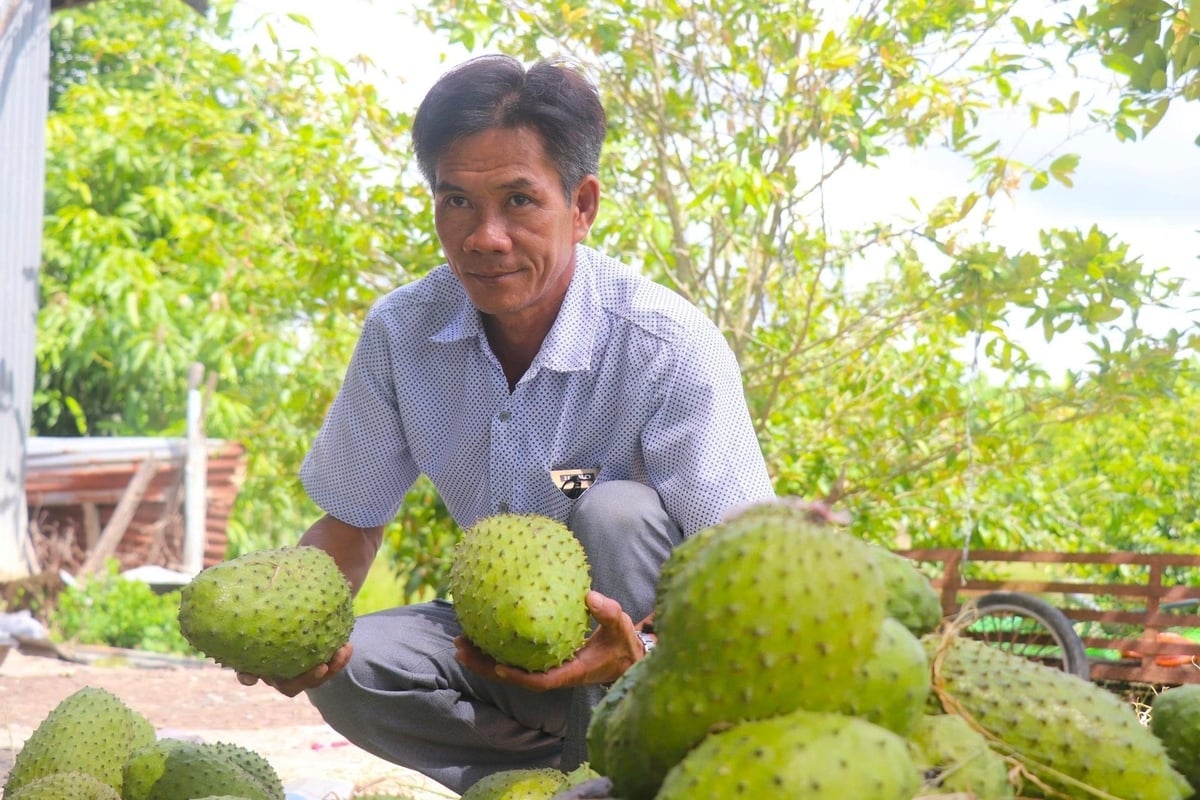
Thanks to effective crop restructuring combined with poverty reduction policy communication, the soursop cultivation model in Thoi Hung has proven effective over the years. Photo: Kim Anh.
In Hamlet 7 alone, farmers have received over 13 billion VND in support from the Social Policy Bank and approximately 3 billion VND from the Agricultural and Rural Development Bank (Agribank) to invest in production, thus mitigating the problem of illegal lending.
According to Mr. Hien, custard apple trees need replanting after 5-7 years of planting, so maintaining a reserve fund is essential. The cooperative is proposing that the local authorities supplement the capital from the Farmers' Support Fund so that members can confidently expand production.
According to a representative from the Thoi Hung Commune Economic Department, soursop trees yield early (18 months after planting), have high productivity, and stable market demand. After the cooperative was granted a planting area code and VietGAP certification in 2020, Thoi Hung soursop products have been exported through tea processing, supplying approximately 1,500 tons of fruit to the market annually.
The entire Thoi Hung commune currently has over 578 hectares of soursop orchards, forming the largest specialized cultivation area in the city. The commune government has connected with businesses to invest in deep processing, creating a closed value chain. Three soursop products from Thoi Hung have achieved OCOP 4-star certification: Kim Nhien Soursop Tea, Cuong Tim Soursop Tea, and Thoi Hung Soursop Wine.
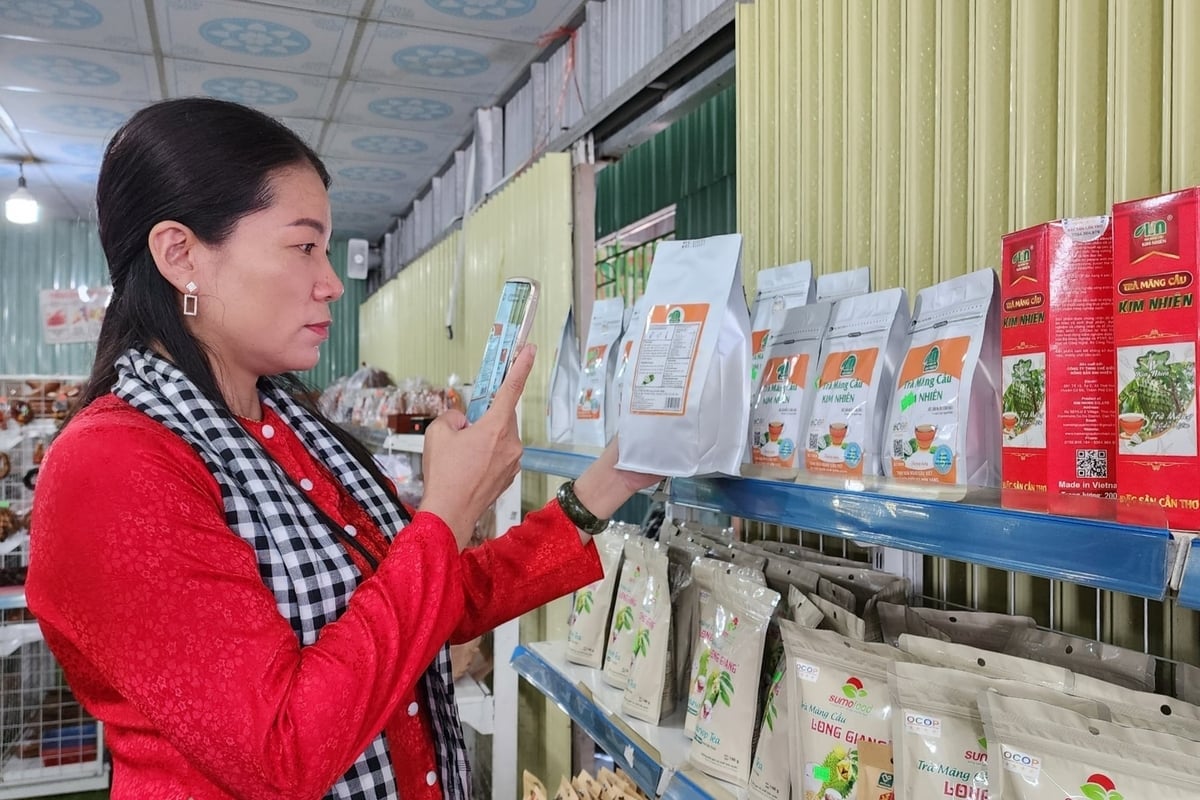
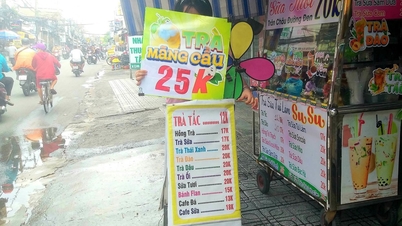
Soursop tea products from Thoi Hung commune are popular with consumers on e-commerce platforms. Photo: Kim Anh.
Recently, the Department of Science and Technology of Can Tho City granted certification for the cultivation area and a set of identification labels to Thoi Hung custard apple cooperative, serving export needs in the near future.
From a state of uncertainty and uncertainty regarding suitable crops, policy communication activities and poverty reduction programs have fundamentally shifted the awareness of farmers in Thoi Hung. They have gained access to technology, markets, capital support, and connections to cooperative models, leading to more sustainable soursop cultivation.
During the 2020-2025 term, Thoi Hung commune no longer has any poor households, equivalent to a reduction of 29 out of 29 households compared to the beginning of the term. The commune currently has 27 near-poor households, a reduction of 60 households compared to the beginning of the term, and the percentage of well-off households has increased significantly.
Source: https://nongnghiepmoitruong.vn/tiep-can-thong-tin-nong-dan-thoi-hung-doi-doi-voi-mang-cau-xiem-d785547.html













![Green tea pork: [Part 2] A new specialty brand from Thai Nguyen](https://vphoto.vietnam.vn/thumb/402x226/vietnam/resource/IMAGE/2025/12/10/1765338249553_2114-img_6953-nongnghiep-112106.jpeg)






![[Video] The craft of making Dong Ho folk paintings has been inscribed by UNESCO on the List of Crafts in Need of Urgent Safeguarding.](https://vphoto.vietnam.vn/thumb/402x226/vietnam/resource/IMAGE/2025/12/10/1765350246533_tranh-dong-ho-734-jpg.webp)



















































Comment (0)