

The message behind every worker losing their job is that it's an entire family.
On June 6th, during the questioning session with Minister of Labour, Invalids and Social Affairs Dao Ngoc Dung, many delegates exercised their right to debate to discuss the increasing number of one-time social insurance withdrawals, demanding clarification of the causes and solutions.
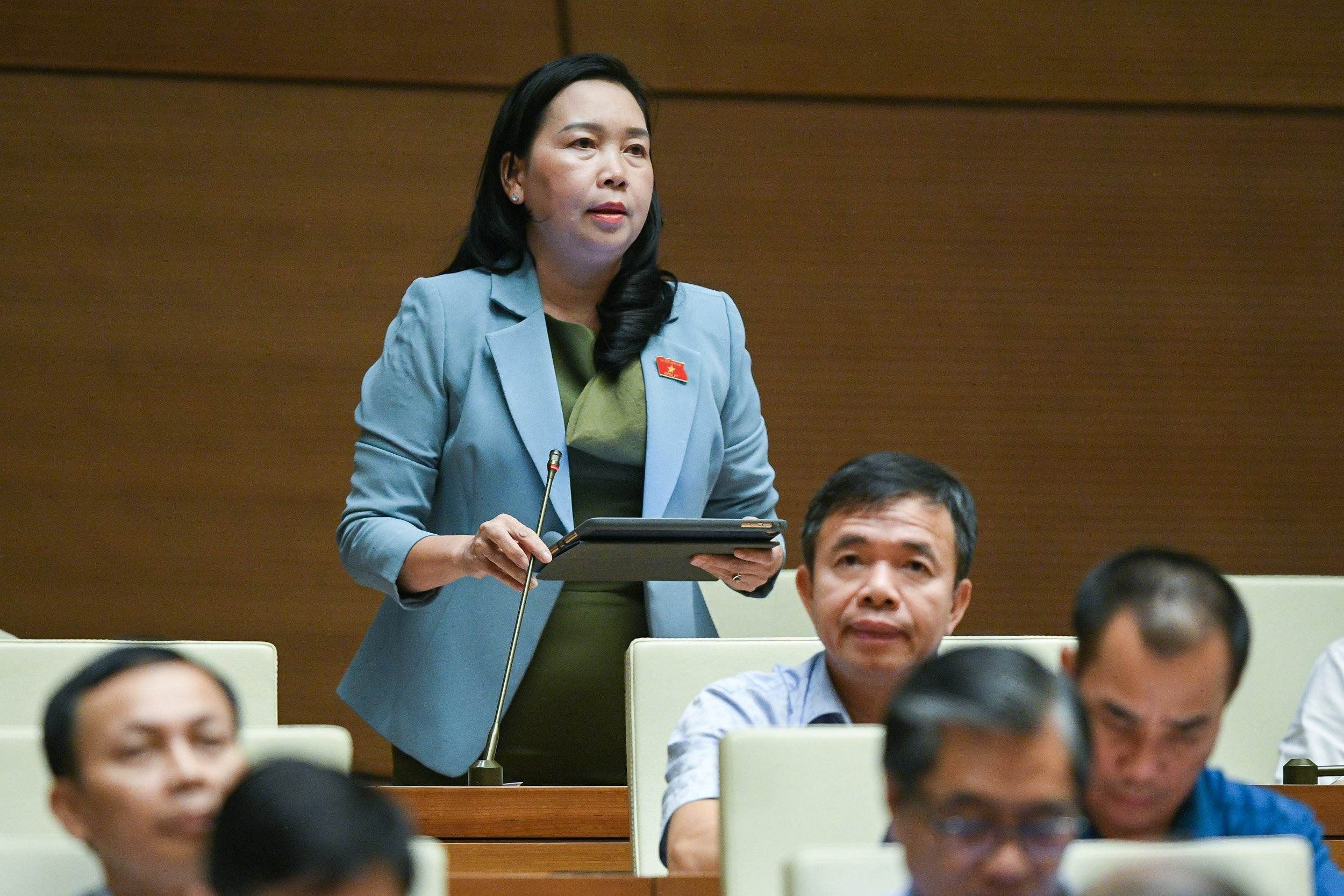
Some delegates pointed out that when workers lose their jobs and their savings are depleted, they have to withdraw their social insurance contributions in a lump sum as a lifeline to cover expenses. "Behind every unemployed worker is an entire family," said Delegate Ly Tiet Hanh (Binh Dinh delegation), noting that resolving the issue of workers' rights would alleviate many problems for society.
Responding to the issues raised by Deputies Nguyen Thanh Cam and Tran Thi Dieu Thuy, Minister Dao Ngoc Dung stated that before 2019, the number of people withdrawing social insurance contributions was approximately 500,000 per year. However, by 2023, this number had increased to over 900,000 per year.
"The number of people withdrawing their social insurance contributions in a lump sum is almost equal to the number of participants, which is a risk," Minister Dao Ngoc Dung said, adding that if the rate of lump-sum social insurance withdrawals does not decrease, it will be difficult to ensure social security for the elderly and those reaching retirement age, and the social security policy system will also struggle to be sustainable.
Explaining the reasons, the Minister of Labor, Invalids and Social Affairs frankly stated that the income of workers is low, with the vast majority being factory workers, while civil servants and public employees have very little income.
"The number of people withdrawing social insurance in a lump sum has increased in recent years, particularly among workers and in the South (accounting for 72%). This is a matter that warrants serious consideration," Mr. Dao Ngoc Dung informed.
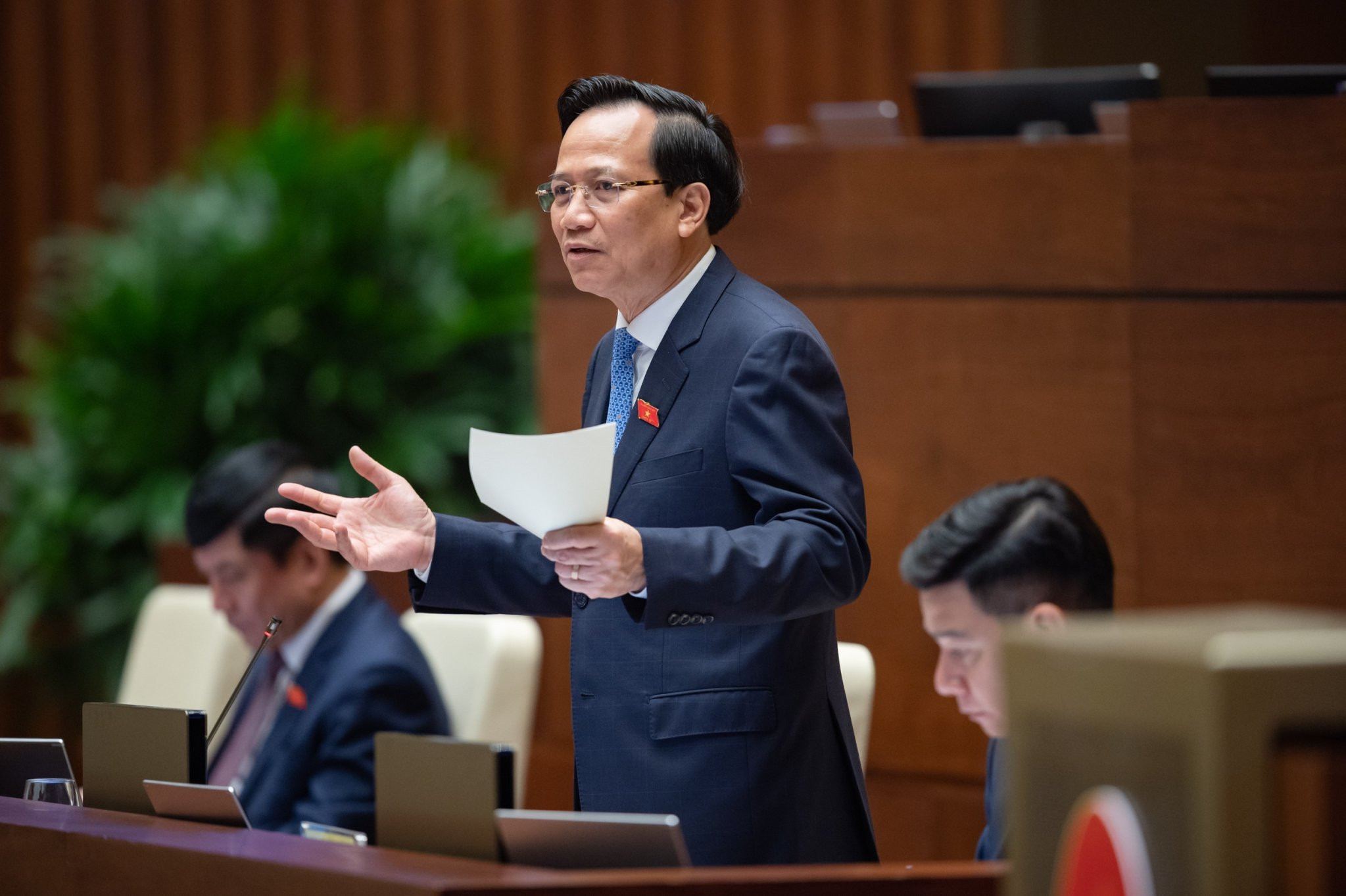
Regarding the increase in lump-sum social insurance withdrawals, the Minister stated that no other country has a mechanism for withdrawing social insurance in a lump sum as easy as Vietnam. He explained that the benefits of withdrawing social insurance in a lump sum are high, but public awareness campaigns on this issue have not been effective.
Using her right to debate a second time with the Minister, National Assembly Deputy Tran Thi Dieu Thuy (Ho Chi Minh City) was dissatisfied with the Minister's assessment that the cause was due to inadequate communication efforts. She argued that workers desire consistent and long-term stable social insurance policies. According to Deputy Tran Thi Dieu Thuy, the fact that the law has been amended every 10 years, resulting in different social insurance policies, has led to insecurity, hence the consideration of the benefits of withdrawing a lump sum and then rejoining later.
Joining the discussion, National Assembly Deputy Nguyen Anh Tri ( Hanoi ) raised the issue that the increase in the number of people withdrawing social insurance contributions in a lump sum over the past period, from 500,000 to 900,000 people per year, is very concerning.
"Workers withdrawing their social insurance contributions in a lump sum is usually a last resort and a genuine wish, so it should be respected. However, solutions are also needed to ensure the stability of the insurance fund," said Mr. Nguyen Anh Tri.
Representative Nguyen Anh Tri agreed with the approach of ensuring the rights of depositors and maintaining the stability of the Fund. However, he proposed a solution where, in the first five years, if a depositor withdraws their money, they would only receive back the exact amount they contributed. From 6 to 15 years onwards, they would receive back the amount contributed plus the average savings interest rate. After 15 years, they would receive back all their contributions, including the money the agency had paid on their behalf.
Paying social insurance contributions for 15 years, or potentially up to 10 years.
Responding to the debate by National Assembly Deputy Tran Thi Dieu Thuy, Minister Dao Ngoc Dung clearly stated that the most important and fundamental reason is how to improve the lives of workers.
Regarding the amendment of the Social Insurance Law, the Minister stated that a comprehensive approach to insurance-related policies is necessary. He argued that continuing to require contributions for 20 years would be unaffordable for workers, especially those in labor-intensive industries and sectors.
Minister Dao Ngoc Dung stated his view that the social insurance contribution period should be reduced to 15 years, or even 10 years in line with international practice. This would mean less contribution and less benefit, while also adhering to the principles of sharing, contribution-benefit, and equality.
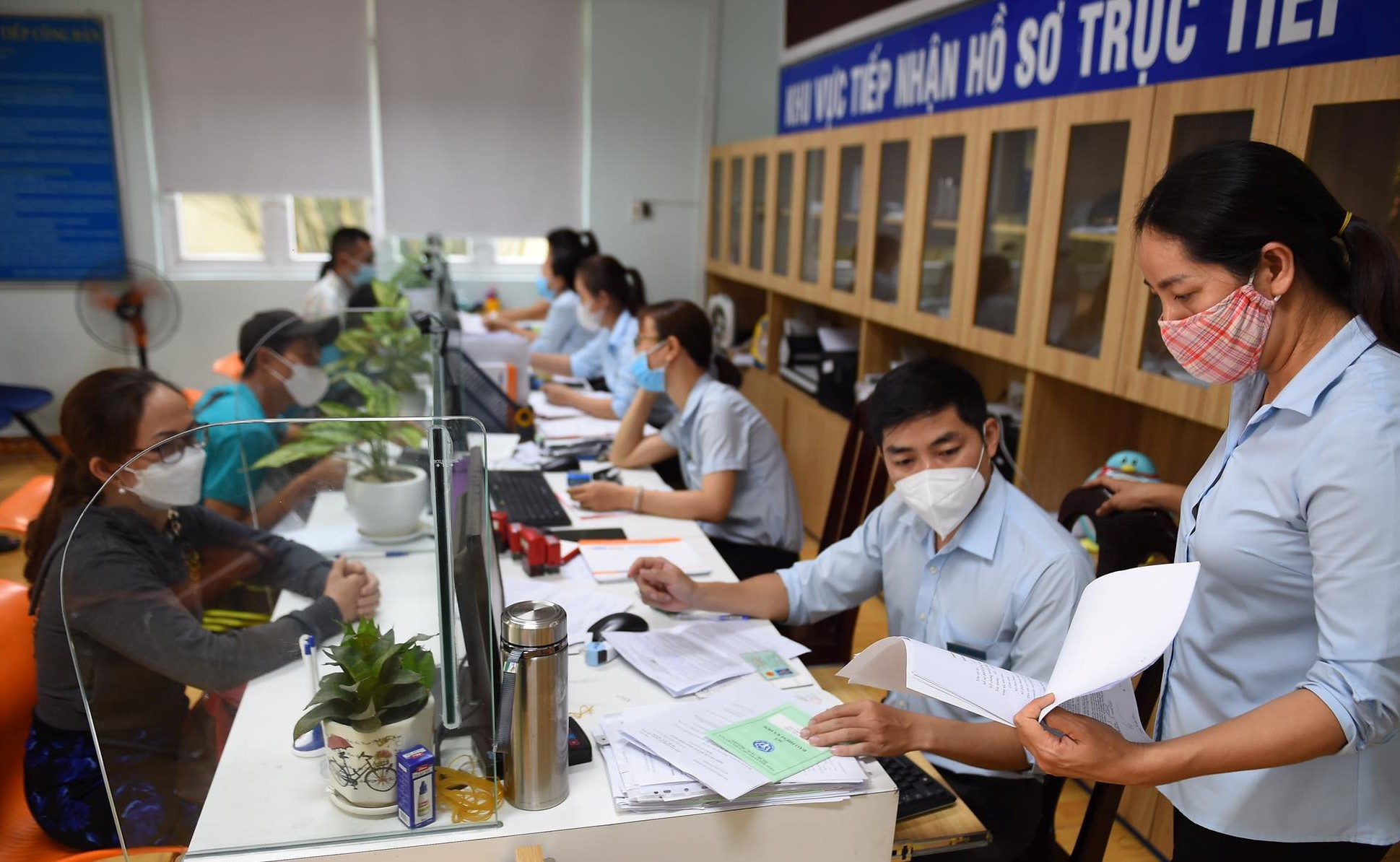
"Stopping the one-time withdrawal of social insurance benefits is a difficult issue, but there are regulations on the conditions and circumstances under which withdrawals are permitted, and the extent of such withdrawals," Minister Dao Ngoc Dung said, adding that these contents will be institutionalized in the revised Social Insurance Law to be submitted to the National Assembly for consideration and decision.
The Minister of Labour, Invalids and Social Affairs also affirmed that the amendment to the Social Insurance Law will aim to increase benefits for contributors without restricting their rights. At the same time, policies will be implemented to create the most favorable conditions for female workers.
Concluding the questioning session and addressing specific issues, the Chairman of the National Assembly instructed the Ministry of Labour, Invalids and Social Affairs to finalize policies and laws on social insurance, and prepare the draft revised Social Insurance Law for submission to the National Assembly for consideration.
"The amendment and supplementation of social insurance policies need to ensure the expansion and encouragement of employees and employers to participate in social insurance, aiming towards the goal of universal social insurance as stipulated in Resolution 28 of the Central Committee of the Communist Party," the National Assembly Chairman said.
Drawing from practical experience, National Assembly Deputy Nguyen Thi Thuy (Bac Kan) pointed out the difficulties faced by female workers over 40 years old. “Due to business downsizing, job opportunities for female workers over 40 after losing their jobs are very low, leading to the risk that these individuals will have to withdraw their social insurance contributions in a lump sum,” Ms. Nguyen Thi Thuy said, and requested the Minister to advise the Government on solutions to support this group when they lose their jobs.
In response to the above comment, Minister Dao Ngoc Dung shared that he had read the report on labor in the textile, garment, and footwear industries. During a recent inspection trip, while having meals with workers, he noticed that most of the textile, garment, and footwear industries are predominantly female-employed.
Source



























![[Photo] Prime Minister Pham Minh Chinh holds a phone call with the CEO of Russia's Rosatom Corporation.](/_next/image?url=https%3A%2F%2Fvphoto.vietnam.vn%2Fthumb%2F1200x675%2Fvietnam%2Fresource%2FIMAGE%2F2025%2F12%2F11%2F1765464552365_dsc-5295-jpg.webp&w=3840&q=75)












































Comment (0)