

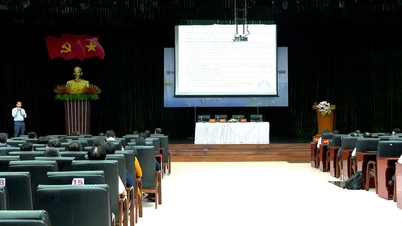
(MPI) – At the discussion session on the assessment of the results of the implementation of the 2024 socio- economic development plan and the projected 2025 socio-economic development plan, National Assembly deputies proposed many solutions to achieve the set goals, emphasizing solutions to support business development.
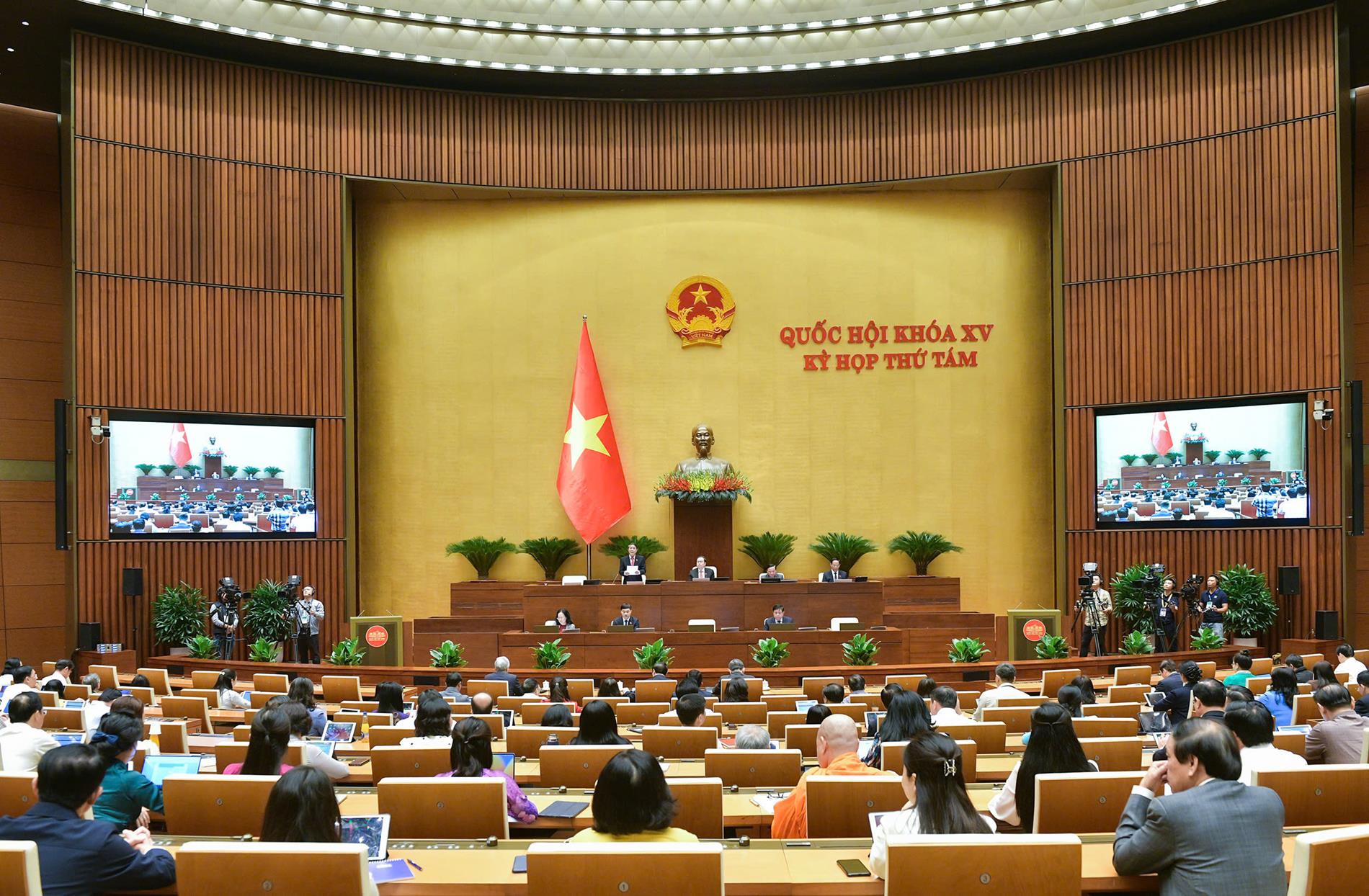 |
| Overview of the discussion session. Photo: Quochoi.vn |
Create favorable conditions for businesses to recover and develop
Delegate Pham Hung Thang - National Assembly Delegation of Ha Nam province said that the last months of 2024 and the beginning of 2025 is a very important period in focusing on completing at the highest level the targets of the Resolution of the 13th National Party Congress. Accordingly, the Delegate pointed out a number of tasks and solutions that the Government needs to focus on implementing in the coming time, including continuing to review, amend and supplement mechanisms and policies to remove difficulties and obstacles for businesses, especially administrative procedures and loan interest rates, creating favorable conditions for businesses to recover and develop.
Strengthen management, focus on implementing solutions to handle difficulties and obstacles, speed up disbursement of public investment capital, prioritize resource allocation for investment in connecting infrastructure and national target programs. Study the mechanism to allow localities to transfer capital from slow and ineffective projects to other key projects to promote investment resources.
Speaking at the discussion, delegate Nguyen Van Manh - National Assembly Delegation of Vinh Phuc province said that the quality of labor supply is still inadequate, limited, not meeting the labor demand of a modern, flexible, sustainable and integrated labor market, and there is no data on labor export in 2024. The labor market has not improved much in terms of labor quality when the number of informal workers doing precarious and unstable jobs still accounts for a large proportion. At the same time, the unemployment rate is still high. Career orientation work to stream students according to the Prime Minister's decision has not achieved the set goals.
Accordingly, delegate Nguyen Van Manh proposed a number of solutions to the National Assembly and the Government such as improving analytical and forecasting capacity, focusing on removing difficulties in accessing credit, focusing on production, business and priority areas, having plans and policies to support production and business enterprises, and orienting the search for orders from markets to solve employment for workers.
Strengthen information and propaganda on the Party and State's policies and guidelines on vocational training support and job creation for young people; promote vocational training to meet social needs, link vocational training with the employment needs of enterprises; focus on socializing vocational training, encourage enterprises to participate in vocational training; innovate training content and programs to meet the needs of enterprises.
Increase credit support for young entrepreneurs to create more jobs, improve the implementation of credit support policies for young people to find and create jobs...
Also related to the issue of enterprises, Delegate Nguyen Hoang Bao Tran - National Assembly Delegation of Binh Duong province said that enterprises in Vietnam are mostly micro, small and medium enterprises, with low competitiveness, limited financial potential, and the labor force is mainly unskilled laborers, coming from rural areas. In the past, the rate of enterprises providing vocational training for workers was only 36%. Policies to support enterprises in vocational training for workers are still complicated in terms of procedures.
Training orders have not attracted businesses when there are still barriers in terms of costs and equipment between vocational training institutions and businesses, and there is no coordination mechanism between vocational training institutions and businesses in managing and developing training programs. Vocational training institutions have not invested in modern facilities and equipment, lack qualified teachers suitable for each training major and training scale, and have not been able to ensure that they are commensurate with the potential and requirements of skilled human resources. Many vocational training institutions in large cities do not have enough space for teaching and practice.
Therefore, delegate Nguyen Hoang Bao Tran proposed to conduct research to have specific policies in vocational training associated with the reality of labor quality, labor market as well as the socio-economic characteristics of each locality, gradually developing both the scale and quality of labor resources, contributing to ensuring the completion of the targets on trained labor as set out in the plan. In addition, it is necessary to invest in modern equipment and machinery for teaching in vocational schools to ensure compliance with reality, development trends of society and enterprises, and limit waste in training facilities. In addition, the delegate proposed to increase the level of vocational training support for unemployed workers.
Delegate Trinh Lam Sinh - National Assembly Delegation of An Giang province highly appreciated the Government's proactive and drastic management in implementing the socio-economic plan in the past time. To achieve the set goals in the remaining months of 2024, the delegate proposed that the Government continue to implement scenarios to proactively and promptly respond to the growth levels of the economy; effectively implement solutions focusing on traditional growth drivers, especially exports; and at the same time promote the implementation of new growth drivers.
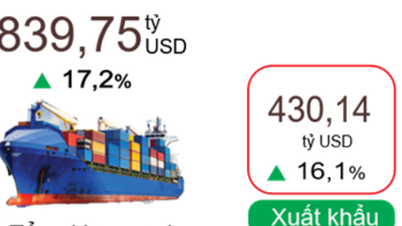
The delegate said that according to the Government's report, the total import-export turnover in 2024 is forecast to be at a record level, which shows the recovery of domestic production and consumer demand in the markets. In particular, the high proportion of FDI sector exports shows that enterprises in this sector are doing very well, based on the State's preferential support mechanisms and policies; demonstrated by the fact that many large corporations have come to research and committed to invest in the fields of electronics, semiconductor chips, renewable energy, etc.
However, the delegate said that the data of businesses withdrawing from the market shows that domestic businesses are still facing many difficulties. The delegate suggested that the Government continue to provide policy support to help domestic economic sectors overcome difficulties; at the same time, issue more drastic support policies to protect and stimulate domestic consumption of goods against the invasion of cheap goods from abroad, through e-commerce and social networks.
Breakthrough, stronger institutions, remove difficulties and obstacles, perfect the legal system, unify, synchronize, be feasible, public and transparent
Delegate La Thanh Tan - Hai Phong City National Assembly Delegation expressed his agreement with the main tasks and solutions for 2025, including breakthrough and stronger solutions in terms of institutions, removing difficulties and obstacles, perfecting the legal system, unifying, synchronizing, feasible, public and transparent. At the same time, he outlined a number of tasks and solutions in implementing the goal of having 2 million enterprises by 2030 set out in Resolution No. 41 dated October 10, 2023 of the Politburo on building and promoting the role of Vietnamese entrepreneurs in the new period.
According to delegate La Thanh Tan, the Investment Law and the Enterprise Law have strongly institutionalized the regime, everyone has the right to freely do business in the fields that are not prohibited by law as stipulated in the 2013 Constitution. The business community of all economic sectors has continuously developed in quantity and quality, gradually becoming the central force of the economy, to date there are about 930,000 businesses in operation, although this number is not as expected. The business environment in our country has become much more open.
However, businesses still complain about the risks they face right from the start, which are business conditions or standards and regulations that are very difficult to enforce. The consequence of this situation is to create many barriers, limit business freedom and create many risks for businesses, such as difficulties in carrying out conditional business licensing procedures, incurring unofficial costs, etc. This also leads to businesses having to delay or even cancel their business plans, causing waste of time, resources and business opportunities. This is also one of the reasons why Vietnamese businesses have been slow to grow in recent times.
At this session, based on the discussion of the National Assembly delegates, the National Assembly Standing Committee agreed to remove the regulation that fire prevention and fighting services are a conditional business line in the draft Law on Fire Prevention, Fighting and Rescue, to create favorable conditions for enterprises, strengthen the autonomy and self-responsibility regime, under the inspection and supervision of state agencies. This is an innovation in legislative work in the direction of both ensuring state management and freeing up resources for development and the determination to abandon the mindset of banning if you can't manage it and preventing waste in law-making work in the spirit of the Central's orientation, and at the same time shows that reducing business conditions is feasible.
The goal of having 2 million enterprises by 2030 is a huge challenge, so along with the solutions to promote decentralization, decentralization and reduction of administrative procedures that the Government is vigorously implementing, enterprises and entrepreneurs need synchronous solutions, creating breakthroughs, and need the support of the State to create vitality, encouragement, training and companionship. The above innovation will create more motivation for enterprises and entrepreneurs to start up and participate in the market.
Delegate La Thanh Tan proposed that the Government direct the continued review of business conditions to classify, take measures to handle, and remove barriers in the institutions regarding business conditions as the recommendations and proposals of enterprises mentioned above. In particular, it is necessary to resolutely abolish business conditions that are not issued in legal documents, resolutions of the National Assembly, ordinances, resolutions of the National Assembly Standing Committee, Government Decrees, and international treaties to which Vietnam is a member as prescribed in Article 7 of the Investment Law 2020.
Delegate Nguyen Thi Thu Ha - National Assembly Delegation of Ninh Binh province emphasized the severe damages and consequences caused by the two storms Yagi and Tra My and requested the Government to direct ministries, branches and localities to proactively propose and issue strong enough mechanisms and policies to support the sectors and fields that are being severely affected; Develop a project to rebuild the economy after the storm, implement tax exemptions, reductions, and extensions of taxes, fees, land rents, and water surface rents for affected and damaged enterprises, organizations and people; Prioritize the allocation of resources to promptly overcome incidents and damages to the traffic system, dykes, and irrigation reservoirs.
At the same time, it is recommended to pay attention to restructuring the term, maintaining the debt group, considering exempting and reducing interest rates for customers who have suffered losses; Supplementing resources to implement preferential credit policies for the Bank for Social Policies; Guiding how to determine the extent of damage occurring on a large scale due to objective and force majeure reasons, including assets formed from loan capital sources to serve as a basis for implementing support policies and solutions; Having a mechanism for lending without collateral, a separate mechanism for debt classification, provisioning and using provisions to handle risks for debts of customers facing difficulties and losses due to the impact of natural disasters; reviewing, amending, supplementing and promulgating mechanisms and policies to support agricultural, forestry and fishery production to restore production./.

![[Photo] 60th Anniversary of the Founding of the Vietnam Association of Photographic Artists](/_next/image?url=https%3A%2F%2Fvphoto.vietnam.vn%2Fthumb%2F1200x675%2Fvietnam%2Fresource%2FIMAGE%2F2025%2F12%2F05%2F1764935864512_a1-bnd-0841-9740-jpg.webp&w=3840&q=75)

![[Photo] National Assembly Chairman Tran Thanh Man attends the VinFuture 2025 Award Ceremony](/_next/image?url=https%3A%2F%2Fvphoto.vietnam.vn%2Fthumb%2F1200x675%2Fvietnam%2Fresource%2FIMAGE%2F2025%2F12%2F05%2F1764951162416_2628509768338816493-6995-jpg.webp&w=3840&q=75)








































































Comment (0)