

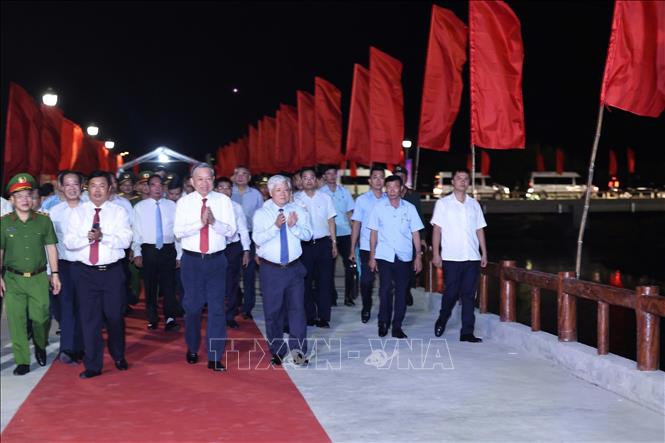
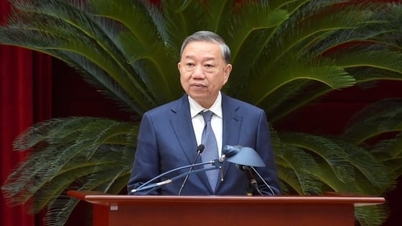
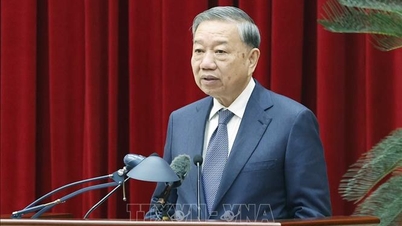
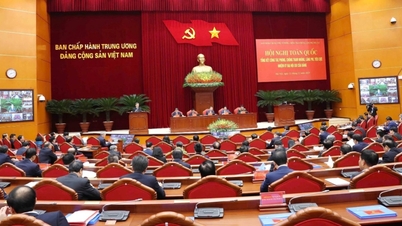
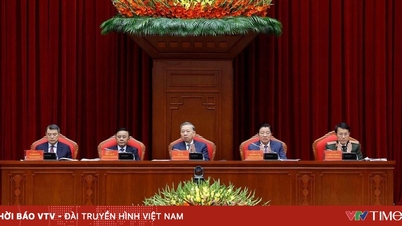
Attending at the Ca Mau location were: General Secretary To Lam; former Chairwoman of the National Assembly Nguyen Thi Kim Ngan; former Standing Member of the Party Central Committee Le Hong Anh; Politburo Member, Secretary of the Party Central Committee, Head of the Central Propaganda Department Nguyen Trong Nghia; Politburo Member, Secretary of the Party Central Committee, Chairman of the Central Committee of the Vietnam Fatherland Front Do Van Chien; Secretary of the Party Central Committee, Chief of the Party Central Office Nguyen Duy Ngoc; Central Committee Member, Secretary of the Provincial Party Committee, Chairman of the Provincial People's Council of Ca Mau Nguyen Tien Hai.
Attending the event at the Hai Phong location were: Member of the Political Bureau, Secretary of the Central Committee of the Party, Standing Deputy Prime Minister Nguyen Hoa Binh ; and Member of the Central Committee of the Party, Secretary of the Hai Phong City Party Committee Le Tien Chau.
Attending the meeting from Thanh Hoa were: Comrade Le Hoai Trung, Secretary of the Central Committee of the Party and Head of the Central Committee's Foreign Affairs Department; and Comrade Nguyen Doan Anh, Member of the Central Committee of the Party and Secretary of the Thanh Hoa Provincial Party Committee.
At the three locations, the event was also attended by members of the Central Committee of the Party, leaders of central and local ministries, departments and agencies, historical witnesses, and a large number of local people.
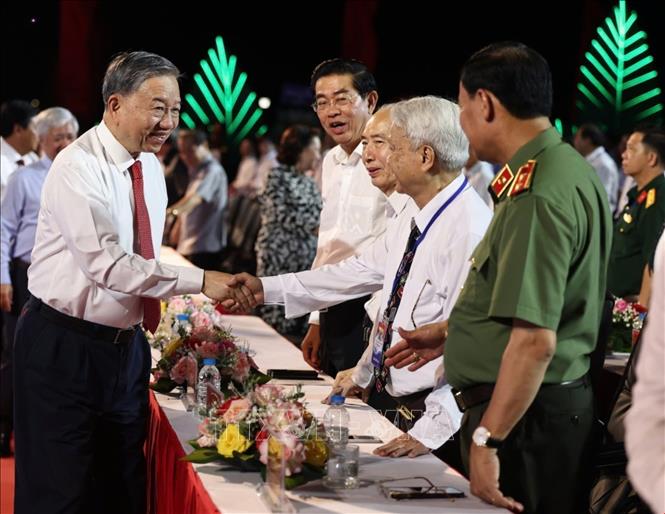
The commemoration recreated a pivotal moment in Vietnamese history: a shift in forces that contributed to the victory in the national struggle for reunification. The decision to relocate cadres, soldiers, and children of the people from the South demonstrated the profound strategic vision of President Ho Chi Minh and the Central Party Committee in laying the foundation for building a socialist North and consolidating forces for the reunification struggle. This relocation to the North showcased the patriotism and will of every Vietnamese citizen, who were ready to sacrifice themselves and their families for the common cause of the nation; it demonstrated the solidarity between North and South, a bond shared by our people and our country.
In 1954, following the Geneva Conference, our country adopted the 17th parallel as the temporary military demarcation line. Waves from the open sea carried ships relocating people to the North, laden with the longing for home and the burning desire for reunification of tens of thousands of cadres, soldiers, and compatriots from the South. From a promise of return in two years, the largest troop movement in history lasted 21 years before the country was completely unified. The children who relocated to the North were trained as "red seeds" to continue the work of building and developing the nation.
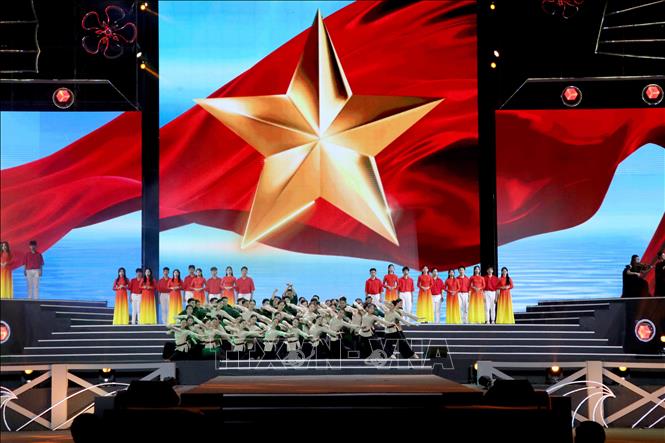
In Ca Mau, the main location for the televised event was the Monument to the Trains Gathering for the North (Song Doc town, Tran Van Thoi district, Ca Mau). The artistic program celebrated the dedication and sacrifice of the cadres, soldiers, and people of Ca Mau, as well as the people of the South who gathered for the North; bidding farewell to their homeland and loved ones to embark on the long-term resistance war for the day of national reunification, when North and South would be reunited. Those who left promised to return victorious, while those who remained were determined to build revolutionary base areas.
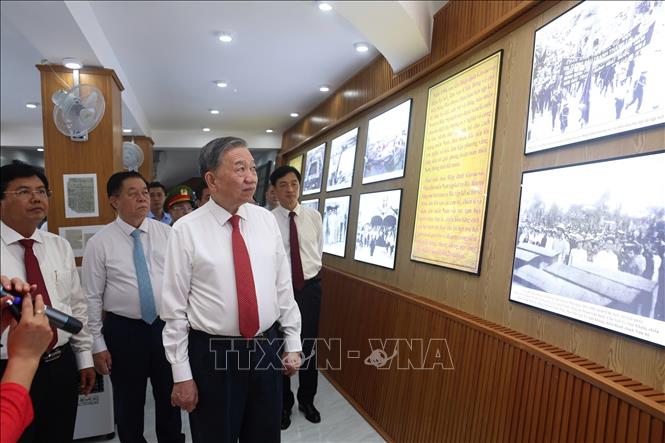
Seventy years ago, this very spot witnessed a 200-day mobilization effort to bring cadres, soldiers, and people from the South to the North for living and studying. The Song Doc Wharf has now become a historical site, marking a golden chapter in the history of building the North, fighting for and liberating the South, and unifying the country.
Hai Phong organized a televised event at the City Theater Square. At the end of 1954, the system of schools for students from the South was established, receiving special attention from President Ho Chi Minh, the Party, and the State. Hai Phong welcomed approximately 15,000 children from the South to study there, out of a total of about 32,000 students from the South who relocated to the North. After their studies, from the "zero-numbered dock" in Hai Phong, some "red seeds" were nurtured in the North and returned to liberate and build the South. Now, many of them are high-ranking officials of the Party and State, scientists, educators, artists, and reputable businesspeople, contributing significantly to society. This confirms that the largest-scale student relocation in history was considered a success in all three aspects: character development, educational model, and long-term training strategy.
President Ho Chi Minh's unique nursery and the Party's policies during the resistance war years have inspired Hai Phong's current education and training strategy. Over the years, Hai Phong has consistently strived to be a leading city in educating and training future generations.
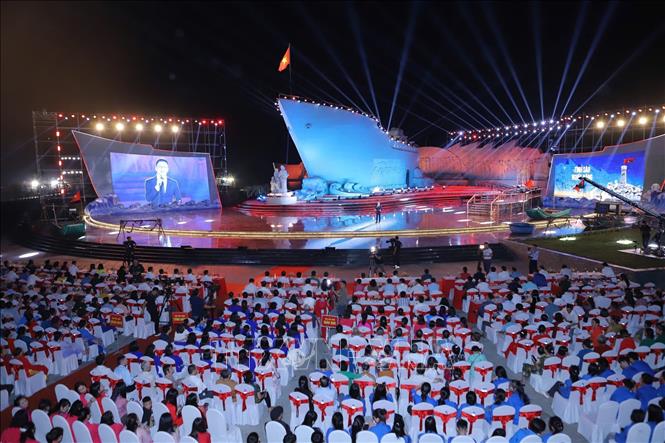
The memorial site for the people, cadres, soldiers, and students from the South who relocated to the North (Quang Tien ward, Sam Son city, Thanh Hoa province) is also a venue for the commemorative program. Seventy years ago, Thanh Hoa was honored to be chosen by the Central Party Committee, the Government, and President Ho Chi Minh as the first locality in the North to welcome the people, cadres, soldiers, and students from the South who relocated to the North. The reception point was located at Lach Hoi port, Quang Tien commune (now Quang Tien ward, Sam Son city). This was a meeting of special political and historical significance, sacred and deeply moving, between the people of Thanh Hoa and the sons and daughters of the South who relocated to the North.
September 25, 1954, became an unforgettable historical moment, especially when the first ship sailed through the Lach Hoi - Sam Son harbor amidst the cheers of thousands of Thanh Hoa people joyfully welcoming their compatriots from the South. Thanh Hoa was the province that received the largest number of people, cadres, soldiers, and students from the South in the entire country. Despite hardship and poverty, the people of Thanh Hoa at that time dedicated their best to their compatriots from the South. In nine months (from September 1954 to May 1955), Thanh Hoa received 45 ships carrying 47,346 cadres and soldiers; 1,775 wounded soldiers; 5,922 students; and 1,443 families of cadres relocating to the North. The people of Thanh Hoa, especially the people of Sam Son, organized the reception, care, and provision of living needs for the cadres, soldiers, and people from the South who were relocating to the North.
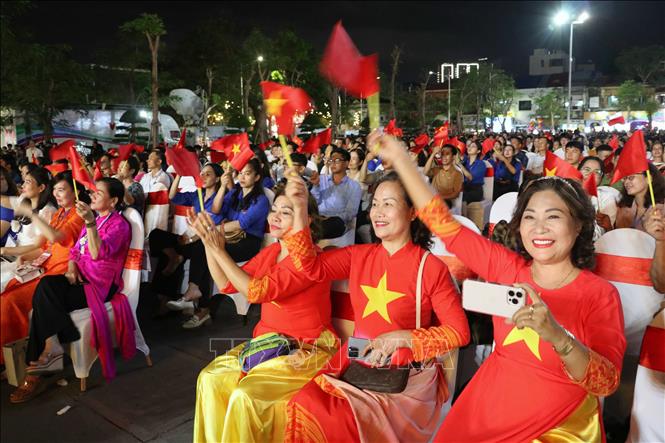
The commemoration ceremony featured a live artistic program at three locations: Ca Mau, Thanh Hoa, and Hai Phong, consisting of three parts. Part 1, themed "Aspiration for Unification," recreated the historical context of the troop mobilization to the North, stemming from the correct decisions of President Ho Chi Minh and the Central Party Committee. Part 2, "A Unwavering Loyalty," expressed the spirit of unity and determination of the entire nation, with all their hearts and enthusiasm, in the face of the decision to mobilize troops to the North. Part 3, "Glorifying Vietnam," conveyed the significance of the mobilization, which served as a historical lesson for building a new era of national progress.
Along with that is the comprehensive report "Unity – The Strength to Build a Rising Vietnam," which shows that throughout Vietnam's history, unity has always been the guiding principle for all actions to achieve glorious victories. The greater the difficulties and hardships, the more valuable the strength of unity becomes. In the difficult times for the country and the nation, the spirit of national unity is clearly evident: During the pandemic, the country united and shared. The people of the North wholeheartedly supported the South. During storms and floods, especially Typhoon No. 3 and the recent floods in Central Vietnam, the people turned their attention to their brothers and sisters…
In the report, General Secretary To Lam affirmed: We are facing a historic opportunity to usher the country into a new era, an era of national progress. This is an era under the leadership of the Party, successfully building a prosperous, strong, democratic, just, and civilized Vietnam, fulfilling the aspirations of President Ho Chi Minh and the hopes of the entire nation to stand shoulder to shoulder with the world's leading powers. More urgent than ever, and a top priority, is to consolidate and promote the great national unity under the leadership of the Party. This is one of the key solutions to usher the country into this new era. Historical practice shows that the great national unity creates immense strength and is the source of all the successes of the Vietnamese revolution. Only through great unity can there be victory.
The event of regrouping in the North has become a symbol of patriotism, national unity, and the unwavering determination and solidarity of our people and army, who went forth for a great cause, for the noble revolutionary cause that still shines brightly. The sacred values of this event are still present on the path of building our nation's cause to this day.
The televised program commemorating the 70th anniversary of the regrouping in the North – a journey of looking back at a historical milestone of the nation, where contributions and sacrifices were made to create independence, peace, prosperity, and happiness.
* Earlier, General Secretary To Lam and the Central Committee delegation visited the National Historical Site of the assembly point for the North in late 1954 and early 1955 on the southern bank of the Doc River, Doc town, Tran Van Thoi district, Ca Mau province.
Source: https://baotintuc.vn/thoi-su/tong-bi-thu-du-cau-truyen-hinh-ky-niem-70-nam-su-kien-tap-ket-ra-bac-20241116220248058.htm

![[Photo] Closing Ceremony of the 10th Session of the 15th National Assembly](/_next/image?url=https%3A%2F%2Fvphoto.vietnam.vn%2Fthumb%2F1200x675%2Fvietnam%2Fresource%2FIMAGE%2F2025%2F12%2F11%2F1765448959967_image-1437-jpg.webp&w=3840&q=75)
![[Photo] Prime Minister Pham Minh Chinh holds a phone call with the CEO of Russia's Rosatom Corporation.](/_next/image?url=https%3A%2F%2Fvphoto.vietnam.vn%2Fthumb%2F1200x675%2Fvietnam%2Fresource%2FIMAGE%2F2025%2F12%2F11%2F1765464552365_dsc-5295-jpg.webp&w=3840&q=75)




















































Comment (0)